
BuddhistCatholicContemplativeEvangelicalGeneral ChristianHinduJewishLatter-day SaintMuslimNew VisionsProgressive Christian
Beliefs
- Buddhist
- Catholic
- Contemplative
- Evangelical
- General Christian
- Hindu
- Jewish
- Latter-day Saint
- More Voices
- Muslim
- New Visions
- Pagan
- Progressive Christian
Topics
- Religion News
- Food and Religion
- Sports and Religion
- Religious Art
- Religious Music and Entertainment
- Religious Events
- History and Religion
- Style and Religion
- Politics and Religion
- Women in Religion
- Recreation Outdoors and Religion
- Business Finance and Religion
- Careers Workplace and Religion
- Education and Religion
- Family Parenting and Religion
- Health Fitness and Religion
- Home and Religion
- Relationships and Religion
- Technology and Religion
- Travel and Religion
Columnists
- Buddhist Columnists
- Business Finance and Religion Columnists
- Careers Workplace and Religion Columnists
- Catholic Columnists
- Contemplative Columnists
- Education and Religion Columnists
- Evangelists Columnists
- Family Parenting and Religion Columnists
- General Christian Columnists
- Health Fitness and Religion Columnists
- Hindu Columnists
- History and Religion Columnists
- Home and Religion Columnists
- Jewish Columnists
- More Voices Columnists
- Latter Day Columnists
- Muslim Columnists
- New Visions Columnists
- Nonreligious Columnists
- Pagan Columnists
- Politics and Religion Columnists
- Progressive Columnists
- Recreation Outdoors and Religion Columnists
- Relationships and Religion Columnists
- Religion News Columnists
- Religious Art Columnists
- Religious Events Columnists
- Religious Music and Entertainment Columnists
- Sports and Religion Columnists
- Style and Religion Columnists
- Technology and Religion Columnists
- Travel and Religion Columnists
- Women in Religion Columnists
Resource Library
- 2026 Calendar
- Library of World Religions
- The 100 Most Holy Places on Earth
- Patheos Answers
- Podcasts
- Videos
- Faith Leaders Database
- Anglican Episcopalian
- Bahai
- Baptist
- Buddhism
- Christianity
- Confucianism
- Eastern Orthodoxy
- Hinduism
- Holiness and Pentecostal
- ISKCON
- Islam
- Judaism
- Lutheran
- Methodist
- The Church of Jesus Christ of Latter-day Saints
- New Age
- Paganism
- Presbytarian and Reformed
- Protestantism
- Religion Behind the Scenes
- Roman Catholic
- Scientology
- Shia Islam
- Sikhism
- Sufism
- Sunni Islam
- Taoism
- Zen
- See all religions
Research Tools
 Ad-Free & Subscriber Log-In Subscription Support
Ad-Free & Subscriber Log-In Subscription Support
Follow Patheos 

- Trending:
- Forgiveness
- |
- Marriage
- |
- Consciousness
- |
- Death Penalty
- |
- Election
- |
- Halloween

- Home
- Latter-day Saint
- History and Religion
- “Who Holds the Keys?”
“Who Holds the Keys?”
Last updated on: July 12, 2024 at 7:30 pm by Dan Peterson
“Who Holds the Keys?” 2024-07-12T19:30:58-06:00 Dan Peterson
Patheos Explore the world's faith through different perspectives on religion and spirituality! Patheos has the views of the prevalent religions and spiritualities of the world.
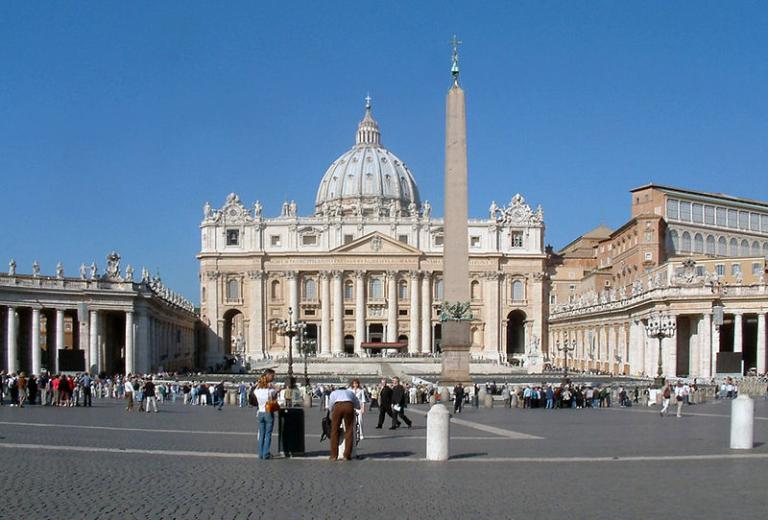
St.Peter’s Basilica in Vatican City. (Wikimedia Commons public domain photograph)
A thoroughly vicious and rage-fueled new article has appeared in Interpreter: A Journal of Latter-day Saint Faith and Scholarship: “Who Holds the Keys?” written by Daniel C. Peterson
Abstract: While, for understandable reasons, Protestant Christendom tends to downplay the question, the more ancient Christian churches have historically placed considerable weight on what is often termed “apostolic succession.” The Catholic church, for instance, strongly affirms the “primacy of Peter” and the status of the Bishop of Rome, the Pope, as ancient Peter’s lineal successor. Curiously, perhaps, The Church of Jesus Christ of Latter-day Saints, although it was founded on the American frontier in the early nineteenth century, takes a view of the matter that crucially resembles the Catholic viewpoint more than it does a western Protestant one. But the Latter-day Saint view differs dramatically on the history of the apostolic succession and, accordingly, on the identity of the modern successors to the ancient apostles.

The Celestial Room of the Idaho Falls Temple. (LDS Media Library) Please note the heavenly reunions depicted in the mural on the wall.
I return again, briefly, to Sebastian Junger’s new book In My Time of Dying: How I Came Face to Face with the Idea of an Afterlife, sharing some passages that I have extracted for my ongoing research and writing:
Doctors approach near-death experiences very much like my father approached physics, and they have come up with prosaic explanations for just about everything. Tunnels, bright lights, life reviews, Godheads, out-of-body experiences, feelings of peace and unity, cosmic insight, and a disinterest in the corporeal world can all be induced in people fairly easily—and happen all the time. You don’t need to believe in an afterlife to explain the visions of a hypoxic brain or the out-of-body illusions of someone suffering a seizure.
With one central exception: the dead. (115)
A parenthetical observation: Mr. Junger is overstating the situation considerably here. Some doctors are, yes, materialistic reductionists and, thus, skeptics about near-death experiences if not altogether dogmatically opposed to taking them seriously. I’ve spoken with several of them on the topic, and I’ve read others. But physicians are also among the most best-known advocates of NDEs as indicators of a distinction between mind and body and of a life beyond death. But his point is a good one:
Why do the dying—and only the dying—keep seeing the dead in their last days and hours? If there is any true mystery to all this, it’s that in mud huts and in hospital rooms, in car accidents and on battlefields, in darkened bedrooms and in screaming ambulances, deathly ill people are startled to see a loved one hovering over them. There are neurochemical explanations for why people hallucinate, but not for why they keep hallucinating the same thing. Some attempts have been made, though: the visions are said to be unconscious projections ginned up by terrified patients, or evolutionary adaptations that aid survival, or simply cultural expectations that are expressed in imaginary form. Those proposals fall well short of explaining the broad and powerful sweep of this phenomenon across the world.
One of the most notable aspects of these visions is how startled the dying seem to be. I was deeply shocked to see my father and in no way comforted by him; in fact, I was mortified. Hours before dying, my mother squinted at a corner of the bedroom and said, “What’s he doing here?” I guessed it was her estranged brother, George, long dead of throat cancer.
“That’s George,” I said. “He’s come a long way to see you, and you have to be nice to him.” “We’ll see about that,” she said. (115)
Here are a couple of additional examples:
After Tyler Carroll left the military, he took a job as a paramedic for a fire department. One day he picked up a seventy-year-old woman who was having trouble breathing. He put a twelve-lead on her and determined that she was having a heart attack, so he loaded her into the ambulance for a trip to the hospital. Five minutes later she sat bolt upright, as if she’d seen something, and said in amazement, “I’m about to die.” Then she lay back and died.
One wonders what she saw. Because of the prevalence of sedation, the dying are not always clear-minded, but occasionally someone makes it to their last breath without morphine. One nurse told me that she took care of a man who was pain-free until the very end and entirely lucid. Hours before he died, she heard him say the name “Barbara” over and over, as if she were present in the room. The nurse went into the kitchen to tell the man’s wife.
“Barbara was the love of his life,” the woman said, crying. “She was our nineteen-year-old.” (116)
Junger draws on stories compiled in Deathbed Visions, the posthumously-published 1926 classic written by the British physicist Sir William F. Barrett (1844-1925), who, despite his parapsychological interests, was elected a Fellow of the Royal Society:
Over and over, the people described in Barrett’s book were startled to see deceased relatives in the room and usually felt calmed by them, even delighted. “‘Marion, my daughter!’ one man shouted shortly before he died. Some encounters even felt like a family reunion: “Look, there they all are, William and Elizabeth and Emma and Anne—and Priscilla too!” one woman exclaimed after waking from a coma. (William was a son who had died many years earlier in infancy; Priscilla was a family friend who had passed away two days prior.)
In an era of slow communication, it was entirely possible to not know that a close friend or even family member had died, and Barrett considered visits by the recently dead to be exceptionally strong evidence of an afterlife. A Frenchman named Paul Durocq died of yellow fever while traveling with his family in Venezuela, in 1894. In his last hours, he seemed to be visited by the spirit of a close friend who had died while the Durocqs were away—although they didn’t know that. The Durocqs found his funeral announcement in the mail when they got home.
Barrett also considered the death visions of children to be particularly persuasive. “On Nov 2nd and 3rd, 1870, I lost my two eldest boys, David and Harry, to scarlet fever, they being three and four years old, respectively,” one man told Barrett. “Harry died at Abbott’s Langley on November 2nd, fourteen miles from my vicarage at Aspley; David the following day at Aspley. About an hour before the death of this latter child, he sat up in bed, and pointing to the bottom of the bed said distinctly, ‘There is little Harry calling me.’ ” (117)

Cherry blossoms, Lake Kawaguchiko, and Mount Fuji. Can anything possibly be more Japanese than this? (Wikimedia Commons public domain image)
As is my frequent custom, though, I close with a disgusting and offensive story that should help to stoke your righteous indignation and to keep it gratifyingly inflamed. I’ve drawn it from the Christopher Hitchens Memorial “How Religion Poisons Everything” File™: “Church Responds to Japan Earthquake With Donations and Service: Reconstruction begins of shrines and temples in disaster-stricken Nanao City, Ishikawa”
History and Religion
Travel and Religion
Previous Post

July 11, 2024
A lying liar who lies!
Next Post

July 13, 2024 18,446,744,073,709,551,615 grains of wheat
Recent Comments
"Another class of memories are of individuals who previously lived. Some of these remembered individuals ..."
"Sutherland's lecture sounds interesting. He seems to restate the Washington consensus that trade brings peace ..."
Learning more about a region of ..."
"In a meeting today, I learned another important reason why accurate (or at least as ..."
From Serbia’s “White City,” Belgrade
"I've been watching a lot of video interviews of NDErs and researchers. I think in ..."
Browse Our Archives
Select a Category Uncategorized
Select a Month October 2026 September 2026 August 2026 July 2026 June 2026 May 2026 April 2026 March 2026 February 2026 January 2026 December 2025 November 2025 October 2025 September 2025 August 2025 July 2025 June 2025 May 2025 April 2025 March 2025 February 2025 January 2025 December 2024 November 2024 October 2024 September 2024 August 2024 July 2024 June 2024 May 2024 April 2024 March 2024 February 2024 January 2024 December 2023 November 2023 October 2023 September 2023 August 2023 July 2023 June 2023 May 2023 April 2023 March 2023 February 2023 January 2023 December 2022 November 2022 October 2022 September 2022 August 2022 July 2022 June 2022 May 2022 April 2022 March 2022 February 2022 January 2022 December 2021 November 2021 October 2021 September 2021 August 2021 July 2021 June 2021 May 2021 April 2021 March 2021 February 2021 January 2021 December 2020 November 2020 October 2020 September 2020 August 2020 July 2020 June 2020 May 2020 April 2020 March 2020 February 2020 January 2020 December 2019 November 2019 October 2019 September 2019 August 2019 July 2019 June 2019 May 2019 April 2019 March 2019 February 2019 January 2019 December 2018 November 2018 October 2018 September 2018 August 2018 July 2018 June 2018 May 2018 April 2018 March 2018 February 2018 January 2018 December 2017 November 2017 October 2017 September 2017 August 2017 July 2017 June 2017 May 2017 April 2017 March 2017 February 2017 January 2017 December 2016 November 2016 October 2016 September 2016 August 2016 July 2016 June 2016 May 2016 April 2016 March 2016 February 2016 January 2016 December 2015 November 2015 October 2015 September 2015 August 2015 July 2015 June 2015 May 2015 April 2015 March 2015 February 2015 January 2015 December 2014 November 2014 March 2014 August 2013 February 2012
Follow Us!
TAKE THE
Religious Wisdom Quiz
What Christian tradition is associated with the seven sacraments?
Select your answer to see how you score.
Quakerism Roman Catholicism Protestantism Seventh-day Adventism
Related posts from Sic et Non


Notes on Women, Priesthood, and General Conference

"The Book of Moses as a Temple Text"

TRENDING AT PATHEOS Latter-day Saint

The Sermon on the Mount, Part I: Matthew...
The Sermon on the Mount, Part I (Matthew 4:12-5:12) St. Matthew moves...

What's up from Crossway: Reviewing some of their latest A few weeks...

Janie Learns the Way of the Cross: A...
Teaching children about Jesus' Passion can be challenging. Many parents and educators...

Looking For Good Catholic Writing - October 2026
He alone extends the heavens, and he walks upon the waves of...

In "Irreplaceable," our book on vocation and technology, Trevor Sutton and I...

I was strolling through the top floor of the brand new Parthenon...
view all Latter-day Saint blogs
What Are Your Thoughts?leave a comment
Ad-Free & Subscriber Log-In Subscription Support
- About Us
- 2026 Calendar
- Videos
- Podcasts
- Library of World Religions
- Faith In Media Tracker
- Advertise With Us
- Write for Us
- Privacy Policy
- Terms of Service
- Do Not Sell My Data
- Contact Us
- Radiant Digital
- Manage Newsletter Subscriptions
- Unsubscribe From Notifications
- Sitemap
Copyright 2008-2026, Patheos. All rights reserved.
Subscription Support Ad-Free & Subscriber Log-In
Follow Patheos