
BuddhistCatholicContemplativeEvangelicalGeneral ChristianHinduJewishLatter-day SaintMuslimNew VisionsProgressive Christian
Beliefs
- Buddhist
- Catholic
- Contemplative
- Evangelical
- General Christian
- Hindu
- Jewish
- Latter-day Saint
- More Voices
- Muslim
- New Visions
- Pagan
- Progressive Christian
Topics
- Religion News
- Food and Religion
- Sports and Religion
- Religious Art
- Religious Music and Entertainment
- Religious Events
- History and Religion
- Style and Religion
- Politics and Religion
- Women in Religion
- Recreation Outdoors and Religion
- Business Finance and Religion
- Careers Workplace and Religion
- Education and Religion
- Family Parenting and Religion
- Health Fitness and Religion
- Home and Religion
- Relationships and Religion
- Technology and Religion
- Travel and Religion
Columnists
- Buddhist Columnists
- Business Finance and Religion Columnists
- Careers Workplace and Religion Columnists
- Catholic Columnists
- Contemplative Columnists
- Education and Religion Columnists
- Evangelists Columnists
- Family Parenting and Religion Columnists
- General Christian Columnists
- Health Fitness and Religion Columnists
- Hindu Columnists
- History and Religion Columnists
- Home and Religion Columnists
- Jewish Columnists
- More Voices Columnists
- Latter Day Columnists
- Muslim Columnists
- New Visions Columnists
- Nonreligious Columnists
- Pagan Columnists
- Politics and Religion Columnists
- Progressive Columnists
- Recreation Outdoors and Religion Columnists
- Relationships and Religion Columnists
- Religion News Columnists
- Religious Art Columnists
- Religious Events Columnists
- Religious Music and Entertainment Columnists
- Sports and Religion Columnists
- Style and Religion Columnists
- Technology and Religion Columnists
- Travel and Religion Columnists
- Women in Religion Columnists
Resource Library
- 2026 Calendar
- Library of World Religions
- The 100 Most Holy Places on Earth
- Patheos Answers
- Podcasts
- Videos
- Faith Leaders Database
- Anglican Episcopalian
- Bahai
- Baptist
- Buddhism
- Christianity
- Confucianism
- Eastern Orthodoxy
- Hinduism
- Holiness and Pentecostal
- ISKCON
- Islam
- Judaism
- Lutheran
- Methodist
- The Church of Jesus Christ of Latter-day Saints
- New Age
- Paganism
- Presbytarian and Reformed
- Protestantism
- Religion Behind the Scenes
- Roman Catholic
- Scientology
- Shia Islam
- Sikhism
- Sufism
- Sunni Islam
- Taoism
- Zen
- See all religions
Research Tools
 Ad-Free & Subscriber Log-In Subscription Support
Ad-Free & Subscriber Log-In Subscription Support
Follow Patheos 

- Trending:
- Forgiveness
- |
- Marriage
- |
- Consciousness
- |
- Death Penalty
- |
- Election
- |
- Halloween

- Home
- Latter-day Saint
- History and Religion
- “Faith, Evidence and the Abundant Life”
“Faith, Evidence and the Abundant Life”
Last updated on: June 16, 2024 at 2:47 pm by Dan Peterson
“Faith, Evidence and the Abundant Life” 2024-06-16T14:47:25-06:00 Dan Peterson
Patheos Explore the world's faith through different perspectives on religion and spirituality! Patheos has the views of the prevalent religions and spiritualities of the world.
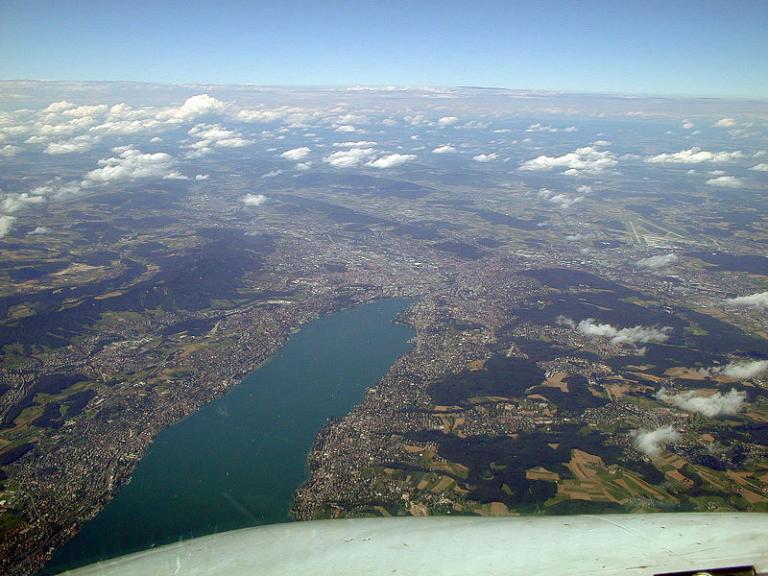
Aerial view of Zürich and its suburbs (Wikimedia Commons public domain image)
I taught the Sunday school class this morning (on Alma 5-7) in what I think is the Västra Frölunda Ward of the Church of Jesus Christ of Latter-day Saints. The ward meets in the building in which we held the FAIR conference yesterday — though it’s a different ward from where we attended (and I gave a fireside) when we were here eight years for the previous FAIR here. It still looks new and contemporary, but I’m told that it’s the building where Elder Dale G. Renlund of the Quorum of the Twelve — the G stands for Gunnar — attended church for several years as a teenager. It is also the home ward of Per Gösta Malm, who served as a General Authority of the Church from 201o until his death in 2016. His widow was there today.
After church, my wife and I headed to the airport, from which we flew to Copenhagen, Denmark, and then on to Zürich, Switzerland.
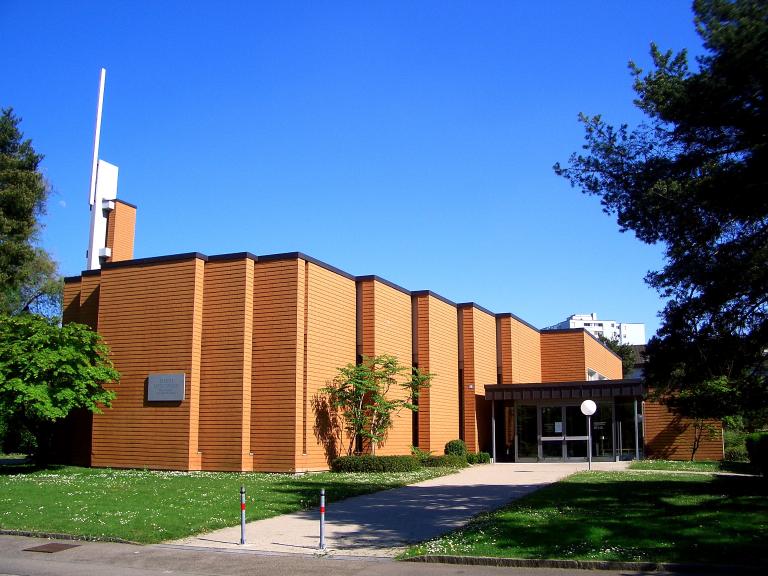
This is the chapel that I attended for about six months when I was serving in the headquarters office of the Switzerland Zürich Mission. (Wikimedia Commons public domain photograph)
Fundamental to a long-term writing project of mine — or, at least, to its opening chapter — is a famous argument that has come to be called “Pascal’s wager.” As part of my thinking about the wager, I’ve read Michael Rota, Taking Pascal’s Wager: Faith, Evidence and the Abundant Life (Downers Grove, IL: IVP Academic, 2016). At the time that he published Taking Pascal’s Wager, Dr. Rota was an associate professor of philosophy at the University of St. Thomas, in St. Paul, Minnesota.
I try — rather inconsistently, I admit — to use this blog as a mode of storing and sharing notes from my reading, and I’m going to do that yet again in this case. Here are a couple of introductory quotations from Professor Rota on “the seventeenth-century polymath Blaise Pascal” and his famous (and controversial) “wager”:
Pascal made important contributions in mathematics, probability theory and physics. His work on fluid mechanics was instrumental in the later invention of the hydraulic press, and he himself designed and built one of the first mechanical calculating machines, an early precursor to the digital computer. (Interestingly, the principles used in the machine are still employed in many automobile odometers.) Pascal was an inventor, an intellectual and a scientist. He was also a deeply religious man. At the age of thirty-one he had a powerful mystical experience of God. He described the experience in a note and stitched the note into his coat, keeping it close to him. He evidently transferred the paper note (together with a cleaner copy he put down on parchment) from coat to coat for the rest of his life — as a servant found them there after his death. (22-23)
As noted, when Pascal died at the age of just slightly past thirty-nine in 1662, his servant found a small piece of parchment that had been sewn into his coat. At the top of the paper, Pascal had drawn a cross. Underneath the cross were these words:
The Year of Grace 1654
Monday, November 23, day of saint Clement, pope and martyr,
and others in the martyrology.
Vigil of Saint Chrysogonus, martyr, and others.
From about ten-thirty in the evening to about half an hour after
Midnight,
Fire.
God of Abraham, God of Isaac, God of Jacob,
Not of the philosophers and savants.
Certitude, certitude; feeling, joy, peace.
God of Jesus Christ.
Deum meum et Deum vestrum.
“Thy God shall be my God.”
Forgetting the world and everything except God. He is only found by the paths taught in the Gospel.
Grandeur of the human soul.
“Just Father, the world has not known you, but
I have known you.”
Joy, joy, joy, tears of joy.
I separated myself from him:Dereliquerent me fontem aquae vivae[They have forsaken me the fountain of living water]
“My God, will you abandon me?”
May I not be eternally separated from him.
“This is eternal life, that they know you, the only true God,and
Him whom you have sent, Jesus Christ.”
Jesus Christ.
Jesus Christ.
I separated myself from him; I fled him, renounced him,
Crucified him.
May I never be separated from him!
He is only kept by the paths taught in the Gospel.
Total submission to Jesus Christ and to my director.
Eternally in joy for a day of trial on earth.
Non obliviscar sermonestuos [I will not forget your words]. Amen.[cited by Romano Guardini,Pascal For Our Time (Herder and Herder, 1966), 33-34]
This was Pascal’s reminder to himself of what had evidently been an intense and very personal two-hour religious experience. It occurred when he was approximately thirty-one years old. The historical evidence suggests that he kept the event secret until his death. However, although we know few if any details about, he plainly regarded it as an encounter with God, and as so personally significant that it transformed him and altered the course of his life. He kept his record of it — what scholars today often call “The Memorial” — in the lining of his coat, close to his heart. For the eight years of life that remained to him thereafter, he carefully transferred the document from one coat to another, newly sewing it into the lining every time that he changed his clothing. Obviously, the note preserved Pascal’s memory of a treasured experience, something to which he could return over and over again.
There is, to me, something very moving in Pascal’s story.
Here an interpretive expansion and reformulation of the “wager” given by Professor Rota:
If Christianity is indeed true, then by committing to live a Christian life one brings great joy to God and all others in heaven, raises the chance that one will be with God forever, raises the chance that one will help others attain union with God, expresses gratitude to God, and becomes more aware of God’s love and more receptive to his help in the course of one’s earthly life. On the other hand, if Christianity is false, the person who commits his or her life to Jesus’ teachings has still lived a worthwhile life, striving for moral excellence and experiencing the benefits of religious community (benefits that contemporary sociological research reveals to be significant). (23)
Here are some further notes from Rota, Taking Pascal’s Wager, 33-34, on the benefits to be gained from taking Pascal’s wager if theism or Christianity — he hasn’t yet sought to distinguish precisely between them, and (we shall see!) perhaps will not — turns out to be true. For sake of verbal economy, Dr. Rota labels as WC the conjoint proposition You take the wager and Christianity is true:
- One will have “maximized one’s chance at eternal life.” (33)
- Since God presumably hopes that we will choose him and, thereby, accept his offer of eternal life, “by seeking closeness with God, you will bring joy to God and all others who are with God in heaven.” (33)
- One will have shown gratitude to God, for his grace and his generous offer of eternal life and other blessings. This is perhaps something quite like (2) above, but it’s viewed this time not from God’s perspective but from the perspective of the human person involved. For gratitude is a virtue, and the cultivation of virtue is a good thing.
- “Fourth, it’s very plausible to think that you are more likely to benefit from divine aid for moral and spiritual growth if you seek a relationship with God than if you don’t. No doubt God would not leave you without grace if you didn’t seek him, but it’s reasonable to think that if you’re more open to God’s assistance in your life, then you’ll end up resisting less when God sends help your way.” (33)
- “Fifth, you are more likely to be aware of God’s love during this earthly life. If Christianity is true, a close relationship with God can begin now.” (34)
- “Sixth, if Christianity is true and you’ve attempted to follow a Christian way of life, you’re more likely to be a help to others in their journey to God. Since the ultimate good for human beings will largely depend on their relationship with God, we can include in outcome WC the idea that you’ll be more likely to help others in the most important way possible.” (34, italics in the original)
These six propositions are neatly summarized in a simple chart on page 34, which also alludes to “this-worldly costs and benefits of WN [You take the wager and Christianity is not true]” without yet enumerating them.
The six goods just mentioned are all goods specific to outcome WC; they are goods that won’t also be present if Christianity is false, and thus are goods that won’t be included in outcome WN. (34)
Posted from Zürich, Switzerland
History and Religion
Travel and Religion
Previous Post

June 16, 2024
A Ten-Year Anniversary Falls on Father's Day
Next Post

June 17, 2024 The Most Beautiful Place on Our Planet
Recent Comments
"DP: “But Mr. Sutherland worries about the fact that our time, when we can communicate ..."
Learning more about a region of ..."
"Another class of memories are of individuals who previously lived. Some of these remembered individuals ..."
"Sutherland's lecture sounds interesting. He seems to restate the Washington consensus that trade brings peace ..."
Learning more about a region of ..."
"In a meeting today, I learned another important reason why accurate (or at least as ..."
From Serbia’s “White City,” Belgrade
Browse Our Archives
Select a Category Uncategorized
Select a Month October 2026 September 2026 August 2026 July 2026 June 2026 May 2026 April 2026 March 2026 February 2026 January 2026 December 2025 November 2025 October 2025 September 2025 August 2025 July 2025 June 2025 May 2025 April 2025 March 2025 February 2025 January 2025 December 2024 November 2024 October 2024 September 2024 August 2024 July 2024 June 2024 May 2024 April 2024 March 2024 February 2024 January 2024 December 2023 November 2023 October 2023 September 2023 August 2023 July 2023 June 2023 May 2023 April 2023 March 2023 February 2023 January 2023 December 2022 November 2022 October 2022 September 2022 August 2022 July 2022 June 2022 May 2022 April 2022 March 2022 February 2022 January 2022 December 2021 November 2021 October 2021 September 2021 August 2021 July 2021 June 2021 May 2021 April 2021 March 2021 February 2021 January 2021 December 2020 November 2020 October 2020 September 2020 August 2020 July 2020 June 2020 May 2020 April 2020 March 2020 February 2020 January 2020 December 2019 November 2019 October 2019 September 2019 August 2019 July 2019 June 2019 May 2019 April 2019 March 2019 February 2019 January 2019 December 2018 November 2018 October 2018 September 2018 August 2018 July 2018 June 2018 May 2018 April 2018 March 2018 February 2018 January 2018 December 2017 November 2017 October 2017 September 2017 August 2017 July 2017 June 2017 May 2017 April 2017 March 2017 February 2017 January 2017 December 2016 November 2016 October 2016 September 2016 August 2016 July 2016 June 2016 May 2016 April 2016 March 2016 February 2016 January 2016 December 2015 November 2015 October 2015 September 2015 August 2015 July 2015 June 2015 May 2015 April 2015 March 2015 February 2015 January 2015 December 2014 November 2014 March 2014 August 2013 February 2012
Follow Us!
TAKE THE
Religious Wisdom Quiz
What did Moses do after breaking the tablets?
Select your answer to see how you score.
Left the camp Fasted for 30 days Returned to Sinai for new tablets Destroyed the calf
Related posts from Sic et Non


A Powerful and Very Private Spiritual Experience
Attention, people in or near Orlando, Florida!
The Seventeenth Century and the Birth of Modern...
TRENDING AT PATHEOS Latter-day Saint

How to Make a Decision When You Can't...
Main point: It’s much more valuable to stay close to God so...

Archdiocese Hosts Military Marriage Retreat in Germany
RASTATT, Germany — The transient military lifestyle, with its frequent deployments and...

Nearly every morning, I make the drive to Detroit with my high-school-age...

The Real AI Story Is Adoption Without Trust
Artificial intelligence has crossed a political threshold. It is no longer a...

A new article, written by Jeff Lindsay and Gale L. Pooley,...

Swimfan: Forgotten Aughts Pleasures
This is a recovery effort. In 2002, My Big Fat Greek Wedding...
view all Latter-day Saint blogs
What Are Your Thoughts?leave a comment
Ad-Free & Subscriber Log-In Subscription Support
- About Us
- 2026 Calendar
- Videos
- Podcasts
- Library of World Religions
- Faith In Media Tracker
- Advertise With Us
- Write for Us
- Privacy Policy
- Terms of Service
- Do Not Sell My Data
- Contact Us
- Radiant Digital
- Manage Newsletter Subscriptions
- Unsubscribe From Notifications
- Sitemap
Copyright 2008-2026, Patheos. All rights reserved.
Subscription Support Ad-Free & Subscriber Log-In
Follow Patheos