
BuddhistCatholicContemplativeEvangelicalGeneral ChristianHinduJewishLatter-day SaintMuslimNew VisionsProgressive Christian
Beliefs
- Buddhist
- Catholic
- Contemplative
- Evangelical
- General Christian
- Hindu
- Jewish
- Latter-day Saint
- More Voices
- Muslim
- New Visions
- Pagan
- Progressive Christian
Topics
- Religion News
- Food and Religion
- Sports and Religion
- Religious Art
- Religious Music and Entertainment
- Religious Events
- History and Religion
- Style and Religion
- Politics and Religion
- Women in Religion
- Recreation Outdoors and Religion
- Business Finance and Religion
- Careers Workplace and Religion
- Education and Religion
- Family Parenting and Religion
- Health Fitness and Religion
- Home and Religion
- Relationships and Religion
- Technology and Religion
- Travel and Religion
Columnists
- Buddhist Columnists
- Business Finance and Religion Columnists
- Careers Workplace and Religion Columnists
- Catholic Columnists
- Contemplative Columnists
- Education and Religion Columnists
- Evangelists Columnists
- Family Parenting and Religion Columnists
- General Christian Columnists
- Health Fitness and Religion Columnists
- Hindu Columnists
- History and Religion Columnists
- Home and Religion Columnists
- Jewish Columnists
- More Voices Columnists
- Latter Day Columnists
- Muslim Columnists
- New Visions Columnists
- Nonreligious Columnists
- Pagan Columnists
- Politics and Religion Columnists
- Progressive Columnists
- Recreation Outdoors and Religion Columnists
- Relationships and Religion Columnists
- Religion News Columnists
- Religious Art Columnists
- Religious Events Columnists
- Religious Music and Entertainment Columnists
- Sports and Religion Columnists
- Style and Religion Columnists
- Technology and Religion Columnists
- Travel and Religion Columnists
- Women in Religion Columnists
Resource Library
- 2026 Calendar
- Library of World Religions
- The 100 Most Holy Places on Earth
- Patheos Answers
- Podcasts
- Videos
- Faith Leaders Database
- Anglican Episcopalian
- Bahai
- Baptist
- Buddhism
- Christianity
- Confucianism
- Eastern Orthodoxy
- Hinduism
- Holiness and Pentecostal
- ISKCON
- Islam
- Judaism
- Lutheran
- Methodist
- The Church of Jesus Christ of Latter-day Saints
- New Age
- Paganism
- Presbytarian and Reformed
- Protestantism
- Religion Behind the Scenes
- Roman Catholic
- Scientology
- Shia Islam
- Sikhism
- Sufism
- Sunni Islam
- Taoism
- Zen
- See all religions
Research Tools
 Ad-Free & Subscriber Log-In Subscription Support
Ad-Free & Subscriber Log-In Subscription Support
Follow Patheos 

- Trending:
- Forgiveness
- |
- Marriage
- |
- Consciousness
- |
- Death Penalty
- |
- Election
- |
- Halloween

- Home
- Latter-day Saint
- History and Religion
- Thaïs
Thaïs
Last updated on: May 9, 2024 at 3:39 pm by Dan Peterson
Thaïs 2024-05-09T15:39:58-06:00 Dan Peterson
Patheos Explore the world's faith through different perspectives on religion and spirituality! Patheos has the views of the prevalent religions and spiritualities of the world.
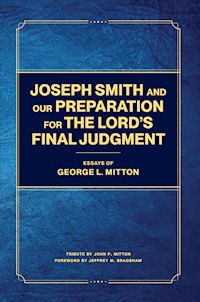
The cover of a new book from the Interpreter Foundation.
I want to remind everyone out there again of the gathering tomorrow night — Friday night, 10 May 2024 — in honor of the contributions of George L. Mitton. The event will take place at 7 PM in the large room upstairs at Legacy Village, 4146 North University Avenue, Provo, UT 84604.
A new book has been published in connection with this event, under the title Joseph Smith and Our Preparation for the Lord’s Final Judgment.

“Six Days in August” isn’t the only Interpreter Foundation film project underway: Elder Ahmad S. Corbitt of the Seventy (on the left) sits on Wednesday, 8 May 2024, for an interview with Jeffrey M. Bradshaw (right, foreground) and Junior Banza (right, background) as part of the Interpreter Foundation’s forthcoming “Not By Bread Alone” video series.
Early last evening, my wife and I observed a photo shoot in Salt Lake City for the Interpreter Foundation’s rapidly approaching theatrical film Six Days in August. The shoot involved the film’s Joseph Smith (Paul Wuthrich, reprising his role from Witnesses) and its Brigham Young (John Donovan Wilson), and was the first step toward creating movie posters and social media and other key art for the film.
From there we went to a performance by the Utah Opera of Jules Massenet’s 1894 opera Thaïs. I thought that I had seen Thaïs once before, many years ago, but I realized within about the first sixty seconds that I had not.
I was surprised by it, and surprised at how much I enjoyed it. (Of course, almost everybody is familiar with its famous violin “Meditation.”) To a small extent, I enjoyed it because of its setting in fourth-century Egypt, a place (though not especially a time) with which I’m very familiar. I first went to Egypt in January of 1978, we lived in Egypt from the summer of 1978 to the summer of 1982, and we have visited Egypt more times since then than I can count — most recently late last October and this past January.
But I want to offer a few comments on the opera and on its performance last night. It is the story of Thaïs, a superstar courtesan in Alexandria, and of a devout Christian named Athanaël, who had apparently known her when they were both quite young. A monk of Antinoë (or Antinoopolis) in the Western Desert — years ago, I had the opportunity to visit the venerable and remote monastery of St. Antony in the Eastern Desert and to make repeated visits to the distant monasteries of Wadi Natrun in the Western Desert — Athanaël is determined to convert her from her overt devotion to Venus to his rigorous form of Christianity, and thus to save her soul. He succeeds, but, in the end, he seems to have lost his own.
I begin with the very last scene, which — unsurprisingly to those who have been following my blog for any length of time — strongly caught my attention. Just a few months after her repentance and conversion, Thaîs is dying, and Athanaël realizes that he can’t bear the thought of losing her. He comes to her convent and confesses his love for her, essentially renouncing his Christianity and asceticism, begging her to live:
Non! le ciel . . . rien n’existe . . . rien n’est vrai que la vie et que l’amour des êtres. . . . Je t’aime!
No! Heaven . . . nothing exists . . . nothing is true but life and the love of (human) beings. I love you!
Here are the final words of Thaïs, spoken on her deathbed. I have omitted the interjections and pleadings of Athanaël:
Et la voilà l’aurore! . . .
Et les voilà les roses de l’éternel matin! . . .
Le ciel s’ouvre! Voici les anges et les prophètes . . .
et les saints! Ils viennent avec un sourire,
les mains toutes pleines de fleurs! . . .
Deux séraphins aux blanches ailes planent dans l’azur,
et comme tu l’as dit, le doux consolateur posant
sur mes yeux ses doigts de lumière!
Ah! en essuie à jamais les pleurs! . . .
Le son des harpes d’or m’enchante!
De suaves parfums me pénètrent!
Je sens une exquise béatitude,
Ah! Ah! Une béatitude endormir tous mes maux! . . .
Ah! le ciel! Je voix… Dieu!
And here is a slightly free English translation, partially but not entirely my own, of her final words:
And here is the dawn! . . .
And there the roses of eternal morning! . . .
Heaven is opening! Here are the angels and the prophets . . .
and the saints! They come with a smile,
their hands all full of flowers! . . .
Two seraphim with white wings soar in the azure (sky)
and, just as you said, the gentle Comforter places
on my eyes his fingers of light!
Ah! dries them forever of tears! . . .
The sound of the golden harps enchants me!
Gentle fragrances pierce my soul!
I feel an exquisite beatitude,
Ah! Ah! A beatitude that puts to rest all my pains! . . .
Ah! Heaven! I see . . . God!
Whether Massinet or his librettist Louis Gallet (or the Nobel-laureate Anatole France, on whose 1890 novel Thaïs, which I have not read, the opera is based) invented her final words out of pure imagination, or whether they are based on the final words of others, I do not know. But some will recognize that they strongly resemble many accounts of so-called “death-bed visions.” The ecstatic references to light, music, beautiful scents, welcoming heavenly beings, peace and exquisite happiness . . . These are textbook elements of such accounts.
Other thoughts occurred to me last night, as well. It is the physical rigors of her several months of guilt-induced penance that ultimately kill Thaïs, and I thought how belief in Christ’s atonement without such demanding penitence would have made for a happier ending. The Restored Gospel stresses repentance, but it doesn’t demand self-flagellation or self-destruction. And a non-celibate, non-monastic form of Christianity would have allowed Athanaël to marry Thaïs, whom he clearly loved and who seems possibly to have loved him, as well. There should not be an absolute gulf between loving God and feeling affection or love for God’s children. Athanaël’s frustrated love may have destroyed him, and their suffering was unnecessary.
But I was especially put off by one particular modern misreading of the story, evident in both the program notes and the audience’s reaction:
In the program notes, “religious hypocrisy” is identified as one of the opera’s themes. But I absolutely do not see Athanaël as a hypocrite. To me — and I would appreciate readers’ perspectives on this — a hypocrite is someone who publicly professes a principle or a set of principles but, privately, either doesn’t really believe in them or regularly, consciously, deliberately, and rather blithely violates them. Examples would include a politician who trumpets his commitment to “family values” but who engages regularly in secret trysts with his mistress and, while claiming to be pro-life, pays for her abortion. Or a politician who campaigns on her deep concern for the poor and the downtrodden but who gives nothing to charity and who exploits and mistreats her cleaning lady.
Athanaël, however, is portrayed in the opera as genuinely pious, authentically and deeply religious, albeit tormented by a deep attraction to Thaïs. That attraction emerges only after he has gone to Alexandria in what seems to have been a sincere effort to retrieve her from a life of ostentatious devotion to superficial sensuality. As he takes her to the desert area of his monastery and her destined convent, driving her mercilessly and demanding that she punish her body in penance, she collapses. It is then that he recognizes her inner purity, her goodness and the utter sincerity of her conversion:
Ah! des gouttes de sang coulent de ses pied blancs. La pitié s’émeut en mon âme! Pauvre enfant! Pauvre femme! J’ai trop prolongé cette épreuve! Pardonne-moi, ô ma sœur, ô sainte Thaïs! O sainte, très sainte Thaïs!
Ah, drops of blood drip from her white feet. Pity moves my soul. Poor child! Poor woman! Oh holy Thaïs, oh my sister ! — I have prolonged this hard trial too long! Forgive me. [He prostrates himself. Weeping, he kisses her bleeding feet with adoration.] Oh holy, most holy Tha’is!
Plainly, this isn’t mere lust. Moreover, yielding to a powerful temptation after strenuous resistance to it does not seem to me an example of mere hypocrisy, but simply of human weakness and fallibility.
The audience, however, didn’t react properly on the — I believe — three occasions when Athanaël prays for the strength to resist the powerful temptation of Thaïs’s charm and beauty. Each time, there were titters of laughter. I’m assuming that those who laughed didn’t believe his prayers to be sincere, that he was merely a lustful man paying lip service to his professed beliefs. But this seems to me completely misguided. The opera itself portrays him as deeply disturbed after taking Thaïs to the convent and returning to his own monastery. His fellow monks worry about him; for weeks he doesn’t eat, he doesn’t drink, and he rarely speaks. He confesses his torment to his superior at the monastery, who provides no real help but simply bids him farewell and walks out. It is only then that Athanaël leaves his monastery to visit the dying Thaïs, to confess his guilty love and to implore her to live.
I wondered what the audience’s laughter signified: Are modern people simply incapable of taking an oath or a vow seriously? Do we deride and mock the notion of moral restraint and moral effort? Do we no longer believe in the possibility of human goodness, or of genuine human efforts to attain it. I was, honestly, very bothered by that laughter.
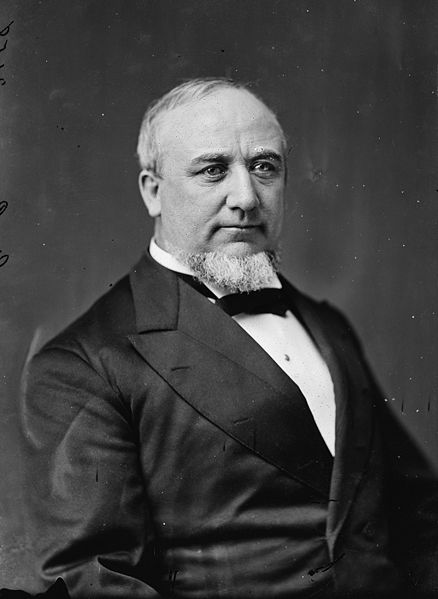
Like many of his family, Chris Cannon was heavily influenced by the achievements and legacy of his great ancestor, George Q. Cannon, who is shown here somewhere during the years 1870-1880.
(Wikimedia Commons public domain image)
I was shocked today to hear from a friend of the death of former Utah Congressman Chris Cannon: “Former Utah Rep. Chris Cannon dies at age 73” One of Chris’s younger brothers was a missionary companion of mine — more than once, actually — in Switzerland, and I came to know his entire remarkable family shortly after I returned. In fact, for a brief time, Chris and I lived with several others in a house at the southwest corner of the BYU campus that has long since been razed and, fittingly, replaced by an expanded parking lot for Brick Oven Pizza.
Chris was a good man. He made a mark, and he will be missed.
History and Religion
Travel and Religion
Previous Post

May 8, 2024
"The Hello Girls"
Next Post

May 10, 2024 "Mormon and Moroni's Rhetoric"
Recent Comments
"DP: “But Mr. Sutherland worries about the fact that our time, when we can communicate ..."
Learning more about a region of ..."
"Sutherland's lecture sounds interesting. He seems to restate the Washington consensus that trade brings peace ..."
Learning more about a region of ..."
"In a meeting today, I learned another important reason why accurate (or at least as ..."
From Serbia’s “White City,” Belgrade
"I've been watching a lot of video interviews of NDErs and researchers. I think in ..."
Browse Our Archives
Select a Category Uncategorized
Select a Month October 2026 September 2026 August 2026 July 2026 June 2026 May 2026 April 2026 March 2026 February 2026 January 2026 December 2025 November 2025 October 2025 September 2025 August 2025 July 2025 June 2025 May 2025 April 2025 March 2025 February 2025 January 2025 December 2024 November 2024 October 2024 September 2024 August 2024 July 2024 June 2024 May 2024 April 2024 March 2024 February 2024 January 2024 December 2023 November 2023 October 2023 September 2023 August 2023 July 2023 June 2023 May 2023 April 2023 March 2023 February 2023 January 2023 December 2022 November 2022 October 2022 September 2022 August 2022 July 2022 June 2022 May 2022 April 2022 March 2022 February 2022 January 2022 December 2021 November 2021 October 2021 September 2021 August 2021 July 2021 June 2021 May 2021 April 2021 March 2021 February 2021 January 2021 December 2020 November 2020 October 2020 September 2020 August 2020 July 2020 June 2020 May 2020 April 2020 March 2020 February 2020 January 2020 December 2019 November 2019 October 2019 September 2019 August 2019 July 2019 June 2019 May 2019 April 2019 March 2019 February 2019 January 2019 December 2018 November 2018 October 2018 September 2018 August 2018 July 2018 June 2018 May 2018 April 2018 March 2018 February 2018 January 2018 December 2017 November 2017 October 2017 September 2017 August 2017 July 2017 June 2017 May 2017 April 2017 March 2017 February 2017 January 2017 December 2016 November 2016 October 2016 September 2016 August 2016 July 2016 June 2016 May 2016 April 2016 March 2016 February 2016 January 2016 December 2015 November 2015 October 2015 September 2015 August 2015 July 2015 June 2015 May 2015 April 2015 March 2015 February 2015 January 2015 December 2014 November 2014 March 2014 August 2013 February 2012
Follow Us!
TAKE THE
Religious Wisdom Quiz
Who said, "Cast all your anxiety on him because he cares for you"?
Select your answer to see how you score.
Paul Jesus Peter James
Related posts from Sic et Non

A firmly scriptural "No" to Representative Andy Ogles...

Necessary Notes on "Six Days in August"

"Well done, thou good and faithful servant."
TRENDING AT PATHEOS Latter-day Saint

Swimfan: Forgotten Aughts Pleasures
This is a recovery effort. In 2002, My Big Fat Greek Wedding...

Top Three Anti-Catholic Lies About Catholicism
This is my initial transcript for the video, "THE 3 WORST...

Pope Leo Celebrates Mass for Nurses & Docs...
I don't have any idea how he did it, but Pope Leo...

The Sermon on the Mount, Part I: Matthew...
The Sermon on the Mount, Part I (Matthew 4:12-5:12) St. Matthew moves...

What's up from Crossway: Reviewing some of their latest A few weeks...

Janie Learns the Way of the Cross: A...
Teaching children about Jesus' Passion can be challenging. Many parents and educators...
view all Latter-day Saint blogs
What Are Your Thoughts?leave a comment
Ad-Free & Subscriber Log-In Subscription Support
- About Us
- 2026 Calendar
- Videos
- Podcasts
- Library of World Religions
- Faith In Media Tracker
- Advertise With Us
- Write for Us
- Privacy Policy
- Terms of Service
- Do Not Sell My Data
- Contact Us
- Radiant Digital
- Manage Newsletter Subscriptions
- Unsubscribe From Notifications
- Sitemap
Copyright 2008-2026, Patheos. All rights reserved.
Subscription Support Ad-Free & Subscriber Log-In
Follow Patheos