
BuddhistCatholicContemplativeEvangelicalGeneral ChristianHinduJewishLatter-day SaintMuslimNew VisionsProgressive Christian
Beliefs
- Buddhist
- Catholic
- Contemplative
- Evangelical
- General Christian
- Hindu
- Jewish
- Latter-day Saint
- More Voices
- Muslim
- New Visions
- Pagan
- Progressive Christian
Topics
- Religion News
- Food and Religion
- Sports and Religion
- Religious Art
- Religious Music and Entertainment
- Religious Events
- History and Religion
- Style and Religion
- Politics and Religion
- Women in Religion
- Recreation Outdoors and Religion
- Business Finance and Religion
- Careers Workplace and Religion
- Education and Religion
- Family Parenting and Religion
- Health Fitness and Religion
- Home and Religion
- Relationships and Religion
- Technology and Religion
- Travel and Religion
Columnists
- Buddhist Columnists
- Business Finance and Religion Columnists
- Careers Workplace and Religion Columnists
- Catholic Columnists
- Contemplative Columnists
- Education and Religion Columnists
- Evangelists Columnists
- Family Parenting and Religion Columnists
- General Christian Columnists
- Health Fitness and Religion Columnists
- Hindu Columnists
- History and Religion Columnists
- Home and Religion Columnists
- Jewish Columnists
- More Voices Columnists
- Latter Day Columnists
- Muslim Columnists
- New Visions Columnists
- Nonreligious Columnists
- Pagan Columnists
- Politics and Religion Columnists
- Progressive Columnists
- Recreation Outdoors and Religion Columnists
- Relationships and Religion Columnists
- Religion News Columnists
- Religious Art Columnists
- Religious Events Columnists
- Religious Music and Entertainment Columnists
- Sports and Religion Columnists
- Style and Religion Columnists
- Technology and Religion Columnists
- Travel and Religion Columnists
- Women in Religion Columnists
Resource Library
- 2026 Calendar
- Library of World Religions
- The 100 Most Holy Places on Earth
- Patheos Answers
- Podcasts
- Videos
- Faith Leaders Database
- Anglican Episcopalian
- Bahai
- Baptist
- Buddhism
- Christianity
- Confucianism
- Eastern Orthodoxy
- Hinduism
- Holiness and Pentecostal
- ISKCON
- Islam
- Judaism
- Lutheran
- Methodist
- The Church of Jesus Christ of Latter-day Saints
- New Age
- Paganism
- Presbytarian and Reformed
- Protestantism
- Religion Behind the Scenes
- Roman Catholic
- Scientology
- Shia Islam
- Sikhism
- Sufism
- Sunni Islam
- Taoism
- Zen
- See all religions
Research Tools
 Ad-Free & Subscriber Log-In Subscription Support
Ad-Free & Subscriber Log-In Subscription Support
Follow Patheos 

- Trending:
- Forgiveness
- |
- Marriage
- |
- Consciousness
- |
- Death Penalty
- |
- Election
- |
- Halloween

- Home
- Latter-day Saint
- Travel and Religion
- With aroha for all
With aroha for all
Last updated on: March 1, 2024 at 10:31 am by Dan Peterson
With aroha for all 2024-03-01T10:31:02-07:00 Dan Peterson
Patheos Explore the world's faith through different perspectives on religion and spirituality! Patheos has the views of the prevalent religions and spiritualities of the world.
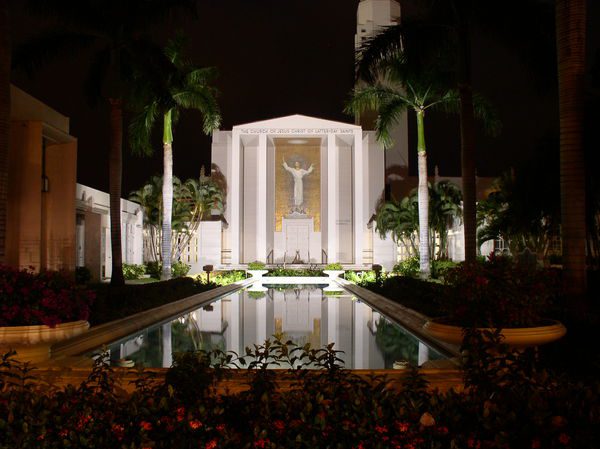
The Latter-day Saint Tabernacle in Honolulu, Hawaii. We spent last night just a few blocks from this landmark building, passing by it enroute. I gave a fireside speech in it once, quite a few years ago now. (Wikimedia Commons public domain image)
According to accounts preserved in Hawaiian mythology, the great gods Kāne (pronounced KAH-nay), Lono, Kū, and (possibly) Kanaloa existed before the creation of the world.
In the beginning, according to one tradition, nothing existed except a chaotic blackness called the “Po” (“night”). But Kāne awoke and, realizing that he was distinct from the Po, managed to break free from it. Thereafter, when Lono and then Kū perceived that Kāne had separated himself from the Po, they too freed themselves.
Next, Kāne created light, with which he pushed the darkness back. These three gods created all the lesser Hawaiian deities — most famous among them the fire and volcano goddess Pele, creator of the Hawaiian Islands. Then, they created our world to serve as a footstool for the gods.
Finally, the three gods gathered red clay from the four corners of the Earth, mixed it with their saliva, molded it into the image of Kāne (though with a head formed by Kāne himself from a specially selected white clay). When they had breathed life into the clay model — according to some accounts, it was Kāne alone who breathed that life into the clay figure — it became the first man.
The similarity of this account to Genesis 2:7, where “Adam” or “man” is created out of adamah (literally, “red clay”) and the Lord God breathes into him “the breath of life,” is obvious.
Associated with dawn, sun and sky, Kāne seems to have been the highest of the four great deities. He was the god of procreation and the ancestor of all humans, both chiefs and commoners.
Kū, god of politics and war, bore many names, including Kū kaʻilimoku (the “Snatcher of Land”). Uniquely among Hawaiian gods, his worship sometimes included ritual human sacrifice. Perhaps appropriately, he was associated with such animals as sharks and hawks.
Lono — sometimes called “Lono-makua” (“Lono the Provider”) — was linked with rainfall, fertility and agriculture, as well as with music and peace. Although the traditions are unclear and sometimes contradictory, there seems to have been a legend in which Lono manifested himself in human form, departing afterwards to “Kahiki” (likely Tahiti) with a promise to return.
Captain James Cook arrived at the Big Island of Hawaii in 1779 during the great harvest festival of Makahiki, sacred to Lono. Coincidentally, the rigging of his ship, HMS Resolution, resembled some of the artifacts associated with Lono-worship, and, just as ritual processions honoring Lono went clockwise around the island, Cook had sailed clockwise around the island before making landfall.
Some historians speculate that, for these and other reasons, the Hawaiians took Captain Cook to be a manifestation of Lono. When a member of his crew became ill and died, however — something not expected among deities—the Hawaiians became suspicious and much less compliant. And when a violent altercation broke out, Cook and several others among his crew were killed.
Some authorities theorize that Kanaloa was a lesser god who was created to preside over the dead and even that his worship may have arrived in Hawaii only after A.D. 1100, via a secondary Polynesian migration. Given his connection with the underworld, several commentators have tried to identify him as a god of evil and of death itself, permanently at war with Kāne. But this may reflect the viewpoint of European missionaries, who were perhaps seeking to associate the four great Hawaiian deities with the Christian Trinity and (in Kanaloa’s case) with Lucifer or Satan.
One legend says that Kanaloa tried to mimic the creation of man by Kāne, Lono and Kū, but that — unlike them — he was unable to bring his statue to life. So, humiliated, he challenged Kāne, vowing that Kāne’s human creations would be mortal and that, when they died, they would belong to him in the underworld.
Balanced against such accounts, however, is the fact that Kanaloa and Kāne were actually often associated with one another and worshiped together. They were apparently viewed as mutually complementary rather than opposed, and may even have been considered brothers.
Canoe builders, for example, would invoke Kāne during their labors, while sailors aboard completed boats would call upon Kanaloa for guidance and protection. Kāne was the lord of the area north of the sun’s annual path, while Kanaloa was the master of the area to its south. Some commentators have suggested that the two gods together represent a divine duality of wildness and domestication, much like the famous “yin and yang” of Chinese Taoism.
And now for just a bit of very amateur comparative thinking:
In Māori mythology, Tāne is the god of forests and of birds, and the son of Ranginui and Papatūānuku, the sky father and the earth mother. On Tahiti, Tāne was the god of peace and beauty.
In Māori, the common noun tāne means “husband,” “male,” “man.” (Not infrequently, it’s one of the identifiers on the doors of men’s restrooms.) In Hawaiian, the common noun kāne refers to a male such as a husband, or a brother-in-law, or a boyfriend. (Not infrequently, it’s one of the identifiers on the doors of men’s restrooms.)
All you need is a sound shift of t>k. And that sound shift is abundantly attested among the Polynesian languages. (Did you miss “‘Kahiki’ (likely Tahiti)” above?)
Think, for example, of the now-common Māori name for New Zealand, Aotearoa. It is typically translated as “[land of the] long white cloud,” where ao- equals “cloud,” –tea- (pronounced TEH-a) equals “white,” and -roa equals “long.” Now compare the massive volcanic peak on Hawaii’s Big Island called Mauna Kea (“White Mountain”).
Compare, too, the enormously important starchy plant taro, which, in Hawaii, is used to make poi. The word is taro in Tahitian, talo in Samoan and Tongan, taʻo in Marquesan, dalo in Fijian, and kalo in Hawaiian.
And then there’s the English term taboo. Meaning “prohibited” or “forbidden,” it comes directly from Tongan or Māori tapu, which is kapu in Hawaiian*.*
These predictable sound shifts intrigue me. If I had another few lifetimes, I think that I would spend at least a few solid months on Polynesian linguistics.
Remember the -roa (“long”) in Aotearoa? Think of the other great Hawaiian volcano, Mauna Loa (“Long Mountain”). A common shift between l and r is easily demonstrated in the Polynesian languages. For example, the Hawaiian term aloha is familiar to many even beyond Hawaii as a greeting. Among its rich and multiple meanings are “love” and “compassion,” perhaps even “empathy.” Its Polynesian cognates include talofa in Samoan, ta’alofa in Tuvaluan, aro’a in Cook Island Māori, and aroha in New Zealand Māori.
And here is an exceptionally interesting case: In Peru and Bolivia, where the sweet potato apparently originated and where it was probably first cultivated, one of the words for it in Quechua is khumara, or kumar (Ayacucho Quechua), or kumara (Bolivian Quechua). Those words are pretty obviously similar to the Polynesian name kumara and to its regional Oceanic cognates (umala, ʻuala, etc.). In Hawaiian, the sweet potato is called kumala. Along with compelling genetic evidence, this has led scholars to postulate pre-Columbian transoceanic contact between the Americas and Polynesia. An interesting thought, that.
Posted from Honolulu, O’ahu, Hawai’i
Travel and Religion
History and Religion
Previous Post

February 27, 2024
"We Rejoice in Christ"
Next Post

February 29, 2024 Christian California
Recent Comments
"I have cpnsidered in my mond if the 4 volume Saints could be made into ..."
From Serbia’s “White City,” Belgrade
"Another class of memories are of individuals who previously lived. Some of these remembered individuals ..."
"Sutherland's lecture sounds interesting. He seems to restate the Washington consensus that trade brings peace ..."
Learning more about a region of ..."
"In a meeting today, I learned another important reason why accurate (or at least as ..."
From Serbia’s “White City,” Belgrade
Browse Our Archives
Select a Category Uncategorized
Select a Month October 2026 September 2026 August 2026 July 2026 June 2026 May 2026 April 2026 March 2026 February 2026 January 2026 December 2025 November 2025 October 2025 September 2025 August 2025 July 2025 June 2025 May 2025 April 2025 March 2025 February 2025 January 2025 December 2024 November 2024 October 2024 September 2024 August 2024 July 2024 June 2024 May 2024 April 2024 March 2024 February 2024 January 2024 December 2023 November 2023 October 2023 September 2023 August 2023 July 2023 June 2023 May 2023 April 2023 March 2023 February 2023 January 2023 December 2022 November 2022 October 2022 September 2022 August 2022 July 2022 June 2022 May 2022 April 2022 March 2022 February 2022 January 2022 December 2021 November 2021 October 2021 September 2021 August 2021 July 2021 June 2021 May 2021 April 2021 March 2021 February 2021 January 2021 December 2020 November 2020 October 2020 September 2020 August 2020 July 2020 June 2020 May 2020 April 2020 March 2020 February 2020 January 2020 December 2019 November 2019 October 2019 September 2019 August 2019 July 2019 June 2019 May 2019 April 2019 March 2019 February 2019 January 2019 December 2018 November 2018 October 2018 September 2018 August 2018 July 2018 June 2018 May 2018 April 2018 March 2018 February 2018 January 2018 December 2017 November 2017 October 2017 September 2017 August 2017 July 2017 June 2017 May 2017 April 2017 March 2017 February 2017 January 2017 December 2016 November 2016 October 2016 September 2016 August 2016 July 2016 June 2016 May 2016 April 2016 March 2016 February 2016 January 2016 December 2015 November 2015 October 2015 September 2015 August 2015 July 2015 June 2015 May 2015 April 2015 March 2015 February 2015 January 2015 December 2014 November 2014 March 2014 August 2013 February 2012
Follow Us!
TAKE THE
Religious Wisdom Quiz
How old was Moses when he died?
Select your answer to see how you score.
120 years 100 years 90 years 110 years
Related posts from Sic et Non

Historical notes about England and Hawaii

Still thinking about Kamehameha the Great

"Reclaiming Jefferson's University"
Maui's Sacred Latter-day Saint History
TRENDING AT PATHEOS Latter-day Saint

57th Dove Awards Honor Dolly Parton, Crown New...
On gospel music’s biggest night, the 57th annual GMA Dove Awards honored...

The First Eucharistic Controversy: Christ’s Real Presence
For Catholics, the Eucharist is the source and summit of the Christian...

What a Stop Sign Can Teach Us About...
How to Make a Decision When You Can't Hear God Main point:...

Archdiocese Hosts Military Marriage Retreat in Germany
RASTATT, Germany — The transient military lifestyle, with its frequent deployments and...

Nearly every morning, I make the drive to Detroit with my high-school-age...

The Real AI Story Is Adoption Without Trust
Artificial intelligence has crossed a political threshold. It is no longer a...
view all Latter-day Saint blogs
What Are Your Thoughts?leave a comment
Ad-Free & Subscriber Log-In Subscription Support
- About Us
- 2026 Calendar
- Videos
- Podcasts
- Library of World Religions
- Faith In Media Tracker
- Advertise With Us
- Write for Us
- Privacy Policy
- Terms of Service
- Do Not Sell My Data
- Contact Us
- Radiant Digital
- Manage Newsletter Subscriptions
- Unsubscribe From Notifications
- Sitemap
Copyright 2008-2026, Patheos. All rights reserved.
Subscription Support Ad-Free & Subscriber Log-In
Follow Patheos