
BuddhistCatholicContemplativeEvangelicalGeneral ChristianHinduJewishLatter-day SaintMuslimNew VisionsProgressive Christian
Beliefs
- Buddhist
- Catholic
- Contemplative
- Evangelical
- General Christian
- Hindu
- Jewish
- Latter-day Saint
- More Voices
- Muslim
- New Visions
- Pagan
- Progressive Christian
Topics
- Religion News
- Food and Religion
- Sports and Religion
- Religious Art
- Religious Music and Entertainment
- Religious Events
- History and Religion
- Style and Religion
- Politics and Religion
- Women in Religion
- Recreation Outdoors and Religion
- Business Finance and Religion
- Careers Workplace and Religion
- Education and Religion
- Family Parenting and Religion
- Health Fitness and Religion
- Home and Religion
- Relationships and Religion
- Technology and Religion
- Travel and Religion
Columnists
- Buddhist Columnists
- Business Finance and Religion Columnists
- Careers Workplace and Religion Columnists
- Catholic Columnists
- Contemplative Columnists
- Education and Religion Columnists
- Evangelists Columnists
- Family Parenting and Religion Columnists
- General Christian Columnists
- Health Fitness and Religion Columnists
- Hindu Columnists
- History and Religion Columnists
- Home and Religion Columnists
- Jewish Columnists
- More Voices Columnists
- Latter Day Columnists
- Muslim Columnists
- New Visions Columnists
- Nonreligious Columnists
- Pagan Columnists
- Politics and Religion Columnists
- Progressive Columnists
- Recreation Outdoors and Religion Columnists
- Relationships and Religion Columnists
- Religion News Columnists
- Religious Art Columnists
- Religious Events Columnists
- Religious Music and Entertainment Columnists
- Sports and Religion Columnists
- Style and Religion Columnists
- Technology and Religion Columnists
- Travel and Religion Columnists
- Women in Religion Columnists
Resource Library
- 2026 Calendar
- Library of World Religions
- The 100 Most Holy Places on Earth
- Patheos Answers
- Podcasts
- Videos
- Faith Leaders Database
- Anglican Episcopalian
- Bahai
- Baptist
- Buddhism
- Christianity
- Confucianism
- Eastern Orthodoxy
- Hinduism
- Holiness and Pentecostal
- ISKCON
- Islam
- Judaism
- Lutheran
- Methodist
- The Church of Jesus Christ of Latter-day Saints
- New Age
- Paganism
- Presbytarian and Reformed
- Protestantism
- Religion Behind the Scenes
- Roman Catholic
- Scientology
- Shia Islam
- Sikhism
- Sufism
- Sunni Islam
- Taoism
- Zen
- See all religions
Research Tools
 Ad-Free & Subscriber Log-In Subscription Support
Follow Patheos 

- Trending:
- Advent
- |
- Forgiveness
- |
- Thanksgiving
- |
- Election
- |
- Seasonal Holidays
- |
- Marriage

- Home
- Latter-day Saint
- Travel and Religion
- “They thought they knew what they were dismissing”
“They thought they knew what they were dismissing”
Last updated on: February 11, 2024 at 3:16 am by Dan Peterson
“They thought they knew what they were dismissing” 2024-02-11T03:16:37-07:00 Dan Peterson
Patheos Explore the world's faith through different perspectives on religion and spirituality! Patheos has the views of the prevalent religions and spiritualities of the world.
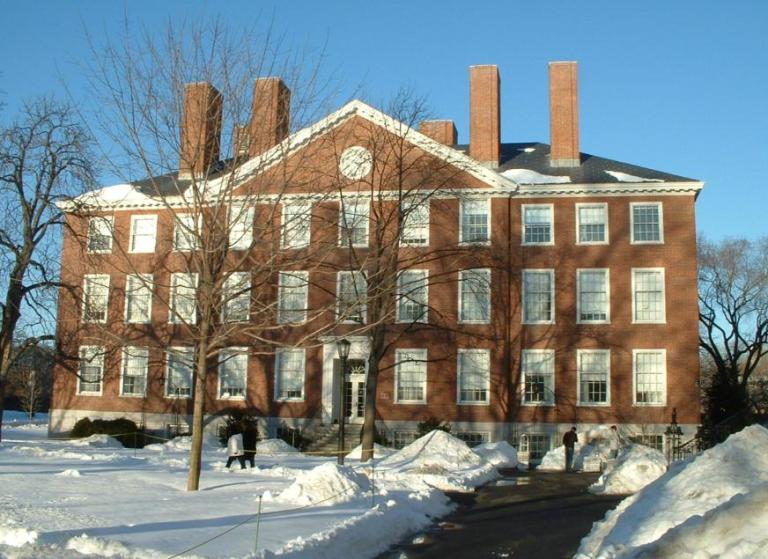
On the former campus of the former Radcliffe College (Wikimedia Commons public domain image)
I return briefly to Elizabeth Lloyd Mayer’s posthumously-published 2008 book Extraordinary Knowing: Science, Skepticism, and the Inexplicable Powers of the Human Mind, which I recently re-read while flying over the Pacific. And, just to refresh memories, I again cite here the brief bio that appears at the end of that volume:
Known as Lisby by her many friends and colleagues, Elizabeth Lloyd Mayer was an internationally known psychoanalyst, researcher, and clinician, the author of groundbreaking papers on female development, clinical technique, the nature of science, and intuition. A graduate of Radcliffe College [a women’s liberal arts college in Cambridge, Massachusetts, that was founded in 1879 and then, in 1999, was fully incorporated into Harvard College], she received her doctorate from Stanford University and graduated from the San Francisco Psychoanalytic Institute, where she later became a training and supervising analyst. She was associate clinical professor of psychology at the University of California, Berkeley, and in the psychiatry department at the University of California Medical Center, San Francisco. She was also a fellow of the International Consciousness Research Laboratories at Princeton and on the research faculty of the Institute for Health and Healing at California Pacific Medical Center. She maintained a private practice in Berkeley for thirty years. Dr. Mayer served on the editorial boards of many of the major journals in her field, including the Journal of the American Psychoanalytic Association, International Journal of Psychoanalysis, Gender and Psychoanalysis, The Psychoanalytic Quarterly, and Contemporary Psychoanalysis. She was the first winner of the American Psychoanalytic Association’s prestigious Menninger Award. A contralto with a long-standing interest in traditional folk and classical music, she was a founder of the California Revels and its artistic director for many years. The mother of two daughters, she was also the producer of an award-winning video series on music education for children and was named Alameda County’s Woman of the Year for Arts and Culture in 1995. Dr. Mayer died on New Year’s Day, 2005, shortly after completing Extraordinary Knowing.
Here are some passages that I marked during that recent re-reading:
It was yet another sixty years before I started asking colleagues what they knew about the Rhine research. [She is referring, here, to the work on alleged extrasensory perception of Duke University’s J. B. Rhine, of whom a basic biography can be derived from the pronouncedly negative Wikipedia article about him.] It turned out most were like me; they’d heard of it, but dismissed it. Also like me, they thought they knew what they were dismissing. The fact was, we were all misinformed. So much for priding ourselves on judging by the evidence. (92)
I had high hopes for what CSICOP’S journal might provide. At the very least it would, I thought, offer useful balance to journals with a clear bent toward belief in the paranormal. I was particularly enthused about the Skeptical Inquirer’s policy of reviewing research on anomalous mental capacities published elsewhere. I figured that CSICOP would help me come up with useful challenges to articles written from the more credulous side. But it didn’t work that way. Reading the Skeptical Inquirer was like reading a fundamentalist religious tract. I found the journal dismayingly snide, regularly punctuated by sarcasm, self-congratulation, and nastiness, all parading as reverence for true science. (93)
Science is rooted in conversation. And that, I kept realizing, was the point. Science doesn’t take root in determined absence of conversation, in resolute commitment to silence. (96)
It is the normal practice of scientists to ignore evidence which appears incompatible or irrelevant…. But there is, unfortunately, no rule by which to avoid the risk of occasionally disregarding thereby true evidence which conflicts (or seems to conflict) with the current teachings of science. During the eighteenth century the French Academy of Science stubbornly denied the evidence for the fall of meteorites, which seemed massively obvious to everybody else. . . .
Such was the awe in which Parisian scientists were held by their foreign associates that curators of public museums in Germany, Denmark, Switzerland, Italy, and Austria, “anxious not to be considered as backward compared with their famous colleagues in Paris… threw away whatever they possessed of these precious meteorites.” The museum curators were quick to defend their actions; any lurking notion that meteorites might descend from the sky smacked dangerously of popular superstition about heavenly intervention. That was precisely the kind of superstition that progressive science was working hard to defy. The scientists and museum curators asserted that getting rid of meteorites was actually in the service of science. (103)
But back to the idea of extrasensory perception, or at least to one form of it:
I think it’s fair to say that over the years, the evidence turns out to be there. It’s solid. The back-and-forth criticism of protocols, improvement of methods, and successful replication of remote viewing in independent laboratories all added up, by the end, to considerable scientific evidence for the reality of remote viewing as a genuine human capacity. We haven’t begun to understand how consciousness can interact with the physical world to make remote viewing possible. On that we’ve barely started. But in the meantime, there’s enough data that remain substantial and convincing to require serious scientific consideration. (108)
That made me see my doubts weren’t the problem. On the contrary, the problem lay with my beliefs. I was having terrible trouble giving up my beliefs about how the world worked, even in the face of evidence that said my beliefs were wrong. It really brought home what any good scientist knows: doubts aren’t what interfere with good science. The trick is to keep looking at evidence in the face of doubt, not letting doubt stop you. It’s a scientific truism, but it’s one thing to know it and another to keep practicing it when your ordinary worldview just can’t contain your evidence. It’s easier to think there must be something wrong with your experiments. And that’s ironic because it looks like humility but it isn’t. It’s privileging your own personal beliefs above the evidence. That’s not science, it’s hubris. (113)
A colleague who’s a high-energy physicist sent me an article from the Proceedings of the Institute of Electrical and Electronics Engineers, one of the foremost journals in engineering and electronics. As it happened, the article was by Puthoff and Targ and offered an overview of past and recent research into remote perception. What really caught my attention, however, was an introductory note from the journal’s editor in chief. He explained why, over objection from his reviewers, he’d decided to publish the article. To make his case, he quoted one reviewer who had assessed the article as methodologically impeccable and could find no substantive basis for rejection. However, that reviewer recommended rejecting it for publication with the following declaration: “This is the kind of thing that I would not believe in even if it existed.” (133)

The Rostock Library at Duke University (Wikimedia Commons public domain image)
On a very different note: Gary Lawrence is a continually good source for helpful insights into ways for ordinary members of the Church to become better missionaries and to improve its public image. Here is a short article of his from Meridian Magazine: “No One Joins the Church Because They Lose a Debate”
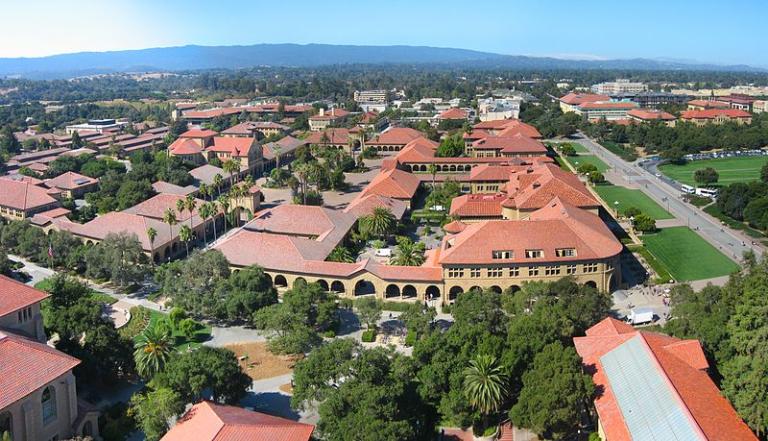
A view of Stanford University, in California (Wikimedia Commons public domain photograph)
In closing, I offer some additional fodder for righteous indignation that I’ve drawn from the seemingly inexhaustible Christopher Hitchens Memorial “How Religion Poisons Everything” File™:
In a day when many have abandoned organized religion, a gathering at the Bishops’ Central Storehouse in Salt Lake City showed the power of gathering for a good cause. . . .
Sharon Eubank, director of the Church’s Humanitarian Services, said Thursday’s gathering answers the question, “Why do I need organized religion?”
“This is what organized religion does,” Eubank said. “It allows us to be good at scale and then to partner with other people who are good at scale.”
Posted from just off New Zealand’s Cape Reinga
Travel and Religion
History and Religion
Previous Post

February 10, 2024
An Appropriate and Defensible Etymology for "Cumorah"?
Next Post

February 12, 2024 Change and Failure to Change
Recent Comments
"There is a ward of The Church of Jesus Christ of Latter-day Saints in Dearborn. ..."
Islam soon to be the world’s ..."
"Interesting question. I have closely read Stephen Smoots book, asked Kara Cooney her views. Kerry ..."
"There's more amazement still, too. Most of the metals that humanity has ever extracted from ..."
"Did you know someone stole Shakespeare's skull? It was thought to be a rumour but ..."
Browse Our Archives
Select a Category Uncategorized
Select a Month November 2026 October 2026 September 2026 August 2026 July 2026 June 2026 May 2026 April 2026 March 2026 February 2026 January 2026 December 2025 November 2025 October 2025 September 2025 August 2025 July 2025 June 2025 May 2025 April 2025 March 2025 February 2025 January 2025 December 2024 November 2024 October 2024 September 2024 August 2024 July 2024 June 2024 May 2024 April 2024 March 2024 February 2024 January 2024 December 2023 November 2023 October 2023 September 2023 August 2023 July 2023 June 2023 May 2023 April 2023 March 2023 February 2023 January 2023 December 2022 November 2022 October 2022 September 2022 August 2022 July 2022 June 2022 May 2022 April 2022 March 2022 February 2022 January 2022 December 2021 November 2021 October 2021 September 2021 August 2021 July 2021 June 2021 May 2021 April 2021 March 2021 February 2021 January 2021 December 2020 November 2020 October 2020 September 2020 August 2020 July 2020 June 2020 May 2020 April 2020 March 2020 February 2020 January 2020 December 2019 November 2019 October 2019 September 2019 August 2019 July 2019 June 2019 May 2019 April 2019 March 2019 February 2019 January 2019 December 2018 November 2018 October 2018 September 2018 August 2018 July 2018 June 2018 May 2018 April 2018 March 2018 February 2018 January 2018 December 2017 November 2017 October 2017 September 2017 August 2017 July 2017 June 2017 May 2017 April 2017 March 2017 February 2017 January 2017 December 2016 November 2016 October 2016 September 2016 August 2016 July 2016 June 2016 May 2016 April 2016 March 2016 February 2016 January 2016 December 2015 November 2015 October 2015 September 2015 August 2015 July 2015 June 2015 May 2015 April 2015 March 2015 February 2015 January 2015 December 2014 November 2014 March 2014 August 2013 February 2012
Follow Us!
TAKE THE
Religious Wisdom Quiz
Who was the first son of Adam and Eve?
Select your answer to see how you score.
Abel Cain Irad Levi
Related posts from Sic et Non
Michael Faraday, James Clerk Maxwell, and the Open...



"An Assessment of the Evidence for Psychic Functioning"
TRENDING AT PATHEOS Latter-day Saint

Smart people saying smart things (11.24.26)
Please take time to listen to Perry Bacon, Sarah Posner, Adam Serwer,...

The Contingency of Our Technology
Last week we were hit with a raft of massive technology outages....

In 1939, President Franklin D. Roosevelt moved Thanksgiving from November 30 to...

Reasons for Restraint: Ricardo Gonzalez, Florida and Dec...
The Morning of January 3 I begin with the dead. On the...

I published this column for Thanksgiving 2012 in the Deseret News....

For many years, Catholicism has been caught up in division over the...
view all Latter-day Saint blogs
What Are Your Thoughts?leave a comment
Ad-Free & Subscriber Log-In Subscription Support
- About Us
- 2026 Calendar
- Videos
- Podcasts
- Library of World Religions
- Faith In Media Tracker
- Advertise With Us
- Write for Us
- Privacy Policy
- Terms of Service
- Do Not Sell My Data
- Contact Us
- Radiant Digital
- Manage Newsletter Subscriptions
- Unsubscribe From Notifications
- Sitemap
Copyright 2008-2026, Patheos, part of the Radiant Digital network of media brands. All rights reserved.
Subscription Support Ad-Free & Subscriber Log-In
Follow Patheos