
BuddhistCatholicContemplativeEvangelicalGeneral ChristianHinduJewishLatter-day SaintMuslimNew VisionsProgressive Christian
Beliefs
- Buddhist
- Catholic
- Contemplative
- Evangelical
- General Christian
- Hindu
- Jewish
- Latter-day Saint
- More Voices
- Muslim
- New Visions
- Pagan
- Progressive Christian
Topics
- Religion News
- Food and Religion
- Sports and Religion
- Religious Art
- Religious Music and Entertainment
- Religious Events
- History and Religion
- Style and Religion
- Politics and Religion
- Women in Religion
- Recreation Outdoors and Religion
- Business Finance and Religion
- Careers Workplace and Religion
- Education and Religion
- Family Parenting and Religion
- Health Fitness and Religion
- Home and Religion
- Relationships and Religion
- Technology and Religion
- Travel and Religion
Columnists
- Buddhist Columnists
- Business Finance and Religion Columnists
- Careers Workplace and Religion Columnists
- Catholic Columnists
- Contemplative Columnists
- Education and Religion Columnists
- Evangelists Columnists
- Family Parenting and Religion Columnists
- General Christian Columnists
- Health Fitness and Religion Columnists
- Hindu Columnists
- History and Religion Columnists
- Home and Religion Columnists
- Jewish Columnists
- More Voices Columnists
- Latter Day Columnists
- Muslim Columnists
- New Visions Columnists
- Nonreligious Columnists
- Pagan Columnists
- Politics and Religion Columnists
- Progressive Columnists
- Recreation Outdoors and Religion Columnists
- Relationships and Religion Columnists
- Religion News Columnists
- Religious Art Columnists
- Religious Events Columnists
- Religious Music and Entertainment Columnists
- Sports and Religion Columnists
- Style and Religion Columnists
- Technology and Religion Columnists
- Travel and Religion Columnists
- Women in Religion Columnists
Resource Library
- 2026 Calendar
- Library of World Religions
- The 100 Most Holy Places on Earth
- Patheos Answers
- Podcasts
- Videos
- Faith Leaders Database
- Anglican Episcopalian
- Bahai
- Baptist
- Buddhism
- Christianity
- Confucianism
- Eastern Orthodoxy
- Hinduism
- Holiness and Pentecostal
- ISKCON
- Islam
- Judaism
- Lutheran
- Methodist
- The Church of Jesus Christ of Latter-day Saints
- New Age
- Paganism
- Presbytarian and Reformed
- Protestantism
- Religion Behind the Scenes
- Roman Catholic
- Scientology
- Shia Islam
- Sikhism
- Sufism
- Sunni Islam
- Taoism
- Zen
- See all religions
Research Tools
 Ad-Free & Subscriber Log-In Subscription Support
Follow Patheos 

- Trending:
- Advent
- |
- Forgiveness
- |
- Thanksgiving
- |
- Election
- |
- Seasonal Holidays
- |
- Marriage

- Home
- Latter-day Saint
- Travel and Religion
- Ignorance is No Defense
Ignorance is No Defense
Last updated on: February 26, 2024 at 8:58 pm by Dan Peterson
Ignorance is No Defense 2024-02-26T20:58:57-07:00 Dan Peterson
Patheos Explore the world's faith through different perspectives on religion and spirituality! Patheos has the views of the prevalent religions and spiritualities of the world.

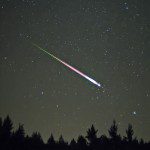
It’s rough here, I’ll admit. But I’m willing to endure it.
(Wikimedia Commons public domain image)
This blog entry is, to a considerable extent, a continuation of the thinking that I began yesterday.
Considerable merriment has been occasioned among a handful of merry madcaps over at what I call the Peterson Obsession Board by my repeated invitations to an atheist commenter on my blog (whom we shall call “gemli”) that he read books and/or articles on the topics that he professes to address in his many comments here. He himself has steadfastly refused to look at any of them, since he knows in advance that they are all without value. On multiple occasions, in response to his insistence that it is essentially immoral to believe in propositions that can’t be proven, I’ve directed him to the classic essay by the great Harvard psychologist and philosopher William James entitled The Will to Believe, which explicitly responds to the notion that belief in propositions that can’t be proven is immoral. He has invariably refused to read it, because, he says, it argues for mystical “woo-woo” and “booga-booga” and is obvious nonsense. He has declared hundreds of times that there is no evidence for any of the propositions that I advance here; he has refused each time to look at any of the evidence that I’ve offered for his examination.
Mostly, I suppose, because gemli is challenging me,, his admirers over at the Obsession Board have vocally hymned his praise in this regard (as in others). My inviting him to read about, say, the witnesses to the Book of Mormon or purported archaeological evidence for Latter-day Saint claims or the character and the legal trials of the Prophet Joseph Smith or near-death experiences or arguments for the fine-tuning of the universe is the equivalent, from their point of view, of demanding that he read publications of the Flat Earth Society or accounts of alien abductions.
But, of course, my position is that, if one is going to comment publicly for years on accounts of alien abductions or on the quality of the publications of the Flat Earth Society, one should, yes, read them. If one comments publicly over a period of several years on the reliability (or lack thereof) of the Book of Mormon witnesses, one should have read something about them.
I have recommended, for instance, that gemli read Richard Lloyd Anderson’s Investigating the Book of Mormon Witnesses. With his Harvard law degree and his doctorate in ancient history from the University of California at Berkeley and his decades of meticulous research, Professor Anderson isn’t an immediately obvious idiot who can be summarily dismissed, sight unseen. And yet gemli has summarily dismissed Professor Anderson each and every time, unread, proceeding thereupon to pronounce his negative verdict on the credibility of the witnesses and, even, to tell us what really happened with them. Has he read other materials about the witnesses? No. Of course not. He doesn’t need to read anything in order to know all about them.
I’m at a loss, frankly, to understand how this is admirable, or deserving of applause.
To the best of my recollection, I have never so much as read two full paragraphs about the Songhai Empire that dominated the western portion of the African Sahel in the fifteenth and sixteenth centuries. And, as long as I remain silent on the subject, that is perfectly fine. I have no opinions about it; I don’t take it upon myself to lecture others about its history. And, if I did begin to opine publicly about it, others — and especially others who had actually taken the trouble to learn about it — would be quite justified in criticizing me, and in laughing at my audacious presumption.
If one commences to comment publicly on Joseph Smith’s character, it surely wouldn’t hurt to read a decent biography of him or two, or at least to skim through one of the several books by solid scholars that attempt to describe his character based on the testimonies of those who knew him. If one decides to argue publicly about the legal cases in which Joseph was involved, it doesn’t seem altogether weird to suggest that one should perhaps take a look at some of the recent books and articles produced by reputable legal historians on exactly that topic.
Now, to change the subject a bit but not really the point: In the past month or so, I’ve posted several entries here about parapsychology, “remote viewing,” and extrasensory perception or ESP.
I’ve previously sketched how I came to my present position — an openminded willingness to consider the matter, and, actually, a growing inclination to give it some credit — from my previously long-held conviction that there was simply no evidence to support parapsychological claims. I’ll do it again now, perhaps more clearly.
Years ago, I developed an interest in the writing of the distinguished Anglo-American philosopher of religion John Hick (1922-2012), whom I once had the actual privilege of meeting. In one of his books — I don’t recall offhand which of them it was — he casually mentioned how impressed he had been upon doing some serious reading in publications of the Society for Psychical Research. To say that I was surprised would be to put it mildly. Here was a thinker for whom I had considerable respect, and he was sharing a positive judgment on a group that I had thought, honestly, to be about as credible as, well, the Flat Earth Society. I filed that away in my mind, intending someday to take a systematic look at their work. (I still haven’t really done it; it remains a goal of mine.)
Perhaps I had been loosened up just a bit, even before reading Professor Hick’s aside, by my one totally unexpected experience with “dowsing” or “water witching.” It was a success. But I drew no broad conclusions from it, except to be somewhat less certain about such things.
Years later, after my immersion in John Hick’s books, I read The Afterlife Experiments, a 2002 book principally written by Gary E. Schwartz (Ph.D., Harvard University), who was a professor of psychiatry and psychology at Yale University, as well as Director of the Yale Psychophysiology Center and co-director of the Yale Behavioral Medicine Clinic from 1976 to 1988, before moving to the University of Arizona, where he is currently Professor of Psychology, Medicine, Neurology, Psychiatry, and Surgery and the Director of the Laboratory for Advances in Consciousness and Health in the Department of Psychology. I mention his credentials not to imply that he cannot be questioned or that he is necessarily right, but merely to indicate that he isn’t an obviously unqualified buffoon.
Reading Professor Schwartz’s book shook me profoundly.
Thereafter, I came across Elizabeth Lloyd Mayer’s posthumously published 2007 book Extraordinary Knowing: Science, Skepticism, and the Inexplicable Powers of the Human Mind. Dr. Mayer (Ph.D., Stanford University) was a psychoanalyst in private practice as well as an associate clinical professor of psychology at the University of California, Berkeley, and on the staff of the UC Medical Center in San Francisco. Again, not an obvious buffoon.
Her book opened my mind to things that I had never seriously considered.
And, very recently, I finished Deborah Blum’s very readable book Ghost Hunters: William James and the Search for Scientific Proof of Life After Death, which has given me a much better idea of the history of “psychic research” than I had before, and of the care with which the early leaders of the Society for Psychical Research — some of them extraordinarily prominent scientists and philosophers in their day and ours — went about their work.
Now, I’ve been fairly extensively mocked online over the past few weeks for my openness to evidence for “extraordinary knowing.” A few have vowed that they will never waste their time reading such worthless drivel. Several have informed me that there simply is no evidence for ESP or clairvoyance or anything of the sort.
But that seems to me to be the very question at issue — and refusing to read about the subject seems to me a very poor way to develop an informed view on the matter.
Posted from Poʻipū, Kaua’i, Hawai’i
Travel and Religion
History and Religion
Previous Post
February 25, 2024
Fact and Theory and Extraordinary Claims
Next Post

February 27, 2024 "We Rejoice in Christ"
Recent Comments
"There is a ward of The Church of Jesus Christ of Latter-day Saints in Dearborn. ..."
Islam soon to be the world’s ..."
"Interesting question. I have closely read Stephen Smoots book, asked Kara Cooney her views. Kerry ..."
"There's more amazement still, too. Most of the metals that humanity has ever extracted from ..."
"Did you know someone stole Shakespeare's skull? It was thought to be a rumour but ..."
Browse Our Archives
Select a Category Uncategorized
Select a Month November 2026 October 2026 September 2026 August 2026 July 2026 June 2026 May 2026 April 2026 March 2026 February 2026 January 2026 December 2025 November 2025 October 2025 September 2025 August 2025 July 2025 June 2025 May 2025 April 2025 March 2025 February 2025 January 2025 December 2024 November 2024 October 2024 September 2024 August 2024 July 2024 June 2024 May 2024 April 2024 March 2024 February 2024 January 2024 December 2023 November 2023 October 2023 September 2023 August 2023 July 2023 June 2023 May 2023 April 2023 March 2023 February 2023 January 2023 December 2022 November 2022 October 2022 September 2022 August 2022 July 2022 June 2022 May 2022 April 2022 March 2022 February 2022 January 2022 December 2021 November 2021 October 2021 September 2021 August 2021 July 2021 June 2021 May 2021 April 2021 March 2021 February 2021 January 2021 December 2020 November 2020 October 2020 September 2020 August 2020 July 2020 June 2020 May 2020 April 2020 March 2020 February 2020 January 2020 December 2019 November 2019 October 2019 September 2019 August 2019 July 2019 June 2019 May 2019 April 2019 March 2019 February 2019 January 2019 December 2018 November 2018 October 2018 September 2018 August 2018 July 2018 June 2018 May 2018 April 2018 March 2018 February 2018 January 2018 December 2017 November 2017 October 2017 September 2017 August 2017 July 2017 June 2017 May 2017 April 2017 March 2017 February 2017 January 2017 December 2016 November 2016 October 2016 September 2016 August 2016 July 2016 June 2016 May 2016 April 2016 March 2016 February 2016 January 2016 December 2015 November 2015 October 2015 September 2015 August 2015 July 2015 June 2015 May 2015 April 2015 March 2015 February 2015 January 2015 December 2014 November 2014 March 2014 August 2013 February 2012
Follow Us!
TAKE THE
Religious Wisdom Quiz
Who was the first son of Adam and Eve?
Select your answer to see how you score.
Abel Cain Irad Levi
Related posts from Sic et Non

Michael Faraday, James Clerk Maxwell, and the Open...



"An Assessment of the Evidence for Psychic Functioning"
TRENDING AT PATHEOS Latter-day Saint

Smart people saying smart things (11.24.26)
Please take time to listen to Perry Bacon, Sarah Posner, Adam Serwer,...

The Contingency of Our Technology
Last week we were hit with a raft of massive technology outages....

In 1939, President Franklin D. Roosevelt moved Thanksgiving from November 30 to...

Reasons for Restraint: Ricardo Gonzalez, Florida and Dec...
The Morning of January 3 I begin with the dead. On the...

I published this column for Thanksgiving 2012 in the Deseret News....

For many years, Catholicism has been caught up in division over the...
view all Latter-day Saint blogs
What Are Your Thoughts?leave a comment
Ad-Free & Subscriber Log-In Subscription Support
- About Us
- 2026 Calendar
- Videos
- Podcasts
- Library of World Religions
- Faith In Media Tracker
- Advertise With Us
- Write for Us
- Privacy Policy
- Terms of Service
- Do Not Sell My Data
- Contact Us
- Radiant Digital
- Manage Newsletter Subscriptions
- Unsubscribe From Notifications
- Sitemap
Copyright 2008-2026, Patheos, part of the Radiant Digital network of media brands. All rights reserved.
Subscription Support Ad-Free & Subscriber Log-In
Follow Patheos