
BuddhistCatholicContemplativeEvangelicalGeneral ChristianHinduJewishLatter-day SaintMuslimNew VisionsProgressive Christian
Beliefs
- Buddhist
- Catholic
- Contemplative
- Evangelical
- General Christian
- Hindu
- Jewish
- Latter-day Saint
- More Voices
- Muslim
- New Visions
- Pagan
- Progressive Christian
Topics
- Religion News
- Food and Religion
- Sports and Religion
- Religious Art
- Religious Music and Entertainment
- Religious Events
- History and Religion
- Style and Religion
- Politics and Religion
- Women in Religion
- Recreation Outdoors and Religion
- Business Finance and Religion
- Careers Workplace and Religion
- Education and Religion
- Family Parenting and Religion
- Health Fitness and Religion
- Home and Religion
- Relationships and Religion
- Technology and Religion
- Travel and Religion
Columnists
- Buddhist Columnists
- Business Finance and Religion Columnists
- Careers Workplace and Religion Columnists
- Catholic Columnists
- Contemplative Columnists
- Education and Religion Columnists
- Evangelists Columnists
- Family Parenting and Religion Columnists
- General Christian Columnists
- Health Fitness and Religion Columnists
- Hindu Columnists
- History and Religion Columnists
- Home and Religion Columnists
- Jewish Columnists
- More Voices Columnists
- Latter Day Columnists
- Muslim Columnists
- New Visions Columnists
- Nonreligious Columnists
- Pagan Columnists
- Politics and Religion Columnists
- Progressive Columnists
- Recreation Outdoors and Religion Columnists
- Relationships and Religion Columnists
- Religion News Columnists
- Religious Art Columnists
- Religious Events Columnists
- Religious Music and Entertainment Columnists
- Sports and Religion Columnists
- Style and Religion Columnists
- Technology and Religion Columnists
- Travel and Religion Columnists
- Women in Religion Columnists
Resource Library
- 2026 Calendar
- Library of World Religions
- The 100 Most Holy Places on Earth
- Patheos Answers
- Podcasts
- Videos
- Faith Leaders Database
- Anglican Episcopalian
- Bahai
- Baptist
- Buddhism
- Christianity
- Confucianism
- Eastern Orthodoxy
- Hinduism
- Holiness and Pentecostal
- ISKCON
- Islam
- Judaism
- Lutheran
- Methodist
- The Church of Jesus Christ of Latter-day Saints
- New Age
- Paganism
- Presbytarian and Reformed
- Protestantism
- Religion Behind the Scenes
- Roman Catholic
- Scientology
- Shia Islam
- Sikhism
- Sufism
- Sunni Islam
- Taoism
- Zen
- See all religions
Research Tools
 Ad-Free & Subscriber Log-In Subscription Support
Ad-Free & Subscriber Log-In Subscription Support
Follow Patheos 

- Trending:
- Forgiveness
- |
- Marriage
- |
- Consciousness
- |
- Death Penalty
- |
- Election
- |
- Halloween

- Home
- Latter-day Saint
- History and Religion
- “Extraordinary claims require extraordinary evidence.”
“Extraordinary claims require extraordinary evidence.”
Last updated on: February 19, 2024 at 3:50 am by Dan Peterson
“Extraordinary claims require extraordinary evidence.” 2024-02-19T03:50:25-07:00 Dan Peterson
Patheos Explore the world's faith through different perspectives on religion and spirituality! Patheos has the views of the prevalent religions and spiritualities of the world.
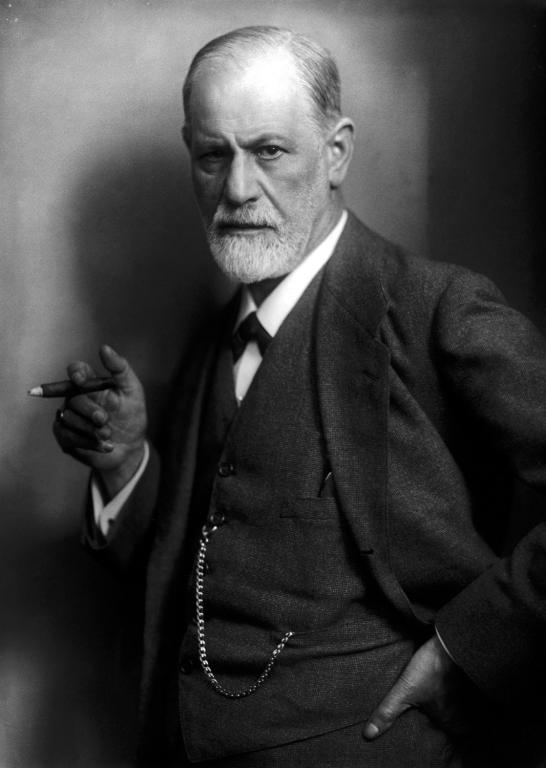
Sigmund Freud in 1922 (Wikimedia Commons public domain)
For my own undoubtedly dishonorable purposes, I’m extracting here some more of the passages that I marked during my recent re-reading of Elizabeth Lloyd Mayer’s posthumously-published 2008 book Extraordinary Knowing: Science, Skepticism, and the Inexplicable Powers of the Human Mind. And, to reorient those who may be reading, I once again cite the brief biography that appears at the end of that volume:
Known as Lisby by her many friends and colleagues, Elizabeth Lloyd Mayer was an internationally known psychoanalyst, researcher, and clinician, the author of groundbreaking papers on female development, clinical technique, the nature of science, and intuition. A graduate of Radcliffe College, she received her doctorate from Stanford University and graduated from the San Francisco Psychoanalytic Institute, where she later became a training and supervising analyst. She was associate clinical professor of psychology at the University of California, Berkeley, and in the psychiatry department at the University of California Medical Center, San Francisco. She was also a fellow of the International Consciousness Research Laboratories at Princeton and on the research faculty of the Institute for Health and Healing at California Pacific Medical Center. She maintained a private practice in Berkeley for thirty years. Dr. Mayer served on the editorial boards of many of the major journals in her field, including the Journal of the American Psychoanalytic Association, International Journal of Psychoanalysis, Gender and Psychoanalysis, The Psychoanalytic Quarterly, and Contemporary Psychoanalysis. She was the first winner of the American Psychoanalytic Association’s prestigious Menninger Award. A contralto with a long-standing interest in traditional folk and classical music, she was a founder of the California Revels and its artistic director for many years. The mother of two daughters, she was also the producer of an award-winning video series on music education for children and was named Alameda County’s Woman of the Year for Arts and Culture in 1995. Dr. Mayer died on New Year’s Day, 2005, shortly after completing Extraordinary Knowing.
When Elizabeth Lloyd Mayer began looking seriously for the very first time into studies of “psychical phenomena,” she was astounded at what she was seeing:
I began discovering mountains of research and a vast relevant literature I hadn’t known existed. As astonished as I was by the sheer quantity, I was equally astonished by the high caliber. Much of the research not only met but far exceeded ordinary standards of rigorous mainstream science.
Every good scientist knows the famous dictum first enunciated by sociologist Marcello Truzzi and later popularized by astronomer and author Carl Sagan: “Extraordinary claims require extraordinary evidence.” The claims made by the research I was reading were plenty extraordinary. They suggest the existence of mental capacities that defy space, time, and the basic boundaries of individual identity. Anything less than superb evidence won’t begin to justify claims like that. As a result, a good deal of research on anomalous mental capacities—certainly not all, but enough to be startling—adheres to stunningly high standards. Outside assessments of that research have repeatedly determined, often to the significant surprise of the evaluators, that the studies are overall scrupulously controlled, rigorously designed, and carefully regulated by masked and double-blind procedures. (69-70)
Here is what the great Harvard psychologist and philosopher William James had to say:
[W] ere I asked to point to a scientific journal where hard-headedness and never-sleeping suspicion of sources of error might be seen in their full bloom, I think I should have to fall back on the Proceedings of the “Society for Psychical Research.” . . . Quality, and not mere quantity, is what has been mainly kept in mind. The most that could be done with every reported case has been done. The witnesses, where possible, have been cross-examined personally, the collateral facts have been looked up, and the narrative appears with its precise coefficient of evidential work stamped on it, so that all may know just what its weight as proof may be. (77)
The eminent Anglo-American mathematical physicist Freeman Dyson (1923-2020), of Princeton’s Institute for Advanced Study, was also impressed.
The members of the society took great trouble to interview first-hand witnesses as soon as possible after the events, and to document the stories carefully. (cited on 238)

The 1928 cover of Freud’s “The Future of an Illusion,” one of his more important treatments of religious belief
(Wikimedia Commons public domain image)
Sigmund Freud (1856-1939) — who, of course, was an outspoken atheist and a vocal critic of religious belief — was similarly struck by what he saw as evidence for extrasensory perception or “ESP”:
He himself was convinced that anomalous mental capacities were real and hugely significant.
He was particularly fascinated by telepathy, which he’d dubbed thought transference. He enthusiastically pursued its investigation with a few close associates, in particular a Hungarian psychoanalyst named Sándor Ferenczi, with whom he’d begun a collegial correspondence in 1908. On August 20, 1910, Freud triumphantly wrote to Ferenczi,
Your—carefully preserved—observations… seem to me finally to shatter the doubts about the existence of thought transference. Now it is a matter of getting used to it in your thoughts and losing respect for its novelty and also preserving the secret long enough in the maternal womb, but that is where the doubt ends. (79-80)
On October 6, 1909, he wrote, “ . . . Keep quiet about it for the time being, we will have to engage in future experiments. . . .” A few days later, concerned that he hadn’t been emphatic enough, he added, “ . . . [ L] et us keep absolute silence with regard to it. The only one whom I have drawn into the secret is Heller, who also has had experiences with it. We want to initiate Jung at a later date. . . . Think out some good plans and have your brother formulate experiments. . . . I am almost afraid that you have begun to recognize something big here, but we will encounter the greatest difficulties in exploiting it.” (81)
At the end of his long and extraordinary career, Freud made a remarkable statement. If, he said, he had it to do over again, he might devote his life to the study of thought transference. In an unpublished letter to Hereward Carrington, a leading investigator with the Society for Psychical Research, Freud wrote, “I am not one of those who from the outset disapprove of the study of the so-called occult psychological phenomena as unscientific, as unworthy or even as dangerous. If I were at the beginning of a scientific career, instead of as now at its end, I would perhaps choose no other field of work in spite of all difficulties.” (82)
Privately, he believed dreams were a royal road to more than suppressed sexual and aggressive impulses. He considered them a royal road to telepathic capacities—communication between two minds—as well. He went so far as to declare it an “incontestable fact that sleep creates favorable conditions for telepathy.” He also stated that any study of the human mind that excluded dream telepathy was incomplete. But he was having enough trouble getting his general theory of dreams accepted. Venturing into telepathic aspects of dreams would, he was sure, land him thoroughly beyond the pale. (188)
Posted from the Tasman Sea
History and Religion
Travel and Religion
Previous Post

February 18, 2024
Of fjords, both under water and in the mountains
Next Post

February 20, 2024 Memories Connected with Sydney (and Rome)
Recent Comments
"I have cpnsidered in my mond if the 4 volume Saints could be made into ..."
From Serbia’s “White City,” Belgrade
"DP: “But Mr. Sutherland worries about the fact that our time, when we can communicate ..."
Learning more about a region of ..."
"Another class of memories are of individuals who previously lived. Some of these remembered individuals ..."
"Sutherland's lecture sounds interesting. He seems to restate the Washington consensus that trade brings peace ..."
Learning more about a region of ..."
Browse Our Archives
Select a Category Uncategorized
Select a Month October 2026 September 2026 August 2026 July 2026 June 2026 May 2026 April 2026 March 2026 February 2026 January 2026 December 2025 November 2025 October 2025 September 2025 August 2025 July 2025 June 2025 May 2025 April 2025 March 2025 February 2025 January 2025 December 2024 November 2024 October 2024 September 2024 August 2024 July 2024 June 2024 May 2024 April 2024 March 2024 February 2024 January 2024 December 2023 November 2023 October 2023 September 2023 August 2023 July 2023 June 2023 May 2023 April 2023 March 2023 February 2023 January 2023 December 2022 November 2022 October 2022 September 2022 August 2022 July 2022 June 2022 May 2022 April 2022 March 2022 February 2022 January 2022 December 2021 November 2021 October 2021 September 2021 August 2021 July 2021 June 2021 May 2021 April 2021 March 2021 February 2021 January 2021 December 2020 November 2020 October 2020 September 2020 August 2020 July 2020 June 2020 May 2020 April 2020 March 2020 February 2020 January 2020 December 2019 November 2019 October 2019 September 2019 August 2019 July 2019 June 2019 May 2019 April 2019 March 2019 February 2019 January 2019 December 2018 November 2018 October 2018 September 2018 August 2018 July 2018 June 2018 May 2018 April 2018 March 2018 February 2018 January 2018 December 2017 November 2017 October 2017 September 2017 August 2017 July 2017 June 2017 May 2017 April 2017 March 2017 February 2017 January 2017 December 2016 November 2016 October 2016 September 2016 August 2016 July 2016 June 2016 May 2016 April 2016 March 2016 February 2016 January 2016 December 2015 November 2015 October 2015 September 2015 August 2015 July 2015 June 2015 May 2015 April 2015 March 2015 February 2015 January 2015 December 2014 November 2014 March 2014 August 2013 February 2012
Follow Us!
TAKE THE
Religious Wisdom Quiz
Who visited baby Jesus in the manger?
Select your answer to see how you score.
Roman guards Scribes Shepherds Fishermen
Related posts from Sic et Non
Michael Faraday, James Clerk Maxwell, and the Open...



A great American thinker on dogmatic scientific orthodoxy
TRENDING AT PATHEOS Latter-day Saint

Methodist Central Hall and Westminster Abbey
Situated on the same square is Methodist Central Hall and Westminster Abbey. ...

57th Dove Awards Honor Dolly Parton, Crown New...
On gospel music’s biggest night, the 57th annual GMA Dove Awards honored...

The First Eucharistic Controversy: Christ’s Real Presence
For Catholics, the Eucharist is the source and summit of the Christian...

What a Stop Sign Can Teach Us About...
How to Make a Decision When You Can't Hear God Main point:...

Archdiocese Hosts Military Marriage Retreat in Germany
RASTATT, Germany — The transient military lifestyle, with its frequent deployments and...

Nearly every morning, I make the drive to Detroit with my high-school-age...
view all Latter-day Saint blogs
What Are Your Thoughts?leave a comment
Ad-Free & Subscriber Log-In Subscription Support
- About Us
- 2026 Calendar
- Videos
- Podcasts
- Library of World Religions
- Faith In Media Tracker
- Advertise With Us
- Write for Us
- Privacy Policy
- Terms of Service
- Do Not Sell My Data
- Contact Us
- Radiant Digital
- Manage Newsletter Subscriptions
- Unsubscribe From Notifications
- Sitemap
Copyright 2008-2026, Patheos. All rights reserved.
Subscription Support Ad-Free & Subscriber Log-In
Follow Patheos