
BuddhistCatholicContemplativeEvangelicalGeneral ChristianHinduJewishLatter-day SaintMuslimNew VisionsProgressive Christian
Beliefs
- Buddhist
- Catholic
- Contemplative
- Evangelical
- General Christian
- Hindu
- Jewish
- Latter-day Saint
- More Voices
- Muslim
- New Visions
- Pagan
- Progressive Christian
Topics
- Religion News
- Food and Religion
- Sports and Religion
- Religious Art
- Religious Music and Entertainment
- Religious Events
- History and Religion
- Style and Religion
- Politics and Religion
- Women in Religion
- Recreation Outdoors and Religion
- Business Finance and Religion
- Careers Workplace and Religion
- Education and Religion
- Family Parenting and Religion
- Health Fitness and Religion
- Home and Religion
- Relationships and Religion
- Technology and Religion
- Travel and Religion
Columnists
- Buddhist Columnists
- Business Finance and Religion Columnists
- Careers Workplace and Religion Columnists
- Catholic Columnists
- Contemplative Columnists
- Education and Religion Columnists
- Evangelists Columnists
- Family Parenting and Religion Columnists
- General Christian Columnists
- Health Fitness and Religion Columnists
- Hindu Columnists
- History and Religion Columnists
- Home and Religion Columnists
- Jewish Columnists
- More Voices Columnists
- Latter Day Columnists
- Muslim Columnists
- New Visions Columnists
- Nonreligious Columnists
- Pagan Columnists
- Politics and Religion Columnists
- Progressive Columnists
- Recreation Outdoors and Religion Columnists
- Relationships and Religion Columnists
- Religion News Columnists
- Religious Art Columnists
- Religious Events Columnists
- Religious Music and Entertainment Columnists
- Sports and Religion Columnists
- Style and Religion Columnists
- Technology and Religion Columnists
- Travel and Religion Columnists
- Women in Religion Columnists
Resource Library
- 2026 Calendar
- Library of World Religions
- The 100 Most Holy Places on Earth
- Patheos Answers
- Podcasts
- Videos
- Faith Leaders Database
- Anglican Episcopalian
- Bahai
- Baptist
- Buddhism
- Christianity
- Confucianism
- Eastern Orthodoxy
- Hinduism
- Holiness and Pentecostal
- ISKCON
- Islam
- Judaism
- Lutheran
- Methodist
- The Church of Jesus Christ of Latter-day Saints
- New Age
- Paganism
- Presbytarian and Reformed
- Protestantism
- Religion Behind the Scenes
- Roman Catholic
- Scientology
- Shia Islam
- Sikhism
- Sufism
- Sunni Islam
- Taoism
- Zen
- See all religions
Research Tools
 Ad-Free & Subscriber Log-In Subscription Support
Follow Patheos 

- Trending:
- Advent
- |
- Forgiveness
- |
- Thanksgiving
- |
- Election
- |
- Seasonal Holidays
- |
- Marriage

- Home
- Latter-day Saint
- History and Religion
- ESP and other supposedly discredited things
ESP and other supposedly discredited things
Last updated on: February 22, 2024 at 9:07 pm by Dan Peterson
ESP and other supposedly discredited things 2024-02-22T21:07:11-07:00 Dan Peterson
Patheos Explore the world's faith through different perspectives on religion and spirituality! Patheos has the views of the prevalent religions and spiritualities of the world.

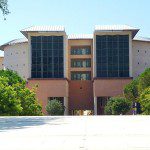
On the campus at the University of California at Berkeley, where Dr. Elizabeth Lloyd Meyer taught until her death. (Wikimedia Commons public domain photo)
Two books particularly stand out for having opened my mind to the possible reality of such things as clairvoyance (aka “remote viewing”), telepathy, and even communication with the dead via mediums. None of these is essential to my worldview or my faith. (If anything, indeed, spirit mediums seem to be antithetical to my doctrinal commitments, at least at first glance.) But, in my judgment, if they are real they seem to suggest a universe that is congenial to my faith and my worldview. Why? Because they appear to strengthen the case for the power of mind, as opposed to a world made up solely of atoms and the void, a world in which consciousness is merely an ephemeral epiphenomenon reducible in the end to mindless matter and ceasing with death.
One of those books was the somewhat sensationally titled 2003 volume The Afterlife Experiments: Breakthrough Scientific Evidence of Life After Death, which was written by Gary E. Schwartz with William L. Simon. Schwartz, who received his Ph.D. from Harvard University, taught for many years in the psychology and psychiatry departments at Yale University. Currently, he is a professor of Psychology, Medicine, Neurology, Psychiatry, and Surgery at the University of Arizona.
The other was Elizabeth Lloyd Mayer’s posthumously-published 2008 book Extraordinary Knowing: Science, Skepticism, and the Inexplicable Powers of the Human Mind. I cite here the brief bio that appears at the end of the volume:
Known as Lisby by her many friends and colleagues, Elizabeth Lloyd Mayer was an internationally known psychoanalyst, researcher, and clinician, the author of groundbreaking papers on female development, clinical technique, the nature of science, and intuition. A graduate of Radcliffe College, she received her doctorate from Stanford University and graduated from the San Francisco Psychoanalytic Institute, where she later became a training and supervising analyst. She was associate clinical professor of psychology at the University of California, Berkeley, and in the psychiatry department at the University of California Medical Center, San Francisco. She was also a fellow of the International Consciousness Research Laboratories at Princeton and on the research faculty of the Institute for Health and Healing at California Pacific Medical Center. She maintained a private practice in Berkeley for thirty years. Dr. Mayer served on the editorial boards of many of the major journals in her field, including the Journal of the American Psychoanalytic Association, International Journal of Psychoanalysis, Gender and Psychoanalysis, The Psychoanalytic Quarterly, and Contemporary Psychoanalysis. She was the first winner of the American Psychoanalytic Association’s prestigious Menninger Award. A contralto with a long-standing interest in traditional folk and classical music, she was a founder of the California Revels and its artistic director for many years. The mother of two daughters, she was also the producer of an award-winning video series on music education for children and was named Alameda County’s Woman of the Year for Arts and Culture in 1995. Dr. Mayer died on New Year’s Day, 2005, shortly after completing Extraordinary Knowing.
I first bought and read Extraordinary Knowing immediately after its initial publication. I then loaned it to a friend and never saw it again. But I re-read it on today’s flight. Here is the Epigraph of the book:
In December 1991, my daughter’s harp was stolen; we got it back. But it came back in a way that irrevocably changed my familiar world of science and rational thinking. It changed the way I go about living in that world. It changed the way I perceive the world and try to make sense of it. This book is about what unfolded as I attempted to explain what happened.—Elizabeth Lloyd Mayer
Extraordinary Knowing features forewords by the psychologist Carol Gilligan, then of Harvard University, and the late mathematical physicist Freeman Dyson, then of the Institute for Advanced Study at Princeton. Dyson’s foreword is expressly conflicted but open-minded:
This book begins with an extraordinary story about a harp—one that is typical of thousands of others in which somebody knows something without having any normal way of knowing. This kind of extraordinary knowing is commonly called extrasensory perception, or ESP. Since I am a scientist, the story puts me in a difficult position. As a scientist I don’t believe the story, but as a human being I want to believe it. As a scientist, I don’t believe anything that is not based on solid evidence. As a scientist, I have to consider it possible that Elizabeth Mayer and Harold McCoy might have concocted the story or deluded themselves into believing it. Scientists call such stories “anecdotal,” meaning that they are scientifically worthless. On the other hand, as a human being I find the story convincing. I am impressed by the fact that Elizabeth Mayer is herself a scientist and would normally be skeptical of such anecdotal evidence. She understands why the majority of scientists do not believe her story. . . .
There are three possible positions that one may take concerning the evidence for ESP. First, the position of orthodox scientists, who believe that ESP does not exist. Second, the position of true believers, who believe that ESP is real and can be proved to exist by scientific methods. Third, my own position, that ESP is real, as the anecdotal evidence suggests, but cannot be tested with the clumsy tools of science. These positions also imply different views concerning the proper scope of science. If one believes, as many of my scientific colleagues believe, that the scope of science is unlimited, then science can ultimately explain everything in the universe, and ESP must either be nonexistent or scientifically explainable. If one believes, as I do, that ESP exists but is scientifically untestable, one must believe that the scope of science is limited. I put forward, as a working hypothesis, that ESP is real but belongs to a mental universe that is too fluid and evanescent to fit within the rigid protocols of controlled scientific testing. I do not claim that this hypothesis is true. I claim only that it is consistent with the evidence and worthy of consideration.
Candidly, I find Freeman Dyson’s foreword rather odd, because Professor Mayer’s book actually provides multiple examples of statistically significant positive results for tests of “anomalous knowing.” ESP does not, in fact, appear to be “scientifically untestable.”
I encourage skeptics to read Extraordinary Knowing. I realize that at least one commenter here will defiantly refuse to do so, while demanding evidence and declaring, over and over and over again, his supposed passion for “Reality.” Others, though, might profit from reading the book. Or, of course, they can close their eyes, ram their fingers in their ears, and vie with one another in calling me names and redundantly lampooning my hilariously comic embrace of pseudoscientific booga booga and woo-woo.
Posted from Ko Olina, O’ahu, Hawai’i
History and Religion
Previous Post

January 30, 2024
"Psychic functioning has been well established"
Next Post
February 1, 2024 The Book of Mormon and then-prevailing notions of scripture
Recent Comments
"Interesting question. I have closely read Stephen Smoots book, asked Kara Cooney her views. Kerry ..."
"There's more amazement still, too. Most of the metals that humanity has ever extracted from ..."
"Did you know someone stole Shakespeare's skull? It was thought to be a rumour but ..."
"Well, this is an instant favourite.I could write for hours about bacterial communities in soil ..."
Browse Our Archives
Select a Category Uncategorized
Select a Month November 2026 October 2026 September 2026 August 2026 July 2026 June 2026 May 2026 April 2026 March 2026 February 2026 January 2026 December 2025 November 2025 October 2025 September 2025 August 2025 July 2025 June 2025 May 2025 April 2025 March 2025 February 2025 January 2025 December 2024 November 2024 October 2024 September 2024 August 2024 July 2024 June 2024 May 2024 April 2024 March 2024 February 2024 January 2024 December 2023 November 2023 October 2023 September 2023 August 2023 July 2023 June 2023 May 2023 April 2023 March 2023 February 2023 January 2023 December 2022 November 2022 October 2022 September 2022 August 2022 July 2022 June 2022 May 2022 April 2022 March 2022 February 2022 January 2022 December 2021 November 2021 October 2021 September 2021 August 2021 July 2021 June 2021 May 2021 April 2021 March 2021 February 2021 January 2021 December 2020 November 2020 October 2020 September 2020 August 2020 July 2020 June 2020 May 2020 April 2020 March 2020 February 2020 January 2020 December 2019 November 2019 October 2019 September 2019 August 2019 July 2019 June 2019 May 2019 April 2019 March 2019 February 2019 January 2019 December 2018 November 2018 October 2018 September 2018 August 2018 July 2018 June 2018 May 2018 April 2018 March 2018 February 2018 January 2018 December 2017 November 2017 October 2017 September 2017 August 2017 July 2017 June 2017 May 2017 April 2017 March 2017 February 2017 January 2017 December 2016 November 2016 October 2016 September 2016 August 2016 July 2016 June 2016 May 2016 April 2016 March 2016 February 2016 January 2016 December 2015 November 2015 October 2015 September 2015 August 2015 July 2015 June 2015 May 2015 April 2015 March 2015 February 2015 January 2015 December 2014 November 2014 March 2014 August 2013 February 2012
Follow Us!
TAKE THE
Religious Wisdom Quiz
There is a season for everything under heaven—a time to be born and a time to do what?
Select your answer to see how you score.
Die Sing Rest Live
Related posts from Sic et Non

Michael Faraday, James Clerk Maxwell, and the Open...


"An Assessment of the Evidence for Psychic Functioning"
TRENDING AT PATHEOS Latter-day Saint

Smart people saying smart things (11.24.26)
Please take time to listen to Perry Bacon, Sarah Posner, Adam Serwer,...

The Contingency of Our Technology
Last week we were hit with a raft of massive technology outages....

In 1939, President Franklin D. Roosevelt moved Thanksgiving from November 30 to...

Reasons for Restraint: Ricardo Gonzalez, Florida and Dec...
The Morning of January 3 I begin with the dead. On the...

I published this column for Thanksgiving 2012 in the Deseret News....

For many years, Catholicism has been caught up in division over the...
view all Latter-day Saint blogs
What Are Your Thoughts?leave a comment
Ad-Free & Subscriber Log-In Subscription Support
- About Us
- 2026 Calendar
- Videos
- Podcasts
- Library of World Religions
- Faith In Media Tracker
- Advertise With Us
- Write for Us
- Privacy Policy
- Terms of Service
- Do Not Sell My Data
- Contact Us
- Radiant Digital
- Manage Newsletter Subscriptions
- Unsubscribe From Notifications
- Sitemap
Copyright 2008-2026, Patheos, part of the Radiant Digital network of media brands. All rights reserved.
Subscription Support Ad-Free & Subscriber Log-In
Follow Patheos