
BuddhistCatholicContemplativeEvangelicalGeneral ChristianHinduJewishLatter-day SaintMuslimNew VisionsProgressive Christian
Beliefs
- Buddhist
- Catholic
- Contemplative
- Evangelical
- General Christian
- Hindu
- Jewish
- Latter-day Saint
- More Voices
- Muslim
- New Visions
- Pagan
- Progressive Christian
Topics
- Religion News
- Food and Religion
- Sports and Religion
- Religious Art
- Religious Music and Entertainment
- Religious Events
- History and Religion
- Style and Religion
- Politics and Religion
- Women in Religion
- Recreation Outdoors and Religion
- Business Finance and Religion
- Careers Workplace and Religion
- Education and Religion
- Family Parenting and Religion
- Health Fitness and Religion
- Home and Religion
- Relationships and Religion
- Technology and Religion
- Travel and Religion
Columnists
- Buddhist Columnists
- Business Finance and Religion Columnists
- Careers Workplace and Religion Columnists
- Catholic Columnists
- Contemplative Columnists
- Education and Religion Columnists
- Evangelists Columnists
- Family Parenting and Religion Columnists
- General Christian Columnists
- Health Fitness and Religion Columnists
- Hindu Columnists
- History and Religion Columnists
- Home and Religion Columnists
- Jewish Columnists
- More Voices Columnists
- Latter Day Columnists
- Muslim Columnists
- New Visions Columnists
- Nonreligious Columnists
- Pagan Columnists
- Politics and Religion Columnists
- Progressive Columnists
- Recreation Outdoors and Religion Columnists
- Relationships and Religion Columnists
- Religion News Columnists
- Religious Art Columnists
- Religious Events Columnists
- Religious Music and Entertainment Columnists
- Sports and Religion Columnists
- Style and Religion Columnists
- Technology and Religion Columnists
- Travel and Religion Columnists
- Women in Religion Columnists
Resource Library
- 2026 Calendar
- Library of World Religions
- The 100 Most Holy Places on Earth
- Patheos Answers
- Podcasts
- Videos
- Faith Leaders Database
- Anglican Episcopalian
- Bahai
- Baptist
- Buddhism
- Christianity
- Confucianism
- Eastern Orthodoxy
- Hinduism
- Holiness and Pentecostal
- ISKCON
- Islam
- Judaism
- Lutheran
- Methodist
- The Church of Jesus Christ of Latter-day Saints
- New Age
- Paganism
- Presbytarian and Reformed
- Protestantism
- Religion Behind the Scenes
- Roman Catholic
- Scientology
- Shia Islam
- Sikhism
- Sufism
- Sunni Islam
- Taoism
- Zen
- See all religions
Research Tools
 Ad-Free & Subscriber Log-In Subscription Support
Ad-Free & Subscriber Log-In Subscription Support
Follow Patheos 

- Trending:
- Forgiveness
- |
- Marriage
- |
- Consciousness
- |
- Death Penalty
- |
- Election
- |
- Halloween

- Home
- Latter-day Saint
- History and Religion
- Some reasons to be religious?
Some reasons to be religious?
Last updated on: January 17, 2024 at 3:32 am by Dan Peterson
Some reasons to be religious? 2024-01-17T03:32:42-07:00 Dan Peterson
Patheos Explore the world's faith through different perspectives on religion and spirituality! Patheos has the views of the prevalent religions and spiritualities of the world.
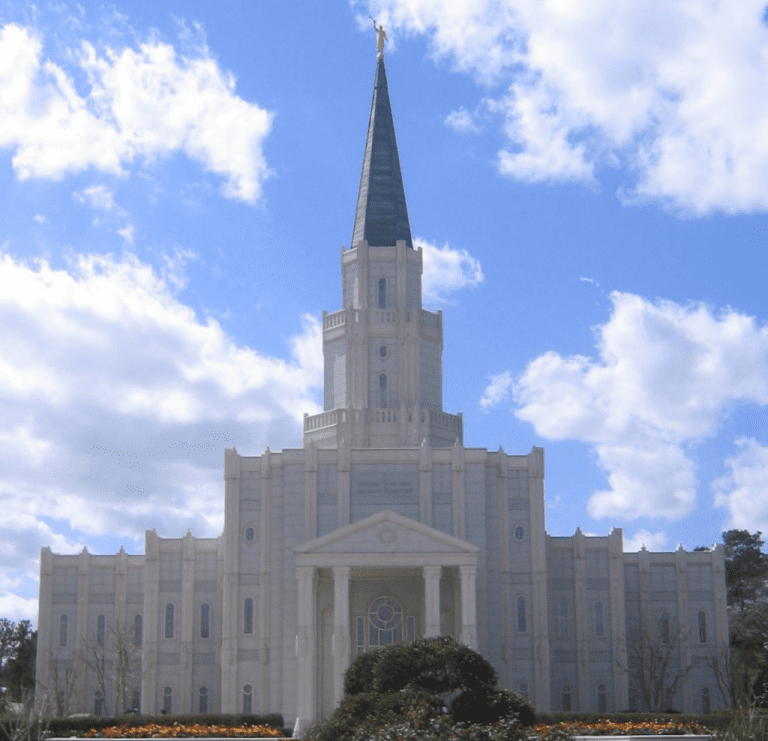
The Houston Texas Temple of the Church of Jesus Christ of Latter-day Saints.
(Wikimedia Commons public domain image)
I want to remind you of Steve Densley’s rapidly approaching fireside in the greater Houston area. (See here for details of time and place and topic.) In one exceptionally weird corner of the internet, of course, the reviews of his remarks are already pouring in, days before those remarks will be delivered. I can’t help but think of Proverbs 18:13. And to think that some people actually deny the existence of prophecy!

Respect the SCIENCE! (Wikimedia Commons pubic domain image)
I now offer you a larger-than-usual tranche of abominations from the Christopher Hitchens Memorial “How Religion Poisons Everything” File™. Will these horrors never cease?
Shimon Waldfogel, “Religion and Spirituality in The Primary Care Setting: Toward the 21st century” (Department of Psychiatry and Human Behavior, Behavioral Medicine Consultant Department of Family Medicine, Jefferson Medical College)
Religion and medicine have a common tradition of alleviating suffering, yet, throughout much of the twentieth century the religious/spiritual dimension of the person has rarely been addressed in the medical literature and more rarely incorporated in clinical training. Thus, an important therapeutic tool that can enhance the patient’s coping with illness and improve their well-being has not been part of the clinician’s medical treatment repertoire. Recently, there is a growing recognition that the biopsychosocial model of health could be expanded to include the spiritual dimension. The primary care setting is the logical locus for this expanded paradigm to sprout as we enter the twenty-first century. . . .
It is assumed that religion has a unique influence on individuals during times of personal crisis and suffering. It therefore seems likely to have an impact on the person’s health and response to disease. This association has been demonstrated in numerous studies that have been reported in the medical, nursing, medical sociology and epidemiology literature. The inclusion of religious and spiritual problems in DSM 4 further supports the importance of addressing this aspect of the person in the clinical setting.
Corina R. Ronneberg, MS, Edward Alan Miller, PhD, MPA, Elizabeth Dugan, PhD, and Frank Porell, PhD, “The Protective Effects of Religiosity on Depression: A 2-Year Prospective Study” (Department of Gerontology, John E. McCormack Graduate School of Policy & Global Studies, University of Massachusetts Boston.)
Purpose of the Study: Approximately 20% of older adults are diagnosed with depression in the United States. Extant research suggests that engagement in religious activity, or religiosity, may serve as a protective factor against depression. This prospective study examines whether religiosity protects against depression and/or aids in recovery.
Design and Methods: Study data are drawn from the 2006 and 2008 waves of the Health and Retirement Study. The sample consists of 1,992 depressed and 5,740 nondepressed older adults (mean age = 68.12 years), at baseline (2006), for an overall sample size of 7,732. Logistic regressions analyzed the relationship between organizational (service attendance), nonorganizational (private prayer), and intrinsic measures of religiosity and depression onset (in the baseline nondepressed group) and depression recovery (in the baseline depressed group) at follow-up (2008), controlling for other baseline factors.
Results: Religiosity was found to both protect against and help individuals recover from depression. Individuals not depressed at baseline remained nondepressed 2 years later if they frequently attended religious services, whereas those depressed at baseline were less likely to be depressed at follow-up if they more frequently engaged in private prayer.
Implications: Findings suggest that both organizational and nonorganizational forms of religiosity affect depression outcomes in different circumstances (i.e., onset and recovery, respectively). Important strategies to prevent and relieve depression among older adults may include improving access and transportation to places of worship among those interested in attending services and facilitating discussions about religious activities and beliefs with clinicians.
M. Bonelli (Sigmund Freud University and Institute of Religiosity in Psychiatry and Psychotherapy, Vienna, Austria) and Harold G. Koenig (Duke University Medical Center, Durham, North Carolina; King Abdulaziz University (KAU), Jeddah, Saudi Arabia, “Mental Disorders, Religion and Spirituality 1990 to 2010: A Systematic Evidence-Based Review”
Abstract: Religion/spirituality has been increasingly examined in medical research during the past two decades. Despite the increasing number of published studies, a systematic evidence-based review of the available data in the field of psychiatry has not been done during the last 20 years. The literature was searched using PubMed (1990–2010). Weexamined original research on religion, religiosity, spirituality, and related terms published in the top 25% of psychiatry and neurology journals according to the ISI journals citation index 2010. Most studies focused on religion or religiosity and only 7 % involved interventions. Among the 43 publications that met these criteria, thirty-one (72.1 %) found a relationship between level of religious/spiritual involvement and less mental disorder (positive), eight (18.6 %) found mixed results (positive and negative), and two (4.7 % reported more mental disorder (negative). All studies on dementia, suicide, and stress-related disorders found a positive association, as well as 79 and 67 % of the papers ondepression and substance abuse, respectively. In contrast, findings from the few studies in schizophrenia were mixed, and in bipolar disorder, indicated no association or a negative one. There is good evidence that religious involvement is correlated with better mental health in the areas of depression, substance abuse, and suicide; some evidence in stress-related disorders and dementia; insufficient evidence in bipolar disorder and schizophrenia, and no data in many other mental disorders
Alexander Moreira-Almeida, Francisco Lotufo Neto, and Harold G Koenig, “Religiousness and mental health: a review,” Revista Brasileira de Psiquiatria 28: 242-250, 2006.
OBJECTIVE: The relationship between religiosity and mental health has been a perennial source of controversy. This paper reviews the scientific evidence available for the relationship between religion and mental health. METHOD: The authors present the main studies and conclusions of a larger systematic review of 850 studies on the religion-mental health relationship published during the 20th Century identified through several databases. The present paper also includes an update on the papers published since 2000, including researches performed in Brazil and a brief historical and methodological background. DISCUSSION: The majority of well-conducted studies found that higher levels of religious involvement are positively associated with indicators of psychological well-being (life satisfaction, happiness, positive affect, and higher morale) and with less depression, suicidal thoughts and behavior, drug/alcohol use/abuse. Usually the positive impact of religious involvement on mental health is more robust among people under stressful circumstances (the elderly, and those with disability and medical illness). Theoretical pathways of the religiousness-mental health connection and clinical implications of these findings are also discussed. CONCLUSIONS: There is evidence that religious involvement is usually associated with better mental health. We need to improve our understanding of the mediating factors of this association and its use in clinical practice.
Posted from London, England
History and Religion
Travel and Religion
Previous Post

January 16, 2024
"If you seek his monument, look around"
Next Post

January 18, 2024 On Religious Involvement and Health
Recent Comments
"DP: “But Mr. Sutherland worries about the fact that our time, when we can communicate ..."
Learning more about a region of ..."
"Sutherland's lecture sounds interesting. He seems to restate the Washington consensus that trade brings peace ..."
Learning more about a region of ..."
"In a meeting today, I learned another important reason why accurate (or at least as ..."
From Serbia’s “White City,” Belgrade
"I've been watching a lot of video interviews of NDErs and researchers. I think in ..."
Browse Our Archives
Select a Category Uncategorized
Select a Month October 2026 September 2026 August 2026 July 2026 June 2026 May 2026 April 2026 March 2026 February 2026 January 2026 December 2025 November 2025 October 2025 September 2025 August 2025 July 2025 June 2025 May 2025 April 2025 March 2025 February 2025 January 2025 December 2024 November 2024 October 2024 September 2024 August 2024 July 2024 June 2024 May 2024 April 2024 March 2024 February 2024 January 2024 December 2023 November 2023 October 2023 September 2023 August 2023 July 2023 June 2023 May 2023 April 2023 March 2023 February 2023 January 2023 December 2022 November 2022 October 2022 September 2022 August 2022 July 2022 June 2022 May 2022 April 2022 March 2022 February 2022 January 2022 December 2021 November 2021 October 2021 September 2021 August 2021 July 2021 June 2021 May 2021 April 2021 March 2021 February 2021 January 2021 December 2020 November 2020 October 2020 September 2020 August 2020 July 2020 June 2020 May 2020 April 2020 March 2020 February 2020 January 2020 December 2019 November 2019 October 2019 September 2019 August 2019 July 2019 June 2019 May 2019 April 2019 March 2019 February 2019 January 2019 December 2018 November 2018 October 2018 September 2018 August 2018 July 2018 June 2018 May 2018 April 2018 March 2018 February 2018 January 2018 December 2017 November 2017 October 2017 September 2017 August 2017 July 2017 June 2017 May 2017 April 2017 March 2017 February 2017 January 2017 December 2016 November 2016 October 2016 September 2016 August 2016 July 2016 June 2016 May 2016 April 2016 March 2016 February 2016 January 2016 December 2015 November 2015 October 2015 September 2015 August 2015 July 2015 June 2015 May 2015 April 2015 March 2015 February 2015 January 2015 December 2014 November 2014 March 2014 August 2013 February 2012
Follow Us!
TAKE THE
Religious Wisdom Quiz
How old was Moses when he died?
Select your answer to see how you score.
90 years 100 years 120 years 110 years
Related posts from Sic et Non
Once more unto the breach, dear friends, once...
"Was Joseph a Sexual Predator?" and other fun...


TRENDING AT PATHEOS Latter-day Saint

The Sermon on the Mount, Part I: Matthew...
The Sermon on the Mount, Part I (Matthew 4:12-5:12) St. Matthew moves...

What's up from Crossway: Reviewing some of their latest A few weeks...

Janie Learns the Way of the Cross: A...
Teaching children about Jesus' Passion can be challenging. Many parents and educators...

Looking For Good Catholic Writing - October 2026
He alone extends the heavens, and he walks upon the waves of...

In "Irreplaceable," our book on vocation and technology, Trevor Sutton and I...

I was strolling through the top floor of the brand new Parthenon...
view all Latter-day Saint blogs
What Are Your Thoughts?leave a comment
Ad-Free & Subscriber Log-In Subscription Support
- About Us
- 2026 Calendar
- Videos
- Podcasts
- Library of World Religions
- Faith In Media Tracker
- Advertise With Us
- Write for Us
- Privacy Policy
- Terms of Service
- Do Not Sell My Data
- Contact Us
- Radiant Digital
- Manage Newsletter Subscriptions
- Unsubscribe From Notifications
- Sitemap
Copyright 2008-2026, Patheos. All rights reserved.
Subscription Support Ad-Free & Subscriber Log-In
Follow Patheos