
BuddhistCatholicContemplativeEvangelicalGeneral ChristianHinduJewishLatter-day SaintMuslimNew VisionsProgressive Christian
Beliefs
- Buddhist
- Catholic
- Contemplative
- Evangelical
- General Christian
- Hindu
- Jewish
- Latter-day Saint
- More Voices
- Muslim
- New Visions
- Pagan
- Progressive Christian
Topics
- Religion News
- Food and Religion
- Sports and Religion
- Religious Art
- Religious Music and Entertainment
- Religious Events
- History and Religion
- Style and Religion
- Politics and Religion
- Women in Religion
- Recreation Outdoors and Religion
- Business Finance and Religion
- Careers Workplace and Religion
- Education and Religion
- Family Parenting and Religion
- Health Fitness and Religion
- Home and Religion
- Relationships and Religion
- Technology and Religion
- Travel and Religion
Columnists
- Buddhist Columnists
- Business Finance and Religion Columnists
- Careers Workplace and Religion Columnists
- Catholic Columnists
- Contemplative Columnists
- Education and Religion Columnists
- Evangelists Columnists
- Family Parenting and Religion Columnists
- General Christian Columnists
- Health Fitness and Religion Columnists
- Hindu Columnists
- History and Religion Columnists
- Home and Religion Columnists
- Jewish Columnists
- More Voices Columnists
- Latter Day Columnists
- Muslim Columnists
- New Visions Columnists
- Nonreligious Columnists
- Pagan Columnists
- Politics and Religion Columnists
- Progressive Columnists
- Recreation Outdoors and Religion Columnists
- Relationships and Religion Columnists
- Religion News Columnists
- Religious Art Columnists
- Religious Events Columnists
- Religious Music and Entertainment Columnists
- Sports and Religion Columnists
- Style and Religion Columnists
- Technology and Religion Columnists
- Travel and Religion Columnists
- Women in Religion Columnists
Resource Library
- 2026 Calendar
- Library of World Religions
- The 100 Most Holy Places on Earth
- Patheos Answers
- Podcasts
- Videos
- Faith Leaders Database
- Anglican Episcopalian
- Bahai
- Baptist
- Buddhism
- Christianity
- Confucianism
- Eastern Orthodoxy
- Hinduism
- Holiness and Pentecostal
- ISKCON
- Islam
- Judaism
- Lutheran
- Methodist
- The Church of Jesus Christ of Latter-day Saints
- New Age
- Paganism
- Presbytarian and Reformed
- Protestantism
- Religion Behind the Scenes
- Roman Catholic
- Scientology
- Shia Islam
- Sikhism
- Sufism
- Sunni Islam
- Taoism
- Zen
- See all religions
Research Tools
 Ad-Free & Subscriber Log-In Subscription Support
Ad-Free & Subscriber Log-In Subscription Support
Follow Patheos 

- Trending:
- Forgiveness
- |
- Marriage
- |
- Consciousness
- |
- Death Penalty
- |
- Election
- |
- Halloween

- Home
- Latter-day Saint
- Travel and Religion
- A note on Joseph Smith and Muhammad
A note on Joseph Smith and Muhammad
Last updated on: January 29, 2024 at 1:18 pm by Dan Peterson
A note on Joseph Smith and Muhammad 2024-01-29T13:18:31-07:00 Dan Peterson
Patheos Explore the world's faith through different perspectives on religion and spirituality! Patheos has the views of the prevalent religions and spiritualities of the world.
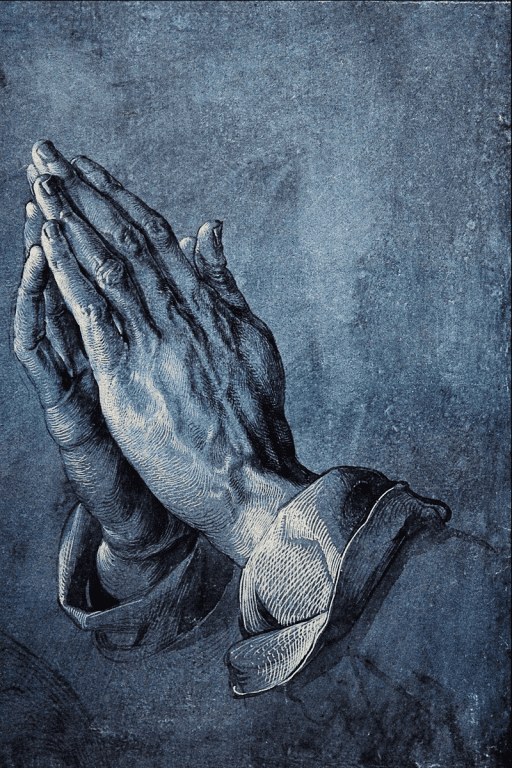
Albrecht Dürer, “Praying Hands” (1508)
Wikimedia Commons public domain image
Meridian Magazine has just posted a new article of mine entitled “The Problem of Unanswered Prayers.” I hope that some of you will find it helpful or of interest or, at least, not objectionable.
My new article could, I think, fittingly be paired with another piece that I wrote a while back, “On Choosing Prince Charming.” And this sad but (to me) movingly wonderful story about President Jeffrey R. Holland and the tragic recent death of a young woman in Castle Dale, Utah, seems to suit the mood, as well: “Why the righteous are not spared tribulation, President Holland explains at funeral of Latter-day Saint teen: ‘Let me encourage all of you to avoid saying “what if” or “would have” or “should have” or “could have.” Faith always points forward,’ he tells grieving teens after accident”
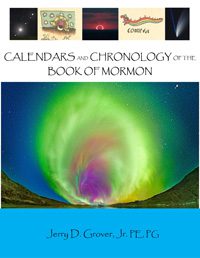
The cover
I was pleasantly surprised, a week ago Sunday night, to have Jerry Grover drop by my house to deliver a copy of his latest book, Calendars and Chronology of the Book of Mormon. I’m excited to read it, though I haven’t had a chance to do so yet and won’t — for reasons that will shortly be apparent — have the opportunity to read it for the next month or so. (It’s a large and heavy tome.) I regret that, because the prolific and very energetic Brother Grover invariably has interesting things to say.
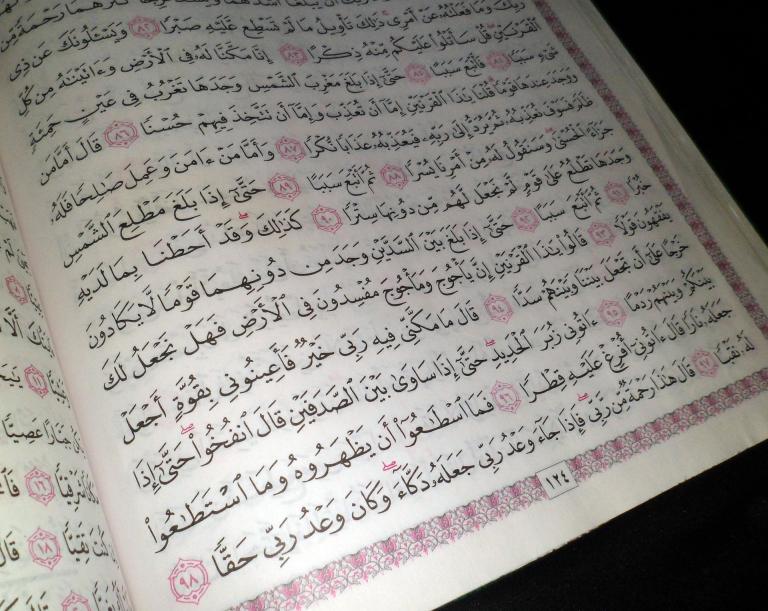
A Qur’an, opened to Surat al-Kahf (“The Sura of the Cave,” or chapter 18), verses 83-98
I received a question today in the comments section of this blog, from Bruce Cowser. It raises an issue that is often raised with me, and I think that I’ll try a hasty answer here.
Dan, I’ve long been curious to know how you view the Prophet Mohammed. In your mind, was he:
- A man inspired by God to dictate limited spiritual truths in beautiful Arabic poetry?
- A false prophet, skilled at synthesizing ideas and stories rumbling around in his head into beautiful Arabic poetry? Or,
- Something else altogether?
I understand that Mohammed was illiterate, and if so, was not able to study Christian and Jewish texts, but could have heard these texts read or recounted to him. Clearly he draws on biblical stories within the suras of the Quran.
The choices for explaining Mohammed may not be as binary as with Joseph Smith, but what is your take (or best guess)?
Here’s my tentative current position:
I’m inclined to regard Muhammad — that’s the spelling of his name in Roman letters that is currently favored among English-speaking Arabists, although several other spellings are entirely acceptable and although a dot under the h would be ideal — as a man who was inspired by God, though not, perhaps, fully a prophet in the Latter-day Saint sense. (However, I’m open to that possibility too.) I have authoritative support for believing that Muhammad may have been genuinely divinely inspired in such places as the Journal of Discourses (e.g., the remarks of George A. Smith and Parley Pratt at 3:28-42) and a powerfully forthright statement of the First Presidency. I will eventually publish an explanation of how inspiration might have worked in his case, based on suggestions by the late great Scottish Islamicist and biographer of Muhammad W. Montgomery Watt, who was also an Anglican priest.
If we can regard the American Founding Fathers and the great Protestant Reformers as having been in some sense inspired, as we commonly do, I can’t see what would be so difficult about granting the same status to Muhammad. But didn’t he get some things wrong, from the Latter-day Saint perspective, and so some questionable things? Yes, he probably did (although that’s a topic for separate discussion). So did the Founders. (Thomas Jefferson, for example, seems to have been a deist, and he owned slaves.) Prophethood doesn’t confer infallibility, so there seems no reason to believe that inspiration at a possibly lower level would do so.
I’m not aware of any serious student of Islam or of the life of Muhammad who believes him to have been a conscious deceiver.
As for Muhammad’s “illiteracy”: He is described in Arabic sources as ummi, which is generally taken to mean that he was illiterate. And it is true that, in Modern Standard Arabic, ummi does mean “illiterate” and ummiyya means “illiteracy.” Moreover, his purported illiteracy has become a major feature of modern Islamic apologetics. Much in the manner of Latter-day Saints discussing Joseph Smith and the Book of Mormon, Muslims will ask “Could such a man have written the Qur’an?” I am not sure, however, that descriptions of Muhammad as ummi were originally intended to claim that he was fully illiterate. Ummi is an adjective derived from the Arabic noun umma, which means something like “people” or “community.” In its original sense, I think, ummi meant “of the people,” or, in once sense, “popular.” (The important Hebrew-language writer Asher Zvi Hirsch Ginsberg [1856-1927] used the pen name Ahad Ha’am [אחד העם, lit. ‘one of the people’, from Genesis 26:10].). Compare the English adjective lay, which comes from Late Latin laicus, which comes from Greek laikos “of the people,” which in its turn is derived from laos “(the common) folk,” “the people,” “the crowd.” Which would suggest that Muhammad wasn’t illiterate but that he was a “common man,” unlearned. (I will eventually write some more about the evidence that Muhammad actually could read and write, at least on the practical level required of a seventh-century Arabian merchant.) But then, I think an unlearned Muhammad still leaves the Qur’an difficult to explain. The alleged miracle survives.
And finally, yes, I do believe that the choices for explaining Muhammad away — if that’s the path that one chooses to take; it is one that I’m not personally inclined to take — are less binary than those for Joseph Smith. Muhammad never had partners in any of his visions and revelations; Joseph commonly did. And Muhammad’s experiences didn’t involve tangible, material objects like the plates of the Book of Mormon. But the evidence for the objective reality of a set of gold plates in the story of the Book of Mormon is, in my judgment, strong and indeed virtually unassailable. And that puts Joseph in a different category, in an important respect, than Muhammad (and many others). Muhammad’s revelatory experiences can be dismissed as merely personal and subjective. ((I’m not saying that they should be.) Frequently, Joseph’s cannot.

A conference of the Communist Party of China (Wikimedia Commons public domain photograph)
Speaking of Islam and Muslims: What China is doing to the Muslim Uyghur minority in East Turkistan needs to be known and understood by the entire world. And these young Uyghur women in Germany are trying very hard to make that so: “Uyghur Youth Initiative video on genocide goes viral: Filmed by youth activists following a recent pro-Uyghur protest in Munich, the video has since had over 3 million views on TikTok and 7.5 million hits on Instagram.”
Happily, by the way, the oppression and genocide of the Uyghurs is not something to be found in the Christopher Hitchens Memorial “How Religion Poisons Everything” File™. Rather, it is a project undertaken by the Communist Party of China, which is blissfully free of the evils of theism and which is attempting to remove the vicious scourge of religiosity from the world.
Travel and Religion
History and Religion
Previous Post

January 28, 2024
Writing history is easy if you toss out the facts.
Next Post

January 30, 2024 "Psychic functioning has been well established"
Recent Comments
"In a meeting today, I learned another important reason why accurate (or at least as ..."
From Serbia’s “White City,” Belgrade
"PL: "Let's hope he doesn't have your address..."I have to frankly confess that a few ..."
From Serbia’s “White City,” Belgrade
"Let's hope he doesn't have your address..."
From Serbia’s “White City,” Belgrade
"PL: "The layers are peeling back."He appears to be suffering under an odd but powerful ..."
From Serbia’s “White City,” Belgrade
Browse Our Archives
Select a Category Uncategorized
Select a Month October 2026 September 2026 August 2026 July 2026 June 2026 May 2026 April 2026 March 2026 February 2026 January 2026 December 2025 November 2025 October 2025 September 2025 August 2025 July 2025 June 2025 May 2025 April 2025 March 2025 February 2025 January 2025 December 2024 November 2024 October 2024 September 2024 August 2024 July 2024 June 2024 May 2024 April 2024 March 2024 February 2024 January 2024 December 2023 November 2023 October 2023 September 2023 August 2023 July 2023 June 2023 May 2023 April 2023 March 2023 February 2023 January 2023 December 2022 November 2022 October 2022 September 2022 August 2022 July 2022 June 2022 May 2022 April 2022 March 2022 February 2022 January 2022 December 2021 November 2021 October 2021 September 2021 August 2021 July 2021 June 2021 May 2021 April 2021 March 2021 February 2021 January 2021 December 2020 November 2020 October 2020 September 2020 August 2020 July 2020 June 2020 May 2020 April 2020 March 2020 February 2020 January 2020 December 2019 November 2019 October 2019 September 2019 August 2019 July 2019 June 2019 May 2019 April 2019 March 2019 February 2019 January 2019 December 2018 November 2018 October 2018 September 2018 August 2018 July 2018 June 2018 May 2018 April 2018 March 2018 February 2018 January 2018 December 2017 November 2017 October 2017 September 2017 August 2017 July 2017 June 2017 May 2017 April 2017 March 2017 February 2017 January 2017 December 2016 November 2016 October 2016 September 2016 August 2016 July 2016 June 2016 May 2016 April 2016 March 2016 February 2016 January 2016 December 2015 November 2015 October 2015 September 2015 August 2015 July 2015 June 2015 May 2015 April 2015 March 2015 February 2015 January 2015 December 2014 November 2014 March 2014 August 2013 February 2012
Follow Us!
TAKE THE
Religious Wisdom Quiz
Who declared, "Choose for yourselves this day whom you will serve"?
Select your answer to see how you score.
Joshua Gideon Moses Aaron
Related posts from Sic et Non


Notes on Women, Priesthood, and General Conference

"The Book of Moses as a Temple Text"

TRENDING AT PATHEOS Latter-day Saint

The Sermon on the Mount, Part I: Matthew...
The Sermon on the Mount, Part I (Matthew 4:12-5:12) St. Matthew moves...

What's up from Crossway: Reviewing some of their latest A few weeks...

Janie Learns the Way of the Cross: A...
Teaching children about Jesus' Passion can be challenging. Many parents and educators...

Looking For Good Catholic Writing - October 2026
He alone extends the heavens, and he walks upon the waves of...

In "Irreplaceable," our book on vocation and technology, Trevor Sutton and I...

I was strolling through the top floor of the brand new Parthenon...
view all Latter-day Saint blogs
What Are Your Thoughts?leave a comment
Ad-Free & Subscriber Log-In Subscription Support
- About Us
- 2026 Calendar
- Videos
- Podcasts
- Library of World Religions
- Faith In Media Tracker
- Advertise With Us
- Write for Us
- Privacy Policy
- Terms of Service
- Do Not Sell My Data
- Contact Us
- Radiant Digital
- Manage Newsletter Subscriptions
- Unsubscribe From Notifications
- Sitemap
Copyright 2008-2026, Patheos. All rights reserved.
Subscription Support Ad-Free & Subscriber Log-In
Follow Patheos