
BuddhistCatholicContemplativeEvangelicalGeneral ChristianHinduJewishLatter-day SaintMuslimNew VisionsProgressive Christian
Beliefs
- Buddhist
- Catholic
- Contemplative
- Evangelical
- General Christian
- Hindu
- Jewish
- Latter-day Saint
- More Voices
- Muslim
- New Visions
- Pagan
- Progressive Christian
Topics
- Religion News
- Food and Religion
- Sports and Religion
- Religious Art
- Religious Music and Entertainment
- Religious Events
- History and Religion
- Style and Religion
- Politics and Religion
- Women in Religion
- Recreation Outdoors and Religion
- Business Finance and Religion
- Careers Workplace and Religion
- Education and Religion
- Family Parenting and Religion
- Health Fitness and Religion
- Home and Religion
- Relationships and Religion
- Technology and Religion
- Travel and Religion
Columnists
- Buddhist Columnists
- Business Finance and Religion Columnists
- Careers Workplace and Religion Columnists
- Catholic Columnists
- Contemplative Columnists
- Education and Religion Columnists
- Evangelists Columnists
- Family Parenting and Religion Columnists
- General Christian Columnists
- Health Fitness and Religion Columnists
- Hindu Columnists
- History and Religion Columnists
- Home and Religion Columnists
- Jewish Columnists
- More Voices Columnists
- Latter Day Columnists
- Muslim Columnists
- New Visions Columnists
- Nonreligious Columnists
- Pagan Columnists
- Politics and Religion Columnists
- Progressive Columnists
- Recreation Outdoors and Religion Columnists
- Relationships and Religion Columnists
- Religion News Columnists
- Religious Art Columnists
- Religious Events Columnists
- Religious Music and Entertainment Columnists
- Sports and Religion Columnists
- Style and Religion Columnists
- Technology and Religion Columnists
- Travel and Religion Columnists
- Women in Religion Columnists
Resource Library
- 2026 Calendar
- Library of World Religions
- The 100 Most Holy Places on Earth
- Patheos Answers
- Podcasts
- Videos
- Faith Leaders Database
- Anglican Episcopalian
- Bahai
- Baptist
- Buddhism
- Christianity
- Confucianism
- Eastern Orthodoxy
- Hinduism
- Holiness and Pentecostal
- ISKCON
- Islam
- Judaism
- Lutheran
- Methodist
- The Church of Jesus Christ of Latter-day Saints
- New Age
- Paganism
- Presbytarian and Reformed
- Protestantism
- Religion Behind the Scenes
- Roman Catholic
- Scientology
- Shia Islam
- Sikhism
- Sufism
- Sunni Islam
- Taoism
- Zen
- See all religions
Research Tools
 Ad-Free & Subscriber Log-In Subscription Support
Ad-Free & Subscriber Log-In Subscription Support
Follow Patheos 

- Trending:
- Forgiveness
- |
- Marriage
- |
- Consciousness
- |
- Death Penalty
- |
- Election
- |
- Halloween

- Home
- Latter-day Saint
- History and Religion
- Approaching the Facsimiles of the Book of Abraham
Approaching the Facsimiles of the Book of Abraham
Last updated on: December 7, 2023 at 10:46 pm by Dan Peterson
Approaching the Facsimiles of the Book of Abraham 2023-12-07T22:46:14-07:00 Dan Peterson
Patheos Explore the world's faith through different perspectives on religion and spirituality! Patheos has the views of the prevalent religions and spiritualities of the world.
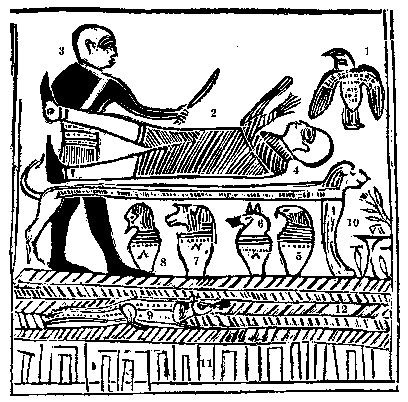
Facsimile 1 in the Book of Abraham
(LDS Media Library)
I return, yet again, to BYU Studies Quarterly 61/4 (2022), which is a special issue of the regular quarterly publication BYU Studies. It was created by four faithful Latter-day Saint Egyptologists — Stephen O. Smoot (Ph.D. candidate, Catholic University of America), John Gee (Ph.D., Yale University), Kerry Muhlestein (Ph.D., University of California at Los Angeles), and John S. Thompson (Ph.D., University of Pennsylvania) — and bears its own unique title: A Guide to the Book of Abraham. As I’ve previously indicated, it represents something of a state-of-the-question survey from people who are thoroughly familiar with the topic and the issues. I’ve tried to state as clearly as I’m capable of stating it that I am largely quoting bottom-line conclusions. I am not claiming to reproduce the evidence and the arguments on which those bottom-line conclusions are based. For such evidence and arguments you should consult A Guide to the Book of Abraham itself.
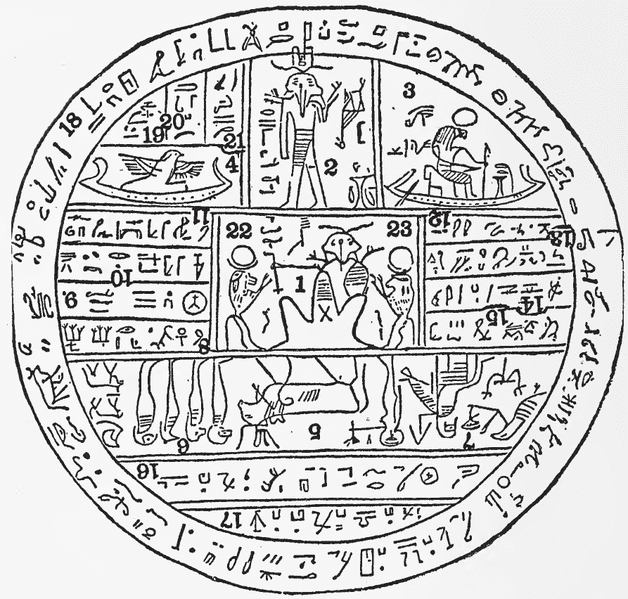
Facsimile 2 from the Book of Abraham
(Wikimedia Commons public domain image)
In a short section titled “Approaching the Facsimiles” (209-214), the authors first lay out a number of contrasting paradigms for understanding the Book of Abraham facsimiles and their relationship (or lack thereof) to the Book of Abraham itself. They note the all of them have strengths, but that none by itself seems to account for all the data.
Whichever paradigm one adopts, it seems clear that Joseph Smith’s explanations of the facsimiles were original to himself (none of the explanation appear next to the illustrations on the papyri he possessed). “There are aspects of [these explanations] that match what Egyptologists say they mean. Some [of them] are quite compelling. . . . However, as we look at the entirety of any of the facsimiles, an Egyptological interpretation does not match what Joseph Smith said about them.” This is complicated by the fact that even though not all of Joseph Smith’s explanations of the facsimiles in their entirety agree with how modern Egyptologists understand these illustrations, in many instances they do accurately reflect Egyptian and Semitic concepts. (211-212, quoting Professor Kerry Muhlestein)
There is a fundamental problem in choosing between such paradigms or, thus far, in choosing to create an altogether new one:
Despite some important advances in scholarship, “we [still] do not [entirely] know to what we really should compare the facsimiles.” For instance, we must ask if Joseph Smith meant to give us “an interpretation [of the facsimiles] that ancient Egyptians would have held, or one that only a small group of priests interested in Abraham would have held, or something another group altogether would have held.” Or, alternatively, “was he giving us an interpretation we needed to receive for our spiritual benefit regardless of how any ancient groups would have seen these?” The fact is that we don’t know for sure. While we “can make a pretty good case for the idea that some Egyptians could have viewed Facsimile 1 the way Joseph Smith presents it, [we are still] not sure that is the methodology we should be employing. We just don’t enough about what Joseph Smith was doing to be sure about any possible comparisons or lack thereof.” (213)
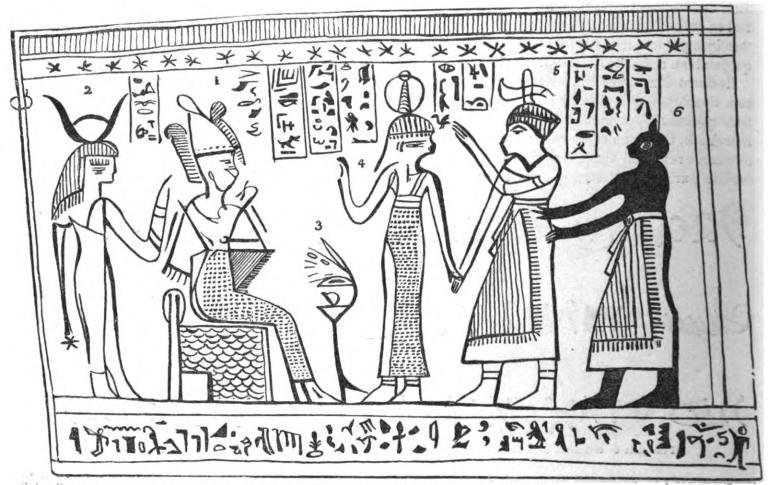
Facsimile 3 from the Book of Abraham in the Pearl of Great Price
Turning specifically to the third of the three Book of Abraham facsimiles, the authors write that
“Facsimile 3 has always been the most neglected of the three facsimiles in the Book of Abraham. Unfortunately, most of what has been said about this facsimile is seriously wanting at best and highly erroneous at worst.” Some valuable work in recent years . . . has helped . . . better situating this facsimile [Facsimile ] in its ancient Egyptian context. As that context has become clearer, elements of Joseph Smith’s explanations have become more plausible (although other elements remain at odds with current Egyptological theories). (214, quoting Professor John Gee)
And, finally, here is a very important point. I’ve italicized the last sentence in order to ensure that it isn’t overlooked:
Whichever theoretical paradigm one adopts in approaching the facsimiles, a respectable case can be made that with a number of his explanations Joseph Smith accurately captured ancient Egyptian concepts (and even scored a few bull’s-eyes with his explanations) that would have otherwise been beyond his natural ability to know. Any honest approach to the facsimiles must recognize this and take this into account. (213)
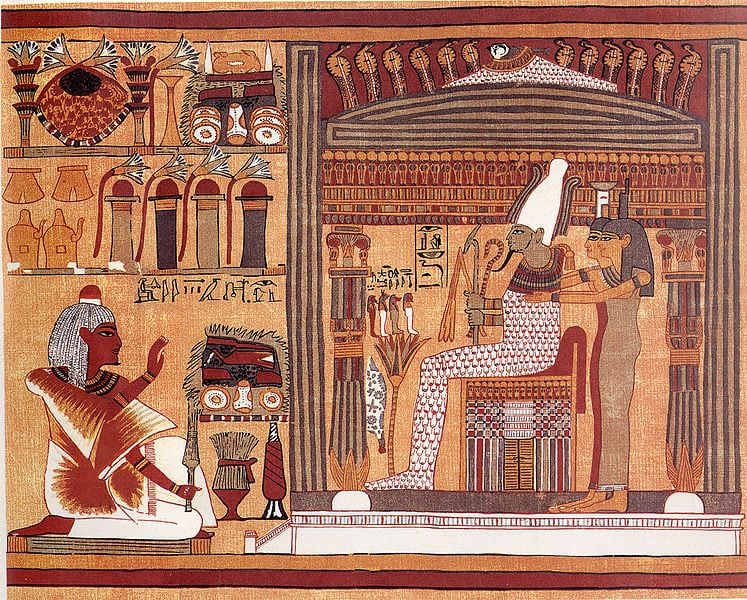
Ani kneeling before enthroned Osiris (facsimile of original dating to roughly 1300 BC)
(Wikimedia Commons public domain image )
The immediately next section of the volume is “A Semitic View of the Facsimiles” (215-220), which is, to a substantial degree, devoted to sympathetic consideration of Kevin L. Barney’s important article “The Facsimiles and Semitic Adaptation of Existing Sources,” in Astronomy, Papyrus, and Covenant, ed. John Gee and Brian M. Hauglid (Provo, Utah: Foundation for Ancient Research and Mormon Studies, 2005): 107-130. An important aspect of Barney’s article is its treatment the judgment scene in the apocryphal Testament of Abraham, which seems to draw quite directly from the judgment imagery in chapter 125 of the ancient Egyptian Book of the Dead.
Barney argues that “studying only the Egyptian context of the facsimiles will never yield a complete explanation of the significance of Joseph’s interpretations. We need to be able to look at them the way [a hypothetical ancient Jewish redactor] did, as Semitized illustrations of the Book of Abraham. When we see them from this perspective, our vision gains clarity, and the facsimiles and Joseph’s interpretations come into focus.” (218-219, quoting Kevin Barney)
In conclusion to this section, the authors remark that
Ultimately, there is still much to discuss and consider when it comes to the interpretation of the facsimiles of the Book of Abraham. Barney’s theory, while perhaps not definitive, is “valuable and attractive” and offers important “new avenues for further research.” It also provides one way to understand Joseph Smith’s interpretations of the facsimiles in a plausible ancient light. (219, quoting Kerry Muhlestein)
Happily, the present volume’s discussion of specific details of the Book of Abraham facsimiles continues for almost a hundred further pages — which will be covered here in due course.
History and Religion
Religious Art
Previous Post
December 6, 2023
Nibo labi bii? Betelehemu ilu ara
Next Post
December 9, 2023 Elder Patrick Kearon
Recent Comments
"Sutherland's lecture sounds interesting. He seems to restate the Washington consensus that trade brings peace ..."
Learning more about a region of ..."
"In a meeting today, I learned another important reason why accurate (or at least as ..."
From Serbia’s “White City,” Belgrade
"I've been watching a lot of video interviews of NDErs and researchers. I think in ..."
"PL: "Let's hope he doesn't have your address..."I have to frankly confess that a few ..."
From Serbia’s “White City,” Belgrade
Browse Our Archives
Select a Category Uncategorized
Select a Month October 2026 September 2026 August 2026 July 2026 June 2026 May 2026 April 2026 March 2026 February 2026 January 2026 December 2025 November 2025 October 2025 September 2025 August 2025 July 2025 June 2025 May 2025 April 2025 March 2025 February 2025 January 2025 December 2024 November 2024 October 2024 September 2024 August 2024 July 2024 June 2024 May 2024 April 2024 March 2024 February 2024 January 2024 December 2023 November 2023 October 2023 September 2023 August 2023 July 2023 June 2023 May 2023 April 2023 March 2023 February 2023 January 2023 December 2022 November 2022 October 2022 September 2022 August 2022 July 2022 June 2022 May 2022 April 2022 March 2022 February 2022 January 2022 December 2021 November 2021 October 2021 September 2021 August 2021 July 2021 June 2021 May 2021 April 2021 March 2021 February 2021 January 2021 December 2020 November 2020 October 2020 September 2020 August 2020 July 2020 June 2020 May 2020 April 2020 March 2020 February 2020 January 2020 December 2019 November 2019 October 2019 September 2019 August 2019 July 2019 June 2019 May 2019 April 2019 March 2019 February 2019 January 2019 December 2018 November 2018 October 2018 September 2018 August 2018 July 2018 June 2018 May 2018 April 2018 March 2018 February 2018 January 2018 December 2017 November 2017 October 2017 September 2017 August 2017 July 2017 June 2017 May 2017 April 2017 March 2017 February 2017 January 2017 December 2016 November 2016 October 2016 September 2016 August 2016 July 2016 June 2016 May 2016 April 2016 March 2016 February 2016 January 2016 December 2015 November 2015 October 2015 September 2015 August 2015 July 2015 June 2015 May 2015 April 2015 March 2015 February 2015 January 2015 December 2014 November 2014 March 2014 August 2013 February 2012
Follow Us!
TAKE THE
Religious Wisdom Quiz
Which book of the Bible ends with the word 'Amen'?
Select your answer to see how you score.
Romans Philippians Revelation Jude
Related posts from Sic et Non


Notes on Women, Priesthood, and General Conference

"The Book of Moses as a Temple Text"

TRENDING AT PATHEOS Latter-day Saint

In "Irreplaceable," our book on vocation and technology, Trevor Sutton and I...

I was strolling through the top floor of the brand new Parthenon...

What Does Gêvâh Mean For Kimberley Guifoyle &...
This week, a lot of the news is focused on Kimberly Guilfoyle....

INNER CIRCLE: Profound Mystery (Of Christ In All...
Ephesians 5:31-32 “For this reason, a man will leave his father and...

Do Not Rejoice When Your Enemy Falls: The...
Turning an execution into a public spectacle is a disturbing expression of...

'The Chosen' S6 Trailer: The Passion Gets Very...
Not many watching 'The Chosen' worry about spoilers, but just because they...
view all Latter-day Saint blogs
What Are Your Thoughts?leave a comment
Ad-Free & Subscriber Log-In Subscription Support
- About Us
- 2026 Calendar
- Videos
- Podcasts
- Library of World Religions
- Faith In Media Tracker
- Advertise With Us
- Write for Us
- Privacy Policy
- Terms of Service
- Do Not Sell My Data
- Contact Us
- Radiant Digital
- Manage Newsletter Subscriptions
- Unsubscribe From Notifications
- Sitemap
Copyright 2008-2026, Patheos. All rights reserved.
Subscription Support Ad-Free & Subscriber Log-In
Follow Patheos