
BuddhistCatholicContemplativeEvangelicalGeneral ChristianHinduJewishLatter-day SaintMuslimNew VisionsProgressive Christian
Beliefs
- Buddhist
- Catholic
- Contemplative
- Evangelical
- General Christian
- Hindu
- Jewish
- Latter-day Saint
- More Voices
- Muslim
- New Visions
- Pagan
- Progressive Christian
Topics
- Religion News
- Food and Religion
- Sports and Religion
- Religious Art
- Religious Music and Entertainment
- Religious Events
- History and Religion
- Style and Religion
- Politics and Religion
- Women in Religion
- Recreation Outdoors and Religion
- Business Finance and Religion
- Careers Workplace and Religion
- Education and Religion
- Family Parenting and Religion
- Health Fitness and Religion
- Home and Religion
- Relationships and Religion
- Technology and Religion
- Travel and Religion
Columnists
- Buddhist Columnists
- Business Finance and Religion Columnists
- Careers Workplace and Religion Columnists
- Catholic Columnists
- Contemplative Columnists
- Education and Religion Columnists
- Evangelists Columnists
- Family Parenting and Religion Columnists
- General Christian Columnists
- Health Fitness and Religion Columnists
- Hindu Columnists
- History and Religion Columnists
- Home and Religion Columnists
- Jewish Columnists
- More Voices Columnists
- Latter Day Columnists
- Muslim Columnists
- New Visions Columnists
- Nonreligious Columnists
- Pagan Columnists
- Politics and Religion Columnists
- Progressive Columnists
- Recreation Outdoors and Religion Columnists
- Relationships and Religion Columnists
- Religion News Columnists
- Religious Art Columnists
- Religious Events Columnists
- Religious Music and Entertainment Columnists
- Sports and Religion Columnists
- Style and Religion Columnists
- Technology and Religion Columnists
- Travel and Religion Columnists
- Women in Religion Columnists
Resource Library
- 2026 Calendar
- Library of World Religions
- The 100 Most Holy Places on Earth
- Patheos Answers
- Podcasts
- Videos
- Faith Leaders Database
- Anglican Episcopalian
- Bahai
- Baptist
- Buddhism
- Christianity
- Confucianism
- Eastern Orthodoxy
- Hinduism
- Holiness and Pentecostal
- ISKCON
- Islam
- Judaism
- Lutheran
- Methodist
- The Church of Jesus Christ of Latter-day Saints
- New Age
- Paganism
- Presbytarian and Reformed
- Protestantism
- Religion Behind the Scenes
- Roman Catholic
- Scientology
- Shia Islam
- Sikhism
- Sufism
- Sunni Islam
- Taoism
- Zen
- See all religions
Research Tools
 Ad-Free & Subscriber Log-In Subscription Support
Ad-Free & Subscriber Log-In Subscription Support
Follow Patheos 

- Trending:
- Forgiveness
- |
- Marriage
- |
- Consciousness
- |
- Death Penalty
- |
- Election
- |
- Halloween

- Home
- Latter-day Saint
- Religious Art
- “Catholic theology made no such provision”
“Catholic theology made no such provision”
Last updated on: July 9, 2023 at 11:38 pm by Dan Peterson
“Catholic theology made no such provision” 2023-07-09T23:38:11-06:00 Dan Peterson
Patheos Explore the world's faith through different perspectives on religion and spirituality! Patheos has the views of the prevalent religions and spiritualities of the world.
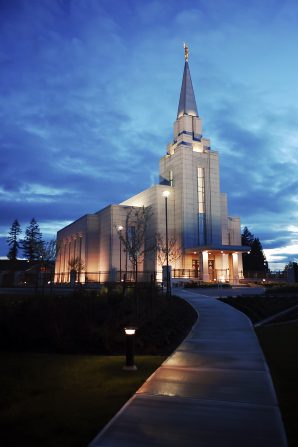
The Vancouver British Columbia Temple was dedicated on 2 May 2010.
(LDS Media Library)
As I mentioned the other day, my wife and I recently read Prue Shaw’s Reading Dante: From Here to Eternity. Dr. Shaw studied at the University of Sydney, where she gained First Class degrees in English and in Italian, and later earned degrees at the the Universities of Oxford (B. Phil in General and Comparative Literature) and Florence (Dott. In Lett.). She taught Italian Language and Literature at the University of Cambridge, the University of London, and University College London, where she is now Emeritus Reader in Italian.
I will share here a trio of the many passages from Reading Dante that especially caught my attention. All three come from the first chapter, “Friendship.”
The first is funny, in a way, but also illustrates the fact that great good can come quite unexpectedly out of evil and injustice:
A distinguished nineteenth-century Italian said that Florence should have erected a statue not to Dante but to the obscure Florentine official who sent him into exile. Without the experience of exile Dante would not—could not—have written the Commedia.
The second has something to do with the remarkable significance of numbers in Dante’s cosmology, a significance that is, in a sense, becoming apparent once more to modern cosmologists:
Researchers working at CERN in Geneva using the Large Hadron Collider speak of the simplicity and beauty of the mathematical principles that underlie the variety of existence. Fractal geometry is another underlying structural principle that unifies natural phenomena from the very small to the very large. The excitement modern scientists feel at these discoveries is the excitement Dante’s poem communicates about numbers and their significance. The relation of numbers to the structure and functioning of the universe and to human creativity is the subject of the sixth chapter.
The third concerns Dante’s relative openness to the idea of a kind of salvation for pre-Christian pagans, which is quite striking and unexpected in a devoutly Catholic medieval Italian poet:
Dante is a good Catholic but an independent thinker. He is determined to understand what it is to be a human being, and the place of the individual in society and in the cosmos—universal concerns that transcend any age or system of religious belief. Far from merely being a spokesman for medieval Catholic orthodoxy, he can reach conclusions his contemporaries found disconcerting and even dangerous.
This independence of mind is revealed early in the poem, when we find the great philosophers and poets of antiquity—Homer, Plato and Aristotle, among many others—occupying a place of special privilege on the edge of hell. Among their number, no less remarkably, are two great philosophers of Islam, Averroes and Avicenna. Unlike the damned, these thinkers and writers suffer no physical pain. Unlike the damned, they have pleasant surroundings: light, fine architecture, green grass, and good conversation—rather like the quad of an Oxbridge college, one might think. Virgil, Homer and the other classical writers assembled there often talk about poetry. Their only punishment is the knowledge of their exclusion from paradise: sanza speme vivemo in disio (“without hope we live in desire”). Their unrequited yearning for the divine has no hope of ever being satisfied. That is punishment enough.
Catholic theology made no such provision for the great minds and talents of the pagan past. The conventional view was that only unbaptised infants occupied Limbo, this region on the outer rim of hell (limbo means “edge”). The Jewish patriarchs like Abraham and Moses had been there too for a time, before they were taken up to heaven by Christ after his death. But no pagans belonged here, no matter how remarkable their lives had been for virtue or for wisdom. One early commentator on the poem, Guido da Pisa, a Carmelite friar writing in the late 1320s, less than ten years after Dante’s death, clearly admired the poet. Yet he felt it necessary to distance himself at the outset from this and similar examples of unorthodox thinking with a formula revoking in advance—ex nunc revoco et annullo—anything he inadvertently says in explicating the poem which is against the faith or against the holy church—vel contra fidem vel contra sanctam ecclesiam. (In the late 1950s at Sydney University, good Catholic girls used to take the same preemptive action by inscribing a monogram with just this meaning in the top corner of every page of their philosophy lecture notes.) Dante, explains Guido da Pisa, speaks as a poet and not as a theologian: poetice et non theologice loquitur. The enduring fascination of the Commedia lies precisely in the fact that Dante writes as a poet and not as a theologian. His view of the world was one that often alarmed his contemporaries, and it is still challenging today; but it is the way he found to express that view which makes the Commedia a masterpiece.
This question is much on my mind here in coastal British Columbia, where the Native American cultures — or, as the Canadians would say, the the cultures of the First Nations — are very evident in place names and elsewhere. These peoples lived for dozens of generations without word of Jesus. According to traditional Christian theology, therefore, the ancestors of today’s indigenous peoples were and are damned. But this seems not only wildly unjust but utterly foreign to the nature of any God whom I could ever possibly recognize as benevolent, let alone loving.

Another failed attempt (this one, frankly, mine) to adequately represent our view here. The ocean is much closer than it seems in this photo, and it occupies about 100 degrees of our panorama.
It is only during the past century or two, I think, that the question of “the salvation of the unevangelized” has become a real and urgent problem for believing Christians. Before that, unbelievers were mostly far away, culturally and linguistically foreign, and, thus easily demonized. For at least the past hundred or hundred and fifty years, though, believers of many different stripes (to say nothing of unbelievers) have been in regular contact with each other, even living in mixed communities alongside each other. It has become impossible to deny that many of Them are at least as good and sincere and rational as We are and, accordingly, it has become much harder to demonize or marginalize them, or to view their likely damnation (as was once confidently expected) with equanimity or indifference.
As I’ve noted here and elsewhere on more than a few occasions, one of the elements of the Restoration in which I take most delight is its way of dealing with — really, neutralizing — the problem of “the salvation of the unevangelized” that continues to challenge many other Christian denominations and thinkers. Our temples, of which more and more are being built and dedicated around the world, are the physical expression not only of our faith but of the “wideness in God’s mercy” that cares for those who died without hearing the good news of the Gospel during their mortal lifetimes.
Posted from Ucluelet, British Columbia
Religious Art
Previous Post

July 8, 2023
Speaking of "jaded Western tourists" . . .
Next Post

July 10, 2023 Nothing new under the sun?
Recent Comments
"I have cpnsidered in my mond if the 4 volume Saints could be made into ..."
From Serbia’s “White City,” Belgrade
"DP: “But Mr. Sutherland worries about the fact that our time, when we can communicate ..."
Learning more about a region of ..."
"Another class of memories are of individuals who previously lived. Some of these remembered individuals ..."
"Sutherland's lecture sounds interesting. He seems to restate the Washington consensus that trade brings peace ..."
Learning more about a region of ..."
Browse Our Archives
Select a Category Uncategorized
Select a Month October 2026 September 2026 August 2026 July 2026 June 2026 May 2026 April 2026 March 2026 February 2026 January 2026 December 2025 November 2025 October 2025 September 2025 August 2025 July 2025 June 2025 May 2025 April 2025 March 2025 February 2025 January 2025 December 2024 November 2024 October 2024 September 2024 August 2024 July 2024 June 2024 May 2024 April 2024 March 2024 February 2024 January 2024 December 2023 November 2023 October 2023 September 2023 August 2023 July 2023 June 2023 May 2023 April 2023 March 2023 February 2023 January 2023 December 2022 November 2022 October 2022 September 2022 August 2022 July 2022 June 2022 May 2022 April 2022 March 2022 February 2022 January 2022 December 2021 November 2021 October 2021 September 2021 August 2021 July 2021 June 2021 May 2021 April 2021 March 2021 February 2021 January 2021 December 2020 November 2020 October 2020 September 2020 August 2020 July 2020 June 2020 May 2020 April 2020 March 2020 February 2020 January 2020 December 2019 November 2019 October 2019 September 2019 August 2019 July 2019 June 2019 May 2019 April 2019 March 2019 February 2019 January 2019 December 2018 November 2018 October 2018 September 2018 August 2018 July 2018 June 2018 May 2018 April 2018 March 2018 February 2018 January 2018 December 2017 November 2017 October 2017 September 2017 August 2017 July 2017 June 2017 May 2017 April 2017 March 2017 February 2017 January 2017 December 2016 November 2016 October 2016 September 2016 August 2016 July 2016 June 2016 May 2016 April 2016 March 2016 February 2016 January 2016 December 2015 November 2015 October 2015 September 2015 August 2015 July 2015 June 2015 May 2015 April 2015 March 2015 February 2015 January 2015 December 2014 November 2014 March 2014 August 2013 February 2012
Follow Us!
TAKE THE
Religious Wisdom Quiz
What color is the first horse in Revelation 6?
Select your answer to see how you score.
Black Pale White Red
Related posts from Sic et Non
Was science possible before the Protestant Reformation?
A long and strenuous but glorious day
“Although the seal is hidden, the wax stamped...
TRENDING AT PATHEOS Latter-day Saint

Methodist Central Hall and Westminster Abbey
Situated on the same square is Methodist Central Hall and Westminster Abbey. ...

57th Dove Awards Honor Dolly Parton, Crown New...
On gospel music’s biggest night, the 57th annual GMA Dove Awards honored...

The First Eucharistic Controversy: Christ’s Real Presence
For Catholics, the Eucharist is the source and summit of the Christian...

What a Stop Sign Can Teach Us About...
How to Make a Decision When You Can't Hear God Main point:...

Archdiocese Hosts Military Marriage Retreat in Germany
RASTATT, Germany — The transient military lifestyle, with its frequent deployments and...

Nearly every morning, I make the drive to Detroit with my high-school-age...
view all Latter-day Saint blogs
What Are Your Thoughts?leave a comment
Ad-Free & Subscriber Log-In Subscription Support
- About Us
- 2026 Calendar
- Videos
- Podcasts
- Library of World Religions
- Faith In Media Tracker
- Advertise With Us
- Write for Us
- Privacy Policy
- Terms of Service
- Do Not Sell My Data
- Contact Us
- Radiant Digital
- Manage Newsletter Subscriptions
- Unsubscribe From Notifications
- Sitemap
Copyright 2008-2026, Patheos. All rights reserved.
Subscription Support Ad-Free & Subscriber Log-In
Follow Patheos