
BuddhistCatholicContemplativeEvangelicalGeneral ChristianHinduJewishLatter-day SaintMuslimNew VisionsProgressive Christian
Beliefs
- Buddhist
- Catholic
- Contemplative
- Evangelical
- General Christian
- Hindu
- Jewish
- Latter-day Saint
- More Voices
- Muslim
- New Visions
- Pagan
- Progressive Christian
Topics
- Religion News
- Food and Religion
- Sports and Religion
- Religious Art
- Religious Music and Entertainment
- Religious Events
- History and Religion
- Style and Religion
- Politics and Religion
- Women in Religion
- Recreation Outdoors and Religion
- Business Finance and Religion
- Careers Workplace and Religion
- Education and Religion
- Family Parenting and Religion
- Health Fitness and Religion
- Home and Religion
- Relationships and Religion
- Technology and Religion
- Travel and Religion
Columnists
- Buddhist Columnists
- Business Finance and Religion Columnists
- Careers Workplace and Religion Columnists
- Catholic Columnists
- Contemplative Columnists
- Education and Religion Columnists
- Evangelists Columnists
- Family Parenting and Religion Columnists
- General Christian Columnists
- Health Fitness and Religion Columnists
- Hindu Columnists
- History and Religion Columnists
- Home and Religion Columnists
- Jewish Columnists
- More Voices Columnists
- Latter Day Columnists
- Muslim Columnists
- New Visions Columnists
- Nonreligious Columnists
- Pagan Columnists
- Politics and Religion Columnists
- Progressive Columnists
- Recreation Outdoors and Religion Columnists
- Relationships and Religion Columnists
- Religion News Columnists
- Religious Art Columnists
- Religious Events Columnists
- Religious Music and Entertainment Columnists
- Sports and Religion Columnists
- Style and Religion Columnists
- Technology and Religion Columnists
- Travel and Religion Columnists
- Women in Religion Columnists
Resource Library
- 2026 Calendar
- Library of World Religions
- The 100 Most Holy Places on Earth
- Patheos Answers
- Podcasts
- Videos
- Faith Leaders Database
- Anglican Episcopalian
- Bahai
- Baptist
- Buddhism
- Christianity
- Confucianism
- Eastern Orthodoxy
- Hinduism
- Holiness and Pentecostal
- ISKCON
- Islam
- Judaism
- Lutheran
- Methodist
- The Church of Jesus Christ of Latter-day Saints
- New Age
- Paganism
- Presbytarian and Reformed
- Protestantism
- Religion Behind the Scenes
- Roman Catholic
- Scientology
- Shia Islam
- Sikhism
- Sufism
- Sunni Islam
- Taoism
- Zen
- See all religions
Research Tools
 Ad-Free & Subscriber Log-In Subscription Support
Ad-Free & Subscriber Log-In Subscription Support
Follow Patheos 

- Trending:
- Forgiveness
- |
- Marriage
- |
- Consciousness
- |
- Death Penalty
- |
- Election
- |
- Halloween

- Home
- Latter-day Saint
- If there is no God, is everything permitted?
If there is no God, is everything permitted?
Last updated on: April 16, 2023 at 12:25 pm by Dan Peterson
If there is no God, is everything permitted? 2023-04-16T12:25:58-06:00 Dan Peterson
Patheos Explore the world's faith through different perspectives on religion and spirituality! Patheos has the views of the prevalent religions and spiritualities of the world.
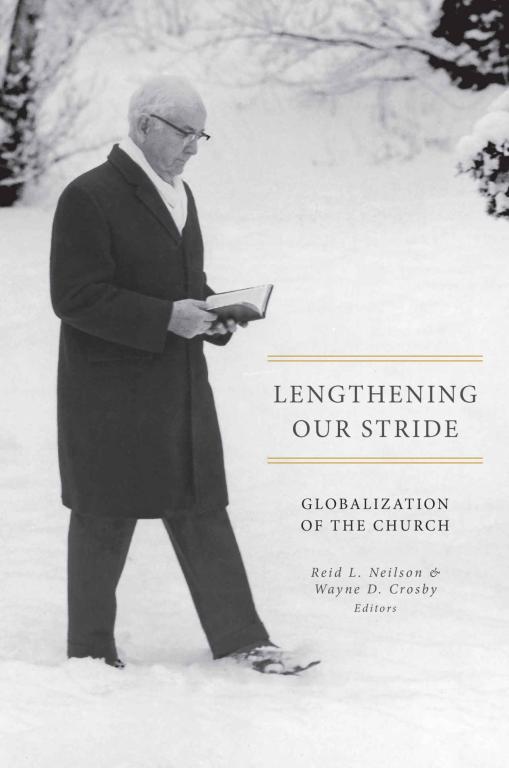
A cover illustration, from Amazon.com
This is, I think, my favorite image of President Spencer W. Kimball.
These new entries went up today on the website of the Interpreter Foundation, all of them compiled or selected by Dennis B. Horne:
“Elder Spencer W. Kimball’s Apostolic Call Experience: From his own writings”
“Precious Highlights in President Spencer W. Kimball’s Journal: Located, described, linked, and dated by Dennis B. Horne” [The labor that went into this makes it an astonishing labor-saving resource for the rest of us. – dcp]
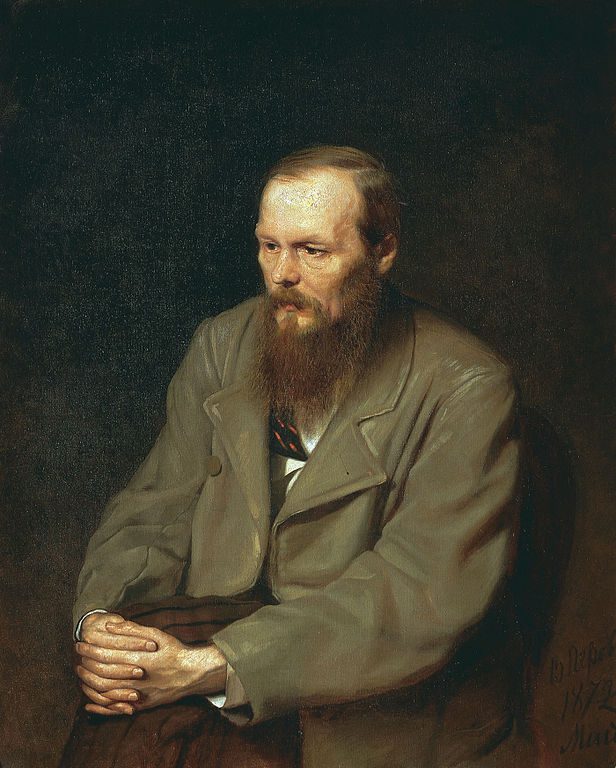
«Портрет писателя Федора Михайловича Достоевского» (Portrait of the Writer Fyodor Dostoyevsky) Vasily Perov (1872), Wikimedia Commons public domain image
“If there is no God,” the great Russian novelist Fyodor Dostoyevsky is claimed to have said, “everything is permitted.” The statement is often attributed to his novel The Brothers Karamazov, but it doesn’t actually occur there, nor in any of his other works.
The French existentialist philosopher Jean-Paul Sartre, in his Being and Nothingness, is generally credited as the first to have attributed the statement to Dostoyevsky, but he didn’t make it up out of nothing. Passages with roughly the same meaning do actually occur — for example in Dmitri’s claim, reported to Alyosha, from his debate with the semnarian Rakitin:
“‘But what will become of men then?’ I asked him, ‘without God and immortal life? All things are permitted then, they can do what they like?'”
Which leads me into consideration of what is often called “the moral argument for the existence of God,” or something of that sort. As a basis for this post, which constitutes a first pass at the topic, I’m using the first four minutes of Gordon Petit’s handy summary of William Lane Craig’s formulation of the argument, accompanied by some of my own reactions and reflections:
- If God does not exist, objective moral values and duties do not exist.
- Objective moral values and duties do exist.
- Therefore, God exists.
This is a logically valid argument, of the form known classically as modus tollens (“If P, then Q. Not Q. Therefore, not P”). Whether the conclusion is actually true, though, depends upon the truth or falsity of the two premises.
Petit explains that “moral values” are concerned with questions of good or bad. That seems rather obvious. “Moral duties,” though, are rather different. They involve obligations, questions of right or wrong. To illustrate the difference, Petit cites examples of things that would be good (e.g., devoting a full year to service of the poor) but that are not duties obligatory for all. Moral duties, by contrast, involve matters that are obligatory for everyone (e.g., treating others with respect) or that are prohibited to everyone (e.g. — my example — tormenting others for entertainment).
Helpfully, Petit also explains what he means by the word objective. He uses it to refer to matters that are “independent of people’s opinions. I like the modesty of that explanation, because I regard the question of the source of moral obligations and duties as a difficult one even for theists and as a question on which I haven’t yet entirely made up my own mind. Value and duties are, it seems to me, obviously not derivable from the periodic table, or sunspots, or geological samples, or any analysis of animal populations in the wild — which, to my mind, suggests that the derivation of objective moral values and duties from reductive naturalism, which ultimately recognizes the existence only of atoms and the void and of epiphenomenal realities that are entirely dependent upon atoms and the void, is very likely impossible. But most of us do recognize moral values and duties as falling upon us from outside us and, indeed, from outside ourselves, independent of society and of the opinions of others. (This is what morally authorized resistance to the Third Reich, the Civil Rights movement, and, before that, the movement for the abolition of slavery.)
With regard to Premise 1, above: C. S. Lewis and many others have pointed to the universality of fundamental morality across human cultures and over centuries. We might differ about how to respect the bodies of the dead, for example — do we burn them, or bury them, or expose them to vultures — but all cultures have agreed that the bodies of the dead ought to be respected. And no culture has ever advocated wholesale lying, unmotivated murder, or the gratuitous torture of small children or defenseless animals.
If, though, there is no God, if what we call morality is merely something that has evolved in order to facilitate the survival of our species, then morality seems to be drained of its specifically moral nature. Yes, behavior x might help society as a whole to survive and even to flourish, but why should I care about the survival and flourishing of humanity? If behavior x conflicts with my own self-interest, why should I feel any obligation to engage in it? Where would that obligation, that “should,” come from? And on what basis might I decide that, even if behavior x were likely to further human survival and flourishing, it would nonetheless be wrong because it injured other, non-human, beings? Those who have read Out of the Silent Planet, the first book of C. S. Lewis’s wonderful Perelandra trilogy, might want to consider the character of the physicist Weston in this context. And there have been more than a few science fiction films in which alien invaders arrive on Earth seeking to exterminate its population in order to more efficiently seize its resources (e.g., its water). Speaking morally, on a purely materialistic worldview would we be able to pronounce such actions “wrong,” as opposed to resisting them simply because they threaten our own self-interest? Even if we grant its notion that the Aryans were the master race, was the Third Reich “wrong” in attempting to seize the territory of others, and even to exterminate them, in order to gain Lebensraum (“living space”) and to enhance its own own flourishing? (See, too, the remarkable fourteen-minute film “The Biology of the Second Reich: Social Darwinism and the Origins of World War 1.” And perhaps, also, my Deseret News column “Was Adolf Hitler Religious?”)
Please note that I am not arguing that unbelievers cannot do good or be good people. That is an altogether distinct proposition — and one that I completely reject. I know for a fact that non-believers can be moral and good. I would never argue otherwise. I am also not talking at all about the specific commands and prohibitions of purportedly revealed scripture (e.g., of the Bible or of the Qur’an). Rather, I’m talking about our seemingly innate moral sense or, to put it another way, our innate sense of external moral authority that is sometimes directly contrary to our own interests or desires. Please note, also, that this is merely a preliminary sketch of the issue:
To be continued.

Poster for pending interfaith event
I’ll be speaking at this event. Perhaps I’ll eventually find some way to share my remarks here, since it’s evidently too late for RSVPs for the event itself.
Utah Valley Interfaith Association Meeting on April 18th at noon!
Please RSVP to Stephanie ([email protected]) by 4/12/23 with any food allergies or dietary restrictions.
A VIP lunch and tour of the Tabernacle for Utah Valley Interfaith Association, Payson Interfaith Association, and mayors/elected officials from Utah County.
The sponsoring organization
Utah Valley Interfaith Association
Previous Post

April 14, 2023
Joseph Mormon Harris?
Next Post

April 16, 2023 On Being “Perfect” (Part Two)
Recent Comments
"I have cpnsidered in my mond if the 4 volume Saints could be made into ..."
From Serbia’s “White City,” Belgrade
"Another class of memories are of individuals who previously lived. Some of these remembered individuals ..."
"Sutherland's lecture sounds interesting. He seems to restate the Washington consensus that trade brings peace ..."
Learning more about a region of ..."
"In a meeting today, I learned another important reason why accurate (or at least as ..."
From Serbia’s “White City,” Belgrade
Browse Our Archives
Select a Category Uncategorized
Select a Month October 2026 September 2026 August 2026 July 2026 June 2026 May 2026 April 2026 March 2026 February 2026 January 2026 December 2025 November 2025 October 2025 September 2025 August 2025 July 2025 June 2025 May 2025 April 2025 March 2025 February 2025 January 2025 December 2024 November 2024 October 2024 September 2024 August 2024 July 2024 June 2024 May 2024 April 2024 March 2024 February 2024 January 2024 December 2023 November 2023 October 2023 September 2023 August 2023 July 2023 June 2023 May 2023 April 2023 March 2023 February 2023 January 2023 December 2022 November 2022 October 2022 September 2022 August 2022 July 2022 June 2022 May 2022 April 2022 March 2022 February 2022 January 2022 December 2021 November 2021 October 2021 September 2021 August 2021 July 2021 June 2021 May 2021 April 2021 March 2021 February 2021 January 2021 December 2020 November 2020 October 2020 September 2020 August 2020 July 2020 June 2020 May 2020 April 2020 March 2020 February 2020 January 2020 December 2019 November 2019 October 2019 September 2019 August 2019 July 2019 June 2019 May 2019 April 2019 March 2019 February 2019 January 2019 December 2018 November 2018 October 2018 September 2018 August 2018 July 2018 June 2018 May 2018 April 2018 March 2018 February 2018 January 2018 December 2017 November 2017 October 2017 September 2017 August 2017 July 2017 June 2017 May 2017 April 2017 March 2017 February 2017 January 2017 December 2016 November 2016 October 2016 September 2016 August 2016 July 2016 June 2016 May 2016 April 2016 March 2016 February 2016 January 2016 December 2015 November 2015 October 2015 September 2015 August 2015 July 2015 June 2015 May 2015 April 2015 March 2015 February 2015 January 2015 December 2014 November 2014 March 2014 August 2013 February 2012
Follow Us!
TAKE THE
Religious Wisdom Quiz
According to Paul, nothing in all creation can separate you from me—not death, not life, not angels or demons. What am I?
Select your answer to see how you score.
God's grace God's mercy Salvation The love of God
Related posts from Sic et Non

Finally, a political blog entry like the ones...
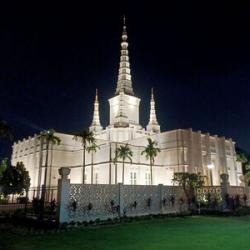
Without Moroni statues, is the Church rejecting its...

Sehnsucht and "Pure Northernness"

TRENDING AT PATHEOS Latter-day Saint

57th Dove Awards Honor Dolly Parton, Crown New...
On gospel music’s biggest night, the 57th annual GMA Dove Awards honored...

The First Eucharistic Controversy: Christ’s Real Presence
For Catholics, the Eucharist is the source and summit of the Christian...

What a Stop Sign Can Teach Us About...
How to Make a Decision When You Can't Hear God Main point:...

Archdiocese Hosts Military Marriage Retreat in Germany
RASTATT, Germany — The transient military lifestyle, with its frequent deployments and...

Nearly every morning, I make the drive to Detroit with my high-school-age...

The Real AI Story Is Adoption Without Trust
Artificial intelligence has crossed a political threshold. It is no longer a...
view all Latter-day Saint blogs
What Are Your Thoughts?leave a comment
Ad-Free & Subscriber Log-In Subscription Support
- About Us
- 2026 Calendar
- Videos
- Podcasts
- Library of World Religions
- Faith In Media Tracker
- Advertise With Us
- Write for Us
- Privacy Policy
- Terms of Service
- Do Not Sell My Data
- Contact Us
- Radiant Digital
- Manage Newsletter Subscriptions
- Unsubscribe From Notifications
- Sitemap
Copyright 2008-2026, Patheos. All rights reserved.
Subscription Support Ad-Free & Subscriber Log-In
Follow Patheos