
BuddhistCatholicContemplativeEvangelicalGeneral ChristianHinduJewishLatter-day SaintMuslimNew VisionsProgressive Christian
Beliefs
- Buddhist
- Catholic
- Contemplative
- Evangelical
- General Christian
- Hindu
- Jewish
- Latter-day Saint
- More Voices
- Muslim
- New Visions
- Pagan
- Progressive Christian
Topics
- Religion News
- Food and Religion
- Sports and Religion
- Religious Art
- Religious Music and Entertainment
- Religious Events
- History and Religion
- Style and Religion
- Politics and Religion
- Women in Religion
- Recreation Outdoors and Religion
- Business Finance and Religion
- Careers Workplace and Religion
- Education and Religion
- Family Parenting and Religion
- Health Fitness and Religion
- Home and Religion
- Relationships and Religion
- Technology and Religion
- Travel and Religion
Columnists
- Buddhist Columnists
- Business Finance and Religion Columnists
- Careers Workplace and Religion Columnists
- Catholic Columnists
- Contemplative Columnists
- Education and Religion Columnists
- Evangelists Columnists
- Family Parenting and Religion Columnists
- General Christian Columnists
- Health Fitness and Religion Columnists
- Hindu Columnists
- History and Religion Columnists
- Home and Religion Columnists
- Jewish Columnists
- More Voices Columnists
- Latter Day Columnists
- Muslim Columnists
- New Visions Columnists
- Nonreligious Columnists
- Pagan Columnists
- Politics and Religion Columnists
- Progressive Columnists
- Recreation Outdoors and Religion Columnists
- Relationships and Religion Columnists
- Religion News Columnists
- Religious Art Columnists
- Religious Events Columnists
- Religious Music and Entertainment Columnists
- Sports and Religion Columnists
- Style and Religion Columnists
- Technology and Religion Columnists
- Travel and Religion Columnists
- Women in Religion Columnists
Resource Library
- 2026 Calendar
- Library of World Religions
- The 100 Most Holy Places on Earth
- Patheos Answers
- Podcasts
- Videos
- Faith Leaders Database
- Anglican Episcopalian
- Bahai
- Baptist
- Buddhism
- Christianity
- Confucianism
- Eastern Orthodoxy
- Hinduism
- Holiness and Pentecostal
- ISKCON
- Islam
- Judaism
- Lutheran
- Methodist
- The Church of Jesus Christ of Latter-day Saints
- New Age
- Paganism
- Presbytarian and Reformed
- Protestantism
- Religion Behind the Scenes
- Roman Catholic
- Scientology
- Shia Islam
- Sikhism
- Sufism
- Sunni Islam
- Taoism
- Zen
- See all religions
Research Tools
 Ad-Free & Subscriber Log-In Subscription Support
Ad-Free & Subscriber Log-In Subscription Support
Follow Patheos 

- Trending:
- Forgiveness
- |
- Marriage
- |
- Consciousness
- |
- Death Penalty
- |
- Election
- |
- Halloween

- Home
- Latter-day Saint
- Health, Fitness and Religion
- Religiosity, Depression, and Life Expectancy
Religiosity, Depression, and Life Expectancy
Last updated on: December 27, 2022 at 8:50 pm by Dan Peterson
Religiosity, Depression, and Life Expectancy 2022-12-27T20:50:49-07:00 Dan Peterson
Patheos Explore the world's faith through different perspectives on religion and spirituality! Patheos has the views of the prevalent religions and spiritualities of the world.
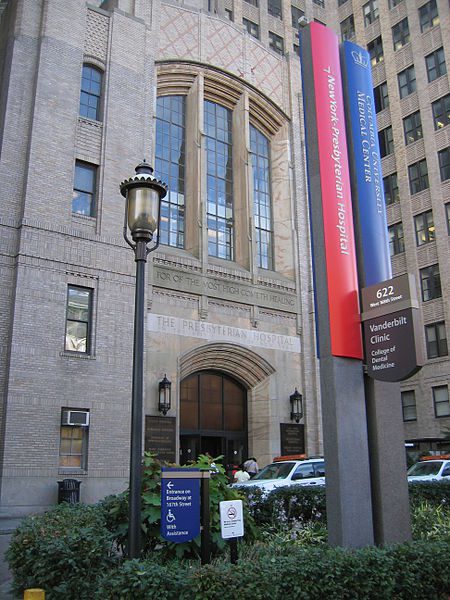
The entrance to New York-Presbyterian Hospital
(Wikimedia Commons public domain photograph)
The image is not particularly relevant to this entry, except that . . . well, it’s a photo of a hospital.
But, first, these three new items went up today on the website of the Interpreter Foundation:
Nibley Lectures: Time Vindicates the Prophets — “Prophets and Ritual”
Between 7 March 1954 and 17 October 1954, Hugh Nibley delivered a series of thirty weekly lectures on KSL Radio that were also published as pamphlets. The series, which was called “Time Vindicates the Prophets,” was given in answer to those who were challenging the right of members of the Church of Jesus Christ of Latter-day Saints to call themselves Christians. This particular lecture suggests that religion is not practical for this life but is essential for the next.
Once again, Jonn Claybaugh provides concise notes for students and teachers of the Church’s “Come, Follow Me” curriculum.
The New Testament in Context Lesson 2: “Be It unto Me according to Thy Word”
In the 27 November 2022 Come, Follow Me segment of the weekly Interpreter Radio Show, Steve Densley, Mark Johnson, and Matt Bowen discussed New Testament lesson 2, on Matthew 1 and Luke 1. That segment is now available for your listening, at your convenience and at no charge. The other segments of the 27 November 2022 radio show can be accessed at https://interpreterfoundation.org/interpreter-radio-show-november-27-2022. The Interpreter Radio Show can be heard live on Sunday evenings from 7 to 9 PM (MDT), on K-TALK, AM 1640, or you can listen to it on the Internet at ktalkmedia.com.

I was born in this hospital in southern California. The fact that I was born in a hospital inescapably suggests — despite suspicions to the contrary based on my advanced age — that there were hominids before me, since some sort of tool-using organism must have built it prior to my birth.
(Public domain photo from Wikimedia Commons)
But, now, on to some appalling links that I’ve retrieved from the Christopher Hitchens Memorial “How Religion Poisons Everything” File©. They should give several of my readers a delicious frisson of righteous indignation and deeply satisfying horror:
Purpose of the Study:
Approximately 20% of older adults are diagnosed with depression in the United States. Extant research suggests that engagement in religious activity, or religiosity, may serve as a protective factor against depression. This prospective study examines whether religiosity protects against depression and/or aids in recovery.
Design and Methods:
Study data are drawn from the 2006 and 2008 waves of the Health and Retirement Study. The sample consists of 1,992 depressed and 5,740 nondepressed older adults (mean age = 68.12 years), at baseline (2006), for an overall sample size of 7,732. Logistic regressions analyzed the relationship between organizational (service attendance), nonorganizational (private prayer), and intrinsic measures of religiosity and depression onset (in the baseline nondepressed group) and depression recovery (in the baseline depressed group) at follow-up (2008), controlling for other baseline factors.
Results:
Religiosity was found to both protect against and help individuals recover from depression. Individuals not depressed at baseline remained nondepressed 2 years later if they frequently attended religious services, whereas those depressed at baseline were less likely to be depressed at follow-up if they more frequently engaged in private prayer.
Implications:
Findings suggest that both organizational and nonorganizational forms of religiosity affect depression outcomes in different circumstances (i.e., onset and recovery, respectively). Important strategies to prevent and relieve depression among older adults may include improving access and transportation to places of worship among those interested in attending services and facilitating discussions about religious activities and beliefs with clinicians.
The objective is to measure the relationship of several healthy characteristics of the Mormon lifestyle to mortality. We examined 9815 religiously active California Mormon adults followed for mortality during 1980-2004 and 15,832 representative U.S. white adults enrolled in the 1987 National Health Interview Survey (NHIS) and followed for mortality during 1988-1997. The standardized mortality ratio (SMR) and 95% confidence interval (CI) was calculated relative to U.S. whites defined to have a SMR of 1.00. Active California Mormons practice a healthy lifestyle advocated by their religion, which emphasizes a strong family life, education and abstention from tobacco and alcohol. Unusually low SMRs occurred among married never smokers who attended church weekly and had at least 12 years of education. For those aged 25-99 years at entry, the SMR for all causes of death was 0.45 (0.42-0.48) for males and 0.55 (0.51-0.59) for females. For those aged 25-64 years at entry, the SMR for all causes of death was 0.36 (0.32-0.41) for males and 0.46 (0.40-0.53) for females. Life expectancy from age 25 was 84 years for males and 86 years for females. These SMRs were largely replicated among similarly defined persons of all religions within the NHIS cohort. Several healthy characteristics of the Mormon lifestyle are associated with substantially reduced death rates and increased life expectancy.
And, while I’m in the area, here is a quartet of articles that I’ve published over the years on the general subject of religiosity and health. I think that there have been others, but these are the ones that I can recall right off the top of my head. As the saying goes, “read ’em and weep”:
Daniel Peterson (2013), “How religious faith benefits society”
Daniel Peterson (2017): “Is religious faith a mental illness?”
Daniel Peterson (2017): “Is religion good for your health?”
William Hamblin and Daniel Peterson (2019): “Is religious faith a disease to be cured?”
:
Dang. I can’t help myself. I seem to be on a roll. I just can’t quit. Although it isn’t directly relevant to the question of the health benefits associated with religiosity and religious observance, there’s some really chilling additional Hitchens File material in this article and in its embedded videos. You should probably be sitting down: “A Look Back at the Church of Jesus Christ in 2022: How leaders and everyday members ministered around the world in 2022”
Health, Fitness and Religion
Christopher Hitchens Memorial "How Religion Poisons Everything" File
Church of Jesus Christ of Latter-day Saints
Previous Post

December 26, 2022
Physics in Wonderland
Next Post
December 28, 2022 Out with the old and in with the new
Browse Our Archives
Select a Category Uncategorized
Select a Month October 2026 September 2026 August 2026 July 2026 June 2026 May 2026 April 2026 March 2026 February 2026 January 2026 December 2025 November 2025 October 2025 September 2025 August 2025 July 2025 June 2025 May 2025 April 2025 March 2025 February 2025 January 2025 December 2024 November 2024 October 2024 September 2024 August 2024 July 2024 June 2024 May 2024 April 2024 March 2024 February 2024 January 2024 December 2023 November 2023 October 2023 September 2023 August 2023 July 2023 June 2023 May 2023 April 2023 March 2023 February 2023 January 2023 December 2022 November 2022 October 2022 September 2022 August 2022 July 2022 June 2022 May 2022 April 2022 March 2022 February 2022 January 2022 December 2021 November 2021 October 2021 September 2021 August 2021 July 2021 June 2021 May 2021 April 2021 March 2021 February 2021 January 2021 December 2020 November 2020 October 2020 September 2020 August 2020 July 2020 June 2020 May 2020 April 2020 March 2020 February 2020 January 2020 December 2019 November 2019 October 2019 September 2019 August 2019 July 2019 June 2019 May 2019 April 2019 March 2019 February 2019 January 2019 December 2018 November 2018 October 2018 September 2018 August 2018 July 2018 June 2018 May 2018 April 2018 March 2018 February 2018 January 2018 December 2017 November 2017 October 2017 September 2017 August 2017 July 2017 June 2017 May 2017 April 2017 March 2017 February 2017 January 2017 December 2016 November 2016 October 2016 September 2016 August 2016 July 2016 June 2016 May 2016 April 2016 March 2016 February 2016 January 2016 December 2015 November 2015 October 2015 September 2015 August 2015 July 2015 June 2015 May 2015 April 2015 March 2015 February 2015 January 2015 December 2014 November 2014 March 2014 August 2013 February 2012
Follow Us!
TAKE THE
Religious Wisdom Quiz
According to Romans 3:23, who has sinned?
Select your answer to see how you score.
Only those who break the Ten Commandments Everyone Those who do not accept Christ The Gentiles
Related posts from Sic et Non


Notes on Women, Priesthood, and General Conference

"The Book of Moses as a Temple Text"

TRENDING AT PATHEOS Latter-day Saint

The Sermon on the Mount, Part I: Matthew...
The Sermon on the Mount, Part I (Matthew 4:12-5:12) St. Matthew moves...

What's up from Crossway: Reviewing some of their latest A few weeks...

Janie Learns the Way of the Cross: A...
Teaching children about Jesus' Passion can be challenging. Many parents and educators...

Looking For Good Catholic Writing - October 2026
He alone extends the heavens, and he walks upon the waves of...

In "Irreplaceable," our book on vocation and technology, Trevor Sutton and I...

I was strolling through the top floor of the brand new Parthenon...
view all Latter-day Saint blogs
Ad-Free & Subscriber Log-In Subscription Support
- About Us
- 2026 Calendar
- Videos
- Podcasts
- Library of World Religions
- Faith In Media Tracker
- Advertise With Us
- Write for Us
- Privacy Policy
- Terms of Service
- Do Not Sell My Data
- Contact Us
- Radiant Digital
- Manage Newsletter Subscriptions
- Unsubscribe From Notifications
- Sitemap
Copyright 2008-2026, Patheos. All rights reserved.
Subscription Support Ad-Free & Subscriber Log-In
Follow Patheos