
BuddhistCatholicContemplativeEvangelicalGeneral ChristianHinduJewishLatter-day SaintMuslimNew VisionsProgressive Christian
Beliefs
- Buddhist
- Catholic
- Contemplative
- Evangelical
- General Christian
- Hindu
- Jewish
- Latter-day Saint
- More Voices
- Muslim
- New Visions
- Pagan
- Progressive Christian
Topics
- Religion News
- Food and Religion
- Sports and Religion
- Religious Art
- Religious Music and Entertainment
- Religious Events
- History and Religion
- Style and Religion
- Politics and Religion
- Women in Religion
- Recreation Outdoors and Religion
- Business Finance and Religion
- Careers Workplace and Religion
- Education and Religion
- Family Parenting and Religion
- Health Fitness and Religion
- Home and Religion
- Relationships and Religion
- Technology and Religion
- Travel and Religion
Columnists
- Buddhist Columnists
- Business Finance and Religion Columnists
- Careers Workplace and Religion Columnists
- Catholic Columnists
- Contemplative Columnists
- Education and Religion Columnists
- Evangelists Columnists
- Family Parenting and Religion Columnists
- General Christian Columnists
- Health Fitness and Religion Columnists
- Hindu Columnists
- History and Religion Columnists
- Home and Religion Columnists
- Jewish Columnists
- More Voices Columnists
- Latter Day Columnists
- Muslim Columnists
- New Visions Columnists
- Nonreligious Columnists
- Pagan Columnists
- Politics and Religion Columnists
- Progressive Columnists
- Recreation Outdoors and Religion Columnists
- Relationships and Religion Columnists
- Religion News Columnists
- Religious Art Columnists
- Religious Events Columnists
- Religious Music and Entertainment Columnists
- Sports and Religion Columnists
- Style and Religion Columnists
- Technology and Religion Columnists
- Travel and Religion Columnists
- Women in Religion Columnists
Resource Library
- 2026 Calendar
- Library of World Religions
- The 100 Most Holy Places on Earth
- Patheos Answers
- Podcasts
- Videos
- Faith Leaders Database
- Anglican Episcopalian
- Bahai
- Baptist
- Buddhism
- Christianity
- Confucianism
- Eastern Orthodoxy
- Hinduism
- Holiness and Pentecostal
- ISKCON
- Islam
- Judaism
- Lutheran
- Methodist
- The Church of Jesus Christ of Latter-day Saints
- New Age
- Paganism
- Presbytarian and Reformed
- Protestantism
- Religion Behind the Scenes
- Roman Catholic
- Scientology
- Shia Islam
- Sikhism
- Sufism
- Sunni Islam
- Taoism
- Zen
- See all religions
Research Tools
 Ad-Free & Subscriber Log-In Subscription Support
Ad-Free & Subscriber Log-In Subscription Support
Follow Patheos 

- Trending:
- Forgiveness
- |
- Marriage
- |
- Consciousness
- |
- Death Penalty
- |
- Election
- |
- Halloween

- Home
- Latter-day Saint
- “Generational Curses and Inheritance in the Book of Abraham”
“Generational Curses and Inheritance in the Book of Abraham”
Last updated on: December 8, 2022 at 10:09 pm by Dan Peterson
“Generational Curses and Inheritance in the Book of Abraham” 2022-12-08T22:09:13-07:00 Dan Peterson
Patheos Explore the world's faith through different perspectives on religion and spirituality! Patheos has the views of the prevalent religions and spiritualities of the world.
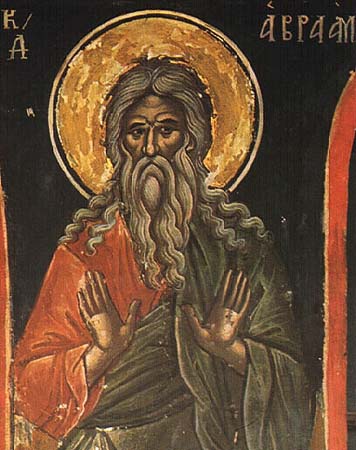
The patriarch Abraham in an anonymous icon
(Wikimedia Commons public domain image)
““Being of that Lineage”: Generational Curses and Inheritance in the Book of Abraham,” written by John S. Thompson
Abstract: The seeming appearance of a lineal or generational curse in the Book of Abraham has been used erroneously to marginalize people and justify racist ideas in Latter-day Saint history. To avoid any further misinterpretation of scripture in ways that are hurtful to others, the following attempts to elucidate the meaning of lineal curses within the Book of Abraham’s claimed ancient provenance. “Cursed” often reflected a simple legalistic concept, applicable to any person regardless of race, that meant one was currently in a state of disinheritance. An individual might be in a state of disinheritance if they violated any requirement necessary to receive their inheritance, and any descendant who remained an heir of a person who no longer had an inheritance to give was also considered disinherited or “cursed,” even though they may have personally done nothing wrong. This ancient understanding of cursing as disinheritance provides better context and clarity to many of Joseph Smith’s revelations and translations, including the Book of Abraham. Arguably, the scriptures and revelations of the Latter-day Saint tradition, including the Bible, indicate that the eternal blessings of a kingdom (land) and priestly kingship/queenship (priesthood) originate from God but must be inherited through an unbroken ancestral chain forged via covenant. Indeed, the express purpose of sealing children to parents in modern Latter-day Saint temples is to make them “heirs.” Consequently, moving towards a better understanding of the roles inheritance and disinheritance play in receiving the divine blessings of the covenant might be beneficial generally and help readers avoid racist interpretations of the Book of Abraham and other scripture. This is especially the case when it is understood that being disinherited, in a gospel context, does not need to be a permanent status when one relies on the grace of the Holy Messiah and submits to those divine laws and covenant rites whereby one can literally inherit the promised blessings.

A 1983 volcano event on the Big Island of Hawaii will perhaps serve to illustrate my alleged reaction to a recent episode at Stanford University, in Palo Alto, California
(Wikimedia Commons public domain image)
As has been pointed out elsewhere, I’m in an incandescent rage about a recent incident during the half-time festivities in Palo Alto, at a football game between Stanford University and Brigham Young University, and I am utterly obsessed with it. To illustrate my obsession, here’s a link to an article about the incident from The Stanford Daily: “Stanford Band apologizes for BYU skit, “forever stands against homophobia.””
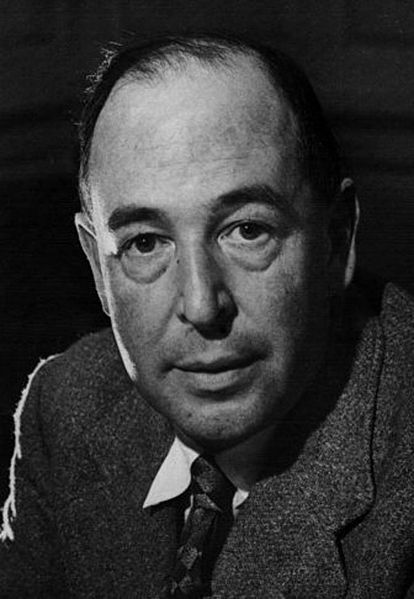
C. S. Lewis at about the age of fifty (Wikimedia Commons public domain image)
By the way: In the past couple of weeks, while driving and just before retiring for the night, my wife and I have been listening to short selections from an audiobooks version of Lewis’s “Chronicles of Narnia.” We’ve completed Sir Kenneth Branagh’s superb recording of The Magician’s Nephew, and we’re now pretty solidly into Michael York’s narration of The Lion, the Witch and the Wardrobe. I enthusiastically recommend this series of recordings, and I say again what I’ve said before: Every time I return for any length of time to the writings of C. S. Lewis, I come away strongly impressed with him all over again. He was a matchless talent. Honestly, I’m in awe.
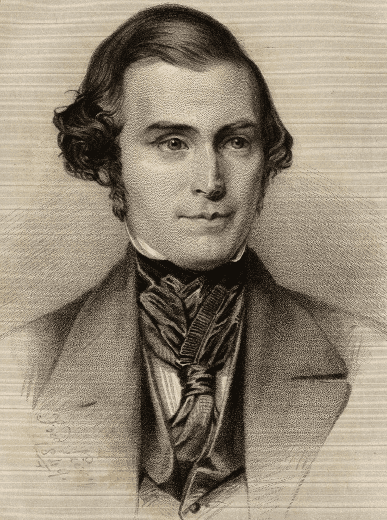
Elder Orson Pratt of the Council of the Twelve (ca. 1850)
Wikimedia Commons public domain image
One of the essays contained in David Hammer, comp., The Pamphlets of Orson Pratt: The Complete Collection (Salt Lake City: Eborn Publishing, 2017), is “Evidences of the Book of Mormon and Bible Compared,” which was published as Number 4 in the series Divine Authenticity of the Book of Mormon. This particular essay appeared at Liverpool, England, on 15 December 1850. Here is a passage from it that occurs on page 344 of the book:
Here, then, are twelve witnesses of the existence of the plates. Neither of these witnesses has ever denied his testimony to this day. Some of these witnesses have died — some have been martyred for their testimony; and one is still living. Is there a person on the earth, that can prove that these witnesses did not see the plates? No, there is not. The existence of the plates, filled with engravings, is proved by twelve eye witnesses; while the correctness of their translation is proved by four eye witnesses, not only of the plates, but of the angel. Therefore, the evidences which this generation have of the Divine Authenticity of the Book of Mormon, and of the existence of the plates, are far greater than the evidences which they have for the truth of any of the books of the Bible. Hence, if they would be condemned for rejecting the Bible, how much more will they be condemned for rejecting the Book of Mormon which was confirmed, in its very origin, by so many witnesses?
I was struck by Elder Pratt’s comment. (He was including Joseph Smith among the “Four” and the “Twelve.”) Orson Pratt, an exceptionally intelligent man, knew all of the witnesses personally and well, although most of them were dead by 1850 and he had pretty much lost touch with the rest of them by then.
As a matter of fact, though, several of them — not just one — still lived in 1850. Oliver Cowdery had died earlier that year, at the tragically young age of 43. But David Whitmer and Martin Harris were still very much alive, as were Jacob Whitmer, John Whitmer, and Hiram Page.
I find the witnesses to the Book of Mormon — including the unofficial witnesses not mentioned by Elder Pratt — extraordinarily persuasive. And others share my judgment of the matter. That’s why we undertook the creation of a theatrical film, a docudrama, a website, and a series of short video features about them.
Posted from Redwood City, California
P.S. Congratulations to University of Utah football on a really impressive victory over the University of Southern California.
Church of Jesus Christ of Latter-day Saints
Undaunted: Witnesses of the Book of Mormon
Witnesses of the Book of Mormon
Previous Post

December 1, 2022
New, from the Interpreter Foundation!
Next Post
December 3, 2022 Prophecy being fulfilled, and not happily
Browse Our Archives
Select a Category Uncategorized
Select a Month October 2026 September 2026 August 2026 July 2026 June 2026 May 2026 April 2026 March 2026 February 2026 January 2026 December 2025 November 2025 October 2025 September 2025 August 2025 July 2025 June 2025 May 2025 April 2025 March 2025 February 2025 January 2025 December 2024 November 2024 October 2024 September 2024 August 2024 July 2024 June 2024 May 2024 April 2024 March 2024 February 2024 January 2024 December 2023 November 2023 October 2023 September 2023 August 2023 July 2023 June 2023 May 2023 April 2023 March 2023 February 2023 January 2023 December 2022 November 2022 October 2022 September 2022 August 2022 July 2022 June 2022 May 2022 April 2022 March 2022 February 2022 January 2022 December 2021 November 2021 October 2021 September 2021 August 2021 July 2021 June 2021 May 2021 April 2021 March 2021 February 2021 January 2021 December 2020 November 2020 October 2020 September 2020 August 2020 July 2020 June 2020 May 2020 April 2020 March 2020 February 2020 January 2020 December 2019 November 2019 October 2019 September 2019 August 2019 July 2019 June 2019 May 2019 April 2019 March 2019 February 2019 January 2019 December 2018 November 2018 October 2018 September 2018 August 2018 July 2018 June 2018 May 2018 April 2018 March 2018 February 2018 January 2018 December 2017 November 2017 October 2017 September 2017 August 2017 July 2017 June 2017 May 2017 April 2017 March 2017 February 2017 January 2017 December 2016 November 2016 October 2016 September 2016 August 2016 July 2016 June 2016 May 2016 April 2016 March 2016 February 2016 January 2016 December 2015 November 2015 October 2015 September 2015 August 2015 July 2015 June 2015 May 2015 April 2015 March 2015 February 2015 January 2015 December 2014 November 2014 March 2014 August 2013 February 2012
Follow Us!
TAKE THE
Religious Wisdom Quiz
Who saw the vision of the valley of dry bones?
Select your answer to see how you score.
Isaiah Ezekiel Daniel Jeremiah
Related posts from Sic et Non


"The Book of Moses as a Temple Text"


TRENDING AT PATHEOS Latter-day Saint

Janie Learns the Way of the Cross: A...
Teaching children about Jesus' Passion can be challenging. Many parents and educators...

Looking For Good Catholic Writing - October 2026
He alone extends the heavens, and he walks upon the waves of...

In "Irreplaceable," our book on vocation and technology, Trevor Sutton and I...

I was strolling through the top floor of the brand new Parthenon...

What Does Gêvâh Mean For Kimberley Guifoyle &...
This week, a lot of the news is focused on Kimberly Guilfoyle....

INNER CIRCLE: Profound Mystery (Of Christ In All...
Ephesians 5:31-32 “For this reason, a man will leave his father and...
view all Latter-day Saint blogs
Ad-Free & Subscriber Log-In Subscription Support
- About Us
- 2026 Calendar
- Videos
- Podcasts
- Library of World Religions
- Faith In Media Tracker
- Advertise With Us
- Write for Us
- Privacy Policy
- Terms of Service
- Do Not Sell My Data
- Contact Us
- Radiant Digital
- Manage Newsletter Subscriptions
- Unsubscribe From Notifications
- Sitemap
Copyright 2008-2026, Patheos. All rights reserved.
Subscription Support Ad-Free & Subscriber Log-In
Follow Patheos