
BuddhistCatholicContemplativeEvangelicalGeneral ChristianHinduJewishLatter-day SaintMuslimNew VisionsProgressive Christian
Beliefs
- Buddhist
- Catholic
- Contemplative
- Evangelical
- General Christian
- Hindu
- Jewish
- Latter-day Saint
- More Voices
- Muslim
- New Visions
- Pagan
- Progressive Christian
Topics
- Religion News
- Food and Religion
- Sports and Religion
- Religious Art
- Religious Music and Entertainment
- Religious Events
- History and Religion
- Style and Religion
- Politics and Religion
- Women in Religion
- Recreation Outdoors and Religion
- Business Finance and Religion
- Careers Workplace and Religion
- Education and Religion
- Family Parenting and Religion
- Health Fitness and Religion
- Home and Religion
- Relationships and Religion
- Technology and Religion
- Travel and Religion
Columnists
- Buddhist Columnists
- Business Finance and Religion Columnists
- Careers Workplace and Religion Columnists
- Catholic Columnists
- Contemplative Columnists
- Education and Religion Columnists
- Evangelists Columnists
- Family Parenting and Religion Columnists
- General Christian Columnists
- Health Fitness and Religion Columnists
- Hindu Columnists
- History and Religion Columnists
- Home and Religion Columnists
- Jewish Columnists
- More Voices Columnists
- Latter Day Columnists
- Muslim Columnists
- New Visions Columnists
- Nonreligious Columnists
- Pagan Columnists
- Politics and Religion Columnists
- Progressive Columnists
- Recreation Outdoors and Religion Columnists
- Relationships and Religion Columnists
- Religion News Columnists
- Religious Art Columnists
- Religious Events Columnists
- Religious Music and Entertainment Columnists
- Sports and Religion Columnists
- Style and Religion Columnists
- Technology and Religion Columnists
- Travel and Religion Columnists
- Women in Religion Columnists
Resource Library
- 2026 Calendar
- Library of World Religions
- The 100 Most Holy Places on Earth
- Patheos Answers
- Podcasts
- Videos
- Faith Leaders Database
- Anglican Episcopalian
- Bahai
- Baptist
- Buddhism
- Christianity
- Confucianism
- Eastern Orthodoxy
- Hinduism
- Holiness and Pentecostal
- ISKCON
- Islam
- Judaism
- Lutheran
- Methodist
- The Church of Jesus Christ of Latter-day Saints
- New Age
- Paganism
- Presbytarian and Reformed
- Protestantism
- Religion Behind the Scenes
- Roman Catholic
- Scientology
- Shia Islam
- Sikhism
- Sufism
- Sunni Islam
- Taoism
- Zen
- See all religions
Research Tools
 Ad-Free & Subscriber Log-In Subscription Support
Ad-Free & Subscriber Log-In Subscription Support
Follow Patheos 

- Trending:
- Forgiveness
- |
- Marriage
- |
- Consciousness
- |
- Death Penalty
- |
- Election
- |
- Halloween

- Home
- Latter-day Saint
- “Dawkins in Denial”
“Dawkins in Denial”
Last updated on: November 15, 2022 at 6:42 pm by Dan Peterson
“Dawkins in Denial” 2022-11-15T18:42:23-07:00 Dan Peterson
Patheos Explore the world's faith through different perspectives on religion and spirituality! Patheos has the views of the prevalent religions and spiritualities of the world.
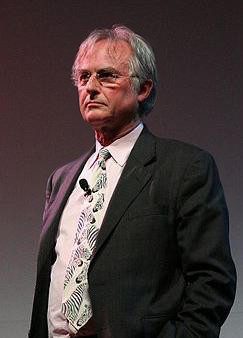
Richard Dawkins at the University of Texas at Austin in 2008
(Photograph by Shane Pope via Wikimedia Commons)
We flew this evening from Fort Lauderdale to Atlanta, and from Atlanta to Richmond, Virginia. It’s a matter of some satisfaction to me that there is now a temple in each of these cities — long dedicated and operating in Atlanta and Fort Lauderdale and, in Richmond, very near to completion and dedication.
While in the air, I began to read a book by one Terry Higham, “a research-minded Catholic layman” who is based in the United Kingdom, titled The God Debate: Dawkins in Denial: Christian Guide Through an Atheist Wilderness. I wasn’t expecting much — I knew nothing about either the book or its author, although I had, it seems, loaded it onto my iPad at some indeterminate point in the past — but I’ve rather liked it thus far. Higham is obviously bright and quite well read. And, candidly, I enjoy critiques of Richard Dawkins, who doesn’t present quite the hilarious target that the late Christopher Hitchens did, but who nevertheless positively demands contradiction.
Higham quotes a famously biting comment on Dawkins from Terry Eagleton, the English Marxist literary theorist, critic, and public intellectual, currently affiliated with the University of Lancaster after long teaching stints at Oxford University and Manchester University:
Imagine someone holding forth on biology whose only knowledge of the subject is the Book of British Birds, and you have a rough idea of what it feels like to read Richard Dawkins on theology. Card-carrying rationalists like Dawkins, who is the nearest thing to a professional atheist we have had since Bertrand Russell, are in one sense the least well-equipped to understand what they castigate, since they don’t believe there is anything there to be understood, or at least anything worth understanding. This is why they invariably come up with vulgar caricatures of religious faith that would make a first-year theology student wince. The more they detest religion, the more ill-informed their criticisms of it tend to be. If they were asked to pass judgment on phenomenology or the geopolitics of South Asia, they would no doubt bone up on the question as assiduously as they could. When it comes to theology, however, any shoddy old travesty will pass muster. . . . critics of the richest, most enduring form of popular culture in human history have a moral obligation to confront that case at its most persuasive, rather than grabbing themselves a victory on the cheap by savaging it as so much garbage and gobbledygook.
Re-reading Eagleton’s comment, I can’t help but think of this blog’s most prolific resident atheist. And Higham agrees with Eagleton’s view of Dawkins:
I believe that what follows will vindicate this review and highlight Dawkins’ reliance on fallacy (assuming in a premise the very thing he has to prove), assumption (implying knowledge he lacks), error (assertions that proper research would have told him were false), and his favoured weapon of mockery (a device that can back-fire when the mocker’s own ignorance and bias are exposed). . . .
It will be a recurring theme of this book that Dawkins’ “passionate commitment to evidence” vanishes like snow on a summer’s day whenever evidence is produced that challenges his atheist world-view. However impressive the evidence, mocking generalisation and incredulous dismissal seem to be his knee-jerk reactions to every claim that God, or some agency of the supernatural universe that theists believe he has also created, has intervened in a tangible way in the physical universe.
Higham also cites (and criticizes) a very forthright statement that I myself have quoted multiple times here, from a vocal advocate of the naturalistic worldview. In his 1994 book The Astonishing Hypothesis: The Scientific Search for the Soul, Sir Francis Crick (1916-2004), co-discoverer with James Watson of the double helix structure of DNA, declared his thorough-going naturalism and reductionism very clearly:
A person’s mental activities are entirely due to the behavior of nerve cells, glial cells, and the atoms, ions, and molecules that make them up and influence them.
The Astonishing Hypothesis is that ‘You,’ your joys and your sorrows, your memories and your ambitions, your sense of identity and free will, are in fact no more than the behaviour of a vast assembly of nerve cells and their associated molecules. As Lewis Carroll’s Alice might have phrased it: ‘You’re nothing but a pack of neurons.’
Back to Higham:
In his book One World, physicist John Polkinghorne describes Crick’s reductionist thesis as:” . . . ultimately suicidal. If Crick’s thesis is true we could never know it. For, not only does it relegate our experience of beauty, moral obligation, and religious encounter to the epiphenomenal scrapheap, it also destroys rationality. Thought is replaced by electro-chemical neural events. Two such events cannot confront each other in rational discourse. They are neither right nor wrong. They simply happen. . . . The very assertions of the reductionist himself are nothing but blips in the neural network of his brain. The world of rational discourse dissolves into the absurd chatter of firing synapses. Quite frankly, that cannot be right and none of us believes it to be so. There is a patent contradiction running through all attempts, however sophisticated they may appear, to derive rationality from irrationality.”
[Oxford mathematician John] Lennox quotes a similar line of reasoning from C. S. Lewis: “If all that exists is Nature, the great mindless interlocking event, if our own deepest convictions are merely the by-products of an irrational process, then clearly there is not the slightest ground for supposing that our sense of fitness and our consequent faith in uniformity tell us anything about a reality external to ourselves. Our convictions are simply a fact about us–like the colour of our hair. If Naturalism is true we have no reason to trust our conviction that Nature is uniform. It can be trusted only if quite a different metaphysic is true. If the deepest thing in reality, the Fact which is the source of all other facthood, is a thing in some degree like ourselves–if it is a Rational Spirit and we derive our rational spirituality from It–then indeed our convictions can be trusted.
I close with another quotation that seemed an uncannily apt description of the approach cultivated here by this blog’s resident atheist:
In his brief engagement with miracles, Dawkins asserts as if self-evidently true that New Testament miracles such as the virgin birth, the raising of Lazarus, and the resurrection of Jesus could only be verified by scientific method. Despite the fact that, in oral or written form, human testimony is the kind of evidence that permeates and shapes our lives, dominates our law courts, and gives us access to the history of our race, Dawkins seems to dismiss it when it comes to reporting miracles, thereby seeking to set the evidential bar too high for advocates of such miracles to clear.
Posted from Richmond, Virginia
Previous Post

October 23, 2022
A Tiny Bit of Florida Church History
Next Post
October 25, 2022 Dishonesty (or incompetence) on public display
Browse Our Archives
Select a Category Uncategorized
Select a Month October 2026 September 2026 August 2026 July 2026 June 2026 May 2026 April 2026 March 2026 February 2026 January 2026 December 2025 November 2025 October 2025 September 2025 August 2025 July 2025 June 2025 May 2025 April 2025 March 2025 February 2025 January 2025 December 2024 November 2024 October 2024 September 2024 August 2024 July 2024 June 2024 May 2024 April 2024 March 2024 February 2024 January 2024 December 2023 November 2023 October 2023 September 2023 August 2023 July 2023 June 2023 May 2023 April 2023 March 2023 February 2023 January 2023 December 2022 November 2022 October 2022 September 2022 August 2022 July 2022 June 2022 May 2022 April 2022 March 2022 February 2022 January 2022 December 2021 November 2021 October 2021 September 2021 August 2021 July 2021 June 2021 May 2021 April 2021 March 2021 February 2021 January 2021 December 2020 November 2020 October 2020 September 2020 August 2020 July 2020 June 2020 May 2020 April 2020 March 2020 February 2020 January 2020 December 2019 November 2019 October 2019 September 2019 August 2019 July 2019 June 2019 May 2019 April 2019 March 2019 February 2019 January 2019 December 2018 November 2018 October 2018 September 2018 August 2018 July 2018 June 2018 May 2018 April 2018 March 2018 February 2018 January 2018 December 2017 November 2017 October 2017 September 2017 August 2017 July 2017 June 2017 May 2017 April 2017 March 2017 February 2017 January 2017 December 2016 November 2016 October 2016 September 2016 August 2016 July 2016 June 2016 May 2016 April 2016 March 2016 February 2016 January 2016 December 2015 November 2015 October 2015 September 2015 August 2015 July 2015 June 2015 May 2015 April 2015 March 2015 February 2015 January 2015 December 2014 November 2014 March 2014 August 2013 February 2012
Follow Us!
TAKE THE
Religious Wisdom Quiz
Who was the king of Babylon during the exile of the Israelites?
Select your answer to see how you score.
Nebuchadnezzar Darius Cyrus Belshazzar
Related posts from Sic et Non
Bidding Adieu to My Native State


6DIA is streaming, physicalism is depressing, and I'm...
TRENDING AT PATHEOS Latter-day Saint

57th Dove Awards Honor Dolly Parton, Crown New...
On gospel music’s biggest night, the 57th annual GMA Dove Awards honored...

The First Eucharistic Controversy: Christ’s Real Presence
For Catholics, the Eucharist is the source and summit of the Christian...

What a Stop Sign Can Teach Us About...
How to Make a Decision When You Can't Hear God Main point:...

Archdiocese Hosts Military Marriage Retreat in Germany
RASTATT, Germany — The transient military lifestyle, with its frequent deployments and...

Nearly every morning, I make the drive to Detroit with my high-school-age...

The Real AI Story Is Adoption Without Trust
Artificial intelligence has crossed a political threshold. It is no longer a...
view all Latter-day Saint blogs
Ad-Free & Subscriber Log-In Subscription Support
- About Us
- 2026 Calendar
- Videos
- Podcasts
- Library of World Religions
- Faith In Media Tracker
- Advertise With Us
- Write for Us
- Privacy Policy
- Terms of Service
- Do Not Sell My Data
- Contact Us
- Radiant Digital
- Manage Newsletter Subscriptions
- Unsubscribe From Notifications
- Sitemap
Copyright 2008-2026, Patheos. All rights reserved.
Subscription Support Ad-Free & Subscriber Log-In
Follow Patheos