
BuddhistCatholicContemplativeEvangelicalGeneral ChristianHinduJewishLatter-day SaintMuslimNew VisionsProgressive Christian
Beliefs
- Buddhist
- Catholic
- Contemplative
- Evangelical
- General Christian
- Hindu
- Jewish
- Latter-day Saint
- More Voices
- Muslim
- New Visions
- Pagan
- Progressive Christian
Topics
- Religion News
- Food and Religion
- Sports and Religion
- Religious Art
- Religious Music and Entertainment
- Religious Events
- History and Religion
- Style and Religion
- Politics and Religion
- Women in Religion
- Recreation Outdoors and Religion
- Business Finance and Religion
- Careers Workplace and Religion
- Education and Religion
- Family Parenting and Religion
- Health Fitness and Religion
- Home and Religion
- Relationships and Religion
- Technology and Religion
- Travel and Religion
Columnists
- Buddhist Columnists
- Business Finance and Religion Columnists
- Careers Workplace and Religion Columnists
- Catholic Columnists
- Contemplative Columnists
- Education and Religion Columnists
- Evangelists Columnists
- Family Parenting and Religion Columnists
- General Christian Columnists
- Health Fitness and Religion Columnists
- Hindu Columnists
- History and Religion Columnists
- Home and Religion Columnists
- Jewish Columnists
- More Voices Columnists
- Latter Day Columnists
- Muslim Columnists
- New Visions Columnists
- Nonreligious Columnists
- Pagan Columnists
- Politics and Religion Columnists
- Progressive Columnists
- Recreation Outdoors and Religion Columnists
- Relationships and Religion Columnists
- Religion News Columnists
- Religious Art Columnists
- Religious Events Columnists
- Religious Music and Entertainment Columnists
- Sports and Religion Columnists
- Style and Religion Columnists
- Technology and Religion Columnists
- Travel and Religion Columnists
- Women in Religion Columnists
Resource Library
- 2026 Calendar
- Library of World Religions
- The 100 Most Holy Places on Earth
- Patheos Answers
- Podcasts
- Videos
- Faith Leaders Database
- Anglican Episcopalian
- Bahai
- Baptist
- Buddhism
- Christianity
- Confucianism
- Eastern Orthodoxy
- Hinduism
- Holiness and Pentecostal
- ISKCON
- Islam
- Judaism
- Lutheran
- Methodist
- The Church of Jesus Christ of Latter-day Saints
- New Age
- Paganism
- Presbytarian and Reformed
- Protestantism
- Religion Behind the Scenes
- Roman Catholic
- Scientology
- Shia Islam
- Sikhism
- Sufism
- Sunni Islam
- Taoism
- Zen
- See all religions
Research Tools
 Ad-Free & Subscriber Log-In Subscription Support
Ad-Free & Subscriber Log-In Subscription Support
Follow Patheos 

- Trending:
- Forgiveness
- |
- Marriage
- |
- Consciousness
- |
- Death Penalty
- |
- Election
- |
- Halloween

- Home
- Latter-day Saint
- Thoughts Occasioned by the Story of Juan Crisóstomo Arriaga
Thoughts Occasioned by the Story of Juan Crisóstomo Arriaga
Last updated on: June 3, 2022 at 3:47 pm by Dan Peterson
Thoughts Occasioned by the Story of Juan Crisóstomo Arriaga 2022-06-03T15:47:00-06:00 Dan Peterson
Patheos Explore the world's faith through different perspectives on religion and spirituality! Patheos has the views of the prevalent religions and spiritualities of the world.
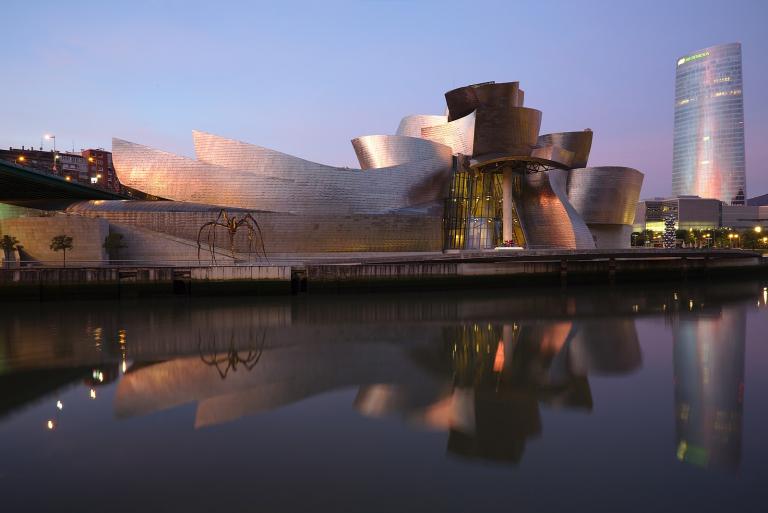
The Guggenheim Museum in Bilbao
PA, CC BY-SA 4.0 <https://creativecommons.org/licenses/by-sa/4.0>, via Wikimedia Commons
***
I recently recorded an episode with “Richie T” of The Cultural Hall Podcast regarding, among some other things, the new Undaunted film, but I think that I failed to mention when it went up online. (I’ve been occupied of late, and out of sync, time-wise, with things originating in North America.) However, some folks — there’s always somebody out there, right? — might find it enjoyable or at least palatable:
“Undaunted: Witnesses of the Book of Mormon Ep. 602 The Cultural Hall”
I’m also not absolutely sure that I ever called attention here to this article that I published in Meridian Magazine not too terribly long ago. Maybe I did. Maybe I didn’t:
“Getting Closer to the Original Text of the Book of Mormon”
***
You might enjoy this little profile:
***
We spent the day today in Bilbao, a very attractive city in the Basque region of northwest of Spain. We saw it from a scenic overlook, walked around its oldest section, and spent a couple of hours in its spectacular and justly famous Guggenheim Museum, designed by Frank Gehry. Our guide today, for both the city and the museum itself, was superb, and he was very knowledgeable and informative about art history. I can’t express, though, how disappointed I was to discover that Frank Gehry is Jewish. (His birth name was Frank Owen Goldberg, and the name given to him by his grandfather at his bar mitzvah was Ephraim.) Why would I be disappointed? Because the Jewish contribution to the sciences and literature and so forth was already vastly out of proportion to the number of Jews in the world. And now I learn — why I wasn’t already aware of it, I don’t know — that Frank Gehry, whose (adopted!) name gave me no clue — is Jewish, too! Our Jewish brothers and sisters have so much talent, and have made such remarkable contributions. Is there anything left over for us poor, pathetic goyim?
During our tour today, we were shown the downtown Teatro Arriaga and were told very briefly about the man for whom it was named. He was Juan Crisóstomo Jacobo Antonio Arriaga y Balzola or, in short, Juan Crisóstomo Arriaga. Sadly, I had never heard of him before. But I’ve now learned a bit about his story:
Arriaga was born on 27 January 1806 near Bilbao. He was a child prodigy as a violinist but also a remarkably precocious composer, which apparently led some to dub him “the Spanish Mozart” — despite the fact that, ethnically, he was actually a Basque. (Coincidentally, he shared his birthday with Mozart, who was born on 27 January 1756, precisely fifty years earlier to the day, and, mutatis mutandis, he and Joannes Chrysostomus Wolfgangus Theophilus Mozart shared their first two names.) And, in fact, from what I’ve read about him just today, Arriaga’s compositions — which are said to be inventive, fresh, and technically resourceful — place him somewhere between the Classical tradition of Haydn and Mozart, on the one hand, and, on the other, the Romanticism of Rossini and Schubert. Arriaga had an opera performed at Bilbao already in 1820, when he was about fourteen or fifteen years old. It was titled Los ésclavos felices (“The Happy Slaves”), but it is now lost. At some point, he also composed three string quartets and a symphony.
Arriaga enrolled in the Conservatoire de Paris, where he studied under, among others, Luigi Cherubini. All of his teachers were apparently impressed by his use of sophisticated harmonies, counterpoint, and fugue, despite the fact that he had received minimal or even no formal instruction in such matters. In fact, Cherubini referred to Arriaga’s now-lost fugue for eight voices, based on the Credo . . . et vitam venturi, as “a masterpiece.”
Incredibly, by the age of eighteen Arriaga was himself an assistant professor at the Conservatoire de Paris. He was intensely dedicated to his work there, and to music, and this may have taken a toll on his health. He contracted a lung ailment (possibly tuberculosis), and that, coupled apparently with extreme fatigue and exhaustion, killed him. He died in Paris on 17 January 1826, just ten days before his twentieth birthday, and he was buried in an unmarked grave at the Cimetière du Nord in Montmartre.
The Wikipedia article on Arriaga quotes Barbara Rosen, author of his only English language biography, Arriaga, the Forgotten Genius: the Short Life of a Basque Composer: “It is . . . possible to hear passages in Arriaga’s work similar to Haydn, Mozart, Beethoven and Rossini, although he sometimes fails to achieve the complexity of these composers’ more mature works. Nevertheless, Arriaga has an identifiable and original style which, in time, undoubtedly would have become more individual and more recognizably his own, possibly incorporating more Spanish and Basque than Viennese elements.”
Stories like Arriaga’s affect me powerfully. I’m painfully aware of lives cut short, or talents undeveloped, or promise unfulfilled. One such case, obviously, is Mozart himself (1756-1791), who died at the age of thirty-five. Another is the great Felix Mendelssohn (1809-1847), who passed away at only thirty-eight. And, of course, there is the astonishing Indian mathematical prodigy Srinivasa Ramanujan (1887-1920), about whom I’ve written here in ““The Man Who Knew Infinity” (Part One)” and ““The Man Who Knew Infinity” (Part Two).” I explicitly addressed the topic of truncated lives, and of capacities that were never allowed to mature, in an article that I wrote for the Deseret News about Ludwig van Beethoven.
In a letter, Mendelssohn once described death as a place “where it is to be hoped there is still music, but no more sorrow or partings.” (See Peter Mercer-Taylor, The Life of Mendelssohn [New York and Cambridge: Cambridge: Cambridge University Press, 2000], 206.) And precisely that is what I believe. Right down to the music, which is abundantly attested in innumerable accounts of near-death experiences.
I absolutely love this quotation from President Russell M. Nelson:
“We were born to die and we die to live. As seedlings of God, we barely blossom on earth; we fully flower in heaven.”
Posted from the Bay of Biscay, between Bilbao, Spain, and Bordeaux, France
Previous Post

May 31, 2022
Which of my avatars was in La Coruña today?
Next Post
June 2, 2022 In the footsteps of Roland and Charlemagne
Browse Our Archives
Select a Category Uncategorized
Select a Month October 2026 September 2026 August 2026 July 2026 June 2026 May 2026 April 2026 March 2026 February 2026 January 2026 December 2025 November 2025 October 2025 September 2025 August 2025 July 2025 June 2025 May 2025 April 2025 March 2025 February 2025 January 2025 December 2024 November 2024 October 2024 September 2024 August 2024 July 2024 June 2024 May 2024 April 2024 March 2024 February 2024 January 2024 December 2023 November 2023 October 2023 September 2023 August 2023 July 2023 June 2023 May 2023 April 2023 March 2023 February 2023 January 2023 December 2022 November 2022 October 2022 September 2022 August 2022 July 2022 June 2022 May 2022 April 2022 March 2022 February 2022 January 2022 December 2021 November 2021 October 2021 September 2021 August 2021 July 2021 June 2021 May 2021 April 2021 March 2021 February 2021 January 2021 December 2020 November 2020 October 2020 September 2020 August 2020 July 2020 June 2020 May 2020 April 2020 March 2020 February 2020 January 2020 December 2019 November 2019 October 2019 September 2019 August 2019 July 2019 June 2019 May 2019 April 2019 March 2019 February 2019 January 2019 December 2018 November 2018 October 2018 September 2018 August 2018 July 2018 June 2018 May 2018 April 2018 March 2018 February 2018 January 2018 December 2017 November 2017 October 2017 September 2017 August 2017 July 2017 June 2017 May 2017 April 2017 March 2017 February 2017 January 2017 December 2016 November 2016 October 2016 September 2016 August 2016 July 2016 June 2016 May 2016 April 2016 March 2016 February 2016 January 2016 December 2015 November 2015 October 2015 September 2015 August 2015 July 2015 June 2015 May 2015 April 2015 March 2015 February 2015 January 2015 December 2014 November 2014 March 2014 August 2013 February 2012
Follow Us!
TAKE THE
Religious Wisdom Quiz
Who was king of Israel during the ministry of Elijah?
Select your answer to see how you score.
Jeroboam Ahab Jehoram Joash
Related posts from Sic et Non
Earthquake in Turkey and Syria: How to Help
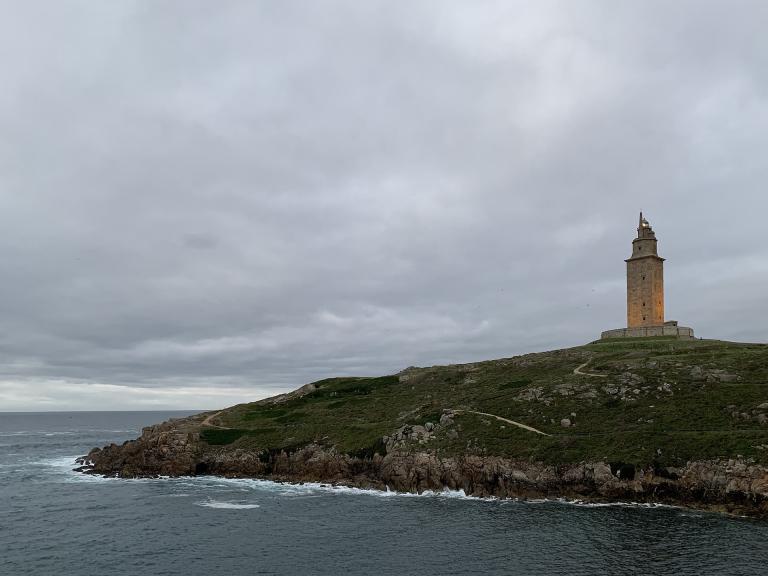
Which of my avatars was in La Coruña...
TRENDING AT PATHEOS Latter-day Saint

Looking at the Largest Orthodox Cathedral on Earth
There is often a considerable amount of anger and, shall we...

The Problem with False Prophets
Miller’s Station UMC| 10/18/26| Anchor Verse: Jeremiah 23: 1, 9-23 I...

Emotion in Early Christianity by Andrew Crislip
Andrew Crislip’s Emotion in Early Christianity examines an often overlooked dimension of...

16 Spiritual Touchstones for a More Grounded Life
After decades of spiritual study, here are 16 principles I try...

Catholic Evangelization: Sharing Your Faith Every Day
Welcome back to the Graceful Awakening mini-series called, “From Faith to Mission.” ...

The Pillar of the Boatmen: the Ancient Monument...
The Pillar of the Boatmen is a Romano-Gaulish sculpture that dates from...
view all Latter-day Saint blogs
Ad-Free & Subscriber Log-In Subscription Support
- About Us
- 2026 Calendar
- Videos
- Podcasts
- Library of World Religions
- Faith In Media Tracker
- Advertise With Us
- Write for Us
- Privacy Policy
- Terms of Service
- Do Not Sell My Data
- Contact Us
- Radiant Digital
- Manage Newsletter Subscriptions
- Unsubscribe From Notifications
- Sitemap
Copyright 2008-2026, Patheos. All rights reserved.
Subscription Support Ad-Free & Subscriber Log-In
Follow Patheos