
BuddhistCatholicContemplativeEvangelicalGeneral ChristianHinduJewishLatter-day SaintMuslimNew VisionsProgressive Christian
Beliefs
- Buddhist
- Catholic
- Contemplative
- Evangelical
- General Christian
- Hindu
- Jewish
- Latter-day Saint
- More Voices
- Muslim
- New Visions
- Pagan
- Progressive Christian
Topics
- Religion News
- Food and Religion
- Sports and Religion
- Religious Art
- Religious Music and Entertainment
- Religious Events
- History and Religion
- Style and Religion
- Politics and Religion
- Women in Religion
- Recreation Outdoors and Religion
- Business Finance and Religion
- Careers Workplace and Religion
- Education and Religion
- Family Parenting and Religion
- Health Fitness and Religion
- Home and Religion
- Relationships and Religion
- Technology and Religion
- Travel and Religion
Columnists
- Buddhist Columnists
- Business Finance and Religion Columnists
- Careers Workplace and Religion Columnists
- Catholic Columnists
- Contemplative Columnists
- Education and Religion Columnists
- Evangelists Columnists
- Family Parenting and Religion Columnists
- General Christian Columnists
- Health Fitness and Religion Columnists
- Hindu Columnists
- History and Religion Columnists
- Home and Religion Columnists
- Jewish Columnists
- More Voices Columnists
- Latter Day Columnists
- Muslim Columnists
- New Visions Columnists
- Nonreligious Columnists
- Pagan Columnists
- Politics and Religion Columnists
- Progressive Columnists
- Recreation Outdoors and Religion Columnists
- Relationships and Religion Columnists
- Religion News Columnists
- Religious Art Columnists
- Religious Events Columnists
- Religious Music and Entertainment Columnists
- Sports and Religion Columnists
- Style and Religion Columnists
- Technology and Religion Columnists
- Travel and Religion Columnists
- Women in Religion Columnists
Resource Library
- 2026 Calendar
- Library of World Religions
- The 100 Most Holy Places on Earth
- Patheos Answers
- Podcasts
- Videos
- Faith Leaders Database
- Anglican Episcopalian
- Bahai
- Baptist
- Buddhism
- Christianity
- Confucianism
- Eastern Orthodoxy
- Hinduism
- Holiness and Pentecostal
- ISKCON
- Islam
- Judaism
- Lutheran
- Methodist
- The Church of Jesus Christ of Latter-day Saints
- New Age
- Paganism
- Presbytarian and Reformed
- Protestantism
- Religion Behind the Scenes
- Roman Catholic
- Scientology
- Shia Islam
- Sikhism
- Sufism
- Sunni Islam
- Taoism
- Zen
- See all religions
Research Tools
 Ad-Free & Subscriber Log-In Subscription Support
Ad-Free & Subscriber Log-In Subscription Support
Follow Patheos 

- Trending:
- Forgiveness
- |
- Marriage
- |
- Consciousness
- |
- Death Penalty
- |
- Election
- |
- Halloween

- Home
- Latter-day Saint
- “Why this article is so important”
“Why this article is so important”
Last updated on: May 29, 2022 at 4:02 pm by Dan Peterson
“Why this article is so important” 2022-05-29T16:02:41-06:00 Dan Peterson
Patheos Explore the world's faith through different perspectives on religion and spirituality! Patheos has the views of the prevalent religions and spiritualities of the world.
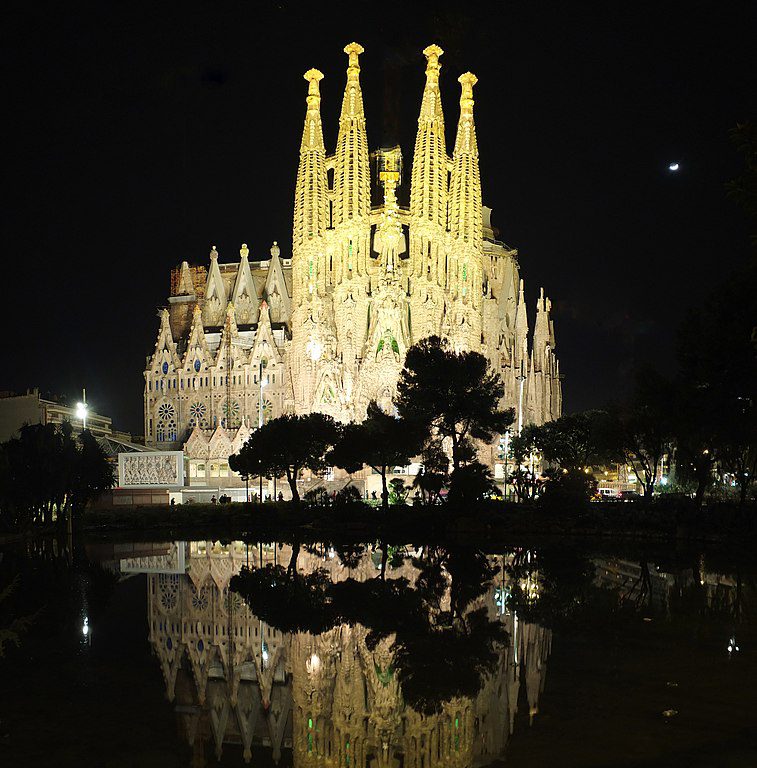
Antoni Gaudi’s “Sagrada Familia” basilica, still under construction
(Wikimedia Commons public domain photograph)
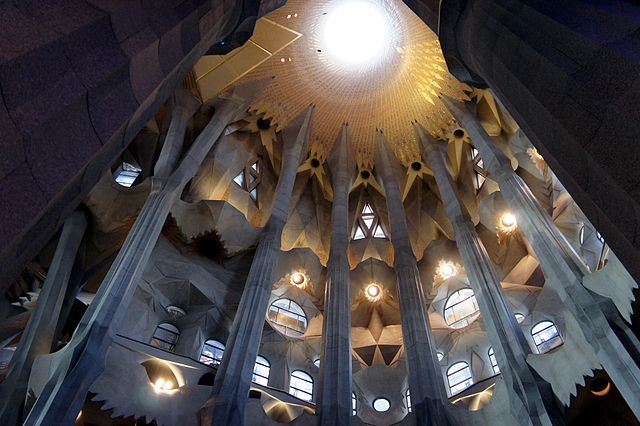
Interior columns supporting Sagrada Familia’s dome in Barcelona
(Photo by Poniol60, Wikimedia Commons public domain image)
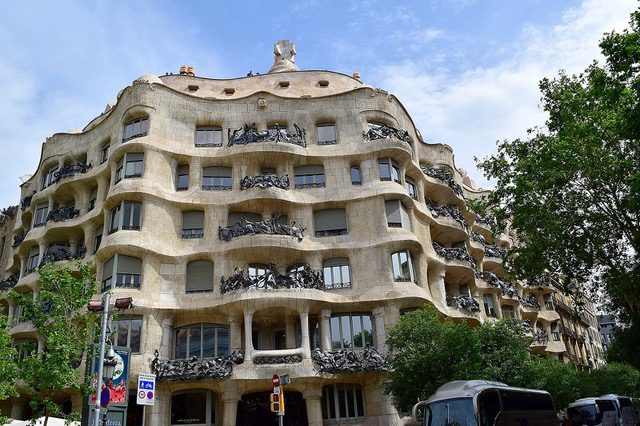
Antoni Gaudi’s Casa Milà in Barcelona
(Wikimedia Commons public domain photo)
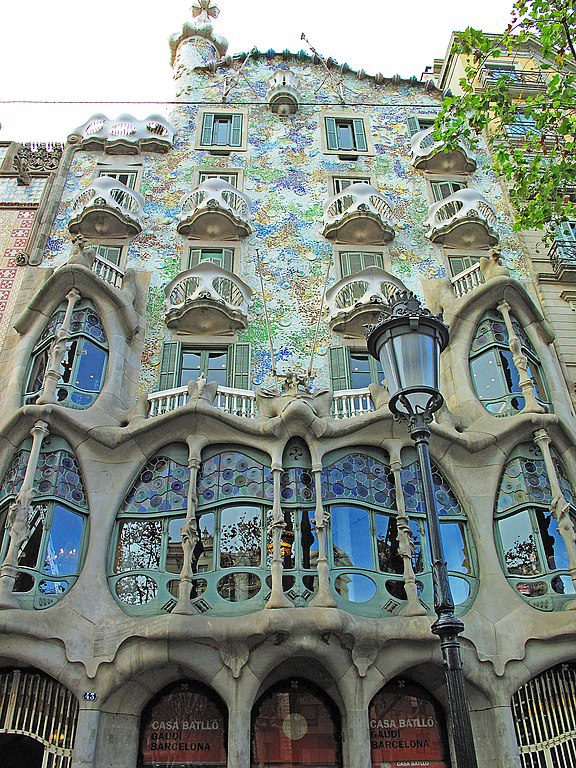
Gaudi’s Casa Batiló, located about half a block from Casa Milà
(Wikimedia Commons public domain image)
***
We’re hoping that this new two-part documentary will be viewed by large numbers of people and that it will receive the widest possible distribution:
The Interpreter Foundation: “DVD Now Available of Undaunted: Witnesses of the Book of Mormon”
Called to Share: “New Docudrama, Undaunted, Shares Story of Witnesses of the Book of Mormon”
LDS Daily: “The Story of the Witnesses of the Book of Mormon Told in Unprecedented New Docudrama”
***
With his generous permission, I share this from a note that Royal Skousen sent to me earlier today:
I have posted on the Interpreter Foundation blog my 91-page write-up entitled “The Witnesses of the Book of Mormon”. This is going to appear as a chapter in part 7 of volume 3 of the critical text.
What is important here is that the statements of the witnesses of the translation process are tested against the original manuscript (O). In this write-up, I consider the following claims by these witnesses and their validation (or at least consistency) [with] how O reads. Here’s what I consider on pages 25-37:
- What did Joseph Smith see using the instrument? From David Whitmer and Joseph Knight, Senior, on parchment, a line of characters [not just one character] from the plates, and underneath it the translation into English; these are hearsay statements that Joseph is supposed to have told them, but they work as possible translations (but not Whitmer’s last statements that there was only a single character from the plates on the first line: his witness here shows faulty memory).
- How many words were viewed by Joseph Smith? From anticipation errors by two scribes, showing Joseph Smith reading off too much of a sense-line at one time: Christian Whitmer (17 and 18 words), Oliver Cowdery (19, 20, 20, and 21 words); from anticipation errors by JS himself (19 and 21 words). This result means that JS was viewing AT LEAST 20 words or so, but likely more. We also have the evidence in Alma 45:22 where JS took over for OC when OC started to tire excessively (he was falling asleep a couple verses earlier: the only place where O shows this, by the way, having OC write garbage). So JS takes over and writes down 28 words, what was remaining in his viewing. So this gives me an estimate of 25 to 35 words being viewed at a time.
- There was no prompting to remind Joseph Smith where he had left off: Emma Smith statements claim this; the manuscript shows no long dittographies, which we would expect if JS is trying to remember where he had quit. There are 14 clear cases of dittography and they are ALL short: 1 to 4 words! Many occur at the end of scribal lines. No full sentence or even a clause, which we might expect, if JS had to recall what he had last translated. We get whole clause and partial sentence dittographies in the printer’s manuscript because there O is visually copied from P, and the eye can skip backwards and repeat text.
- The scribe read back the text to Joseph Smith: 3 statements by David Whitmer, supported by 15 cases of textual correction in O that (a) make no difference (either reading works); and (b) the change was not immediate (the ink flow is either heavier or lighter). I list them all on pages 32-36.
- Errors show that the scribe was listening to dictation, then reading it back to JS, so we get mishearing errors (numerous ones listed on page 36). Everything is aurally transmitted.
This last item shows that the witnesses were WRONG when they claimed the scribe could not ultimately end up with any kind of error, in word or phrase. The last item shows that neither JS nor the instrument had “iron-clad” control over the text. The write-up now lists on pages 39-48 all the substantive errors in O, yet JS and his scribe went on!
I also consider the evidence for the spelling out of the strange Book of Mormon names (but NOT the common biblical names): pages 48-67. Note especially Zenoch and Coriantumr. There is clear evidence for this in O.
Finally, Emma said that in the beginning (when she scribed for JS as he dictated the 116 pages in early 1828) that JS spelled out long words of English he didn’t know how to pronounce. Only one possible case later in O, genealogy to Christian Whitmer (in June 1829). Otherwise, the scribe is spelling long words of English as he thinks they should be spelled (pages 68-84).
And finally, did OC’s spelling improve while he was scribe for the original manuscript? Maybe for only a couple words near the end of the dictation, when the small plates were being dictated at the Whitmers’ in June 1929. angar > anger and hoast > host are the only two examples. In the printer’s manuscript, OC is constantly learning how to spell words, based on his proofing of P against the 1830 typesetting. All of this is more fully described in part 6 of volume 3.
In all, this kind of evidence demonstrates why this article is so important. It looks for independent evidence of what the witnesses claimed. This is not just any old article on the witnesses, just listing their claims. It’s testing their claims against O itself. A long time ago I did a preliminary article on this subject for a book of Noel [Reynolds]’s. Now I’ve expanded that research to be fully inclusive.
A good classical example of this approach is Lorenzo Valla and the Donation of Constantine, with Valla showing linguistically that the Donation was a forgery dating from around 800 instead of in the 300s. I had to do the same with the University of Chicago acquisition of Alma 3-5, supposed from O, but found in 1982! Examination of a document’s internal details reveals much.
***
We’re traveling here with friends and, together with them, we spent most of today between an extended double-decker bus tour of Barcelona, walking along La Rambla — of which the poet Federico García Lorca is said to have remarked that it was “the only street in the world which I wish would never end” — and in the adjacent food market, and enjoying tapas at the Cervecería Catalana at 236 Carrer de Mallorca, which our friends discovered during a previous visit here. (It’s also spelled Cervesería Catalana; both spellings can be found online and, to my considerable puzzlement, at the restaurant itself. Perhaps it’s a Spanish-versus-Catalan thing?) This is at least our third time in Barcelona, and I’m becoming really fond of the place. The scenery up on Montjuïc, the gorgeous tree-lined boulevards down below, the striking but still unfinished Sagrada Familia and the other striking examples of Antoni Gaudi’s architecture (and other art nouveau monuments) that dot the city (I’m an enthusiast for art nouveau; we have a Gustav Klimt museum print in our bedroom that we bought years ago in Vienna) — altogether, they make Barcelona a very, very pleasant and interesting place.
That is, if you’ll indulge me the theft of a phrase from George Orwell, a little “homage to Catalonia.”
On the Mediterranean, heading from Barcelona, Spain, to Cadiz, Spain
Witnesses of the Book of Mormon
Previous Post

May 25, 2022
Evanescence and Permanence
Next Post
May 27, 2022 Where did Nephi build his ship?
Browse Our Archives
Select a Category Uncategorized
Select a Month October 2026 September 2026 August 2026 July 2026 June 2026 May 2026 April 2026 March 2026 February 2026 January 2026 December 2025 November 2025 October 2025 September 2025 August 2025 July 2025 June 2025 May 2025 April 2025 March 2025 February 2025 January 2025 December 2024 November 2024 October 2024 September 2024 August 2024 July 2024 June 2024 May 2024 April 2024 March 2024 February 2024 January 2024 December 2023 November 2023 October 2023 September 2023 August 2023 July 2023 June 2023 May 2023 April 2023 March 2023 February 2023 January 2023 December 2022 November 2022 October 2022 September 2022 August 2022 July 2022 June 2022 May 2022 April 2022 March 2022 February 2022 January 2022 December 2021 November 2021 October 2021 September 2021 August 2021 July 2021 June 2021 May 2021 April 2021 March 2021 February 2021 January 2021 December 2020 November 2020 October 2020 September 2020 August 2020 July 2020 June 2020 May 2020 April 2020 March 2020 February 2020 January 2020 December 2019 November 2019 October 2019 September 2019 August 2019 July 2019 June 2019 May 2019 April 2019 March 2019 February 2019 January 2019 December 2018 November 2018 October 2018 September 2018 August 2018 July 2018 June 2018 May 2018 April 2018 March 2018 February 2018 January 2018 December 2017 November 2017 October 2017 September 2017 August 2017 July 2017 June 2017 May 2017 April 2017 March 2017 February 2017 January 2017 December 2016 November 2016 October 2016 September 2016 August 2016 July 2016 June 2016 May 2016 April 2016 March 2016 February 2016 January 2016 December 2015 November 2015 October 2015 September 2015 August 2015 July 2015 June 2015 May 2015 April 2015 March 2015 February 2015 January 2015 December 2014 November 2014 March 2014 August 2013 February 2012
Follow Us!
TAKE THE
Religious Wisdom Quiz
How old was Moses when he died?
Select your answer to see how you score.
90 years 100 years 120 years 110 years
Related posts from Sic et Non


Some notes on the archaeology of the Bible


TRENDING AT PATHEOS Latter-day Saint

The Sermon on the Mount, Part I: Matthew...
The Sermon on the Mount, Part I (Matthew 4:12-5:12) St. Matthew moves...

What's up from Crossway: Reviewing some of their latest A few weeks...

Janie Learns the Way of the Cross: A...
Teaching children about Jesus' Passion can be challenging. Many parents and educators...

Looking For Good Catholic Writing - October 2026
He alone extends the heavens, and he walks upon the waves of...

In "Irreplaceable," our book on vocation and technology, Trevor Sutton and I...

I was strolling through the top floor of the brand new Parthenon...
view all Latter-day Saint blogs
Ad-Free & Subscriber Log-In Subscription Support
- About Us
- 2026 Calendar
- Videos
- Podcasts
- Library of World Religions
- Faith In Media Tracker
- Advertise With Us
- Write for Us
- Privacy Policy
- Terms of Service
- Do Not Sell My Data
- Contact Us
- Radiant Digital
- Manage Newsletter Subscriptions
- Unsubscribe From Notifications
- Sitemap
Copyright 2008-2026, Patheos. All rights reserved.
Subscription Support Ad-Free & Subscriber Log-In
Follow Patheos