
BuddhistCatholicContemplativeEvangelicalGeneral ChristianHinduJewishLatter-day SaintMuslimNew VisionsProgressive Christian
Beliefs
- Buddhist
- Catholic
- Contemplative
- Evangelical
- General Christian
- Hindu
- Jewish
- Latter-day Saint
- More Voices
- Muslim
- New Visions
- Pagan
- Progressive Christian
Topics
- Religion News
- Food and Religion
- Sports and Religion
- Religious Art
- Religious Music and Entertainment
- Religious Events
- History and Religion
- Style and Religion
- Politics and Religion
- Women in Religion
- Recreation Outdoors and Religion
- Business Finance and Religion
- Careers Workplace and Religion
- Education and Religion
- Family Parenting and Religion
- Health Fitness and Religion
- Home and Religion
- Relationships and Religion
- Technology and Religion
- Travel and Religion
Columnists
- Buddhist Columnists
- Business Finance and Religion Columnists
- Careers Workplace and Religion Columnists
- Catholic Columnists
- Contemplative Columnists
- Education and Religion Columnists
- Evangelists Columnists
- Family Parenting and Religion Columnists
- General Christian Columnists
- Health Fitness and Religion Columnists
- Hindu Columnists
- History and Religion Columnists
- Home and Religion Columnists
- Jewish Columnists
- More Voices Columnists
- Latter Day Columnists
- Muslim Columnists
- New Visions Columnists
- Nonreligious Columnists
- Pagan Columnists
- Politics and Religion Columnists
- Progressive Columnists
- Recreation Outdoors and Religion Columnists
- Relationships and Religion Columnists
- Religion News Columnists
- Religious Art Columnists
- Religious Events Columnists
- Religious Music and Entertainment Columnists
- Sports and Religion Columnists
- Style and Religion Columnists
- Technology and Religion Columnists
- Travel and Religion Columnists
- Women in Religion Columnists
Resource Library
- 2026 Calendar
- Library of World Religions
- The 100 Most Holy Places on Earth
- Patheos Answers
- Podcasts
- Videos
- Faith Leaders Database
- Anglican Episcopalian
- Bahai
- Baptist
- Buddhism
- Christianity
- Confucianism
- Eastern Orthodoxy
- Hinduism
- Holiness and Pentecostal
- ISKCON
- Islam
- Judaism
- Lutheran
- Methodist
- The Church of Jesus Christ of Latter-day Saints
- New Age
- Paganism
- Presbytarian and Reformed
- Protestantism
- Religion Behind the Scenes
- Roman Catholic
- Scientology
- Shia Islam
- Sikhism
- Sufism
- Sunni Islam
- Taoism
- Zen
- See all religions
Research Tools
 Ad-Free & Subscriber Log-In Subscription Support
Ad-Free & Subscriber Log-In Subscription Support
Follow Patheos 

- Trending:
- Forgiveness
- |
- Marriage
- |
- Consciousness
- |
- Death Penalty
- |
- Election
- |
- Halloween

- Home
- Latter-day Saint
- “Reflections on the God Debate”
“Reflections on the God Debate”
Last updated on: March 29, 2022 at 11:04 pm by Dan Peterson
“Reflections on the God Debate” 2022-03-29T23:04:45-06:00 Dan Peterson
Patheos Explore the world's faith through different perspectives on religion and spirituality! Patheos has the views of the prevalent religions and spiritualities of the world.
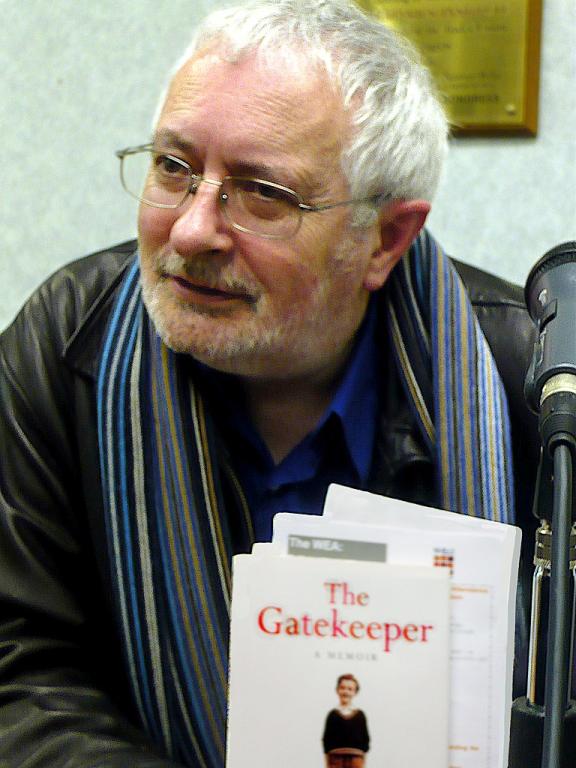
Terry Eagleton in Manchester, UK, in 2008 (Wikimedia Commons public domain image)
***
I’ll be on the Interpreter Radio Show later this evening. I’m looking forward to the conversation.
***
Some time ago, I read Terry Eagleton, Reason, Faith, and Revolution: Reflections on the God Debate (New Haven and London: Yale University Press, 2009). The book is based on the 2008 Dwight H. Terry Lectures that Eagleton delivered at Yale University.
A British literary critic and a committed Marxist radical, Eagleton is both stimulating and provocative and, from my vantage point, often seriously wrong. I don’t think he’s a theist; he’s certainly not a mainstream Christian. In particular, he’s not a fan of Latter-day Saints or of the doctrines of the Church of Jesus Christ of Latter-day Saints. Quite a few years ago, he visited Brigham Young University, leading a smallish faculty seminar for a week or two in which I participated. I recall enjoying it, but I had the distinct impression that he was quite unimpressed with us and even somewhat hostile. And, in fact, he gets in a dig at BYU on page 59 of Reason, Faith, and Revolution.
All of that notwithstanding, I enjoyed the passage that I quote below. While I’m not committed to the notion that Jesus was married, I’m also not . . . umm, wedded to the idea that Jesus was celibate, let alone to the explanation for that putative celibacy that Eagleton (in company with many others) offers. So what did I like about the passage? I found myself thinking, as I read it, not about a permanently celibate professional clergy but about our young missionaries, who forego dating for eighteen months to two years in order to serve, even while the overall ideal for Latter-day Saints is eventual temple marriage and a family:
If self-denial is not an end in itself for Christianity, neither is celibacy. Jesus was probably celibate because he believed that the kingdom of God was about to arrive any moment, which left no time for mortgages, car washes, children, and other such distracting domestic phenomena. This brand of celibacy, however, is not hostile to sexuality as such. On the contrary, it sees giving up sex as a sacrifice, and sacrifice means abandoning something you hold precious. It is no sacrifice to give up drinking bleach. When Saint Paul looks for a sign (or “sacrament”) of the future redeemed world, he offers us the sexual coupling of bodies. It is marriage, not celibacy, which is a sacrament. Fullness of life is what matters; but working for a more abundant life all round sometimes involves suspending or surrendering some of the good things that characterize that existence. Celibacy in this sense is a revolutionary option. Those who fight corrupt regimes in the jungles of Latin America want to go home, enjoy their children, and resume a normal life. The problem is that if this kind of existence is to be available to everyone, the guerrilla fighter has to forego such fulfillments for the moment. He or she becomes what the New Testament calls “a eunuch for the kingdom.” The worst mistake would be to find in this enforced austerity an image of the good life as such. Revolutionaries are rarely the best image of the society they are working to create. (25-26)
A bit more from Eagleton’s 2008 Reason, Faith, and Revolution: Reflections on the God Debate:
Dawkins falsely considers that Christianity offers a rival view of the universe to science. Like the philosopher Daniel C. Dennett in Breaking the Spell, he thinks it is a kind of bogus theory or pseudo-explanation of the world. In this sense, he is rather like someone who thinks that a novel is a botched piece of sociology, and who therefore can’t see the point of it at all. Why bother with Robert Musil when you can read Max Weber? . . .
Dawkins makes an error of genre, or category mistake, about the kind of thing Christian belief is. He imagines that it is either some kind of pseudo-science, or that, if it is not that, then it conveniently dispenses itself from the need for evidence altogether. He also has an old-fashioned scientistic notion of what constitutes evidence. Life for Dawkins would seem to divide neatly down the middle between things you can prove beyond all doubt, and blind faith. He fails to see that all the most interesting stuff goes on in neither of these places. Christopher Hitchens makes much the same crass error, claiming in God Is Not Great that “thanks to the telescope and the microscope, [religion] no longer offers an explanation of anything important.” But Christianity was never meant to be an explanation of anything in the first place. It is rather like saying that thanks to the electric toaster we can forget about Chekhov. (6-7)
One can hardly fail to be reminded in this context of an exchange in C. S. Lewis’s early novel The Pilgrim’s Regress — a book that seems to me more prescient with each passing year. The conversation revolves around the “Landlord,” who, in Lewis’s allegory, represents God:
“But how do you know there is no Landlord?”
“Christopher Columbus, Galileo, the earth is round, invention of printing, gunpowder!!” exclaimed Mr. Enlightenment in such a loud voice that the pony shied.
“I beg your pardon,” said John.
“Eh?” said Mr. Enlightenment.
“I didn’t quite understand,” said John.
“Why, it’s plain as a pikestaff,” said the other.
“Your people in Puritania believe in the Landlord because they have not had the benefits of a scientific training. For example, I dare say it would be news to you to hear that the earth was round-round as an orange, my lad!”
“Well, I don’t know that it would,” said John. feeling a little disappointed. “My father always said it was round.”
“No, no, my dear boy,” said Mr. Enlightenment, “you must have misunderstood him. It is well known that everyone in Puritania thinks the earth flat. It is not likely that I should be mistaken on such a point. Indeed, it is out of the question.”
(C. S. Lewis, The Pilgrim’s Regress: An Allegorical Apology for Christianity, Reason, and Romanticism [Grand Rapids, MI.: Ecrdmans. 1992], 20-21 .)
Aw heck. Eagleton is simply quotable. Here’s another:
I suppose that where science and religion come closest for the Christian is not in what they say about the world, but in the act of creative imagination which both projects involve — a creative act which the believer finds the source of in the Holy Spirit. Scientists like Heisenberg or Schrödinger are supreme imaginative artists, who when it comes to the universe are aware that the elegant and beautiful are more likely to be true than the ugly and misshapen. From a scientific standpoint, cosmic truth is in the deepest sense a question of style, as Plato, the Earl of Shaftesbury, and John Keats were aware. And this is at least one sense in which science is thoroughly and properly value-laden. (7)
[In this context, an article titled “In Search of God’s Perfect Proofs: The mathematicians Günter Ziegler and Martin Aigner have spent the past 20 years collecting some of the most beautiful proofs in mathematics” might be relevant.]
Science is properly atheistic [as a matter of methodology]. Science and theology are for the most part not talking about the same kind of things, any more than orthodontics and literary criticism are. This is one reason for the grotesque misunderstandings that arise between them. (9-10)
The difference between science and theology, as I understand it, is one over whether you see the world as a gift or not; and you cannot just resolve this just by inspecting the thing, any more than you can deduce from examining a porcelain vase that it is a wedding present. (37)
[I]t is scarcely a novel point to claim that for the most part Ditchkins [Ditchkins is Eagleton’s amalgamation of Christoper Hitchens and Richard Dawkins] holds forth on religion in truly shocking ignorance of many of its tenets — a situation I have compared elsewhere to the arrogance of one who regards himself as competent to pronounce on arcane questions of biology on the strength of a passing acquaintance with the British Book of Birds. . . . As Denys Turner remarks, “It is indeed extraordinary how theologically stuck in their ways some atheists are.” (49)
Eagleton refers to Daniel Dennett’s commission of
the Ditchkins-like blunder of believing that religion is a botched attempt to explain the world, which is like seeing ballet as a botched attempt to run for a bus. (50)
It is, in fact, entirely logical that those who see religion as nothing but false consciousness should so often get it wrong, since what profit is to be reaped from the meticulous study of a belief system you hold to be as pernicious as it is foolish? . . . So it is that those who polemicize most ferociously against religion regularly turn out to be the least qualified to do so, rather as many of those who polemicize against literary theory do not hate it because they have read it, but rather do not read it because they hate it. (51-52)
It’s hard not to be reminded here of the 1957 quip from the Catholic sociologist Thomas O’Dea, that “the Book of Mormon has not been universally considered by its critics as one of those books that must be read in order to have an opinion of it.”
***
As you can easily see, I’ve been assembling and organizing my notes for future writing projects. I’m pretty excited about them. I hope that health (so far very good) and time (so far still too cluttered) will permit.
Previous Post

March 26, 2022
Against the Gospel of Instagram
Browse Our Archives
Select a Category Uncategorized
Select a Month October 2026 September 2026 August 2026 July 2026 June 2026 May 2026 April 2026 March 2026 February 2026 January 2026 December 2025 November 2025 October 2025 September 2025 August 2025 July 2025 June 2025 May 2025 April 2025 March 2025 February 2025 January 2025 December 2024 November 2024 October 2024 September 2024 August 2024 July 2024 June 2024 May 2024 April 2024 March 2024 February 2024 January 2024 December 2023 November 2023 October 2023 September 2023 August 2023 July 2023 June 2023 May 2023 April 2023 March 2023 February 2023 January 2023 December 2022 November 2022 October 2022 September 2022 August 2022 July 2022 June 2022 May 2022 April 2022 March 2022 February 2022 January 2022 December 2021 November 2021 October 2021 September 2021 August 2021 July 2021 June 2021 May 2021 April 2021 March 2021 February 2021 January 2021 December 2020 November 2020 October 2020 September 2020 August 2020 July 2020 June 2020 May 2020 April 2020 March 2020 February 2020 January 2020 December 2019 November 2019 October 2019 September 2019 August 2019 July 2019 June 2019 May 2019 April 2019 March 2019 February 2019 January 2019 December 2018 November 2018 October 2018 September 2018 August 2018 July 2018 June 2018 May 2018 April 2018 March 2018 February 2018 January 2018 December 2017 November 2017 October 2017 September 2017 August 2017 July 2017 June 2017 May 2017 April 2017 March 2017 February 2017 January 2017 December 2016 November 2016 October 2016 September 2016 August 2016 July 2016 June 2016 May 2016 April 2016 March 2016 February 2016 January 2016 December 2015 November 2015 October 2015 September 2015 August 2015 July 2015 June 2015 May 2015 April 2015 March 2015 February 2015 January 2015 December 2014 November 2014 March 2014 August 2013 February 2012
Follow Us!
TAKE THE
Religious Wisdom Quiz
What does James say we should be quick to do and slow to do?
Select your answer to see how you score.
Quick to obey, slow to question Quick to pray, slow to doubt Quick to listen, slow to speak and slow to become angry Quick to forgive, slow to judge
Related posts from Sic et Non


"Was Joseph a Sexual Predator?" and other fun...


Desire, Experience, and the Divine
TRENDING AT PATHEOS Latter-day Saint

57th Dove Awards Honor Dolly Parton, Crown New...
On gospel music’s biggest night, the 57th annual GMA Dove Awards honored...

The First Eucharistic Controversy: Christ’s Real Presence
For Catholics, the Eucharist is the source and summit of the Christian...

What a Stop Sign Can Teach Us About...
How to Make a Decision When You Can't Hear God Main point:...

Archdiocese Hosts Military Marriage Retreat in Germany
RASTATT, Germany — The transient military lifestyle, with its frequent deployments and...

Nearly every morning, I make the drive to Detroit with my high-school-age...

The Real AI Story Is Adoption Without Trust
Artificial intelligence has crossed a political threshold. It is no longer a...
view all Latter-day Saint blogs
Ad-Free & Subscriber Log-In Subscription Support
- About Us
- 2026 Calendar
- Videos
- Podcasts
- Library of World Religions
- Faith In Media Tracker
- Advertise With Us
- Write for Us
- Privacy Policy
- Terms of Service
- Do Not Sell My Data
- Contact Us
- Radiant Digital
- Manage Newsletter Subscriptions
- Unsubscribe From Notifications
- Sitemap
Copyright 2008-2026, Patheos. All rights reserved.
Subscription Support Ad-Free & Subscriber Log-In
Follow Patheos