
BuddhistCatholicContemplativeEvangelicalGeneral ChristianHinduJewishLatter-day SaintMuslimNew VisionsProgressive Christian
Beliefs
- Buddhist
- Catholic
- Contemplative
- Evangelical
- General Christian
- Hindu
- Jewish
- Latter-day Saint
- More Voices
- Muslim
- New Visions
- Pagan
- Progressive Christian
Topics
- Religion News
- Food and Religion
- Sports and Religion
- Religious Art
- Religious Music and Entertainment
- Religious Events
- History and Religion
- Style and Religion
- Politics and Religion
- Women in Religion
- Recreation Outdoors and Religion
- Business Finance and Religion
- Careers Workplace and Religion
- Education and Religion
- Family Parenting and Religion
- Health Fitness and Religion
- Home and Religion
- Relationships and Religion
- Technology and Religion
- Travel and Religion
Columnists
- Buddhist Columnists
- Business Finance and Religion Columnists
- Careers Workplace and Religion Columnists
- Catholic Columnists
- Contemplative Columnists
- Education and Religion Columnists
- Evangelists Columnists
- Family Parenting and Religion Columnists
- General Christian Columnists
- Health Fitness and Religion Columnists
- Hindu Columnists
- History and Religion Columnists
- Home and Religion Columnists
- Jewish Columnists
- More Voices Columnists
- Latter Day Columnists
- Muslim Columnists
- New Visions Columnists
- Nonreligious Columnists
- Pagan Columnists
- Politics and Religion Columnists
- Progressive Columnists
- Recreation Outdoors and Religion Columnists
- Relationships and Religion Columnists
- Religion News Columnists
- Religious Art Columnists
- Religious Events Columnists
- Religious Music and Entertainment Columnists
- Sports and Religion Columnists
- Style and Religion Columnists
- Technology and Religion Columnists
- Travel and Religion Columnists
- Women in Religion Columnists
Resource Library
- 2026 Calendar
- Library of World Religions
- The 100 Most Holy Places on Earth
- Patheos Answers
- Podcasts
- Videos
- Faith Leaders Database
- Anglican Episcopalian
- Bahai
- Baptist
- Buddhism
- Christianity
- Confucianism
- Eastern Orthodoxy
- Hinduism
- Holiness and Pentecostal
- ISKCON
- Islam
- Judaism
- Lutheran
- Methodist
- The Church of Jesus Christ of Latter-day Saints
- New Age
- Paganism
- Presbytarian and Reformed
- Protestantism
- Religion Behind the Scenes
- Roman Catholic
- Scientology
- Shia Islam
- Sikhism
- Sufism
- Sunni Islam
- Taoism
- Zen
- See all religions
Research Tools
 Ad-Free & Subscriber Log-In Subscription Support
Ad-Free & Subscriber Log-In Subscription Support
Follow Patheos 

- Trending:
- Forgiveness
- |
- Marriage
- |
- Consciousness
- |
- Death Penalty
- |
- Election
- |
- Halloween

- Home
- Latter-day Saint
- False accounts of the supposed war between science and religion
False accounts of the supposed war between science and religion
Last updated on: March 9, 2022 at 2:39 pm by Dan Peterson
False accounts of the supposed war between science and religion 2022-03-09T14:39:42-07:00 Dan Peterson
Patheos Explore the world's faith through different perspectives on religion and spirituality! Patheos has the views of the prevalent religions and spiritualities of the world.

One obvious possibility
(Wikimedia Commons public domain photo)
***
I was delighted, some time ago, to discover that the British ITV mystery/detective series Midsomer Murders (1997-) has, at least in the past, featured a character named “Dr. Dan Peterson.”
Who, I wondered, could they have hired to portray a person bearing so solemn — so august, respectable, and important — a name? This would surely have been a decision fraught with cultural significance, entered into after long and serious deliberation. Several actors came immediately to my mind.

Another pretty obvious option
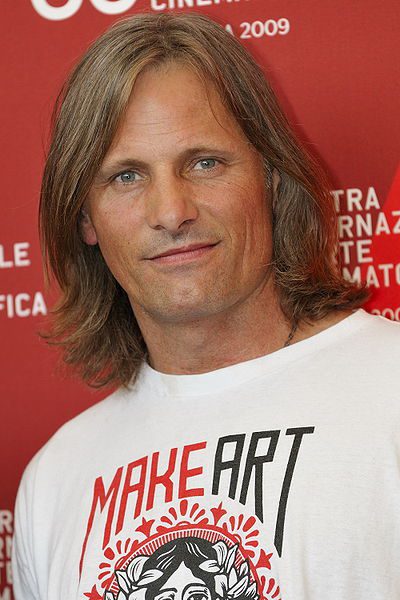
Thinking of him as Aragorn, of course. True King of Gondor.
But no. They selected an actor who surprised me. Frankly, I have to confess that I, personally, would never have thought of him.
Plainly, we live in a fallen and sinful world:
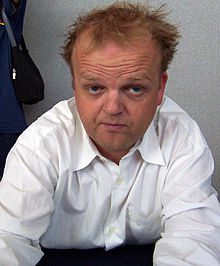
Toby Jones
Another random observation on the passing scene: I often marvel at the bizarre internet behavior of certain apostate critics of Mormonism. Some time back, though, I think I may have found an explanation for their antics:
https://www.braindecoder.com/caffeine-induced-mania-1168100701.html
More than a few of the zanier internet apostates post from time to time on the life-transforming wonders that they’ve discovered in their post-liberation consumption of coffee.
Pure coincidence?
Maybe. But I’m a man of science, and the alternative seems to me something more along the lines of demonic possession. I would prefer not to resort to that explanation. Unless, of course, we postulate that the devil dwells in coffee. Which is, surely, something to ponder . . .

The devil’s brew? (Wikimedia Commons public domain photo by Julius Schorzman)
Speaking of science: I find the continual contrasts of science to religion made by certain atheists — including at least one who likes to comment on my blog here — exceedingly odd. They incessantly point out that science has given us new technologies and cures for polio and other diseases, while theology hasn’t.
My response, on the whole, is “So what?”
To me, this is rather like criticizing the Houston Astros for their failure to score so much as a single touchdown during the entire baseball season just past. Or faulting Homer because his English was so bad. Or lamenting Chaucer’s uselessness in stamping out the bubonic plague or the irrelevance of an accurate knowledge of the Renaissance for building a highway bridge.
It’s like declaring that Thucydides, Tacitus, and Josephus are no longer worth reading since we now have electric toasters. Or that, in these days of jet air travel, there’s no point in reflecting on ethics or on moral issues. Or that, now that we’ve identified muons and positrons and covalent bonds, philosophy is obsolete. Or that, for a society that has essentially eliminated small pox, Shakespeare, Bach, Monet, Dickens, Goethe, Dante, and Dostoevsky are no longer relevant.
(I understand that the people making these unfavorable contrasts of science to religion are likely to go on doing so, despite the fact that, from my point of view, they’re committing something analogous to what Gilbert Ryle called a “category mistake” — and, yes, I’m well aware that Ryle was arguing against mind-brain dualism when he invented the term — but I retain the wan hope that, just perhaps, one of them will, in the manner of a Buddhist monk reflecting on a Zen koan, someday experience enlightenment.)
In the past, I devoted at least two overlapping columns to this topic in the Deseret News — but, since the argument continues to be made, I think it advisable to call attention to them yet again:
“Is the Bible more like Plato’s or Copernicus’ books?”
“Science, progress and religion”
Moreover, when these atheists observe that religion didn’t give us modern cosmology or a flu vaccine, they seem, implicitly, to be claiming science and its achievements for atheism, which is an entirely unjustifiable bit of ideological imperialism. It completely overlooks and ignores such figures (and their number could be multiplied many times over) as the cathedral canon Nicolaus Copernicus (father of the modern heliocentric concept of the solar system), the devoutly Christian Francis Collins (who oversaw the sequencing of the human genome), the deeply Lutheran Johannes Kepler (who made Copernicus’s system accurate by positing elliptical rather than circular orbits for the planets), Father Georges Lemaître (the mathematical physicist who first formulated the concept of an expanding universe and the “Big Bang”), the great Isaac Newton (who devoted roughly as much time to commenting on the Bible as to inventing modern physics), the devoutly Jewish Arno Penzias (co-discoverer of the first empirical confirmation of the Big Bang, 1978 Nobel laureate, and father of a rabbi), Father Gregor Mendel (the founder of modern genetics), the pious Muslim theoretical physicist Abdus Salam (winner of the 1979 Nobel Prize), the very Christian Allan Sandage (among the most prominent astronomers of the twentieth century), the great American Latter-day Saint chemist Henry Eyring (whose son currently serves as a counselor in the First Presidency of the Church of Jesus Christ of Latter-day Saints), and Theodosius Dobzhansky (the devoutly Russian Orthodox evolutionary biologist who was a principal figure in the synthesis of Darwinian evolutionary theory with genetics).
Please see my 2018 Deseret News column on “Kepler and the supposed war between science and religion,”
“I was merely thinking God’s thoughts after him,” Johannes Kepler once wrote. “Since we astronomers are priests of the highest God in regard to the book of nature, it benefits us to be thoughtful, not of the glory of our minds, but rather, above all else, of the glory of God.”
And here’s yet another column that I once wrote for the Deseret News that is also relevant to this issue:
“Inheriting wind — false accounts of the supposed war between science, religion”
***
The insistence of some militantly reductionist adherents of naturalism that “mind” is merely a more or less illusory product of purely chemical/physical processes, that consciousness and free will are hallucinations, seems to me transparently self-refuting. Why should I pay any more attention to the neurochemical events in an atheist’s brain than to his digestive processes? What significance would they have? And, anyway, what, given such preconceptions, would it mean for “me” to “pay attention” to such things? What on earth could it possibly mean to declare that the neurochemical events occurring at one GPS location are “about” the neurochemical events occurring at any other?
Previous Post

March 7, 2022
"It is not the critic who counts"
Next Post
March 9, 2022 Thomas Müntzer -- strange, sinister, and curiously akin
Browse Our Archives
Select a Category Uncategorized
Select a Month October 2026 September 2026 August 2026 July 2026 June 2026 May 2026 April 2026 March 2026 February 2026 January 2026 December 2025 November 2025 October 2025 September 2025 August 2025 July 2025 June 2025 May 2025 April 2025 March 2025 February 2025 January 2025 December 2024 November 2024 October 2024 September 2024 August 2024 July 2024 June 2024 May 2024 April 2024 March 2024 February 2024 January 2024 December 2023 November 2023 October 2023 September 2023 August 2023 July 2023 June 2023 May 2023 April 2023 March 2023 February 2023 January 2023 December 2022 November 2022 October 2022 September 2022 August 2022 July 2022 June 2022 May 2022 April 2022 March 2022 February 2022 January 2022 December 2021 November 2021 October 2021 September 2021 August 2021 July 2021 June 2021 May 2021 April 2021 March 2021 February 2021 January 2021 December 2020 November 2020 October 2020 September 2020 August 2020 July 2020 June 2020 May 2020 April 2020 March 2020 February 2020 January 2020 December 2019 November 2019 October 2019 September 2019 August 2019 July 2019 June 2019 May 2019 April 2019 March 2019 February 2019 January 2019 December 2018 November 2018 October 2018 September 2018 August 2018 July 2018 June 2018 May 2018 April 2018 March 2018 February 2018 January 2018 December 2017 November 2017 October 2017 September 2017 August 2017 July 2017 June 2017 May 2017 April 2017 March 2017 February 2017 January 2017 December 2016 November 2016 October 2016 September 2016 August 2016 July 2016 June 2016 May 2016 April 2016 March 2016 February 2016 January 2016 December 2015 November 2015 October 2015 September 2015 August 2015 July 2015 June 2015 May 2015 April 2015 March 2015 February 2015 January 2015 December 2014 November 2014 March 2014 August 2013 February 2012
Follow Us!
TAKE THE
Religious Wisdom Quiz
In Revelation, how many lampstands does John see?
Select your answer to see how you score.
Four lampstands Twelve lampstands Ten lampstands Seven golden lampstands
Related posts from Sic et Non

The Iron Gates and the Lion of the...


Learning more about a region of which I've...

From Serbia's "White City," Belgrade
TRENDING AT PATHEOS Latter-day Saint

The Problem with False Prophets
Miller’s Station UMC| 10/18/26| Anchor Verse: Jeremiah 23: 1, 9-23 I...

Emotion in Early Christianity by Andrew Crislip
Andrew Crislip’s Emotion in Early Christianity examines an often overlooked dimension of...

16 Spiritual Touchstones for a More Grounded Life
After decades of spiritual study, here are 16 principles I try...

Catholic Evangelization: Sharing Your Faith Every Day
Welcome back to the Graceful Awakening mini-series called, “From Faith to Mission.” ...

The Pillar of the Boatmen: the Ancient Monument...
The Pillar of the Boatmen is a Romano-Gaulish sculpture that dates from...

In one sense walking into Westminster Abbey is like walking down the...
view all Latter-day Saint blogs
Ad-Free & Subscriber Log-In Subscription Support
- About Us
- 2026 Calendar
- Videos
- Podcasts
- Library of World Religions
- Faith In Media Tracker
- Advertise With Us
- Write for Us
- Privacy Policy
- Terms of Service
- Do Not Sell My Data
- Contact Us
- Radiant Digital
- Manage Newsletter Subscriptions
- Unsubscribe From Notifications
- Sitemap
Copyright 2008-2026, Patheos. All rights reserved.
Subscription Support Ad-Free & Subscriber Log-In
Follow Patheos