
BuddhistCatholicContemplativeEvangelicalGeneral ChristianHinduJewishLatter-day SaintMuslimNew VisionsProgressive Christian
Beliefs
- Buddhist
- Catholic
- Contemplative
- Evangelical
- General Christian
- Hindu
- Jewish
- Latter-day Saint
- More Voices
- Muslim
- New Visions
- Pagan
- Progressive Christian
Topics
- Religion News
- Food and Religion
- Sports and Religion
- Religious Art
- Religious Music and Entertainment
- Religious Events
- History and Religion
- Style and Religion
- Politics and Religion
- Women in Religion
- Recreation Outdoors and Religion
- Business Finance and Religion
- Careers Workplace and Religion
- Education and Religion
- Family Parenting and Religion
- Health Fitness and Religion
- Home and Religion
- Relationships and Religion
- Technology and Religion
- Travel and Religion
Columnists
- Buddhist Columnists
- Business Finance and Religion Columnists
- Careers Workplace and Religion Columnists
- Catholic Columnists
- Contemplative Columnists
- Education and Religion Columnists
- Evangelists Columnists
- Family Parenting and Religion Columnists
- General Christian Columnists
- Health Fitness and Religion Columnists
- Hindu Columnists
- History and Religion Columnists
- Home and Religion Columnists
- Jewish Columnists
- More Voices Columnists
- Latter Day Columnists
- Muslim Columnists
- New Visions Columnists
- Nonreligious Columnists
- Pagan Columnists
- Politics and Religion Columnists
- Progressive Columnists
- Recreation Outdoors and Religion Columnists
- Relationships and Religion Columnists
- Religion News Columnists
- Religious Art Columnists
- Religious Events Columnists
- Religious Music and Entertainment Columnists
- Sports and Religion Columnists
- Style and Religion Columnists
- Technology and Religion Columnists
- Travel and Religion Columnists
- Women in Religion Columnists
Resource Library
- 2026 Calendar
- Library of World Religions
- The 100 Most Holy Places on Earth
- Patheos Answers
- Podcasts
- Videos
- Faith Leaders Database
- Anglican Episcopalian
- Bahai
- Baptist
- Buddhism
- Christianity
- Confucianism
- Eastern Orthodoxy
- Hinduism
- Holiness and Pentecostal
- ISKCON
- Islam
- Judaism
- Lutheran
- Methodist
- The Church of Jesus Christ of Latter-day Saints
- New Age
- Paganism
- Presbytarian and Reformed
- Protestantism
- Religion Behind the Scenes
- Roman Catholic
- Scientology
- Shia Islam
- Sikhism
- Sufism
- Sunni Islam
- Taoism
- Zen
- See all religions
Research Tools
 Ad-Free & Subscriber Log-In Subscription Support
Ad-Free & Subscriber Log-In Subscription Support
Follow Patheos 

- Trending:
- Forgiveness
- |
- Marriage
- |
- Consciousness
- |
- Death Penalty
- |
- Election
- |
- Halloween

- Home
- Latter-day Saint
- “The Wind and the Fire to Be My Chariot”
“The Wind and the Fire to Be My Chariot”
Last updated on: March 19, 2022 at 9:04 pm by Dan Peterson
“The Wind and the Fire to Be My Chariot” 2022-03-19T21:04:33-06:00 Dan Peterson
Patheos Explore the world's faith through different perspectives on religion and spirituality! Patheos has the views of the prevalent religions and spiritualities of the world.
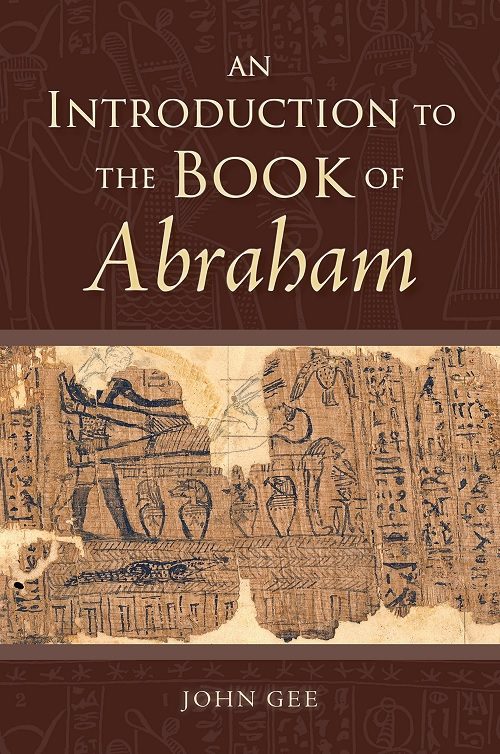
The cover of a book written by Professor Gee for a popular audience (Image from Amazon.com)
***
““The Wind and the Fire to Be My Chariot”: The Anachronism that Wasn’t”
Abstract: In the Book of Abraham, God tells Abraham in Haran, “I cause the wind and the fire to be my chariot” (Abraham 2:7). While this initially might appear to be an anachronism, as the chariot is normally thought to have been introduced later, archaeological finds of chariots at the site of Harran predate Abraham by hundreds of years.
“Interpreting Interpreter: Not-Actually-Anachronistic Chariots”
This post is a summary of the article “‘The Wind and the Fire to Be My Chariot’: The Anachronism that Wasn’t” by John Gee in Volume 50 of Interpreter: A Journal of Latter-day Saint Faith and Scholarship.
The full article can be read at https://interpreterfoundation.org/the-wind-and-the-fire-to-be-my-chariot-the-anachronism-that-wasnt/.
An introduction to the Interpreting Interpreter series is available at https://interpreterfoundation.org/interpreting-interpreter-on-abstracting-thought/.
“The Takeaway: Gee details an item that critics might look to as an anachronism–in this case, a reference to chariots in the Book of Abraham–and demonstrates how the issue disappears upon a closer reading of both the text and the historical record.”
***
A passage from Keith Ward, Why There Almost Certainly Is a God: Doubting Dawkins (Oxford: Lion, 2008), 22-23:
[T]he existence of conscious minds introduces a new form of non-scientific explanations for why things happen as they do. Scientific explanation, in general, works by referring to some initial state (a ’cause’) and a general mathematically describable law. That law predicts what regularly follows from the initial state, and it does so without any reference to purpose, value or consciousness.
But there is another sort of explanation. The Oxford philosopher Richard Swinburne (Dawkins wrongly calls him a theologian, probably because he disagrees with him so much) calls it ‘personal explanation’. It only comes into effect when persons, or conscious minds, exist. Then it explains some of the things that persons do in terms of knowledge, desire, intention and enjoyment.
If you want to explain how it is that I am writing these words, you could do so by showing that I am aware of some possible future states (I can stay in bed, have a coffee, or write these words), I evaluate one of them as desirable (I want to finish this book), I set in motion a causal process to bring about what I desire (I get out of bed), and finally I enjoy what I am doing, because it is what I wanted and desired to do.
This is personal explanation. It is a perfectly satisfactory form of explanation, and it does not seem to be reducible to scientific explanation. If it is, no one has yet plausibly suggested any idea of how to reduce it. How can my talk of knowledge, desires, intentions and awareness translate into statements of physics that only refer to physical states and general laws of their behaviour?
I conclude, like most philosophers, that if conscious knowledge, desire, intention and enjoyment exist, then personal explanation is a sort of explanation that we need, one that is truly explanatory, that is quite different from scientific (purely physical) explanation, and that is not reducible to or translatable into scientific explanation.
I do not think Dawkins agrees with this. I was flattered to find myself mentioned in his book, but puzzled when he said, ‘Like Swinburne, Ward mistakes what it means to explain something.’ However, Swinburne and I are not making a mistake. We are claiming that there is more than one sort of explanation for why things happen as they do. Scientific explanation in terms of physical causes and general laws is one sort of explanation. Personal explanation in terms of desires and intentions is another.
***
A note from George Johnson, Miss Leavitt’s Stars: The Untold Story of the Woman Who Discovered How to Measure the Universe (New York and London: W. W. Norton and Company, 2005), 7-8:
[A]stronomers can say with some confidence that our own galaxy, the Milky Way, is more than 100,000 light-years from end to end and that Andromeda, the galaxy across the street, is 2 million light-years away. These and several other galaxies form our “Local Group.” The neighborhood. Just across town are other conglomerations of galaxies like the Sculptor group and the Maffei group, nearly 10 million light-years in distance. A little farther are the Virgo and Fornax clusters, lying some 50 million light-years from the Milky Way. Even if these were miles, the numbers would be staggering. A single light-year is almost 6 trillion miles.
We still haven’t left our hometown “supercluster,” a galaxy of galaxies a full 200 million light-years across. Beyond it lie more superclusters, stretching to the edge of the visible universe, 10 billion or so light-years from home.
Faced with so grandiose a vision, it is a little surprising to learn that as recently as the 1920s many astronomers thought the Milky Way was the universe. Whether there was anything beyond it was a matter of scholarly debate. What are now taken to be vast galaxies similar to our own were dismissed as small nearby gas clouds, insignificant smudges of light.
I’ve shared a number of such passages here in an attempt to help readers — and, emphatically, to help myself — grasp to at least some small and insignificant degree the unimaginable vastness of the cosmos.
“The most beautiful thing we can experience is the mysterious. It is the source of all true art and science. He to whom the emotion is a stranger, who can no longer pause to wonder and stand wrapped in awe, is as good as dead —his eyes are closed. The insight into the mystery of life, coupled though it be with fear, has also given rise to religion. To know what is impenetrable to us really exists, manifesting itself as the highest wisdom and the most radiant beauty, which our dull faculties can comprehend only in their most primitive forms—this knowledge, this feeling is at the center of true religiousness.” (Albert Einstein)
“The heavens declare the glory of God; and the firmament sheweth his handywork.” (Psalm 19:1)
Such thoughts, it seems to me, are especially appropriate for the approaching Sabbath.
Posted from St. George, Utah
Interpreter Journal Latter-day Saint Faith Scholarship
Why There Almost Certainly Is a God
Previous Post

March 18, 2022
Some thoughts on "explanations"
Next Post
March 19, 2022 Thomas Judd's Store and Other Matters
Browse Our Archives
Select a Category Uncategorized
Select a Month October 2026 September 2026 August 2026 July 2026 June 2026 May 2026 April 2026 March 2026 February 2026 January 2026 December 2025 November 2025 October 2025 September 2025 August 2025 July 2025 June 2025 May 2025 April 2025 March 2025 February 2025 January 2025 December 2024 November 2024 October 2024 September 2024 August 2024 July 2024 June 2024 May 2024 April 2024 March 2024 February 2024 January 2024 December 2023 November 2023 October 2023 September 2023 August 2023 July 2023 June 2023 May 2023 April 2023 March 2023 February 2023 January 2023 December 2022 November 2022 October 2022 September 2022 August 2022 July 2022 June 2022 May 2022 April 2022 March 2022 February 2022 January 2022 December 2021 November 2021 October 2021 September 2021 August 2021 July 2021 June 2021 May 2021 April 2021 March 2021 February 2021 January 2021 December 2020 November 2020 October 2020 September 2020 August 2020 July 2020 June 2020 May 2020 April 2020 March 2020 February 2020 January 2020 December 2019 November 2019 October 2019 September 2019 August 2019 July 2019 June 2019 May 2019 April 2019 March 2019 February 2019 January 2019 December 2018 November 2018 October 2018 September 2018 August 2018 July 2018 June 2018 May 2018 April 2018 March 2018 February 2018 January 2018 December 2017 November 2017 October 2017 September 2017 August 2017 July 2017 June 2017 May 2017 April 2017 March 2017 February 2017 January 2017 December 2016 November 2016 October 2016 September 2016 August 2016 July 2016 June 2016 May 2016 April 2016 March 2016 February 2016 January 2016 December 2015 November 2015 October 2015 September 2015 August 2015 July 2015 June 2015 May 2015 April 2015 March 2015 February 2015 January 2015 December 2014 November 2014 March 2014 August 2013 February 2012
Follow Us!
TAKE THE
Religious Wisdom Quiz
Which Christian group is known for its liturgical calendar?
Select your answer to see how you score.
Methodists Jehovah’s Witnesses Anglicans Baptists
Related posts from Sic et Non

We've been at it for fourteen years now

This Wednesday, Thursday, Friday, and Saturday

"An Early Christian Context for the Book of...
Yup, the Interpreter Foundation is still clearly defunct
TRENDING AT PATHEOS Latter-day Saint

In "Irreplaceable," our book on vocation and technology, Trevor Sutton and I...

I was strolling through the top floor of the brand new Parthenon...

What Does Gêvâh Mean For Kimberley Guifoyle &...
This week, a lot of the news is focused on Kimberly Guilfoyle....

INNER CIRCLE: Profound Mystery (Of Christ In All...
Ephesians 5:31-32 “For this reason, a man will leave his father and...

Do Not Rejoice When Your Enemy Falls: The...
Turning an execution into a public spectacle is a disturbing expression of...

'The Chosen' S6 Trailer: The Passion Gets Very...
Not many watching 'The Chosen' worry about spoilers, but just because they...
view all Latter-day Saint blogs
Ad-Free & Subscriber Log-In Subscription Support
- About Us
- 2026 Calendar
- Videos
- Podcasts
- Library of World Religions
- Faith In Media Tracker
- Advertise With Us
- Write for Us
- Privacy Policy
- Terms of Service
- Do Not Sell My Data
- Contact Us
- Radiant Digital
- Manage Newsletter Subscriptions
- Unsubscribe From Notifications
- Sitemap
Copyright 2008-2026, Patheos. All rights reserved.
Subscription Support Ad-Free & Subscriber Log-In
Follow Patheos