
BuddhistCatholicContemplativeEvangelicalGeneral ChristianHinduJewishLatter-day SaintMuslimNew VisionsProgressive Christian
Beliefs
- Buddhist
- Catholic
- Contemplative
- Evangelical
- General Christian
- Hindu
- Jewish
- Latter-day Saint
- More Voices
- Muslim
- New Visions
- Pagan
- Progressive Christian
Topics
- Religion News
- Food and Religion
- Sports and Religion
- Religious Art
- Religious Music and Entertainment
- Religious Events
- History and Religion
- Style and Religion
- Politics and Religion
- Women in Religion
- Recreation Outdoors and Religion
- Business Finance and Religion
- Careers Workplace and Religion
- Education and Religion
- Family Parenting and Religion
- Health Fitness and Religion
- Home and Religion
- Relationships and Religion
- Technology and Religion
- Travel and Religion
Columnists
- Buddhist Columnists
- Business Finance and Religion Columnists
- Careers Workplace and Religion Columnists
- Catholic Columnists
- Contemplative Columnists
- Education and Religion Columnists
- Evangelists Columnists
- Family Parenting and Religion Columnists
- General Christian Columnists
- Health Fitness and Religion Columnists
- Hindu Columnists
- History and Religion Columnists
- Home and Religion Columnists
- Jewish Columnists
- More Voices Columnists
- Latter Day Columnists
- Muslim Columnists
- New Visions Columnists
- Nonreligious Columnists
- Pagan Columnists
- Politics and Religion Columnists
- Progressive Columnists
- Recreation Outdoors and Religion Columnists
- Relationships and Religion Columnists
- Religion News Columnists
- Religious Art Columnists
- Religious Events Columnists
- Religious Music and Entertainment Columnists
- Sports and Religion Columnists
- Style and Religion Columnists
- Technology and Religion Columnists
- Travel and Religion Columnists
- Women in Religion Columnists
Resource Library
- 2026 Calendar
- Library of World Religions
- The 100 Most Holy Places on Earth
- Patheos Answers
- Podcasts
- Videos
- Faith Leaders Database
- Anglican Episcopalian
- Bahai
- Baptist
- Buddhism
- Christianity
- Confucianism
- Eastern Orthodoxy
- Hinduism
- Holiness and Pentecostal
- ISKCON
- Islam
- Judaism
- Lutheran
- Methodist
- The Church of Jesus Christ of Latter-day Saints
- New Age
- Paganism
- Presbytarian and Reformed
- Protestantism
- Religion Behind the Scenes
- Roman Catholic
- Scientology
- Shia Islam
- Sikhism
- Sufism
- Sunni Islam
- Taoism
- Zen
- See all religions
Research Tools
 Ad-Free & Subscriber Log-In Subscription Support
Ad-Free & Subscriber Log-In Subscription Support
Follow Patheos 

- Trending:
- Forgiveness
- |
- Marriage
- |
- Consciousness
- |
- Death Penalty
- |
- Election
- |
- Halloween

- Home
- Latter-day Saint
- Progress, Science, and Religion
Progress, Science, and Religion
Last updated on: February 9, 2022 at 1:12 pm by Dan Peterson
Progress, Science, and Religion 2022-02-09T13:12:21-07:00 Dan Peterson
Patheos Explore the world's faith through different perspectives on religion and spirituality! Patheos has the views of the prevalent religions and spiritualities of the world.
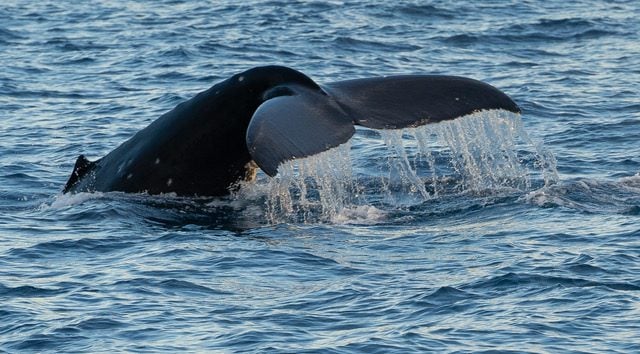
Our friend Russell Richins took this photograph off the coast of the Big Island of Hawaii a few days ago. I asked him to send it to me so that I could claim that I had taken it. In the end, though, even I have some minimal and vaguely remembered standards of integrity. So, yes, he took it — but, well, umm, I taught him how to use a camera. Yeah. That’s it.
***
If you would like to watch the two-hour video of a Witnesses-related event that occurred in Provo, Utah, back on 14 October 2021 without needing to get through Deseret Book’s paywall, you can do so here. The completion of the video and its full going-public were slowed by a nearly tragic external factor that has now, thankfully, been largely overcome:
“Deseret Book’s “What is My Witness” Event”
The Interpreter Foundation is pleased to share here a video of an event that Deseret Book and Excel Entertainment sponsored in Provo on 14 October 2021. The event celebrated the release of the Interpreter Foundation’s dramatic film, Witnesses, on DVD and via streaming. Most though not quite all of the program was occupied by a conversation onstage led by Tammy Uzelac Hall, who hosts the Sunday on Monday podcast for LDS Living. The participants in the conversation, which often responded to clips of specific scenes from the film, were Camrey Bagley Fox (who played Emma Smith), Mark Goodman (the director of Witnesses), Lincoln Hoppe (Martin Harris), Daniel Peterson (executive producer), Russell Richins (producer), Caleb Spivak (Oliver Cowdery), and Paul Wuthrich (Joseph Smith Jr.). Also featured on the program were the Truman Brothers, members of the Nashville Tribute Band, who performed four songs.
Were you aware that the Interpreter Foundation has a YouTube channel? Well, we do. And you might find some other things on it that will interest you:
https://www.youtube.com/c/theinterpreterfoundation
***
Speaking of the Witnesses film, its producer, Russ Richins, has been on vacation over here in Hawaii with his wife. (He took the photograph that I’ve shared above.) We met up with them last night at a restaurant here in Ko Olina. There are very few things in this life that are better than good conversation with good friends over good food.
***
Critics of religious faith often like to compare it, unfavorably, to science. Science, they say, has cured polio and malaria, sent humans to the moon, created powerful computers, and plumbed the secrets of distant stars and galaxies. Religion has done none of these things.
However, this is a profoundly misguided argument. For one thing, it suggests that only such accomplishments as these have value. Most thinking people, though, would disagree. No sonnet has ever built a bridge. No symphony has ever cured a cancer. Acts of charitable self-sacrifice or selfless caring don’t solve problems in quantum physics. Are such things therefore useless? Very few people would say so: Sonnets and symphonies and kind deeds — and sculptures, paintings, walks in the woods, and moments spent watching sunsets over the ocean — have unique and irreplaceable values of their own.
Moreover, the skeptics’ argument seemingly recognizes only fields where tangible progress can be demonstrated. But many important areas of human effort don’t move forward in obvious ways. In literature, for instance, it would be absurd to argue that Henry Morton Robinson’s The Cardinal, the best-selling American novel of 1950, is a greater book than Dante’s Divine Comedy simply because, at its publication, more than six centuries of literary “progress” had occurred since Dante’s death. Nineteenth-century chemistry textbooks are obsolete, of course, but the music of Bach, Mozart and Beethoven certainly isn’t. Twenty-first-century literature hasn’t rendered Shakespeare, Goethe, Tolstoy, and Dostoevsky irrelevant. John Tavener and Arvo Pärt haven’t relegated Haydn, Brahms, and Vivaldi to the musical dumpster.
I borrow an illustration from Vatican astronomer Guy Consolmagno’s excellent keynote address to the Interpreter Foundation’s 2016 Science and Mormonism Symposium: Specialists in astronomy today seldom, if ever, read the works of Ptolemy, Copernicus, and Kepler because, in their technical areas, those pivotal works of Western science have been superseded, replaced. But Plato, Aristotle, Aquinas, Kant, and Kierkegaard haven’t been replaced or superseded. Their writings are still alive, still richly challenging, and deeply relevant for contemporary reflection on philosophy, literary criticism, and ethics. Charles Darwin, Isaac Newton, Rene Descartes, and David Hume are all enormously important figures in Western intellectual history. But Descartes and Hume continue to be active presences in ongoing debates, whereas — historically significant as they are — Darwin and Newton play little if any role in current programs of scientific research.
Furthermore, the skeptics’ argument neglects obvious and fundamental differences between the objects of religious faith and those of scientific inquiry. For instance, science focuses on things that can, at least in principle, be counted and measured; religious faith, like philosophy, historiography, and ethical reflection, does not.
Ah, the critics will respond, but that’s because the objects of science are real while those of faith are imaginary. And perhaps those critics are willing to say that philosophy, history, and ethics focus on illusions, as well — though most people, when pressed, would hesitate to say that the distinction between good and evil is mere subjective fantasy.
But it could just as easily be — and arguably is — the case that the tools of science simply aren’t suited to the treatment of philosophical, ethical, and religious matters. A screwdriver isn’t well-adapted for pounding nails, either, but that fact scarcely means that pounding nails is worthless. A net with a 6-inch mesh is well-fitted for catching tuna, but smaller fish, plankton, and krill will elude it. An odometer will measure quite accurately how far you’ve traveled, but an odometer is utterly worthless for identifying your location or telling you which direction you’re headed.
In a 1615 letter to the Grand Duchess Christina of Tuscany, the great Italian Renaissance scientist Galileo Galilei cited a quip that he said he had heard “from an ecclesiastic of the most eminent degree” (but who remains unidentified): “The intention of the Holy Spirit is to teach us how one goes to heaven, not how the heavens go.”
Ideally, science can tell you how to achieve a goal. But it can’t begin to tell you which goals you should pursue. Ethical decisions can’t be determined by weight or by counting electrons. Worldviews aren’t found, as such, in geological strata or quasars or the vascular structure of flowering plants. And science produces bombs and surgical equipment, astronomical telescopes and missile submarine periscopes, pharmaceuticals and poisons, with equal efficiency.
Science is an enormously powerful instrument that has made impressive advances, but part of its effectiveness stems from its deliberately narrow focus. Many of life’s most important issues are flatly beyond its range.
Posted from Ko Olina, Oahu, Hawaii
Previous Post

February 4, 2022
"A Deeper Understanding of the Temple in 175 Entries"
Next Post
February 6, 2022 On the psychology of atheism?
Browse Our Archives
Select a Category Uncategorized
Select a Month October 2026 September 2026 August 2026 July 2026 June 2026 May 2026 April 2026 March 2026 February 2026 January 2026 December 2025 November 2025 October 2025 September 2025 August 2025 July 2025 June 2025 May 2025 April 2025 March 2025 February 2025 January 2025 December 2024 November 2024 October 2024 September 2024 August 2024 July 2024 June 2024 May 2024 April 2024 March 2024 February 2024 January 2024 December 2023 November 2023 October 2023 September 2023 August 2023 July 2023 June 2023 May 2023 April 2023 March 2023 February 2023 January 2023 December 2022 November 2022 October 2022 September 2022 August 2022 July 2022 June 2022 May 2022 April 2022 March 2022 February 2022 January 2022 December 2021 November 2021 October 2021 September 2021 August 2021 July 2021 June 2021 May 2021 April 2021 March 2021 February 2021 January 2021 December 2020 November 2020 October 2020 September 2020 August 2020 July 2020 June 2020 May 2020 April 2020 March 2020 February 2020 January 2020 December 2019 November 2019 October 2019 September 2019 August 2019 July 2019 June 2019 May 2019 April 2019 March 2019 February 2019 January 2019 December 2018 November 2018 October 2018 September 2018 August 2018 July 2018 June 2018 May 2018 April 2018 March 2018 February 2018 January 2018 December 2017 November 2017 October 2017 September 2017 August 2017 July 2017 June 2017 May 2017 April 2017 March 2017 February 2017 January 2017 December 2016 November 2016 October 2016 September 2016 August 2016 July 2016 June 2016 May 2016 April 2016 March 2016 February 2016 January 2016 December 2015 November 2015 October 2015 September 2015 August 2015 July 2015 June 2015 May 2015 April 2015 March 2015 February 2015 January 2015 December 2014 November 2014 March 2014 August 2013 February 2012
Follow Us!
TAKE THE
Religious Wisdom Quiz
What does "Tamar" mean in Hebrew?
Select your answer to see how you score.
Daughter of the King The Lord is my refuge My delight Palm tree
Related posts from Sic et Non

A case of twin near-death experiences?

Toward a "Post-Materialist Science"?
Once more unto the breach, dear friends, once...

TRENDING AT PATHEOS Latter-day Saint

The First Eucharistic Controversy: Christ’s Real Presence
For Catholics, the Eucharist is the source and summit of the Christian...

What a Stop Sign Can Teach Us About...
How to Make a Decision When You Can't Hear God Main point:...

Archdiocese Hosts Military Marriage Retreat in Germany
RASTATT, Germany — The transient military lifestyle, with its frequent deployments and...

Nearly every morning, I make the drive to Detroit with my high-school-age...

The Real AI Story Is Adoption Without Trust
Artificial intelligence has crossed a political threshold. It is no longer a...

A new article, written by Jeff Lindsay and Gale L. Pooley,...
view all Latter-day Saint blogs
Ad-Free & Subscriber Log-In Subscription Support
- About Us
- 2026 Calendar
- Videos
- Podcasts
- Library of World Religions
- Faith In Media Tracker
- Advertise With Us
- Write for Us
- Privacy Policy
- Terms of Service
- Do Not Sell My Data
- Contact Us
- Radiant Digital
- Manage Newsletter Subscriptions
- Unsubscribe From Notifications
- Sitemap
Copyright 2008-2026, Patheos. All rights reserved.
Subscription Support Ad-Free & Subscriber Log-In
Follow Patheos