
BuddhistCatholicContemplativeEvangelicalGeneral ChristianHinduJewishLatter-day SaintMuslimNew VisionsProgressive Christian
Beliefs
- Buddhist
- Catholic
- Contemplative
- Evangelical
- General Christian
- Hindu
- Jewish
- Latter-day Saint
- More Voices
- Muslim
- New Visions
- Pagan
- Progressive Christian
Topics
- Religion News
- Food and Religion
- Sports and Religion
- Religious Art
- Religious Music and Entertainment
- Religious Events
- History and Religion
- Style and Religion
- Politics and Religion
- Women in Religion
- Recreation Outdoors and Religion
- Business Finance and Religion
- Careers Workplace and Religion
- Education and Religion
- Family Parenting and Religion
- Health Fitness and Religion
- Home and Religion
- Relationships and Religion
- Technology and Religion
- Travel and Religion
Columnists
- Buddhist Columnists
- Business Finance and Religion Columnists
- Careers Workplace and Religion Columnists
- Catholic Columnists
- Contemplative Columnists
- Education and Religion Columnists
- Evangelists Columnists
- Family Parenting and Religion Columnists
- General Christian Columnists
- Health Fitness and Religion Columnists
- Hindu Columnists
- History and Religion Columnists
- Home and Religion Columnists
- Jewish Columnists
- More Voices Columnists
- Latter Day Columnists
- Muslim Columnists
- New Visions Columnists
- Nonreligious Columnists
- Pagan Columnists
- Politics and Religion Columnists
- Progressive Columnists
- Recreation Outdoors and Religion Columnists
- Relationships and Religion Columnists
- Religion News Columnists
- Religious Art Columnists
- Religious Events Columnists
- Religious Music and Entertainment Columnists
- Sports and Religion Columnists
- Style and Religion Columnists
- Technology and Religion Columnists
- Travel and Religion Columnists
- Women in Religion Columnists
Resource Library
- 2026 Calendar
- Library of World Religions
- The 100 Most Holy Places on Earth
- Patheos Answers
- Podcasts
- Videos
- Faith Leaders Database
- Anglican Episcopalian
- Bahai
- Baptist
- Buddhism
- Christianity
- Confucianism
- Eastern Orthodoxy
- Hinduism
- Holiness and Pentecostal
- ISKCON
- Islam
- Judaism
- Lutheran
- Methodist
- The Church of Jesus Christ of Latter-day Saints
- New Age
- Paganism
- Presbytarian and Reformed
- Protestantism
- Religion Behind the Scenes
- Roman Catholic
- Scientology
- Shia Islam
- Sikhism
- Sufism
- Sunni Islam
- Taoism
- Zen
- See all religions
Research Tools
 Ad-Free & Subscriber Log-In Subscription Support
Ad-Free & Subscriber Log-In Subscription Support
Follow Patheos 

- Trending:
- Forgiveness
- |
- Marriage
- |
- Consciousness
- |
- Death Penalty
- |
- Election
- |
- Halloween

- Home
- Latter-day Saint
- Of Victims and Psychics
Of Victims and Psychics
Last updated on: February 21, 2022 at 12:58 pm by Dan Peterson
Of Victims and Psychics 2022-02-21T12:58:21-07:00 Dan Peterson
Patheos Explore the world's faith through different perspectives on religion and spirituality! Patheos has the views of the prevalent religions and spiritualities of the world.
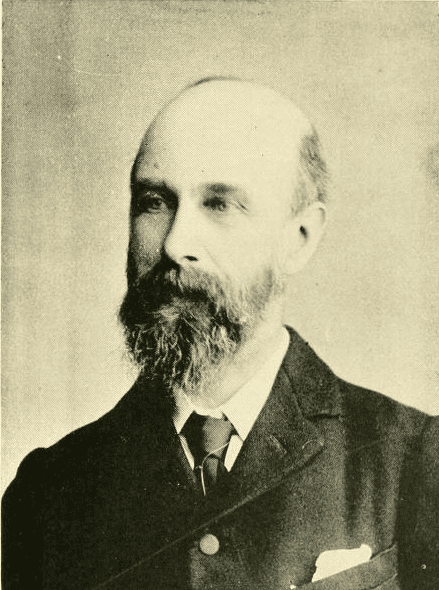
Sir William F. Barrett (1844-1925)
Wikimedia Commons public domain image
***
The invaluable Jeff Lindsay has posted an interesting item on his blog regarding the portion of the Book of Mormon that is set in ancient Arabia:
“An Update on Maps of the Arabian Peninsula Showing Nahom-related Names”
***
Some time back, I was deleting some old computer files when I came across a curious item. I’m not quite sure where it came from, nor who wrote it nor when, but it’s addressed to me:
“If you want to know if Mormonism is hurtful – listen to the critics. Validate their experiences, don’t diminish them. Don’t blame their trauma on their faithlessness.
“Invalidating people who are really struggling with religious issues tends to increase their self doubt and hopelessness. They feel broken and alone for not fitting in with the indoctrination.
“I would recommend that you Dan Peterson recuse yourself from any such conversations in the future. Your own talk shows that you have the smell of blood on your hands if not the stain.
“Speak to struggling members leaving the JW or Christian Science or other faiths also being disrupted by the Google age. Mormon bitter apostates are no less traumatized.”
I suppose that I’ll respond to it here, since I can’t recall whether or not I responded directly to its author and since it expresses sentiments that I’ve encountered more than once. (I won’t bother with the hyperbolic claim that I have blood on my hands, nor with the unreasonable demand that I should never again enter into discussions of the merits or demerits of my church and faith.)
First of all, yes, it’s important to respond to earnest and suffering people with as much charity and sympathetic understanding as one can muster. That, I think, goes without saying for any serious disciple of Christ and, for that matter, for any reasonably decent person.
Having said that, however, I don’t think that listening to critics is the only thing that one must do in determining whether Mormonism is “hurtful.” Don’t the voices of those who seem to be satisfied with their Church membership count, as well? And don’t we need to try to sort truth from falsehood? Might some sociological and statistical and other data not be useful?
At the height of a messy and angry divorce between two people who have been one’s good friends, it would seem to me to be unfair and unwise simply to take at face value the complaints or allegations of one spouse about the other.
Talk of “validating,” and of not “invalidating,” the experiences of people who claim to have been hurt seems to me a reasonable request if it signifies taking them seriously and responding empathetically. If, however, it means that one must believe everything such people say and grant its complete accuracy without question, then it strikes me as a form of emotional blackmail and as remarkably cavalier and indifferent toward truth.
To take a dramatic parallel: There are, of course, genuine rapes. And rape is a terrible crime. Moreover, rape victims have often, historically, been treated with cold and wounding skepticism. I should hardly need to say that such responses are horribly wrong. On the other hand, not every allegation of rape is true — and those who are accused of the offense are also entitled to a fair hearing and to justice.
***
I’ve never been overly interested in paranormal phenomena — what’s sometimes called psi — such as clairvoyance, ESP, and spiritualism. My worldview doesn’t demand that they be authentic or true. Pretty obviously, though, their authenticity, if confirmed or even strongly evidenced, would tend to undermine certain reductionist materialist dogmas in a way that would be congenial to things that matter much more, and much more directly, to me.
In recent years, I’ve begun to wonder whether I shouldn’t take a more serious and open-minded look. I had long thought that such things had been definitively discredited, but now I’m not so sure. The first inkling that I had in that direction was a brief discussion, in one of his books (I no longer remember which) by the prominent Anglo-American philosopher John Hick, who had spent some time reading through the publications of England’s Society for Psychical Research. He had emerged from that reading much more impressed than I had expected he would.
Then, several years ago, I read The Afterlife Experiments: Breakthrough Scientific Evidence of Life After Death, by Gary E. Schwartz, and I was more impressed than I had expected to be.
Thereupon, I read Extraordinary Knowing: Science, Skepticism, and the Inexplicable Powers of the Human Mind by the late Elizabeth Lloyd Mayer, and, again, I was surprised and impressed.
I’ll probably never get around to it, but it would be fascinating to seriously read through the publications of the London-based Society for Psychical Research, which may well have been relegated to the academic fringe not because its work wasn’t sound and rigorous but because its conclusions are ideologically incompatible with certain reigning dogmas.
I’ve been thinking about the SPR again since I read Entangled Minds: Extrasensory Experiences in a Quantum Reality by the controversial psychologist and professor Dr. Dean Radin. Think of him what you will — he, personally, isn’t my focus at the moment — his brief discussion of the Society for Psychical Research is interesting.
The Society was founded around 1882 by, among others, the physicist Sir William Barrett, of the Royal College of Science in Dublin, Ireland. Its members included the physicist Sir Oliver Lodge, who became famous for his contributions to wireless telegraphy; the physicist Baron Rayleigh, brother-in-law to the British prime minister Arthur James Balfour and eventual winner of the Nobel Prize for his discovery of the inert gas argon; the astronomer Samuel P. Langley, director of the Smithsonian Institution; the great Harvard philosopher and psychologist William James; the astronomer Simon Newcomb, president of the American Association for the Advancement of Science; the German physicist Heinrich Hertz, the first person to provide conclusive proof of the existence of electromagnetic waves (who died sadly young at 36); and Edward C. Pickering, director of the Harvard Observatory.
The British physicist J. J. Thompson, who won a Nobel Prize in 1906 for his discovery of the electron, served for thirty-four years as a member of the Society’s Governing Council. The French physiologist Charles Richet, who later won a Nobel Prize for his research on anaphylaxis, served as president of the Society for a time.
And so forth.
These weren’t mere pseudoscientific crackpots, lightly dismissed — and they believed that they had found solid evidence for psychic phenomena. My sense is that many of their studies haven’t been refuted. They’re simply out of fashion and no longer read.
Perhaps it’s time to dust some of their volumes off and take another look at their work.
***
I close, though, with a pair of items from the Christopher Hitchens Memorial “How Religion Poisons Everything” File©:
“The larger value two national journalists see in Latter-day Saint missions”
Christopher Hitchens Memorial "How Religion Poisons Everything" File
Next Post

February 22, 2022 Of Atheistic "Brights" and Religious "Dims"
Browse Our Archives
Select a Category Uncategorized
Select a Month October 2026 September 2026 August 2026 July 2026 June 2026 May 2026 April 2026 March 2026 February 2026 January 2026 December 2025 November 2025 October 2025 September 2025 August 2025 July 2025 June 2025 May 2025 April 2025 March 2025 February 2025 January 2025 December 2024 November 2024 October 2024 September 2024 August 2024 July 2024 June 2024 May 2024 April 2024 March 2024 February 2024 January 2024 December 2023 November 2023 October 2023 September 2023 August 2023 July 2023 June 2023 May 2023 April 2023 March 2023 February 2023 January 2023 December 2022 November 2022 October 2022 September 2022 August 2022 July 2022 June 2022 May 2022 April 2022 March 2022 February 2022 January 2022 December 2021 November 2021 October 2021 September 2021 August 2021 July 2021 June 2021 May 2021 April 2021 March 2021 February 2021 January 2021 December 2020 November 2020 October 2020 September 2020 August 2020 July 2020 June 2020 May 2020 April 2020 March 2020 February 2020 January 2020 December 2019 November 2019 October 2019 September 2019 August 2019 July 2019 June 2019 May 2019 April 2019 March 2019 February 2019 January 2019 December 2018 November 2018 October 2018 September 2018 August 2018 July 2018 June 2018 May 2018 April 2018 March 2018 February 2018 January 2018 December 2017 November 2017 October 2017 September 2017 August 2017 July 2017 June 2017 May 2017 April 2017 March 2017 February 2017 January 2017 December 2016 November 2016 October 2016 September 2016 August 2016 July 2016 June 2016 May 2016 April 2016 March 2016 February 2016 January 2016 December 2015 November 2015 October 2015 September 2015 August 2015 July 2015 June 2015 May 2015 April 2015 March 2015 February 2015 January 2015 December 2014 November 2014 March 2014 August 2013 February 2012
Follow Us!
TAKE THE
Religious Wisdom Quiz
True or False: Mark is the only Gospel that records Jesus asking 'Who touched my clothes?' after power went out from him.
Select your answer to see how you score.
FALSE TRUE
Related posts from Sic et Non


Michael Faraday, James Clerk Maxwell, and the Open...


TRENDING AT PATHEOS Latter-day Saint

Janie Learns the Way of the Cross: A...
Teaching children about Jesus' Passion can be challenging. Many parents and educators...

Looking For Good Catholic Writing - October 2026
He alone extends the heavens, and he walks upon the waves of...

In "Irreplaceable," our book on vocation and technology, Trevor Sutton and I...

I was strolling through the top floor of the brand new Parthenon...

What Does Gêvâh Mean For Kimberley Guifoyle &...
This week, a lot of the news is focused on Kimberly Guilfoyle....

INNER CIRCLE: Profound Mystery (Of Christ In All...
Ephesians 5:31-32 “For this reason, a man will leave his father and...
view all Latter-day Saint blogs
Ad-Free & Subscriber Log-In Subscription Support
- About Us
- 2026 Calendar
- Videos
- Podcasts
- Library of World Religions
- Faith In Media Tracker
- Advertise With Us
- Write for Us
- Privacy Policy
- Terms of Service
- Do Not Sell My Data
- Contact Us
- Radiant Digital
- Manage Newsletter Subscriptions
- Unsubscribe From Notifications
- Sitemap
Copyright 2008-2026, Patheos. All rights reserved.
Subscription Support Ad-Free & Subscriber Log-In
Follow Patheos