
BuddhistCatholicContemplativeEvangelicalGeneral ChristianHinduJewishLatter-day SaintMuslimNew VisionsProgressive Christian
Beliefs
- Buddhist
- Catholic
- Contemplative
- Evangelical
- General Christian
- Hindu
- Jewish
- Latter-day Saint
- More Voices
- Muslim
- New Visions
- Pagan
- Progressive Christian
Topics
- Religion News
- Food and Religion
- Sports and Religion
- Religious Art
- Religious Music and Entertainment
- Religious Events
- History and Religion
- Style and Religion
- Politics and Religion
- Women in Religion
- Recreation Outdoors and Religion
- Business Finance and Religion
- Careers Workplace and Religion
- Education and Religion
- Family Parenting and Religion
- Health Fitness and Religion
- Home and Religion
- Relationships and Religion
- Technology and Religion
- Travel and Religion
Columnists
- Buddhist Columnists
- Business Finance and Religion Columnists
- Careers Workplace and Religion Columnists
- Catholic Columnists
- Contemplative Columnists
- Education and Religion Columnists
- Evangelists Columnists
- Family Parenting and Religion Columnists
- General Christian Columnists
- Health Fitness and Religion Columnists
- Hindu Columnists
- History and Religion Columnists
- Home and Religion Columnists
- Jewish Columnists
- More Voices Columnists
- Latter Day Columnists
- Muslim Columnists
- New Visions Columnists
- Nonreligious Columnists
- Pagan Columnists
- Politics and Religion Columnists
- Progressive Columnists
- Recreation Outdoors and Religion Columnists
- Relationships and Religion Columnists
- Religion News Columnists
- Religious Art Columnists
- Religious Events Columnists
- Religious Music and Entertainment Columnists
- Sports and Religion Columnists
- Style and Religion Columnists
- Technology and Religion Columnists
- Travel and Religion Columnists
- Women in Religion Columnists
Resource Library
- 2026 Calendar
- Library of World Religions
- The 100 Most Holy Places on Earth
- Patheos Answers
- Podcasts
- Videos
- Faith Leaders Database
- Anglican Episcopalian
- Bahai
- Baptist
- Buddhism
- Christianity
- Confucianism
- Eastern Orthodoxy
- Hinduism
- Holiness and Pentecostal
- ISKCON
- Islam
- Judaism
- Lutheran
- Methodist
- The Church of Jesus Christ of Latter-day Saints
- New Age
- Paganism
- Presbytarian and Reformed
- Protestantism
- Religion Behind the Scenes
- Roman Catholic
- Scientology
- Shia Islam
- Sikhism
- Sufism
- Sunni Islam
- Taoism
- Zen
- See all religions
Research Tools
 Ad-Free & Subscriber Log-In Subscription Support
Ad-Free & Subscriber Log-In Subscription Support
Follow Patheos 

- Trending:
- Forgiveness
- |
- Marriage
- |
- Consciousness
- |
- Death Penalty
- |
- Election
- |
- Halloween

- Home
- Latter-day Saint
- Two Notes on Nauvoo History
Two Notes on Nauvoo History
Last updated on: October 24, 2022 at 7:03 am by Dan Peterson
Two Notes on Nauvoo History 2022-10-24T07:03:27-06:00 Dan Peterson
Patheos Explore the world's faith through different perspectives on religion and spirituality! Patheos has the views of the prevalent religions and spiritualities of the world.
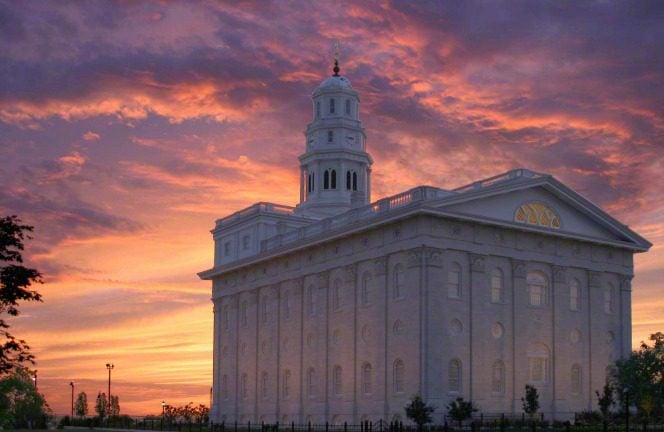
The modern, reconstructed Nauvoo Illinois Temple. (LDS Media Library)
***
For much of his lifetime, newspaper reports insinuated that Joseph Smith was duping his followers in a greed-motivated religious scam.
For a person of his remarkable abilities and undeniable charisma, however, it seems that he derived very little monetary profit from his devilish scheme, if such it was.
“Now father,” Helen Soby wrote in an 1841 letter responding to such concerns, “if you want to know about us or Joe Smith read the Book of Mormon . . . instead of newspapers’ statements. All the money that he has had of us is 100 dollars that I lent him, and that has been proffered to me three times and I would not receive it.”
Joseph was seriously hurt financially in 1840. He had invested in a partnership to buy the steamboat Des Moines, an undertaking intended to bring people (overwhelmingly new converts) and development to the new city of the Saints on the Mississippi. But that investment was lost three months after the purchase, when the steamboat, rechristened the Nauvoo, ran into rocks and sank on a hidden sandbank.
At that point, he owed $73,066.38. By contrast, his monetary assets — in a large but cash-poor new settlement on the cash-poor American frontier — included less than twenty thousand dollars . . . in notes receivable.
Accordingly, in April 1842, pursuant to a new federal law that had become effective just the previous February, Joseph declared bankruptcy, seeking relief from creditors whom he simply could not pay.
He defended his decision as the only way he could settle the debts he owed: “I was forced into the measure by having been robbed, mobbed, plundered, and wasted of all my property, time after time, in various places.”
“Some observers,” writes historian Glen Leonard, “could not imagine that Smith lacked means, since as trustee-in-trust for the church he controlled vast assets in land and buildings. But these were not his own. When the Twelve took over management of Nauvoo property sales in 1841, the Prophet prepared an inventory. His personal belongings, said the Twelve, included ‘his old Charley horse, given him in Kirtland; two pet deer; two old turkeys, and four young ones; the old cow given him by a brother in Missouri; his old Major, dog; his wife, children, and a little household furniture.’ The Prophet kept his own real estate separate from land registered in his name as trustee-in-trust for the church by filing it in Emma Smith’s name.”
Glen M. Leonard, Nauvoo: A Place of Peace, A People of Promise (Salt Lake City and Provo: Deseret Book and Brigham Young University Press, 2002), 149-150, 168-169.
***
A film has recently been made to advocate the theory that Joseph and Hyrum Smith were assassinated on 27 June 1844 in the jail at Carthage, Illinois, not by the armed anti-Mormon mob that was indisputably there with murderous intent, but by their fellow inmates, Willard Richards and John Taylor — members of the Quorum of the Twelve Apostles who went on, respectively, to be a second counselor in the First Presidency and the third president of the Church of Jesus Christ of Latter-day Saints. Presumably, this was done on the orders of Brigham Young, who almost immediately succeeded Joseph as the leader of the Church and, in time, as its second president.
I’ve managed, unfortunately, to watch the scene from the movie in which Elder Taylor and Elder Richards treacherously murder their cellmates. I was, to be candid, surprised at my response. The depiction didn’t merely strike me as wrong. It didn’t merely displease me. It offended me. Deeply. It made me almost physically ill. It was indescribably revolting to me — and the two words that genuinely came to my mind, again and again, as I thought about it were Satanic and obscene. That’s why, yesterday, Rob Gardner’s heart-rending setting of the poem “O, give me back my Prophet dear,” which was penned by none other than John Taylor (who also wrote the announcement of the death of Joseph and Hyrum that now forms Section 135 of the Doctrine and Covenants) was on my mind:
1. O, give me back my Prophet dear,
And Patriarch, O give them back,
The Saints of Latter-days to cheer,
And lead them in the Gospel track!
But O, they’re gone from my embrace,
From earthly scenes their spirits fled,
Two of the best of Adam’s race,
Now lie entombed among the dead.
2. Ye men of wisdom, tell me why —
No guilt, no crime in them were found —
Their blood doth now so loudly cry,
From prison walls and Carthage ground?
Your tongues are mute, but pray attend,
The secret I will now relate,
Why those whom God to earth did lend,
Have met the suffering martyrs’ fate.
3. It is because they strove to gain,
Beyond the grave a heaven of bliss,
Because they made the Gospel plain
And led the Saints to righteousness;
It is because God called them forth,
And led them by His own right hand.
Christ’s coming to proclaim on eath,
And gather Israel to their land.
4. It is because the priests of Baal
Were desperate their craft to save,
And when they saw it doomed to fail,
They sent the Prophets to their grave
Like scenes the ancient Prophets saw,
Like these the ancient Prophets fell.
And, till the resurrection dawn,
Prophet and Patriarch, farewell.
I’m informed that one of the principal figures behind the making of the film has been excommunicated. Why? For his accusation that the future second and third presidents of the Church of Jesus Christ of Latter-day Saints, in collusion with a third apostle, a future counselor in the Church’s First Presidency, cold-bloodedly and with premeditation murdered its first president and his patriarch-brother. I’m told that the filmmaker sees his excommunication as a badge of honor. (He’s a heroic truth teller, after all.) Personally, I regret that he can’t be excommunicated twice, so repugnant do I find his allegation. The hypothetical parallel that came pretty quickly to my mind was someone who claims that poor John Wilkes Booth was merely loitering around Ford’s Theater when Mary Todd Lincoln stealthily reached into her purse, pulled a pistol, and shot her husband, Abraham, in the head at point blank range. And then she framed the unfortunate Mr. Booth and all of his completely innocent friends. The allegation would be screamingly funny, if it were at all funny.
I’m hoping that this repulsive piece of speculative historical revisionism will soon fade into the obscurity that I believe it abundantly deserves, and I’m very reluctant to give it even the slightest degree of publicity. But some folks have already begun to respond to it, and I’ve finally elected to share links to the three brief articles on the topic that I’ve read thus far:
Moreover, this 2008 BYU Studies article remains fundamental for serious study of the matter:
Yuck. I’m appalled this this dreck has to be mentioned at all.
Previous Post

January 21, 2022
Carthage Jail, Tonga, and the Abrahamic Covenant
Next Post
January 23, 2022 Out of Kirtland
Browse Our Archives
Select a Category Uncategorized
Select a Month October 2026 September 2026 August 2026 July 2026 June 2026 May 2026 April 2026 March 2026 February 2026 January 2026 December 2025 November 2025 October 2025 September 2025 August 2025 July 2025 June 2025 May 2025 April 2025 March 2025 February 2025 January 2025 December 2024 November 2024 October 2024 September 2024 August 2024 July 2024 June 2024 May 2024 April 2024 March 2024 February 2024 January 2024 December 2023 November 2023 October 2023 September 2023 August 2023 July 2023 June 2023 May 2023 April 2023 March 2023 February 2023 January 2023 December 2022 November 2022 October 2022 September 2022 August 2022 July 2022 June 2022 May 2022 April 2022 March 2022 February 2022 January 2022 December 2021 November 2021 October 2021 September 2021 August 2021 July 2021 June 2021 May 2021 April 2021 March 2021 February 2021 January 2021 December 2020 November 2020 October 2020 September 2020 August 2020 July 2020 June 2020 May 2020 April 2020 March 2020 February 2020 January 2020 December 2019 November 2019 October 2019 September 2019 August 2019 July 2019 June 2019 May 2019 April 2019 March 2019 February 2019 January 2019 December 2018 November 2018 October 2018 September 2018 August 2018 July 2018 June 2018 May 2018 April 2018 March 2018 February 2018 January 2018 December 2017 November 2017 October 2017 September 2017 August 2017 July 2017 June 2017 May 2017 April 2017 March 2017 February 2017 January 2017 December 2016 November 2016 October 2016 September 2016 August 2016 July 2016 June 2016 May 2016 April 2016 March 2016 February 2016 January 2016 December 2015 November 2015 October 2015 September 2015 August 2015 July 2015 June 2015 May 2015 April 2015 March 2015 February 2015 January 2015 December 2014 November 2014 March 2014 August 2013 February 2012
Follow Us!
TAKE THE
Religious Wisdom Quiz
What does the Hebrew word 'Ruach' mean?
Select your answer to see how you score.
Spirit/Breath Water Fire Strength
Related posts from Sic et Non

“Once more unto the breach, dear friends, once...
How many divine beings appeared in Joseph's First...

TRENDING AT PATHEOS Latter-day Saint

The Sermon on the Mount, Part I: Matthew...
The Sermon on the Mount, Part I (Matthew 4:12-5:12) St. Matthew moves...

What's up from Crossway: Reviewing some of their latest A few weeks...

Janie Learns the Way of the Cross: A...
Teaching children about Jesus' Passion can be challenging. Many parents and educators...

Looking For Good Catholic Writing - October 2026
He alone extends the heavens, and he walks upon the waves of...

In "Irreplaceable," our book on vocation and technology, Trevor Sutton and I...

I was strolling through the top floor of the brand new Parthenon...
view all Latter-day Saint blogs
Ad-Free & Subscriber Log-In Subscription Support
- About Us
- 2026 Calendar
- Videos
- Podcasts
- Library of World Religions
- Faith In Media Tracker
- Advertise With Us
- Write for Us
- Privacy Policy
- Terms of Service
- Do Not Sell My Data
- Contact Us
- Radiant Digital
- Manage Newsletter Subscriptions
- Unsubscribe From Notifications
- Sitemap
Copyright 2008-2026, Patheos. All rights reserved.
Subscription Support Ad-Free & Subscriber Log-In
Follow Patheos