
BuddhistCatholicContemplativeEvangelicalGeneral ChristianHinduJewishLatter-day SaintMuslimNew VisionsProgressive Christian
Beliefs
- Buddhist
- Catholic
- Contemplative
- Evangelical
- General Christian
- Hindu
- Jewish
- Latter-day Saint
- More Voices
- Muslim
- New Visions
- Pagan
- Progressive Christian
Topics
- Religion News
- Food and Religion
- Sports and Religion
- Religious Art
- Religious Music and Entertainment
- Religious Events
- History and Religion
- Style and Religion
- Politics and Religion
- Women in Religion
- Recreation Outdoors and Religion
- Business Finance and Religion
- Careers Workplace and Religion
- Education and Religion
- Family Parenting and Religion
- Health Fitness and Religion
- Home and Religion
- Relationships and Religion
- Technology and Religion
- Travel and Religion
Columnists
- Buddhist Columnists
- Business Finance and Religion Columnists
- Careers Workplace and Religion Columnists
- Catholic Columnists
- Contemplative Columnists
- Education and Religion Columnists
- Evangelists Columnists
- Family Parenting and Religion Columnists
- General Christian Columnists
- Health Fitness and Religion Columnists
- Hindu Columnists
- History and Religion Columnists
- Home and Religion Columnists
- Jewish Columnists
- More Voices Columnists
- Latter Day Columnists
- Muslim Columnists
- New Visions Columnists
- Nonreligious Columnists
- Pagan Columnists
- Politics and Religion Columnists
- Progressive Columnists
- Recreation Outdoors and Religion Columnists
- Relationships and Religion Columnists
- Religion News Columnists
- Religious Art Columnists
- Religious Events Columnists
- Religious Music and Entertainment Columnists
- Sports and Religion Columnists
- Style and Religion Columnists
- Technology and Religion Columnists
- Travel and Religion Columnists
- Women in Religion Columnists
Resource Library
- 2026 Calendar
- Library of World Religions
- The 100 Most Holy Places on Earth
- Patheos Answers
- Podcasts
- Videos
- Faith Leaders Database
- Anglican Episcopalian
- Bahai
- Baptist
- Buddhism
- Christianity
- Confucianism
- Eastern Orthodoxy
- Hinduism
- Holiness and Pentecostal
- ISKCON
- Islam
- Judaism
- Lutheran
- Methodist
- The Church of Jesus Christ of Latter-day Saints
- New Age
- Paganism
- Presbytarian and Reformed
- Protestantism
- Religion Behind the Scenes
- Roman Catholic
- Scientology
- Shia Islam
- Sikhism
- Sufism
- Sunni Islam
- Taoism
- Zen
- See all religions
Research Tools
 Ad-Free & Subscriber Log-In Subscription Support
Ad-Free & Subscriber Log-In Subscription Support
Follow Patheos 

- Trending:
- Forgiveness
- |
- Marriage
- |
- Consciousness
- |
- Death Penalty
- |
- Election
- |
- Halloween

- Home
- Latter-day Saint
- Ritual Complexes, the Book of Mormon, and the Book of Moses
Ritual Complexes, the Book of Mormon, and the Book of Moses
Last updated on: December 17, 2021 at 10:35 pm by Dan Peterson
Ritual Complexes, the Book of Mormon, and the Book of Moses 2021-12-17T22:35:43-07:00 Dan Peterson
Patheos Explore the world's faith through different perspectives on religion and spirituality! Patheos has the views of the prevalent religions and spiritualities of the world.
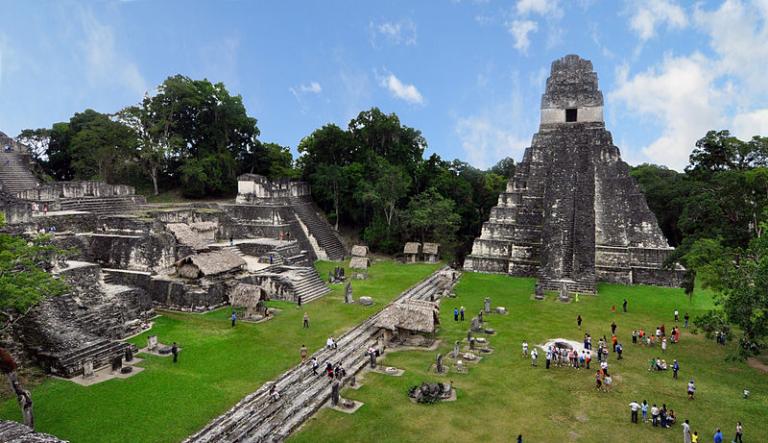
Maya ruins at Tikal, in Guatemala
(Wikimedia Commons public domain image)
The structures shown here postdate the period of the Book of Mormon. Although they were long used quite uncritically in popular Latter-day Saint publications on archaeology and the Book of Mormon, many of the most spectacular ruins in Mesoamerica are actually too late.
Here are five articles from a previous number of Interpreter: A Journal of Latter-day Saint Faith and Scholarship that you might find of interest:
M. Steve Andersen, “The Practice and Meaning of Declaring Lineage in Patriarchal Blessings”
Abstract: In this paper, I show that declarations of lineage in patriarchal blessings have, since the earliest days of the Restoration, evolved in terms of frequency of inclusion, which tribal lineages predominate, and understanding of the meaning of the declaration. I argue for a non- literal understanding consistent with scripture and science, but posit that these declarations have deep and important significance in connection with the gathering of Israel.
Mark Alan Wright, “Axes Mundi: Ritual Complexes in Mesoamerica and the Book of Mormon”
Abstract: An axis mundi refers to a sacred place that connects heaven and earth and is believed to be the center of the world. These places are sanctified through ritual consecration or through a divine manifestation that results in qualitatively detaching that space from the surrounding cosmos. Often expressed in architecture as a universal pillar, these axes mundi incorporate and put in communication three cosmic levels — earth, heaven, and the underworld. As Mark Alan Wright notes, Mesoamerican sacred architecture was designed according to cosmological principles and finds a modern analogy in Latter-day Saint temples. Also, among Mesoamerican civilizations and in the Book of Mormon, the temple, the axis mundi, served as a place where worshipers go to engage in sacred rituals that bridge the divide between heaven and earth and allow the worshiper entry into the divine presence.
[Editor’s Note: Part of our book chapter reprint series, this article is reprinted here as a service to the Latter-Day Saint community. Original pagination and page numbers have necessarily changed, otherwise the reprint has the same content as the original.
See Mark Alan Wright, “Axes Mundi: Ritual Complexes in Mesoamerica and the Book of Mormon,” in Temple Insights: Proceedings of the Interpreter Matthew B. Brown Memorial Conference, “The Temple on Mount Zion,” 22 September 2012, ed. William J. Hamblin and David Rolph Seely (Orem, UT: The Interpreter Foundation; Salt Lake City: Eborn Books, 2014), 187–202. Further information at https://interpreterfoundation.org/books/temple-insights/.]
Review of Kylie Nielson Turley, Alma 1–29: A Brief Theological Introduction (Provo, UT: The Neal A. Maxwell Institute for Religious Scholarship, 2020). 162 pages. $9.95 (paperback).
Abstract: Kylie Nielson Turley delves deep into the conversion and ministry of Alma the Younger, reading new life into a well-known narrative. By analyzing Alma’s story with the full weight of his humanity in mind, she breathes emotion into Alma’s conversion and missionary efforts. Her efforts to read Alma without a veneer of superhumanity result in a highly relatable figure who has known wickedness, repentance, loss, depression, and righteousness.
Brian C. Hales, “Joseph Smith as a Book of Mormon Storyteller”
Abstract: For nearly 200 years, skeptics have promoted different naturalistic explanations to describe how Joseph Smith generated all the words of the Book of Mormon. The more popular theories include plagiarism (e.g. of the Solomon Spaulding manuscript), collaboration (with Oliver Cowdery, Sidney Rigdon, etc.), mental illness (bipolar, dissociative, or narcissistic personality disorders) and automatic writing, also called “spirit writing, “trance writing,” or “channeling.” A fifth and currently the most popular theory posits that Joseph Smith possessed all the intellectual abilities needed to complete the task. A variation on this last explanation proposes that he used the methods of professional storytellers. For millennia, bards and minstrels have entertained their audiences with tales that extended over many hours and over several days. This article explores their techniques to assess whether Joseph Smith might have adopted such methodologies during the three-month dictation of the Book of Mormon. Through extensive fieldwork and research, the secrets of the Serbo-Croatian storytellers’ abilities to dictate polished stories in real time have been identified. Their technique, also found with modification among bards throughout the world, involves the memorization of formulaic language organized into formula systems in order to minimize the number of mental choices the tale-teller must make while wordsmithing each phrase. These formulas are evident in the meter, syntax, or lexical combinations employed in the storyteller’s sentences. Professional bards train for many years to learn the patterns and commit them to memory. When compared to Joseph Smith and the Book of Mormon, the historical record fails to support that he had trained in the use of formula systems prior to 1829 or that his dictation employed a rhythmic delivery of the phrases. Neither are formula patterns detected in the printed 1830 Book of Mormon. Apparently, Smith did not adopt this traditional storyteller’s methodology to dictate the Book of Mormon.
Richard L. Bushman, “Mormon, Moses, and the Representation of Reality”
Abstract: In this essay, Richard Bushman borrows a critical perspective from Erich Auerbach’s Mimesis: The Representation of Reality in Western Literature. He analyzes the representation of antiquity in two of Joseph Smith’s striking translations, the Book of Mormon and the Book of Moses. The two texts, produced within a few years of one another, created distinctive stages on which to dramatize the human-God relationship. The question is: What can we learn from this comparison about God, prophets, and human destiny?
[Editor’s Note: Part of our book chapter reprint series, this article is reprinted here as a service to the Latter-day Saint community. Original pagination and page numbers have necessarily changed, otherwise the reprint has the same content as the original.
See Richard L. Bushman, “Mormon, Moses, and the Representation of Reality,” in Tracing Ancient Threads in the Book of Moses: Inspired Origins, Temple Contexts, and Literary Qualities, edited by Jeffrey M. Bradshaw, David R. Seely, John W. Welch and Scott Gordon (Orem, UT: The Interpreter Foundation; Springville, UT: Book of Mormon Central; Redding, CA: FAIR; Tooele, UT: Eborn Books, 2021), 51–74. Further information at https://interpreterfoundation.org/books/ancient-threads-in-the-book-of-moses/.]
Interpreter Journal Latter-day Saint Faith Scholarship
Previous Post

December 12, 2021
Catching Up a Bit
Next Post
December 13, 2021 In case you haven't noticed, it's Christmastime
Browse Our Archives
Select a Category Uncategorized
Select a Month October 2026 September 2026 August 2026 July 2026 June 2026 May 2026 April 2026 March 2026 February 2026 January 2026 December 2025 November 2025 October 2025 September 2025 August 2025 July 2025 June 2025 May 2025 April 2025 March 2025 February 2025 January 2025 December 2024 November 2024 October 2024 September 2024 August 2024 July 2024 June 2024 May 2024 April 2024 March 2024 February 2024 January 2024 December 2023 November 2023 October 2023 September 2023 August 2023 July 2023 June 2023 May 2023 April 2023 March 2023 February 2023 January 2023 December 2022 November 2022 October 2022 September 2022 August 2022 July 2022 June 2022 May 2022 April 2022 March 2022 February 2022 January 2022 December 2021 November 2021 October 2021 September 2021 August 2021 July 2021 June 2021 May 2021 April 2021 March 2021 February 2021 January 2021 December 2020 November 2020 October 2020 September 2020 August 2020 July 2020 June 2020 May 2020 April 2020 March 2020 February 2020 January 2020 December 2019 November 2019 October 2019 September 2019 August 2019 July 2019 June 2019 May 2019 April 2019 March 2019 February 2019 January 2019 December 2018 November 2018 October 2018 September 2018 August 2018 July 2018 June 2018 May 2018 April 2018 March 2018 February 2018 January 2018 December 2017 November 2017 October 2017 September 2017 August 2017 July 2017 June 2017 May 2017 April 2017 March 2017 February 2017 January 2017 December 2016 November 2016 October 2016 September 2016 August 2016 July 2016 June 2016 May 2016 April 2016 March 2016 February 2016 January 2016 December 2015 November 2015 October 2015 September 2015 August 2015 July 2015 June 2015 May 2015 April 2015 March 2015 February 2015 January 2015 December 2014 November 2014 March 2014 August 2013 February 2012
Follow Us!
TAKE THE
Religious Wisdom Quiz
Who was Jacob's favorite son?
Select your answer to see how you score.
Joseph Judah Dan Levi
Related posts from Sic et Non


Notes on Women, Priesthood, and General Conference

"The Book of Moses as a Temple Text"

TRENDING AT PATHEOS Latter-day Saint

Archdiocese Hosts Military Marriage Retreat in Germany
RASTATT, Germany — The transient military lifestyle, with its frequent deployments and...

Nearly every morning, I make the drive to Detroit with my high-school-age...

The Real AI Story Is Adoption Without Trust
Artificial intelligence has crossed a political threshold. It is no longer a...

A new article, written by Jeff Lindsay and Gale L. Pooley,...

Swimfan: Forgotten Aughts Pleasures
This is a recovery effort. In 2002, My Big Fat Greek Wedding...

Top Three Anti-Catholic Lies About Catholicism
This is my initial transcript for the video, "THE 3 WORST...
view all Latter-day Saint blogs
Ad-Free & Subscriber Log-In Subscription Support
- About Us
- 2026 Calendar
- Videos
- Podcasts
- Library of World Religions
- Faith In Media Tracker
- Advertise With Us
- Write for Us
- Privacy Policy
- Terms of Service
- Do Not Sell My Data
- Contact Us
- Radiant Digital
- Manage Newsletter Subscriptions
- Unsubscribe From Notifications
- Sitemap
Copyright 2008-2026, Patheos. All rights reserved.
Subscription Support Ad-Free & Subscriber Log-In
Follow Patheos