
BuddhistCatholicContemplativeEvangelicalGeneral ChristianHinduJewishLatter-day SaintMuslimNew VisionsProgressive Christian
Beliefs
- Buddhist
- Catholic
- Contemplative
- Evangelical
- General Christian
- Hindu
- Jewish
- Latter-day Saint
- More Voices
- Muslim
- New Visions
- Pagan
- Progressive Christian
Topics
- Religion News
- Food and Religion
- Sports and Religion
- Religious Art
- Religious Music and Entertainment
- Religious Events
- History and Religion
- Style and Religion
- Politics and Religion
- Women in Religion
- Recreation Outdoors and Religion
- Business Finance and Religion
- Careers Workplace and Religion
- Education and Religion
- Family Parenting and Religion
- Health Fitness and Religion
- Home and Religion
- Relationships and Religion
- Technology and Religion
- Travel and Religion
Columnists
- Buddhist Columnists
- Business Finance and Religion Columnists
- Careers Workplace and Religion Columnists
- Catholic Columnists
- Contemplative Columnists
- Education and Religion Columnists
- Evangelists Columnists
- Family Parenting and Religion Columnists
- General Christian Columnists
- Health Fitness and Religion Columnists
- Hindu Columnists
- History and Religion Columnists
- Home and Religion Columnists
- Jewish Columnists
- More Voices Columnists
- Latter Day Columnists
- Muslim Columnists
- New Visions Columnists
- Nonreligious Columnists
- Pagan Columnists
- Politics and Religion Columnists
- Progressive Columnists
- Recreation Outdoors and Religion Columnists
- Relationships and Religion Columnists
- Religion News Columnists
- Religious Art Columnists
- Religious Events Columnists
- Religious Music and Entertainment Columnists
- Sports and Religion Columnists
- Style and Religion Columnists
- Technology and Religion Columnists
- Travel and Religion Columnists
- Women in Religion Columnists
Resource Library
- 2026 Calendar
- Library of World Religions
- The 100 Most Holy Places on Earth
- Patheos Answers
- Podcasts
- Videos
- Faith Leaders Database
- Anglican Episcopalian
- Bahai
- Baptist
- Buddhism
- Christianity
- Confucianism
- Eastern Orthodoxy
- Hinduism
- Holiness and Pentecostal
- ISKCON
- Islam
- Judaism
- Lutheran
- Methodist
- The Church of Jesus Christ of Latter-day Saints
- New Age
- Paganism
- Presbytarian and Reformed
- Protestantism
- Religion Behind the Scenes
- Roman Catholic
- Scientology
- Shia Islam
- Sikhism
- Sufism
- Sunni Islam
- Taoism
- Zen
- See all religions
Research Tools
 Ad-Free & Subscriber Log-In Subscription Support
Ad-Free & Subscriber Log-In Subscription Support
Follow Patheos 

- Trending:
- Forgiveness
- |
- Marriage
- |
- Consciousness
- |
- Death Penalty
- |
- Election
- |
- Halloween

- Home
- Latter-day Saint
- See it!
See it!
Last updated on: November 4, 2021 at 11:45 pm by Dan Peterson
See it! 2021-11-04T23:45:55-06:00 Dan Peterson
Patheos Explore the world's faith through different perspectives on religion and spirituality! Patheos has the views of the prevalent religions and spiritualities of the world.
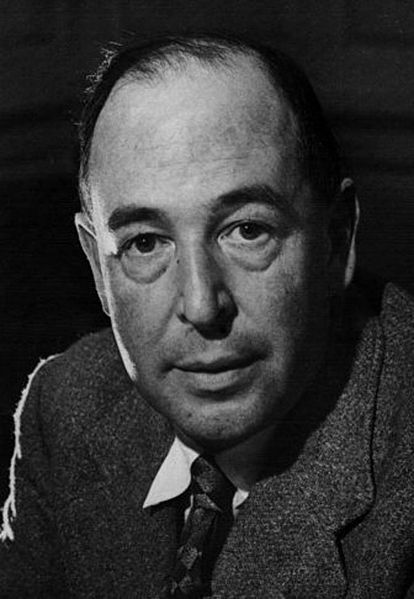
C. S. Lewis at about fifty (Wikimedia Commons public domain image)
***
My wife and I went last night to see a showing of The Most Reluctant Convert: The Untold Story of C. S. Lewis. at a theater near the local campus of the University of California at Irvine. We were expecting to go with a friend who was to be along with us for most of this trip, but she had a family medical development that kept her home.
My wife liked the film; I loved it.
My wife, a theater major, thought that that the movie was too much like a stage play and didn’t feel emotionally involved in or moved by the film. It is, without doubt, very “verbal.” Almost a kind of lecture. Full of overt argument and explicit reflection. Some may not like that. I adored it.
I’m such a C. S. Lewis fanatic — I began reading him as a teenager and have read most everything he ever published, including two episodes during the past fifteen or so in which I systematically read through his works yet again — that, at point after point, I found myself supplying the words of the film in advance. (Many of them come, sometimes in different contexts in the movie, from his writings.) Time after time after time, I would say to myself, inwardly, “Okay, now they need to do this” or “Now they need to show that.” And then they did.
Our little central team that did the Witnesses film have been considering a Next Project to undertake after we’re done with Witnesses. One possibility that we’ve discussed has been a film about the conversion story of C. S. Lewis. In watching this one, however, I saw them checking off just about every box that I had in mind, or would have had in mind, for such a film. And, in my opinion, they did it quite well. That’s alright, though: We had already chosen a new leading candidate for our Next Project.
To me, The Most Reluctant Convert is a powerful film, and I’m pleased to see that it will apparently still be screening in at least some theaters, including theaters in Utah. I encourage any who are even remotely interested to go to see it. It’s quite different from the 1993 movie Shadowlands, in which Lewis is played by Sir Anthony Hopkins. The focus of that very worthwhile film is on the other end, the latter part, of Lewis’s life. Those who are well acquainted with Lewis’s work will be able to flesh out and see the context and the broader significance of of episodes in both movies, which can only touch on such things. For instance, Lewis’s fiercely rational tutor William T. Kirkpatrick, aka “The Great Knock,” is said in the film to have had an enormous influence on Lewis, but that influence is only stated but scarcely illustrated; you can get a sense of the impact that Kirkpatrick had on Lewis by looking at Andrew MacPhee, a character in That Hideous Strength who is manifestly based upon Lewis’s own beloved atheistic teacher.
One of my wishes for the general membership of the Church of Jesus Christ of Latter-day Saints would be greater acquaintance with the writing of C. S. Lewis.
***
Here’s an important point, I think, from The Most Reluctant Convert:
The film shows Lewis picking up a copy of George MacDonald’s Phantastes at a small English train station, and describes the impact that that book had on him. The book “baptized” his imagination, he says, but the rest of him required a bit longer. It shows him engaged in crucial arguments — with such people as Owen Barfield, J. R. R. Tolkien (yes, that Tolkien), and Hugo Dyson — that gradually shifted him from atheism to deism or at least some vaguely theistic stance.
“You must picture me alone in that room at Magdalen [College, Oxford], night after night, feeling, whenever my mind lifted even for a second from my work, the steady, unrelenting approach of Him whom I so earnestly desired not to meet. That which I greatly feared had at last come upon me. In the Trinity Term of 1929 I gave in, and admitted that God was God, and knelt and prayed: perhaps, that night, the most dejected and reluctant convert in all England.”
But his transition from abstract theist to Christian theist is merely described. And very briefly. He undertook a motorcycle ride with his older brother, Warnie, on 22 September 1931 and, although he began the trip as a non-believer in the Lordship of Jesus Christ, he somehow ended it as a believer:
“When we set out I did not believe that Jesus is the Son of God and when we reached the zoo I did.”
I take it from this description, which I remember very distinctly from my readings in his work, that his actual acceptance of Christ was not — or was not directly — the result of argument. Rather, it was the work of the Spirit.
This is entirely consistent with my view that, while argument can accomplish a great deal, it can only do so much. It is essential, but real faith does not come from, and cannot securely rest upon, rational argument or impressive evidences.
For decades, a remark by Austin Farrer about C. S. Lewis — a passage often cited by the late Elder Neal A. Maxwell of the Quorum of the Twelve Apostles — functioned as something of an unofficial motto for Brigham Young University’s Foundation for Ancient Research and Mormon Studies, more commonly known as FARMS, and its successor organization, the Neal A. Maxwell Institute for Religious Scholarship. “Though argument does not create conviction,” Farrer wrote, “the lack of it destroys belief. What seems to be proved may not be embraced; but what no one shows the ability to defend is quickly abandoned. Rational argument does not create belief, but it maintains a climate in which belief may flourish” (see Farrer, “Grete Clerk,” in Light on C. S. Lewis, compiled by Jocelyn Gibb [Harcourt and Brace, 1965]).
Please go to see The Most Reluctant Convert.
Posted from Newport Beach, California
Previous Post

November 3, 2021
"For Arthur VanWagenen and family"
Next Post
November 5, 2021 "Oh, that I were an angel"
Browse Our Archives
Select a Category Uncategorized
Select a Month October 2026 September 2026 August 2026 July 2026 June 2026 May 2026 April 2026 March 2026 February 2026 January 2026 December 2025 November 2025 October 2025 September 2025 August 2025 July 2025 June 2025 May 2025 April 2025 March 2025 February 2025 January 2025 December 2024 November 2024 October 2024 September 2024 August 2024 July 2024 June 2024 May 2024 April 2024 March 2024 February 2024 January 2024 December 2023 November 2023 October 2023 September 2023 August 2023 July 2023 June 2023 May 2023 April 2023 March 2023 February 2023 January 2023 December 2022 November 2022 October 2022 September 2022 August 2022 July 2022 June 2022 May 2022 April 2022 March 2022 February 2022 January 2022 December 2021 November 2021 October 2021 September 2021 August 2021 July 2021 June 2021 May 2021 April 2021 March 2021 February 2021 January 2021 December 2020 November 2020 October 2020 September 2020 August 2020 July 2020 June 2020 May 2020 April 2020 March 2020 February 2020 January 2020 December 2019 November 2019 October 2019 September 2019 August 2019 July 2019 June 2019 May 2019 April 2019 March 2019 February 2019 January 2019 December 2018 November 2018 October 2018 September 2018 August 2018 July 2018 June 2018 May 2018 April 2018 March 2018 February 2018 January 2018 December 2017 November 2017 October 2017 September 2017 August 2017 July 2017 June 2017 May 2017 April 2017 March 2017 February 2017 January 2017 December 2016 November 2016 October 2016 September 2016 August 2016 July 2016 June 2016 May 2016 April 2016 March 2016 February 2016 January 2016 December 2015 November 2015 October 2015 September 2015 August 2015 July 2015 June 2015 May 2015 April 2015 March 2015 February 2015 January 2015 December 2014 November 2014 March 2014 August 2013 February 2012
Follow Us!
TAKE THE
Religious Wisdom Quiz
What was Jesus nailed to?
Select your answer to see how you score.
A cross A ladder A treehouse A stake
Related posts from Sic et Non

Michael Faraday, James Clerk Maxwell, and the Open...


A report from the floor at FAIR 2026...
TRENDING AT PATHEOS Latter-day Saint

I was strolling through the top floor of the brand new Parthenon...

What Does Gêvâh Mean For Kimberley Guifoyle &...
This week, a lot of the news is focused on Kimberly Guilfoyle....

INNER CIRCLE: Profound Mystery (Of Christ In All...
Ephesians 5:31-32 “For this reason, a man will leave his father and...

Do Not Rejoice When Your Enemy Falls: The...
Turning an execution into a public spectacle is a disturbing expression of...

'The Chosen' S6 Trailer: The Passion Gets Very...
Not many watching 'The Chosen' worry about spoilers, but just because they...

The purpose-driven labor priest
A labor activist reads Rick Warren and it gets me wondering about...
view all Latter-day Saint blogs
Ad-Free & Subscriber Log-In Subscription Support
- About Us
- 2026 Calendar
- Videos
- Podcasts
- Library of World Religions
- Faith In Media Tracker
- Advertise With Us
- Write for Us
- Privacy Policy
- Terms of Service
- Do Not Sell My Data
- Contact Us
- Radiant Digital
- Manage Newsletter Subscriptions
- Unsubscribe From Notifications
- Sitemap
Copyright 2008-2026, Patheos. All rights reserved.
Subscription Support Ad-Free & Subscriber Log-In
Follow Patheos