
BuddhistCatholicContemplativeEvangelicalGeneral ChristianHinduJewishLatter-day SaintMuslimNew VisionsProgressive Christian
Beliefs
- Buddhist
- Catholic
- Contemplative
- Evangelical
- General Christian
- Hindu
- Jewish
- Latter-day Saint
- More Voices
- Muslim
- New Visions
- Pagan
- Progressive Christian
Topics
- Religion News
- Food and Religion
- Sports and Religion
- Religious Art
- Religious Music and Entertainment
- Religious Events
- History and Religion
- Style and Religion
- Politics and Religion
- Women in Religion
- Recreation Outdoors and Religion
- Business Finance and Religion
- Careers Workplace and Religion
- Education and Religion
- Family Parenting and Religion
- Health Fitness and Religion
- Home and Religion
- Relationships and Religion
- Technology and Religion
- Travel and Religion
Columnists
- Buddhist Columnists
- Business Finance and Religion Columnists
- Careers Workplace and Religion Columnists
- Catholic Columnists
- Contemplative Columnists
- Education and Religion Columnists
- Evangelists Columnists
- Family Parenting and Religion Columnists
- General Christian Columnists
- Health Fitness and Religion Columnists
- Hindu Columnists
- History and Religion Columnists
- Home and Religion Columnists
- Jewish Columnists
- More Voices Columnists
- Latter Day Columnists
- Muslim Columnists
- New Visions Columnists
- Nonreligious Columnists
- Pagan Columnists
- Politics and Religion Columnists
- Progressive Columnists
- Recreation Outdoors and Religion Columnists
- Relationships and Religion Columnists
- Religion News Columnists
- Religious Art Columnists
- Religious Events Columnists
- Religious Music and Entertainment Columnists
- Sports and Religion Columnists
- Style and Religion Columnists
- Technology and Religion Columnists
- Travel and Religion Columnists
- Women in Religion Columnists
Resource Library
- 2026 Calendar
- Library of World Religions
- The 100 Most Holy Places on Earth
- Patheos Answers
- Podcasts
- Videos
- Faith Leaders Database
- Anglican Episcopalian
- Bahai
- Baptist
- Buddhism
- Christianity
- Confucianism
- Eastern Orthodoxy
- Hinduism
- Holiness and Pentecostal
- ISKCON
- Islam
- Judaism
- Lutheran
- Methodist
- The Church of Jesus Christ of Latter-day Saints
- New Age
- Paganism
- Presbytarian and Reformed
- Protestantism
- Religion Behind the Scenes
- Roman Catholic
- Scientology
- Shia Islam
- Sikhism
- Sufism
- Sunni Islam
- Taoism
- Zen
- See all religions
Research Tools
 Ad-Free & Subscriber Log-In Subscription Support
Ad-Free & Subscriber Log-In Subscription Support
Follow Patheos 

- Trending:
- Forgiveness
- |
- Marriage
- |
- Consciousness
- |
- Death Penalty
- |
- Election
- |
- Halloween

- Home
- Latter-day Saint
- Temples, all the way down
Temples, all the way down
Last updated on: September 12, 2021 at 9:54 pm by Dan Peterson
Temples, all the way down 2021-09-12T21:54:17-06:00 Dan Peterson
Patheos Explore the world's faith through different perspectives on religion and spirituality! Patheos has the views of the prevalent religions and spiritualities of the world.
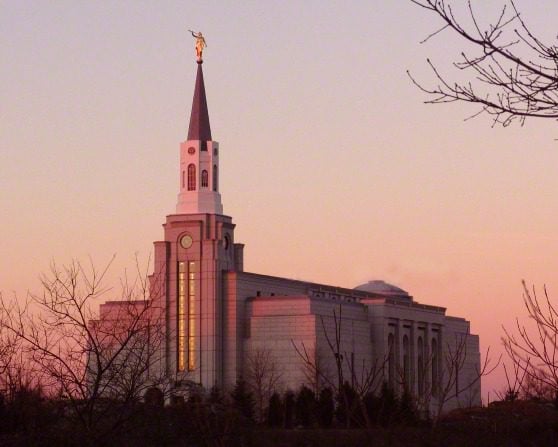
The Boston Massachusetts Temple (LDS Media Library)
***
I’ve been quite busy today, and I haven’t been at my computer very much. Here, though, are links to five articles that you might find of interest and that were published in a prior issue of Interpreter: A Journal of Latter-day Saint Faith and Scholarship:
William J. Hamblin, “The Sôd of Yhwh and the Endowment”
Abstract: Most scholars agree that sôd, when used in relationship to God, refers to the heavenly council, which humans may sometimes visit to learn divine mysteries or obtain a prophetic message to deliver to humankind. Biblical texts on this subject can be compared to passages in Latter-day Saint scripture (e.g., 1 Nephi 1:8-18; Abraham 3:22-23). In this article, William Hamblin succinctly summarizes this concept and argues that the Latter-day Saint temple endowment serves as a ritual and dramatic participation in the divine council of God, through which God reveals to the covenanter details of the plan of salvation — the hidden meaning and purpose of creation and the cosmos.
[Editor’s Note: Part of our book chapter reprint series, this article is reprinted here as a service to the LDS community. Original pagination and page numbers have necessarily changed, otherwise the reprint has the same content as the original.
See William J. Hamblin, “The Sôd of Yhwh and the Endowment,” in Ancient Temple Worship: Proceedings of The Expound Symposium 14 May 2011, ed. Matthew B. Brown, Jeffrey M. Bradshaw, Stephen D. Ricks, and John S. Thompson (Orem, UT: The Interpreter Foundation; Salt Lake City: Eborn Books, 2014), 189–94. Further information at https://interpreterfoundation.org/books/ancient-temple-worship/.]
Abstract: Chapters from Isaiah quoted in the Book of Mormon use the King James Bible as a base text yet frequently vary from it in minor ways, particularly in the earliest text of the Book of Mormon. A disproportionate number of these variants are due to the omission or replacement of words italicized in the KJV. Many of the minor variants were eliminated by the printer for the 1830 edition or by Joseph Smith himself for the 1837 edition, but others remain. Some of the minor variants are easily explained as errors of dictation, transcription, or copying, but others are not so readily accounted for. While some are inconsequential, others negatively affect Isaiah’s text by confusing its meaning or violating grammatical norms. Most have no clear purpose. The disruptive character of these variants suggests they are secondary and were introduced by someone who was relatively uneducated in English grammar and unfamiliar with the biblical passages being quoted. They point to Joseph Smith, the unlearned man who dictated the Book of Mormon translation. Even so, it seems unlikely that a single individual would have intentionally produced these disruptive edits. They are better explained as the product of the well-intentioned but uncoordinated efforts of two individuals, each trying to adapt the Book of Mormon translation for a contemporary audience. Specifically, many of these variants are best explained as the results of Joseph Smith’s attempts to restore missing words to a text from which some words (those italicized in the KJV) had been purposefully omitted by a prior translator. The proposed explanation is consistent with witness accounts of the Book of Mormon translation that portray Joseph Smith visioning a text that was already translated into English. It is also supported by an 1831 newspaper article that describes Joseph Smith dictating one of the Book of Mormon’s biblical chapters minus the KJV’s italicized words. An understanding of the human element in the Book of Mormon translation can aid the student of scripture in distinguishing the “mistake of men” from those variants that are integral to the Book of Mormon’s Bible quotations.
Susan Easton Black, “Sensationalism: A One-sided Perspective”
Review of Benjamin E. Park, Kingdom of Nauvoo: The Rise and Fall of a Religious Empire on the American Frontier (New York City: Liveright Publishing, 2020). 336 pages. $28.95 (hardback).
Abstract: While Benjamin Park shows promise as a writer and historian, his book, Kingdom of Nauvoo, opts for poorly sourced sensationalism instead of illuminating the joy of Nauvoo’s true history.
Daniel C. Peterson, “Temples All the Way Down: Some Notes on the Mi‘raj of Muhammad”
Abstract: In this article, Daniel C. Peterson describes the famous “night” journey that Muhammad allegedly made from Arabia to Jerusalem, and from Jerusalem through the heavens and into the presence of God. His ascension through various gates of heaven, passing by the gatekeepers, is compared with biblical and Latter-day Saint teachings. Elements of the dream strongly resemble the biblical description of the Garden of Eden with its two special trees.
[Editor’s Note: Part of our book chapter reprint series, this article is reprinted here as a service to the LDS community. Original pagination and page numbers have necessarily changed, otherwise the reprint has the same content as the original.
See Daniel C. Peterson, “Temples All the Way Down: Some Notes on the Mi‘raj of Muhammad,” in Ancient Temple Worship: Proceedings of The Expound Symposium 14 May 2011, ed. Matthew B. Brown, Jeffrey M. Bradshaw, Stephen D. Ricks, and John S. Thompson (Orem, UT: The Interpreter Foundation; Salt Lake City: Eborn Books, 2014), 195–216. Further information at https://interpreterfoundation.org/books/ancient-temple-worship/.]
John Gee, “Four Idolatrous Gods in the Book of Abraham”
Abstract: Although unknown as deities in Joseph Smith’s day, the names of four associated idolatrous gods (Elkenah, Libnah, Mahmackrah, and Korash) mentioned in the Book of Abraham are attested anciently. Two of them are known to have connections with the practices attributed to them in the Book of Abraham. The odds of Joseph Smith guessing the names correctly is astronomical.
***
Today was President Russell M. Nelson’s 97th birthday. That’s amazing. He’s amazing.
By the way, after earning his two doctorates and after two years of military service during the Korean War, President Nelson spent a year at Massachusetts General Hospital, which is affiliated with Harvard Medical School. It’s located here in Boston.
Since the time we arrived this evening, there’s been the weirdest thing: Drop of water — lots and lots of them — have been falling from the sky. It actually made nighttime driving just a bit difficult. Something tells me that we’re not in Utah anymore.
***
Finally, here’s yet another terrifying atrocity taken from the Christopher Hitchens Memorial “How Religion Poisons Everything” File©:
“Latter-day Saints join hands with others to help flood victims”
Posted from Boston, Massachusetts
"The Sôd of Yhwh and the Endowment
Christopher Hitchens Memorial "How Religion Poisons Everything" File
Previous Post

September 8, 2021
Choosing the Kingdom First
Next Post
September 10, 2021 Surf New Hampshire!
Browse Our Archives
Select a Category Uncategorized
Select a Month October 2026 September 2026 August 2026 July 2026 June 2026 May 2026 April 2026 March 2026 February 2026 January 2026 December 2025 November 2025 October 2025 September 2025 August 2025 July 2025 June 2025 May 2025 April 2025 March 2025 February 2025 January 2025 December 2024 November 2024 October 2024 September 2024 August 2024 July 2024 June 2024 May 2024 April 2024 March 2024 February 2024 January 2024 December 2023 November 2023 October 2023 September 2023 August 2023 July 2023 June 2023 May 2023 April 2023 March 2023 February 2023 January 2023 December 2022 November 2022 October 2022 September 2022 August 2022 July 2022 June 2022 May 2022 April 2022 March 2022 February 2022 January 2022 December 2021 November 2021 October 2021 September 2021 August 2021 July 2021 June 2021 May 2021 April 2021 March 2021 February 2021 January 2021 December 2020 November 2020 October 2020 September 2020 August 2020 July 2020 June 2020 May 2020 April 2020 March 2020 February 2020 January 2020 December 2019 November 2019 October 2019 September 2019 August 2019 July 2019 June 2019 May 2019 April 2019 March 2019 February 2019 January 2019 December 2018 November 2018 October 2018 September 2018 August 2018 July 2018 June 2018 May 2018 April 2018 March 2018 February 2018 January 2018 December 2017 November 2017 October 2017 September 2017 August 2017 July 2017 June 2017 May 2017 April 2017 March 2017 February 2017 January 2017 December 2016 November 2016 October 2016 September 2016 August 2016 July 2016 June 2016 May 2016 April 2016 March 2016 February 2016 January 2016 December 2015 November 2015 October 2015 September 2015 August 2015 July 2015 June 2015 May 2015 April 2015 March 2015 February 2015 January 2015 December 2014 November 2014 March 2014 August 2013 February 2012
Follow Us!
TAKE THE
Religious Wisdom Quiz
Each chapter except one is an acrostic poem following the Hebrew alphabet. How many chapters make up this book of mourning?
Select your answer to see how you score.
Seven Three Twelve Five
Related posts from Sic et Non

Notes on Women, Priesthood, and General Conference

"The Book of Moses as a Temple Text"

TRENDING AT PATHEOS Latter-day Saint

The First Eucharistic Controversy: Christ’s Real Presence
For Catholics, the Eucharist is the source and summit of the Christian...

What a Stop Sign Can Teach Us About...
How to Make a Decision When You Can't Hear God Main point:...

Archdiocese Hosts Military Marriage Retreat in Germany
RASTATT, Germany — The transient military lifestyle, with its frequent deployments and...

Nearly every morning, I make the drive to Detroit with my high-school-age...

The Real AI Story Is Adoption Without Trust
Artificial intelligence has crossed a political threshold. It is no longer a...

A new article, written by Jeff Lindsay and Gale L. Pooley,...
view all Latter-day Saint blogs
Ad-Free & Subscriber Log-In Subscription Support
- About Us
- 2026 Calendar
- Videos
- Podcasts
- Library of World Religions
- Faith In Media Tracker
- Advertise With Us
- Write for Us
- Privacy Policy
- Terms of Service
- Do Not Sell My Data
- Contact Us
- Radiant Digital
- Manage Newsletter Subscriptions
- Unsubscribe From Notifications
- Sitemap
Copyright 2008-2026, Patheos. All rights reserved.
Subscription Support Ad-Free & Subscriber Log-In
Follow Patheos