
BuddhistCatholicContemplativeEvangelicalGeneral ChristianHinduJewishLatter-day SaintMuslimNew VisionsProgressive Christian
Beliefs
- Buddhist
- Catholic
- Contemplative
- Evangelical
- General Christian
- Hindu
- Jewish
- Latter-day Saint
- More Voices
- Muslim
- New Visions
- Pagan
- Progressive Christian
Topics
- Religion News
- Food and Religion
- Sports and Religion
- Religious Art
- Religious Music and Entertainment
- Religious Events
- History and Religion
- Style and Religion
- Politics and Religion
- Women in Religion
- Recreation Outdoors and Religion
- Business Finance and Religion
- Careers Workplace and Religion
- Education and Religion
- Family Parenting and Religion
- Health Fitness and Religion
- Home and Religion
- Relationships and Religion
- Technology and Religion
- Travel and Religion
Columnists
- Buddhist Columnists
- Business Finance and Religion Columnists
- Careers Workplace and Religion Columnists
- Catholic Columnists
- Contemplative Columnists
- Education and Religion Columnists
- Evangelists Columnists
- Family Parenting and Religion Columnists
- General Christian Columnists
- Health Fitness and Religion Columnists
- Hindu Columnists
- History and Religion Columnists
- Home and Religion Columnists
- Jewish Columnists
- More Voices Columnists
- Latter Day Columnists
- Muslim Columnists
- New Visions Columnists
- Nonreligious Columnists
- Pagan Columnists
- Politics and Religion Columnists
- Progressive Columnists
- Recreation Outdoors and Religion Columnists
- Relationships and Religion Columnists
- Religion News Columnists
- Religious Art Columnists
- Religious Events Columnists
- Religious Music and Entertainment Columnists
- Sports and Religion Columnists
- Style and Religion Columnists
- Technology and Religion Columnists
- Travel and Religion Columnists
- Women in Religion Columnists
Resource Library
- 2026 Calendar
- Library of World Religions
- The 100 Most Holy Places on Earth
- Patheos Answers
- Podcasts
- Videos
- Faith Leaders Database
- Anglican Episcopalian
- Bahai
- Baptist
- Buddhism
- Christianity
- Confucianism
- Eastern Orthodoxy
- Hinduism
- Holiness and Pentecostal
- ISKCON
- Islam
- Judaism
- Lutheran
- Methodist
- The Church of Jesus Christ of Latter-day Saints
- New Age
- Paganism
- Presbytarian and Reformed
- Protestantism
- Religion Behind the Scenes
- Roman Catholic
- Scientology
- Shia Islam
- Sikhism
- Sufism
- Sunni Islam
- Taoism
- Zen
- See all religions
Research Tools
 Ad-Free & Subscriber Log-In Subscription Support
Ad-Free & Subscriber Log-In Subscription Support
Follow Patheos 

- Trending:
- Forgiveness
- |
- Marriage
- |
- Consciousness
- |
- Death Penalty
- |
- Election
- |
- Halloween

- Home
- Latter-day Saint
- Light from the West and the Ancient East
Light from the West and the Ancient East
Last updated on: August 17, 2021 at 6:07 pm by Dan Peterson
Light from the West and the Ancient East 2021-08-17T18:07:51-06:00 Dan Peterson
Patheos Explore the world's faith through different perspectives on religion and spirituality! Patheos has the views of the prevalent religions and spiritualities of the world.
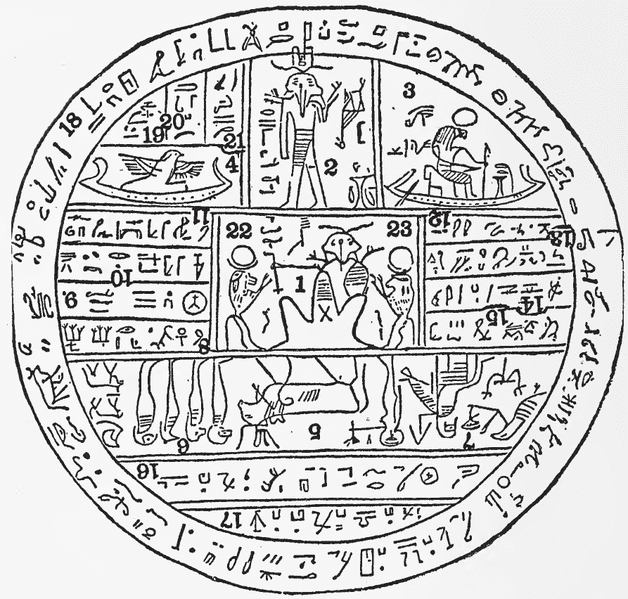
Facsimile 2 from the Book of Abraham (Wikimedia Commons public domain image)
***
New, from Jonn Claybaugh, on the website of the Interpreter Foundation:
***
And here are nine (count ’em, nine!) links to articles from a prior number of Interpreter: A Journal of Latter-day Saint Faith and Scholarship:
Daniel C. Peterson, “Light Began Once More to Grow”
Abstract: Readers are surely aware that the birth of the Christ child is the reason we celebrate Christmas. Members of the Church may be less aware, though, of the notable birth of a child, millennia later, of distant secondary importance.
Abstract: In 2015 Brian Stubbs published a landmark book, demonstrating that Uto-Aztecan, an American Indian language family, contains a vast number of Northwest Semitic and Egyptian loanwords spoken in the first millennium bc. Unlike other similar claims — absurd, eccentric, and without substance — Stubbs’s book is a serious, linguistically based study that deserves serious consideration. In the scholarly world, any claim of Old World influence in the New World languages is met with critical, often hostile skepticism. This essay is written in response to one such criticism.
Daniel T. Ellsworth, “Ministering across Fault Lines of Belief and Community”
Review of David B. Ostler, Bridges: Ministering to Those Who Question (Salt Lake City: Greg Kofford Books, 2019), 206 pp. $32.95 (hardback), $20.95 (paperback).
Abstract: David Ostler’s book Bridges: Ministering to Those Who Question addresses the daunting task of ministering to people who have grown disillusioned with the core doctrines and the community of believers they encounter in The Church of Jesus Christ of Latter-day Saints. This is perhaps the most challenging ministering effort a leader or member of the Church can undertake, and Bridges provides valuable insight into the process of disaffection as well as specific things that Church leaders and members can do to create a healthy environment for members to work through challenges to their faith. This review discusses those strengths of Bridges as a resource and also explores areas where the well-intentioned approaches discussed in the book can backfire, causing more harm than healing in a community of believing Latter-day Saints.
Taylor Halverson, “The Role and Purpose of Synagogues in the Days of Jesus and Paul”
Abstract: This article explores why Jesus so often healed in synagogues. By comparing the uses and purposes of Diaspora and Palestinian synagogues, this article argues that synagogues functioned as a hostel or community center of sorts in ancient Jewish society. That is, those needing healing would seek out such services and resources at the synagogue.
Spencer R. Marsh, “Memory and Millennials: A Review of First Vision: Memory and Mormon Origins”
Abstract: The multiple historical accounts of Joseph Smith’s First Vision have been an area of intense study, debate, and discussion for several decades. The newest addition to the discussion is a specialized monograph engaging the various accounts of the First Vision through the lens of psychology and, particularly, memory studies. This book, authored by Steven C. Harper, proves to be a valuable resource in answering some pressing questions about the integrity of the First Vision accounts, even though that was not the book’s explicitly stated purpose. This review highlights these contributions as interpreted through the lens of a Millennial reviewer — a demographic widely assumed to be facing challenges today in recontextualizing, repurposing, and appreciating the First Vision, with which this new book can help.
Review of Steven C. Harper, First Vision: Memory and Mormon Origins (New York: Oxford University Press, 2019). 271 pages with index. $35.
Noel B. Reynolds, “The Brass Plates Version of Genesis”
Abstract: The Book of Mormon peoples repeatedly indicated that they were descendants of Joseph, the son of Jacob who was sold into Egypt by his brothers. The plates of brass that they took with them from Jerusalem c. 600 bce provided them with a version of many Old Testament books and others not included in our Hebrew Bible. Sometime after publishing his translation of the Book of Mormon, Joseph Smith undertook an inspired revision of the Bible. The opening chapters of his version of Genesis contain a lot of material not included in the Hebrew Bible. But intriguingly, distinctive phraseology in those chapters, as now published in Joseph Smith’s Book of Moses, also show up in the Book of Mormon text. This paper presents a systematic examination of those repeated phrases and finds strong evidence for the conclusion that the version of Genesis used by the Nephite prophets must have been closely similar to Joseph Smith’s Book of Moses.
[Editor’s Note: This paper appeared first in the 1990 festschrift published to honor Hugh W. Nibley.1 It is reprinted here as a convenience for current scholars who are interested in intertextual issues regarding the Book of Mormon. It should be noted that Interpreter has published another paper that picks up this same insight and develops considerable additional evidence supporting the conclusions of the original paper. This reprint uses footnotes instead of endnotes, and there are two more footnotes in this reprint than there are endnotes in the original paper.]
Abstract: The Joseph Smith Papers welcomes engagement with its work and gratefully acknowledges the important work of various scholars on the Book of Abraham. Recent reviews in the Interpreter of Revelations and Translations, Volume 4*, however, significantly misunderstand the purposes and conventions of the project. This response corrects some of those misconceptions, including the idea that the transcript is riddled with errors and the idea that personal agendas drive the analysis in the volume. The complex history of the Book of Abraham can be understood through multiple faithful perspectives, and the Joseph Smith Papers Project affirms the value of robust, respectful, and professional dialogue about our shared history.*
[Editor’s note: We are pleased to present this response to two recent book reviews in the pages of Interpreter. Consistent with practice in many academic journals, we are also publishing rejoinders from the review authors, immediately following this response.]
Jeff Lindsay, “A Welcome Response, but Flaws Remain”
Abstract: After Interpreter published my lengthy paper that discussed apparent bias and flaws in scholarship in the Joseph Smith Papers volume on the Book of Abraham, two members of the JSP Project team have responded with a defense of their volume. Their reply is welcome and points to some of the strengths in the methodology behind much of the volume. However, the specific evidence for bias and flawed scholarship seems to stand and merits further attention.
Abstract: In a response to my review of their Book of Abraham and Related Manuscripts volume, the series editors of the Joseph Smith Papers provided feedback and commentary on two important items. There are other, unaddressed issues this rejoinder examines.
Church of Jesus Christ of Latter-day Saints
Previous Post

August 16, 2021
"Mormon, Moses, and the Representation of Reality"
Next Post
August 17, 2021 Fundamentals Six and Seven: A Refresher
Browse Our Archives
Select a Category Uncategorized
Select a Month October 2026 September 2026 August 2026 July 2026 June 2026 May 2026 April 2026 March 2026 February 2026 January 2026 December 2025 November 2025 October 2025 September 2025 August 2025 July 2025 June 2025 May 2025 April 2025 March 2025 February 2025 January 2025 December 2024 November 2024 October 2024 September 2024 August 2024 July 2024 June 2024 May 2024 April 2024 March 2024 February 2024 January 2024 December 2023 November 2023 October 2023 September 2023 August 2023 July 2023 June 2023 May 2023 April 2023 March 2023 February 2023 January 2023 December 2022 November 2022 October 2022 September 2022 August 2022 July 2022 June 2022 May 2022 April 2022 March 2022 February 2022 January 2022 December 2021 November 2021 October 2021 September 2021 August 2021 July 2021 June 2021 May 2021 April 2021 March 2021 February 2021 January 2021 December 2020 November 2020 October 2020 September 2020 August 2020 July 2020 June 2020 May 2020 April 2020 March 2020 February 2020 January 2020 December 2019 November 2019 October 2019 September 2019 August 2019 July 2019 June 2019 May 2019 April 2019 March 2019 February 2019 January 2019 December 2018 November 2018 October 2018 September 2018 August 2018 July 2018 June 2018 May 2018 April 2018 March 2018 February 2018 January 2018 December 2017 November 2017 October 2017 September 2017 August 2017 July 2017 June 2017 May 2017 April 2017 March 2017 February 2017 January 2017 December 2016 November 2016 October 2016 September 2016 August 2016 July 2016 June 2016 May 2016 April 2016 March 2016 February 2016 January 2016 December 2015 November 2015 October 2015 September 2015 August 2015 July 2015 June 2015 May 2015 April 2015 March 2015 February 2015 January 2015 December 2014 November 2014 March 2014 August 2013 February 2012
Follow Us!
TAKE THE
Religious Wisdom Quiz
What Christian tradition is associated with the seven sacraments?
Select your answer to see how you score.
Quakerism Roman Catholicism Protestantism Seventh-day Adventism
Related posts from Sic et Non


Notes on Women, Priesthood, and General Conference

"The Book of Moses as a Temple Text"

TRENDING AT PATHEOS Latter-day Saint

The Sermon on the Mount, Part I: Matthew...
The Sermon on the Mount, Part I (Matthew 4:12-5:12) St. Matthew moves...

What's up from Crossway: Reviewing some of their latest A few weeks...

Janie Learns the Way of the Cross: A...
Teaching children about Jesus' Passion can be challenging. Many parents and educators...

Looking For Good Catholic Writing - October 2026
He alone extends the heavens, and he walks upon the waves of...

In "Irreplaceable," our book on vocation and technology, Trevor Sutton and I...

I was strolling through the top floor of the brand new Parthenon...
view all Latter-day Saint blogs
Ad-Free & Subscriber Log-In Subscription Support
- About Us
- 2026 Calendar
- Videos
- Podcasts
- Library of World Religions
- Faith In Media Tracker
- Advertise With Us
- Write for Us
- Privacy Policy
- Terms of Service
- Do Not Sell My Data
- Contact Us
- Radiant Digital
- Manage Newsletter Subscriptions
- Unsubscribe From Notifications
- Sitemap
Copyright 2008-2026, Patheos. All rights reserved.
Subscription Support Ad-Free & Subscriber Log-In
Follow Patheos