
BuddhistCatholicContemplativeEvangelicalGeneral ChristianHinduJewishLatter-day SaintMuslimNew VisionsProgressive Christian
Beliefs
- Buddhist
- Catholic
- Contemplative
- Evangelical
- General Christian
- Hindu
- Jewish
- Latter-day Saint
- More Voices
- Muslim
- New Visions
- Pagan
- Progressive Christian
Topics
- Religion News
- Food and Religion
- Sports and Religion
- Religious Art
- Religious Music and Entertainment
- Religious Events
- History and Religion
- Style and Religion
- Politics and Religion
- Women in Religion
- Recreation Outdoors and Religion
- Business Finance and Religion
- Careers Workplace and Religion
- Education and Religion
- Family Parenting and Religion
- Health Fitness and Religion
- Home and Religion
- Relationships and Religion
- Technology and Religion
- Travel and Religion
Columnists
- Buddhist Columnists
- Business Finance and Religion Columnists
- Careers Workplace and Religion Columnists
- Catholic Columnists
- Contemplative Columnists
- Education and Religion Columnists
- Evangelists Columnists
- Family Parenting and Religion Columnists
- General Christian Columnists
- Health Fitness and Religion Columnists
- Hindu Columnists
- History and Religion Columnists
- Home and Religion Columnists
- Jewish Columnists
- More Voices Columnists
- Latter Day Columnists
- Muslim Columnists
- New Visions Columnists
- Nonreligious Columnists
- Pagan Columnists
- Politics and Religion Columnists
- Progressive Columnists
- Recreation Outdoors and Religion Columnists
- Relationships and Religion Columnists
- Religion News Columnists
- Religious Art Columnists
- Religious Events Columnists
- Religious Music and Entertainment Columnists
- Sports and Religion Columnists
- Style and Religion Columnists
- Technology and Religion Columnists
- Travel and Religion Columnists
- Women in Religion Columnists
Resource Library
- 2026 Calendar
- Library of World Religions
- The 100 Most Holy Places on Earth
- Patheos Answers
- Podcasts
- Videos
- Faith Leaders Database
- Anglican Episcopalian
- Bahai
- Baptist
- Buddhism
- Christianity
- Confucianism
- Eastern Orthodoxy
- Hinduism
- Holiness and Pentecostal
- ISKCON
- Islam
- Judaism
- Lutheran
- Methodist
- The Church of Jesus Christ of Latter-day Saints
- New Age
- Paganism
- Presbytarian and Reformed
- Protestantism
- Religion Behind the Scenes
- Roman Catholic
- Scientology
- Shia Islam
- Sikhism
- Sufism
- Sunni Islam
- Taoism
- Zen
- See all religions
Research Tools
 Ad-Free & Subscriber Log-In Subscription Support
Ad-Free & Subscriber Log-In Subscription Support
Follow Patheos 

- Trending:
- Forgiveness
- |
- Marriage
- |
- Consciousness
- |
- Death Penalty
- |
- Election
- |
- Halloween

- Home
- Latter-day Saint
- “Interpreting the Book of Mormon through the Eyes of Someone in Hell”
“Interpreting the Book of Mormon through the Eyes of Someone in Hell”
Last updated on: July 9, 2021 at 11:04 pm by Dan Peterson
“Interpreting the Book of Mormon through the Eyes of Someone in Hell” 2021-07-09T23:04:04-06:00 Dan Peterson
Patheos Explore the world's faith through different perspectives on religion and spirituality! Patheos has the views of the prevalent religions and spiritualities of the world.
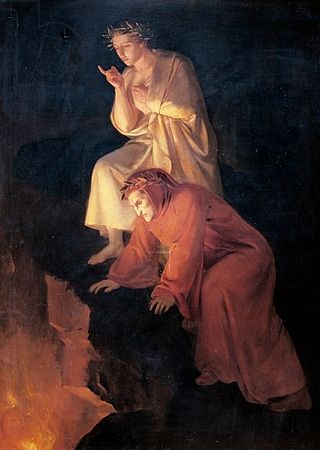
Rafael Flores (d. 1886), “Dante y Virgilio visitando el Infierno”
(Wikimedia Commons public domain image)
***
Like all movies, the Interpreter Foundation’s Witnesses film will eventually come to the end of its theatrical run. And that end is much closer now than it was a few weeks back. If you’ve been meaning to think about perhaps maybe possibly seeing it sometime, your time is running out. And yet, as Sean Means, the movie critic for the Salt Lake Tribune, pointed out weeks ago, Witnesses is a film that really looks good on a big theater screen. So don’t procrastinate. And if there are people in your family or neighborhood or among your friends or in your ward or stake who, in your judgment, ought to see Witnesses, please consider ways to help or to encourage them to do so. Sooner rather than later. This weekend, for example, would be a really good time.
***
Given the title of this blog entry, you will certainly be pardoned if you expected it to be just one more wearisome specimen of my notoriously vicious hatred for any and all who fail to share my religious opinions. But no. Surprisingly, it’s not. I’ve simply taken the subtitle from an article by Steven C. Fotheringham that went up just a few minutes ago in Interpreter: A Journal of Latter-day Saint Faith and Scholarship:
“Glad Tidings from Cumorah: Interpreting the Book of Mormon through the Eyes of Someone in Hell”
Abstract: This article offers evidence that at least some Book of Mormon authors may have understood the potential for post-mortal preaching of the gospel. Indeed, they may have recognized that the future Book of Mormon would be a tool to spread the gospel not only among the living but also among those in the spirit world. Prophecies about the message of the Book of Mormon and the restored gospel being for all mankind may have broader scope than previously recognized, with application on both sides of the veil.
***
Over the nearly nine years of its existence, the Interpreter Foundation has published a great many good things. Here are links to a few of them, from a previous volume of its flagship journal:
Brian C. Hales, “The Case of the Missing Commentary”
Abstract:The first published commentary on Doctrine and Covenants Section 132 is a lengthy volume with much material that deals directly with the revelation as well as extended discussions that go well beyond Joseph Smith’s dictated text. Much of the included material has been previously published, although several new historical items are presented, including a detailed examination of the provenance of the revelation. An apparent weakness of the book involves key themes mentioned in the revelation but minimized or otherwise ignored in this extended commentary. Examples include the possible meanings of the “law” (v. 6), importance of sealing authority (vv. 7‒20), possible polyandry (v. 41), Emma’s offer (v. 51), and others.
Craig L. Foster, “Much More than a Plural Marriage Revelation”
Abstract: Textual Studies of the Doctrine and Covenants: The Plural Marriage Revelation is a textual study of Section 132. It offers some interesting information as the author attempts to understand and place within context the revelation, which is, as the heading for this section in the scriptures reads, “relating to the new and everlasting covenant, including the eternity of the marriage covenant and the principle of plural marriage.” The book has its strengths but is also hampered by some weaknesses, as discussed in this review.
Review of William Victor Smith. Textual Studies of the Doctrine and Covenants: The Plural Marriage Revelation (Salt Lake City: Greg Kofford Books, 2018), 273 pp. $26.95.
Taylor Halverson, “Isaiah 56, Abraham, and the Temple”
Abstract: In the days of the first Israelite temple, only certain individuals were allowed into the temple and sacrificial services; foreigners and eunuchs were excluded. However, in Isaiah 56:1–8, formerly excluded individuals are invited into the presence of God at the temple. This paper will explore how metaphorically connecting Isaiah’s words with Abraham, the eponymous father of the covenant faithful, may demonstrate that even the most unlikely candidates for the presence of God are like Abraham; they too will inherit the ancient covenants according to their faithfulness.
Abstract: Matthew L. Bowen’s book compels readers to consider both the Book of Mormon’s construction and the significance of names in the text. Bowen and his coauthors invite readers to contemplate not only scripture but its stages of construction to completion, be they first draft, editing, final abridgement, or translation. Bowen’s work reveals how, in the endeavor to sacralize the act of scripture reading, specific details like names and their meanings can invigorate one’s understanding of the narrative and its theology, preventing such reading from becoming a rote endeavor.
Review of Matthew L. Bowen, Name as Key-Word: Collected Essays on Onomastic Wordplay and the Temple in Mormon Scripture (Salt Lake City: The Interpreter Foundation and Eborn Books, 2018). 408 pp., $24.95.
Kevin L. Barney, “What’s in a Name? Playing in the Onomastic Sandbox”
Abstract: Name as Key-Word brings together a collection of essays, many of them previously published, whose consistent theme is exploring examples of onomastic wordplay or puns in Mormon scripture in general and the Book of Mormon in particular. Without a knowledge of the meaning of these names, the punning in the scriptural accounts would not be recognized by modern English readers. Exploring the (probable) meanings of these names helps to open our eyes to how the scriptural authors used punning and other forms of wordplay to convey their messages in a memorable way.
Review of Matthew L. Bowen, Name as Key-Word: Collected Essays on Onomastic Wordplay and the Temple in Mormon Scripture (Salt Lake City: The Interpreter Foundation and Eborn Books, 2018). 408 pp., $24.95.
A. Keith Thompson, “The Habeas Corpus Protection of Joseph Smith from Missouri Arrest Requisitions”
Abstract: This is the first of two articles discussing Missouri’s requisitions to extradite Joseph Smith to face criminal charges and the Prophet’s recourse to English habeas corpus practice to defend himself. In this article, the author presents research rejecting the suggestion that the habeas corpus powers of the Nauvoo City Council were irregular and explains why the idea that the Nauvoo Municipal Court lacked jurisdiction to consider interstate habeas corpus matters is anachronistic. In the second article, the author analyzes the conduct of Missouri Governor Thomas Reynolds in relation to the requisitions for Joseph Smith’s extradition. Even by the standards of the day, given what he knew, his conduct was unethical.
Abstract: This is the second of two articles discussing Missouri’s requisitions to extradite Joseph Smith to face criminal charges and the Prophet’s recourse to English habeas corpus practice to defend himself. In the first article, the author discussed the English nature of pre-Civil War habeas corpus practice in America and the anachronistic modern idea that the Nauvoo Municipal Court did not have jurisdiction to consider interstate habeas corpus matters. In this article, he analyzes the conduct of Governor Thomas Reynolds in the matter of Missouri’s requisitions for the extradition of Joseph Smith in light of 1840s legal ethics in America. That analysis follows the discovery that Governor Reynolds had dismissed the underlying 1838 charges against Joseph Smith when he was a Missouri Supreme Court judge. It also responds to the revelation that Missouri reissued indictments based on the same underlying facts in June 1843 despite the existence of a double-jeopardy provision in the Missouri Constitution of 1820.
***
Finally, I really like this note that I just received from my friend Randy Paul, the founder and leader of the Foundation for Religious Diplomacy:
I thought you would like this. Here is the near perfect verb-loaded 1895 prayer by the Quaker leader John Wilhelm Rowntree of York, England, that opened our FRD American Christian and Iranian Shi’ite friendship/Covid relief meeting this morning:
Thou, O Christ, convince us by Thy Spirit, thrill us with Thy Divine passion, drown our selfishness in Thy invading love, lay on us the burden of the world’s suffering, drive us forth with the apostolic fervour of the early Church!
[The Faith and Practice of the Quakers, Rufus M. Jones, Methuen, London, 1927, p. 123]
Interpreter Journal Latter-day Saint Faith Scholarship
Witnesses of the Book of Mormon
Previous Post

July 8, 2021
"Bishops should sometimes be rich!"
Next Post
July 11, 2021 "It was awesome."
Browse Our Archives
Select a Category Uncategorized
Select a Month October 2026 September 2026 August 2026 July 2026 June 2026 May 2026 April 2026 March 2026 February 2026 January 2026 December 2025 November 2025 October 2025 September 2025 August 2025 July 2025 June 2025 May 2025 April 2025 March 2025 February 2025 January 2025 December 2024 November 2024 October 2024 September 2024 August 2024 July 2024 June 2024 May 2024 April 2024 March 2024 February 2024 January 2024 December 2023 November 2023 October 2023 September 2023 August 2023 July 2023 June 2023 May 2023 April 2023 March 2023 February 2023 January 2023 December 2022 November 2022 October 2022 September 2022 August 2022 July 2022 June 2022 May 2022 April 2022 March 2022 February 2022 January 2022 December 2021 November 2021 October 2021 September 2021 August 2021 July 2021 June 2021 May 2021 April 2021 March 2021 February 2021 January 2021 December 2020 November 2020 October 2020 September 2020 August 2020 July 2020 June 2020 May 2020 April 2020 March 2020 February 2020 January 2020 December 2019 November 2019 October 2019 September 2019 August 2019 July 2019 June 2019 May 2019 April 2019 March 2019 February 2019 January 2019 December 2018 November 2018 October 2018 September 2018 August 2018 July 2018 June 2018 May 2018 April 2018 March 2018 February 2018 January 2018 December 2017 November 2017 October 2017 September 2017 August 2017 July 2017 June 2017 May 2017 April 2017 March 2017 February 2017 January 2017 December 2016 November 2016 October 2016 September 2016 August 2016 July 2016 June 2016 May 2016 April 2016 March 2016 February 2016 January 2016 December 2015 November 2015 October 2015 September 2015 August 2015 July 2015 June 2015 May 2015 April 2015 March 2015 February 2015 January 2015 December 2014 November 2014 March 2014 August 2013 February 2012
Follow Us!
TAKE THE
Religious Wisdom Quiz
In this Gospel, Jesus' first miracle is not recorded, and the narrative begins with a voice crying in the wilderness. Which Gospel starts with John the Baptist's ministry?
Select your answer to see how you score.
Luke John Matthew Mark
Related posts from Sic et Non

Notes on Women, Priesthood, and General Conference

"The Book of Moses as a Temple Text"


Some notes on the archaeology of the Bible
TRENDING AT PATHEOS Latter-day Saint

In "Irreplaceable," our book on vocation and technology, Trevor Sutton and I...

I was strolling through the top floor of the brand new Parthenon...

What Does Gêvâh Mean For Kimberley Guifoyle &...
This week, a lot of the news is focused on Kimberly Guilfoyle....

INNER CIRCLE: Profound Mystery (Of Christ In All...
Ephesians 5:31-32 “For this reason, a man will leave his father and...

Do Not Rejoice When Your Enemy Falls: The...
Turning an execution into a public spectacle is a disturbing expression of...

'The Chosen' S6 Trailer: The Passion Gets Very...
Not many watching 'The Chosen' worry about spoilers, but just because they...
view all Latter-day Saint blogs
Ad-Free & Subscriber Log-In Subscription Support
- About Us
- 2026 Calendar
- Videos
- Podcasts
- Library of World Religions
- Faith In Media Tracker
- Advertise With Us
- Write for Us
- Privacy Policy
- Terms of Service
- Do Not Sell My Data
- Contact Us
- Radiant Digital
- Manage Newsletter Subscriptions
- Unsubscribe From Notifications
- Sitemap
Copyright 2008-2026, Patheos. All rights reserved.
Subscription Support Ad-Free & Subscriber Log-In
Follow Patheos