
BuddhistCatholicContemplativeEvangelicalGeneral ChristianHinduJewishLatter-day SaintMuslimNew VisionsProgressive Christian
Beliefs
- Buddhist
- Catholic
- Contemplative
- Evangelical
- General Christian
- Hindu
- Jewish
- Latter-day Saint
- More Voices
- Muslim
- New Visions
- Pagan
- Progressive Christian
Topics
- Religion News
- Food and Religion
- Sports and Religion
- Religious Art
- Religious Music and Entertainment
- Religious Events
- History and Religion
- Style and Religion
- Politics and Religion
- Women in Religion
- Recreation Outdoors and Religion
- Business Finance and Religion
- Careers Workplace and Religion
- Education and Religion
- Family Parenting and Religion
- Health Fitness and Religion
- Home and Religion
- Relationships and Religion
- Technology and Religion
- Travel and Religion
Columnists
- Buddhist Columnists
- Business Finance and Religion Columnists
- Careers Workplace and Religion Columnists
- Catholic Columnists
- Contemplative Columnists
- Education and Religion Columnists
- Evangelists Columnists
- Family Parenting and Religion Columnists
- General Christian Columnists
- Health Fitness and Religion Columnists
- Hindu Columnists
- History and Religion Columnists
- Home and Religion Columnists
- Jewish Columnists
- More Voices Columnists
- Latter Day Columnists
- Muslim Columnists
- New Visions Columnists
- Nonreligious Columnists
- Pagan Columnists
- Politics and Religion Columnists
- Progressive Columnists
- Recreation Outdoors and Religion Columnists
- Relationships and Religion Columnists
- Religion News Columnists
- Religious Art Columnists
- Religious Events Columnists
- Religious Music and Entertainment Columnists
- Sports and Religion Columnists
- Style and Religion Columnists
- Technology and Religion Columnists
- Travel and Religion Columnists
- Women in Religion Columnists
Resource Library
- 2026 Calendar
- Library of World Religions
- The 100 Most Holy Places on Earth
- Patheos Answers
- Podcasts
- Videos
- Faith Leaders Database
- Anglican Episcopalian
- Bahai
- Baptist
- Buddhism
- Christianity
- Confucianism
- Eastern Orthodoxy
- Hinduism
- Holiness and Pentecostal
- ISKCON
- Islam
- Judaism
- Lutheran
- Methodist
- The Church of Jesus Christ of Latter-day Saints
- New Age
- Paganism
- Presbytarian and Reformed
- Protestantism
- Religion Behind the Scenes
- Roman Catholic
- Scientology
- Shia Islam
- Sikhism
- Sufism
- Sunni Islam
- Taoism
- Zen
- See all religions
Research Tools
 Ad-Free & Subscriber Log-In Subscription Support
Ad-Free & Subscriber Log-In Subscription Support
Follow Patheos 

- Trending:
- Forgiveness
- |
- Marriage
- |
- Consciousness
- |
- Death Penalty
- |
- Election
- |
- Halloween

- Home
- Latter-day Saint
- Some reminiscences about how in the world I got onto the BYU faculty
Some reminiscences about how in the world I got onto the BYU faculty
Last updated on: April 16, 2021 at 8:10 pm by Dan Peterson
Some reminiscences about how in the world I got onto the BYU faculty 2021-04-16T20:10:33-06:00 Dan Peterson
Patheos Explore the world's faith through different perspectives on religion and spirituality! Patheos has the views of the prevalent religions and spiritualities of the world.
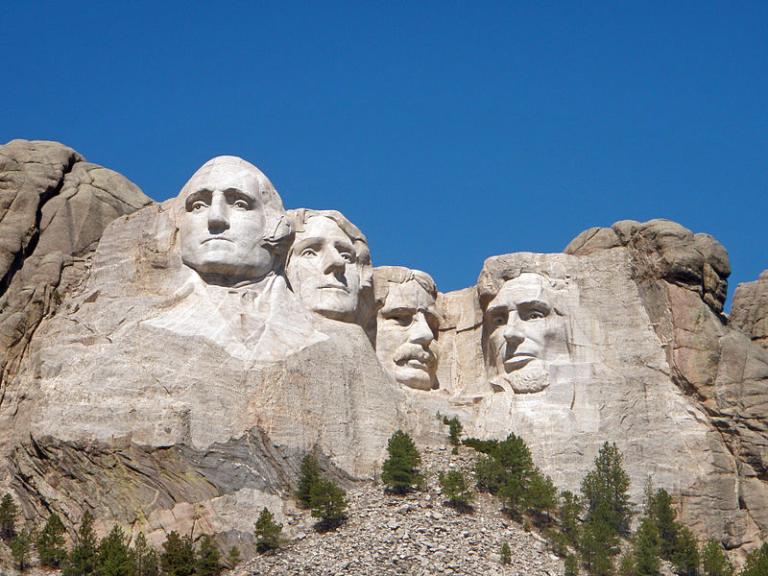
Mount Rushmore National Memorial, near Rapid City, South Dakota
(Wikimedia Commons public domain image)
***
For what it’s worth: I’ve just today agreed to participate in the 2021 edition of the annual FreedomFest, which, unusually, will be held this year in Rapid City, South Dakota. (For a very long time, it’s been hosted in Las Vegas, Nevada. But not this year.) I’m slated to participate on a panel with Ayaan Hirsi Ali. That should be quite fun, and I’m looking forward to it. If your interests lean to libertarian economic thought and/or personal investment, this is a gathering that you might well enjoy quite a bit. I always have. The dates are 21-24 July 2021, although there is also a pre-conference tour available.
***
I’ve been woefully remiss in calling your attention to the interesting materials that have been appearing on the website of Evidence Central, so here are a trio of items for you to look at over the weekend or in coming days. All are short and very user-friendly:
“Book of Mormon Evidence: Uto-Aztecan and Book of Mormon Languages”
“Book of Mormon Evidence: Barley”
“Book of Mormon: Wine and Vineyards”
***
I also feel it a duty to alert you, albeit sometimes just a bit tardily, to new items that have appeared on the important Neville-Neville Land blog. Here are a couple of them:
“Elder Marion G. Romney identified the people of Latin America as descendants of the Lamanites”
“Jonathan Neville’s pants are on fire”
***
I like this, from the National Catholic Register: “Utah’s New Law Could Be Part of Winning Pro-Life Strategy: New pro-life measure recognizes the father’s responsibility for his unborn child, and financially empowers the mother.”
***
As my career as a full-time member of the faculty at Brigham Young University rapidly winds down, I find myself thinking just a bit about how I got here and about the many factors that went into my getting here.
I’ve mentioned previously that it was probably hearing Hugh Nibley and Truman Madsen speak at a BYU Education Week in either Covina or West Covina, California, that first gave me the idea that I might like to attend Brigham Young University.
Once I arrived on the BYU campus in Provo, however, I was smitten. I fell instantly in love with the place, but, even more so, with the sheer idea of it. Although I’m not a Utahn by birth and arguably not by nature, BYU felt like home to me. I always assumed, from that point on, that my life would be deeply connected with it. In fact, it wasn’t so much that I hoped that I would come back to teach and work at BYU as that I simply, quietly, knew that I would. Even though the places that I had long dreamed of living were either in Europe — an Anglophile who loves Alpine scenery, I vacillated between Great Britain, Switzerland, Austria, and Bavaria — or in New England or in the vicinity of Newport Beach, California.
But it was scarcely a done deal that I would return. Several things had to happen to make that work out, and they did.
My chosen field of concentration — Arabic and Islamic studies — wasn’t exactly a BYU focus. It was, of course, a focus at the University of Utah. However, as a non-Utahn I’ve never felt any particular interest in (or rivalry with) that school, which, as I recall, is located near either Richfield or Tremonton. So the odds were against me.
However, the Church and BYU decided to build a Jerusalem Center for Near Eastern Studies on the slope of Mount Scopus, overlooking the Old City. And that construction project became exceedingly controversial in Israel. Many Israeli Jews imagined that it was intended to be a mission headquarters for Jewish conversions. (Where they ever came up with the idea that Latter-day Saints are missionary minded, I’ll never know.) And, in fact, very early on — as I know at first hand, having served on a Jerusalem Center committee after joining the faculty — there were some proposals, including a very tacky one that I vividly remember to this day, that would have justified that suspicion in spades. But missionary purposes were never primary in the conception of the Center, if indeed Church and University officials ever seriously entertained them at all. That memorably tacky proposal went absolutely nowhere and, very soon, it was clear that there was no point in suggesting such things.
One basis for Israeli Jewish suspicion was that, while we were building a Jerusalem Center for Near Eastern Studies, BYU had no program in Near Eastern studies back at its home campus. I hasten to add that BYU wasn’t being duplicitous or sneaky: Its conception of Near Eastern studies at the time, and at the Center still today, was primarily to teach the Old Testament or Hebrew Bible and the New Testament (principally the gospels) on site, where their stories overwhelmingly occurred.
Still, the University now set about to create a Near Eastern studies faculty in Provo to go along with its prominent Jerusalem Center for Near Eastern Studies facility in Israel.
In order to get a better feel for the Near East as the Center was being built, Dean Richard Cracroft of Humanities and Dean Robert Matthews of Religious Education (both now sadly departed) made a swing through Egypt. My good friend Professor S. Kent Brown, who had directed my Jerusalem Study Abroad group and who had then provided space in his family’s apartment for me and my new wife while we searched for housing of our own in Cairo — he was there, by that point, on a fellowship, working in the Coptic Museum — wrote to me from back in the United States, advising me that, if I ever wanted to work at BYU, I should drop whatever I was doing, for as long as was needed (four days, I think, as it turned out), to show Deans Cracroft and Matthews around.
I did, and they became friends. (Dean Cracroft, as it turns out, eventually presided over the Swtizerland Zürich Mission.) I remember having them to dinner one night at our apartment in Digla/Ma‘adi, to the south of Caior on the eastern bank of the Nile. They were clearly deeply impressed by such things as our toilet, which had to be flushed by fetching a bucket of water and pouring it into the bowl. When I eventually visited BYU for interviews, Dean Cracroft took me out to lunch with Garold Davis, his associate dean. “The good thing about Peterson,” he told Professor Davis (who also soon became a friend), “is that we can get him cheap. I’ve seen how he lived in Cairo!”
My coming to BYU was also eased by my acquaintance with Dilworth B. Parkinson, of whom I had already heard several years before when I was a missionary in Switzerland. He was something of a legend there, but not necessarily (in my case, anyhow) in a good sense. After a short while as a missionary in Switzerland, he had been sent down to work with a district of missionaries in Beirut, Lebanon, which was under the stewardship of the Switzerland Zürich Mission because Swiss neutrality was very helpful at the time. His ability with Arabic became famous, but one of the missionaries who had been there was brought back to Switzerland and blamed his transfer on Dil. This missionary, whom I never met and whose name I can no longer remember, was apparently somewhat bitter and, consciously or not, circulated many unfavorable accounts about Elder Parkinson.
So I was horrified to hear that Dil (whom I had never met) was coming to Cairo, to spend a year there doing field research for his University of Michigan doctoral dissertation on the sociolinguistics of terms in address in Cairene colloquial dialect. It took me about five minutes of speaking with him to realize that the image that I had of him was completely false. He kindly served as a tutor to me as I studied Arabic there for my first year and then, after he was hired to teach Arabic at BYU — essentially founding the Arabic program at the University — he was instrumental in getting me hired, as well.
When I was hired, I was hired in some sense as a Jerusalem Center employee. Via arcane accounting paths that I never really cared to explore and cannot fully explain, I have always been a Jerusalem Center employee, although assigned to and responsible to the Department of Asian and Near Eastern Languages. And when I went over for several years to what became the Neal A. Maxwell Institute for Religious Scholarship, the primary portion of my paycheck still came from the Center via the Department. Or something like that.
Cairo was a great place for making Latter-day Saint (and other) friends, some of whom have remained close over our entire lifetimes. Our branch president for much of the time that we were in Egypt was Arnold H. Green, who was a professor of modern Near Eastern history at the American University in Cairo. A few years later, he too joined the BYU faculty, in the Department of History, where he would serve as the department chairman and also as the resident director of the Jerusalem Center. Unfortunately, he passed away a few years back. The other branch president that we had in Cairo was Doug Bradford, who came to Utah after years of service for the United States overseas and taught Arabic part-time in my department. Another friend from Cairo, a native Egyptian non-member graphic artist whose (late) American wife was our Relief Society president, will be coming through Utah later this month, and we’re all very eager to see him.
Posted from Park City, Utah
Next Post

April 17, 2021 "The Man Who Knew Infinity" (Part Two)
Browse Our Archives
Select a Category Uncategorized
Select a Month October 2026 September 2026 August 2026 July 2026 June 2026 May 2026 April 2026 March 2026 February 2026 January 2026 December 2025 November 2025 October 2025 September 2025 August 2025 July 2025 June 2025 May 2025 April 2025 March 2025 February 2025 January 2025 December 2024 November 2024 October 2024 September 2024 August 2024 July 2024 June 2024 May 2024 April 2024 March 2024 February 2024 January 2024 December 2023 November 2023 October 2023 September 2023 August 2023 July 2023 June 2023 May 2023 April 2023 March 2023 February 2023 January 2023 December 2022 November 2022 October 2022 September 2022 August 2022 July 2022 June 2022 May 2022 April 2022 March 2022 February 2022 January 2022 December 2021 November 2021 October 2021 September 2021 August 2021 July 2021 June 2021 May 2021 April 2021 March 2021 February 2021 January 2021 December 2020 November 2020 October 2020 September 2020 August 2020 July 2020 June 2020 May 2020 April 2020 March 2020 February 2020 January 2020 December 2019 November 2019 October 2019 September 2019 August 2019 July 2019 June 2019 May 2019 April 2019 March 2019 February 2019 January 2019 December 2018 November 2018 October 2018 September 2018 August 2018 July 2018 June 2018 May 2018 April 2018 March 2018 February 2018 January 2018 December 2017 November 2017 October 2017 September 2017 August 2017 July 2017 June 2017 May 2017 April 2017 March 2017 February 2017 January 2017 December 2016 November 2016 October 2016 September 2016 August 2016 July 2016 June 2016 May 2016 April 2016 March 2016 February 2016 January 2016 December 2015 November 2015 October 2015 September 2015 August 2015 July 2015 June 2015 May 2015 April 2015 March 2015 February 2015 January 2015 December 2014 November 2014 March 2014 August 2013 February 2012
Follow Us!
TAKE THE
Religious Wisdom Quiz
Where did Elijah confront the prophets of Baal?
Select your answer to see how you score.
Mount Horeb Mount Zion Mount Sinai Mount Carmel
Related posts from Sic et Non

"America's Most Neighborly City"? It's not in Switzerland

"The Book of Moses as a Temple Text"

TRENDING AT PATHEOS Latter-day Saint

The First Eucharistic Controversy: Christ’s Real Presence
For Catholics, the Eucharist is the source and summit of the Christian...

How to Make a Decision When You Can't...
Main point: It’s much more valuable to stay close to God so...

Archdiocese Hosts Military Marriage Retreat in Germany
RASTATT, Germany — The transient military lifestyle, with its frequent deployments and...

Nearly every morning, I make the drive to Detroit with my high-school-age...

The Real AI Story Is Adoption Without Trust
Artificial intelligence has crossed a political threshold. It is no longer a...

A new article, written by Jeff Lindsay and Gale L. Pooley,...
view all Latter-day Saint blogs
Ad-Free & Subscriber Log-In Subscription Support
- About Us
- 2026 Calendar
- Videos
- Podcasts
- Library of World Religions
- Faith In Media Tracker
- Advertise With Us
- Write for Us
- Privacy Policy
- Terms of Service
- Do Not Sell My Data
- Contact Us
- Radiant Digital
- Manage Newsletter Subscriptions
- Unsubscribe From Notifications
- Sitemap
Copyright 2008-2026, Patheos. All rights reserved.
Subscription Support Ad-Free & Subscriber Log-In
Follow Patheos