
BuddhistCatholicContemplativeEvangelicalGeneral ChristianHinduJewishLatter-day SaintMuslimNew VisionsProgressive Christian
Beliefs
- Buddhist
- Catholic
- Contemplative
- Evangelical
- General Christian
- Hindu
- Jewish
- Latter-day Saint
- More Voices
- Muslim
- New Visions
- Pagan
- Progressive Christian
Topics
- Religion News
- Food and Religion
- Sports and Religion
- Religious Art
- Religious Music and Entertainment
- Religious Events
- History and Religion
- Style and Religion
- Politics and Religion
- Women in Religion
- Recreation Outdoors and Religion
- Business Finance and Religion
- Careers Workplace and Religion
- Education and Religion
- Family Parenting and Religion
- Health Fitness and Religion
- Home and Religion
- Relationships and Religion
- Technology and Religion
- Travel and Religion
Columnists
- Buddhist Columnists
- Business Finance and Religion Columnists
- Careers Workplace and Religion Columnists
- Catholic Columnists
- Contemplative Columnists
- Education and Religion Columnists
- Evangelists Columnists
- Family Parenting and Religion Columnists
- General Christian Columnists
- Health Fitness and Religion Columnists
- Hindu Columnists
- History and Religion Columnists
- Home and Religion Columnists
- Jewish Columnists
- More Voices Columnists
- Latter Day Columnists
- Muslim Columnists
- New Visions Columnists
- Nonreligious Columnists
- Pagan Columnists
- Politics and Religion Columnists
- Progressive Columnists
- Recreation Outdoors and Religion Columnists
- Relationships and Religion Columnists
- Religion News Columnists
- Religious Art Columnists
- Religious Events Columnists
- Religious Music and Entertainment Columnists
- Sports and Religion Columnists
- Style and Religion Columnists
- Technology and Religion Columnists
- Travel and Religion Columnists
- Women in Religion Columnists
Resource Library
- 2026 Calendar
- Library of World Religions
- The 100 Most Holy Places on Earth
- Patheos Answers
- Podcasts
- Videos
- Faith Leaders Database
- Anglican Episcopalian
- Bahai
- Baptist
- Buddhism
- Christianity
- Confucianism
- Eastern Orthodoxy
- Hinduism
- Holiness and Pentecostal
- ISKCON
- Islam
- Judaism
- Lutheran
- Methodist
- The Church of Jesus Christ of Latter-day Saints
- New Age
- Paganism
- Presbytarian and Reformed
- Protestantism
- Religion Behind the Scenes
- Roman Catholic
- Scientology
- Shia Islam
- Sikhism
- Sufism
- Sunni Islam
- Taoism
- Zen
- See all religions
Research Tools
 Ad-Free & Subscriber Log-In Subscription Support
Ad-Free & Subscriber Log-In Subscription Support
Follow Patheos 

- Trending:
- Forgiveness
- |
- Marriage
- |
- Consciousness
- |
- Death Penalty
- |
- Election
- |
- Halloween

- Home
- Latter-day Saint
- Revision 8.13 “A New Temple in Jerusalem?”
Revision 8.13 “A New Temple in Jerusalem?”
Last updated on: January 24, 2021 at 6:41 pm by Dan Peterson
Revision 8.13 “A New Temple in Jerusalem?” 2021-01-24T18:41:18-07:00 Dan Peterson
Patheos Explore the world's faith through different perspectives on religion and spirituality! Patheos has the views of the prevalent religions and spiritualities of the world.
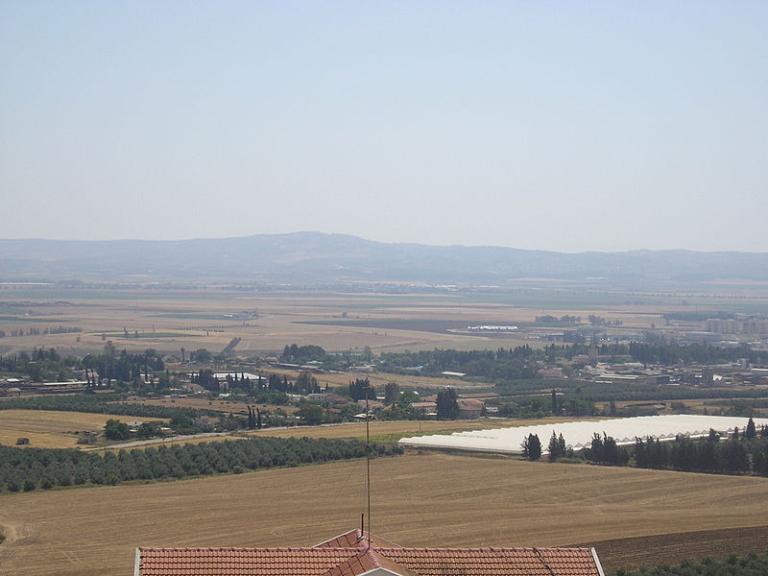
Israel’s Jezreel Valley as it appears today. (Wikimedia Commons public domain image.)
Another development that needs to be achieved, as most Latter- day Saints know, is the construction of a temple in Jerusalem. The prophet Ezekiel saw a vision of a great latter-day temple and its rituals and recorded that vision in chapters 40-47 of the Hebrew biblical book named that bears his name. Joseph Smith taught that, although the entire law of Moses would not be restored, the rituals of sacrifice would be restored and carried out (at least temporarily) in that temple at Jerusalem.[1] Little more than a year prior to his death, at the April 1843 general conference, Joseph prophesied that
Judah must return, Jerusalem must be rebuilt, and the temple, and water come out from under the temple, and the waters of the Dead Sea be healed. It will take some time to rebuild the walls of the city and the temple …and all this must be done before the Son of Man will make His appearance.[2]
Two months later, on 11 June 1843, the Prophet taught a very important historical principle to the Saints at Nauvoo, one that has application to the future as well. “What was the object,” he asked,
of gathering the Jews, or the people of God in any age of the world?… The main object was to build unto the Lord a house whereby He could reveal unto His people the ordinances of His house and the glories of His kingdom, and teach the people the way of salvation; for there are certain ordinances and principles that, when they are taught and practiced, must be done in a place or house built for that purpose. It was the design of the councils of heaven before the world was, that the principles and laws of the priesthood should be predicated upon the gathering of the people in every age of the world.[3]
What kind of a temple will this be? That question is closely linked to the question of precisely who will participate in its construction. “Who do you think is going to build it?” Elder Orson Pratt asked at a special conference in Logan in 1877. “You may think that it will be the unbelieving Jews who rejected the Savior.” However, Elder Pratt could not accept that notion. “The Temple at Jerusalem will undoubtedly be built,” he declared, “by those who believe in the true Messiah.”[4] Certainly we can conclude that valid and authorized (and thoroughly Christian) ordinances revealed in connection with the restored gospel will be practiced there, since Jerusalem is one of the places designated in the Doctrine and Covenants for the performance of vicarious baptisms for the dead.[5]
Construction of the temple raises a very serious question, though. Charles W. Penrose, speaking before his call to the Council of the Twelve and, later, to the First Presidency, remarked that “the gathering of the Jews to their own land” was in process in order “that they may build it up as it was in former times; that the temple may be rebuilt and the mosque of the Moslem which now stands in its place may be moved out of the way; that Jerusalem may be rebult [sic] upon its original site; that the way may be prepared for the coming of the Messiah.”[6] I am glad that Brother Penrose was not yet an apostle when he made this statement because I hope it is partially wrong. Let me clarify what I mean. Some Latter-day Saints look forward with positive pleasure to the day when the Dome of the Rock will be cleared off the Temple Mount and the site will be ready for the construction there of the great latter-day temple. I do not. I love the Dome of the Rock, which, in my judgment, ranks as one of the world’s truly important, interesting, and most beautiful buildings. (Perhaps, I sometimes daydream, it will be possible to incorporate the Dome into the design of the new temple?) Furthermore, I am aware that the Dome of the Rock and the adjacent mosque of al-Aqsa are among the most holy shrines in the world of Islam. Any deliberate injury to them will almost certainly provoke terrible bloodshed. I cannot see why anybody would look forward to such a thing.
Unfortunately, though, we can be quite confident that terrible bloodshed will come. According to the Revelation of John, a horrific war of the evil nations against Israel will occur in the valley of Armageddon—or Har Megiddo, “the hill/mount of Megiddo,” which is also known as Esdraelon or the Jezreel Valley. This is a triangle-shaped plain situated about sixty miles north of Jerusalem, a place associated with a number of decisive ancient battles. The most traumatic of the conflicts that occurred there, from the point of view of ancient Israel—or, more precisely, of ancient Judah—was the one in which pharaoh Necho, going up against Assyria, was intercepted by the righteous king Josiah. Josiah did not appreciate the Egyptians’ unauthorized transit through his territory and went out to stop them. Unfortunately, he was killed in the ensuring battle.[7] So the place already had strong and melancholy associations in the minds of the Jews. But, looking into the future, John saw
spirits of devils, working miracles,… go forth unto the kings of the earth and of the whole world, to gather them to the battle of that great day of God Almighty… And he gathered them together into a place called in the Hebrew tongue Armageddon.[8]
The prophet Joel apparently also knew about this titanic struggle.
For, behold, in those days, and in that time, when I shall bring again the captivity of Judah and Jerusalem [i.e., when I shall bring the captives back], I will also gather all nations, and will bring them down into the valley of Jehoshaphat… Proclaim ye this among the Gentiles; prepare war, wake up the mighty men, let all the men of war draw near; let them come up: Beat your plowshares into swords, and your pruninghooks into spears … [9] Assemble yourselves, and come, all ye heathen… Let the heathen be wakened, and come up to the valley of Jehoshaphat: for there will I sit to judge all the heathen round about. Put ye in the sickle, for the harvest is ripe: come, get you down; for the press is full, the fats [i.e., vats] overflow; for their wickedness is great. Multitudes, multitudes in the valley of decision: for the day of the Lord is near in the valley of decision.[10]
Armed and bloody conflict seems inevitable. Does that mean that we as Latter-day Saints and as citizens of our respective nations should simply sit back and let it happen? Does it mean that we have no responsibility as citizens of the world or, it may be, even as government officials to try to make an unpleasant prophecy fail? I cannot imagine that our Heavenly Father would have us draw such a conclusion. “Therefore,” the Lord directs us, “renounce war and proclaim peace, and seek diligently to turn… the hearts of the Jews unto the prophets, and the prophets unto the Jews; lest I come and smite the whole earth with a curse, and all flesh be consumed before me.”[11]
[1] See History of the Church 4:211-12.
[2] History of the Church 5:337. The prophecy of the healing of the waters of the Dead Sea echoes that of Ezekiel 47:1-10. Incidentally, the very ancient notion that the waters of life are to be found at the base of the mountain of the Lord’s house reappears in the location of baptismal fonts in or near the basements of Latter-day Saint temples.
[3] History of the Church 5:423.
[4] Journal of Discourses 19:20
[5] Doctrine and Covenants 124:36.
[6] Journal of Discourses 24:215.
[7] Judges 23:29. See also Judges 5:19; 2 Kings 9:27; Zechariah 12:11.
[8] Revelation 16:14, 16.
[9] This is a direct contrast to Isaiah 2:4 and Micah 4:3. There is no specific valley that bears the name Jehoshaphat, which means “Jehovah judges” or “Yahweh judges.”
[10] Joel 3:1 2, 9-14.
[11] Doctrine and Covenants 98:16-17.
Church of Jesus Christ of Latter-day Saints
Next Post

January 23, 2021 "Remembering Heaven"
Browse Our Archives
Select a Category Uncategorized
Select a Month October 2026 September 2026 August 2026 July 2026 June 2026 May 2026 April 2026 March 2026 February 2026 January 2026 December 2025 November 2025 October 2025 September 2025 August 2025 July 2025 June 2025 May 2025 April 2025 March 2025 February 2025 January 2025 December 2024 November 2024 October 2024 September 2024 August 2024 July 2024 June 2024 May 2024 April 2024 March 2024 February 2024 January 2024 December 2023 November 2023 October 2023 September 2023 August 2023 July 2023 June 2023 May 2023 April 2023 March 2023 February 2023 January 2023 December 2022 November 2022 October 2022 September 2022 August 2022 July 2022 June 2022 May 2022 April 2022 March 2022 February 2022 January 2022 December 2021 November 2021 October 2021 September 2021 August 2021 July 2021 June 2021 May 2021 April 2021 March 2021 February 2021 January 2021 December 2020 November 2020 October 2020 September 2020 August 2020 July 2020 June 2020 May 2020 April 2020 March 2020 February 2020 January 2020 December 2019 November 2019 October 2019 September 2019 August 2019 July 2019 June 2019 May 2019 April 2019 March 2019 February 2019 January 2019 December 2018 November 2018 October 2018 September 2018 August 2018 July 2018 June 2018 May 2018 April 2018 March 2018 February 2018 January 2018 December 2017 November 2017 October 2017 September 2017 August 2017 July 2017 June 2017 May 2017 April 2017 March 2017 February 2017 January 2017 December 2016 November 2016 October 2016 September 2016 August 2016 July 2016 June 2016 May 2016 April 2016 March 2016 February 2016 January 2016 December 2015 November 2015 October 2015 September 2015 August 2015 July 2015 June 2015 May 2015 April 2015 March 2015 February 2015 January 2015 December 2014 November 2014 March 2014 August 2013 February 2012
Follow Us!
TAKE THE
Religious Wisdom Quiz
What does "apostle" literally mean in Greek?
Select your answer to see how you score.
Sent one Friend Leader Writer
Related posts from Sic et Non


Notes on Women, Priesthood, and General Conference

"The Book of Moses as a Temple Text"

TRENDING AT PATHEOS Latter-day Saint

The Sermon on the Mount, Part I: Matthew...
The Sermon on the Mount, Part I (Matthew 4:12-5:12) St. Matthew moves...

What's up from Crossway: Reviewing some of their latest A few weeks...

Janie Learns the Way of the Cross: A...
Teaching children about Jesus' Passion can be challenging. Many parents and educators...

Looking For Good Catholic Writing - October 2026
He alone extends the heavens, and he walks upon the waves of...

In "Irreplaceable," our book on vocation and technology, Trevor Sutton and I...

I was strolling through the top floor of the brand new Parthenon...
view all Latter-day Saint blogs
Ad-Free & Subscriber Log-In Subscription Support
- About Us
- 2026 Calendar
- Videos
- Podcasts
- Library of World Religions
- Faith In Media Tracker
- Advertise With Us
- Write for Us
- Privacy Policy
- Terms of Service
- Do Not Sell My Data
- Contact Us
- Radiant Digital
- Manage Newsletter Subscriptions
- Unsubscribe From Notifications
- Sitemap
Copyright 2008-2026, Patheos. All rights reserved.
Subscription Support Ad-Free & Subscriber Log-In
Follow Patheos