
BuddhistCatholicContemplativeEvangelicalGeneral ChristianHinduJewishLatter-day SaintMuslimNew VisionsProgressive Christian
Beliefs
- Buddhist
- Catholic
- Contemplative
- Evangelical
- General Christian
- Hindu
- Jewish
- Latter-day Saint
- More Voices
- Muslim
- New Visions
- Pagan
- Progressive Christian
Topics
- Religion News
- Food and Religion
- Sports and Religion
- Religious Art
- Religious Music and Entertainment
- Religious Events
- History and Religion
- Style and Religion
- Politics and Religion
- Women in Religion
- Recreation Outdoors and Religion
- Business Finance and Religion
- Careers Workplace and Religion
- Education and Religion
- Family Parenting and Religion
- Health Fitness and Religion
- Home and Religion
- Relationships and Religion
- Technology and Religion
- Travel and Religion
Columnists
- Buddhist Columnists
- Business Finance and Religion Columnists
- Careers Workplace and Religion Columnists
- Catholic Columnists
- Contemplative Columnists
- Education and Religion Columnists
- Evangelists Columnists
- Family Parenting and Religion Columnists
- General Christian Columnists
- Health Fitness and Religion Columnists
- Hindu Columnists
- History and Religion Columnists
- Home and Religion Columnists
- Jewish Columnists
- More Voices Columnists
- Latter Day Columnists
- Muslim Columnists
- New Visions Columnists
- Nonreligious Columnists
- Pagan Columnists
- Politics and Religion Columnists
- Progressive Columnists
- Recreation Outdoors and Religion Columnists
- Relationships and Religion Columnists
- Religion News Columnists
- Religious Art Columnists
- Religious Events Columnists
- Religious Music and Entertainment Columnists
- Sports and Religion Columnists
- Style and Religion Columnists
- Technology and Religion Columnists
- Travel and Religion Columnists
- Women in Religion Columnists
Resource Library
- 2026 Calendar
- Library of World Religions
- The 100 Most Holy Places on Earth
- Patheos Answers
- Podcasts
- Videos
- Faith Leaders Database
- Anglican Episcopalian
- Bahai
- Baptist
- Buddhism
- Christianity
- Confucianism
- Eastern Orthodoxy
- Hinduism
- Holiness and Pentecostal
- ISKCON
- Islam
- Judaism
- Lutheran
- Methodist
- The Church of Jesus Christ of Latter-day Saints
- New Age
- Paganism
- Presbytarian and Reformed
- Protestantism
- Religion Behind the Scenes
- Roman Catholic
- Scientology
- Shia Islam
- Sikhism
- Sufism
- Sunni Islam
- Taoism
- Zen
- See all religions
Research Tools
 Ad-Free & Subscriber Log-In Subscription Support
Ad-Free & Subscriber Log-In Subscription Support
Follow Patheos 

- Trending:
- Forgiveness
- |
- Marriage
- |
- Consciousness
- |
- Death Penalty
- |
- Election
- |
- Halloween

- Home
- Latter-day Saint
- An instructive disagreement at Oxford about the function of genes
An instructive disagreement at Oxford about the function of genes
Last updated on: January 3, 2021 at 11:39 pm by Dan Peterson
An instructive disagreement at Oxford about the function of genes 2021-01-03T23:39:46-07:00 Dan Peterson
Patheos Explore the world's faith through different perspectives on religion and spirituality! Patheos has the views of the prevalent religions and spiritualities of the world.
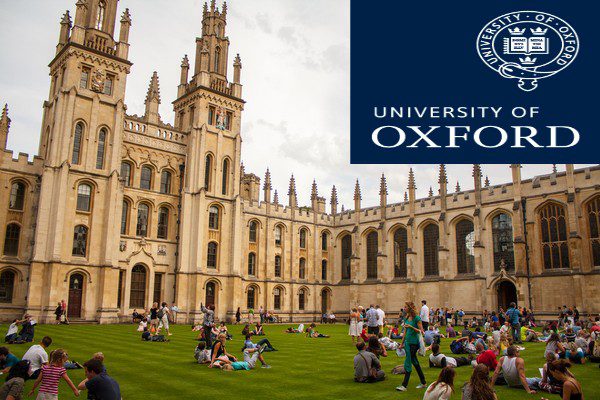
One of the most distinguished and most venerable universities in the world.
(From the Oxford University website)
The first of Alister McGrath’s three earned Oxford University doctorates was in molecular biophysics. The next two were in, first, theology and, second, intellectual history. On pages 38-39 of Alister E. McGrath, Darwinism and the Divine: Evolutionary Thought and Natural Theology (Chichester: Wiley-Blackwell, 2011), McGrath offers an excellent example of how the same bare scientific facts can be interpreted and expanded upon in radically different ways, depending upon the presuppositions that interpreters bring to them:
As his initial illustration, he uses a passage from the Oxford evolutionary biologist, science popularizer, and vocal “New Atheist” polemicist Richard Dawkins, cited from
Dawkins’s early masterpiece of Darwinian popularization, The Selfish Gene (1976). This important and influential work supplements overt scientific description with a covert metaphysic, which represents genes as active agents in control of their own destiny and those of their hosts.
[Genes] swarm in huge colonies, safe inside gigantic lumbering robots, sealed off from the outside world, communicating with it by tortuous indirect routes, manipulating it by remote control. They are in you and me; they created us, body and mind, and their preservation is the ultimate rationale for our existence.
This passage presents a completely defensible scientific statement — “genes are in you and me” — with a series of rather less defensible metaphysical assertions. We are told, for example, that the preservation of our genes “is the ultimate rationale for our existence.” This is, however, simply a presentation of a “gene’s eye view” — a hypothetical metaphysical way of interpreting scientific observation, which arguably reached its zenith in the early 1980s. This approach conceived the gene as an active controlling agent, which could be regarded as “manipulating” the destiny of biological entities, including humanity. Yet the empirically verified facts in this statement are limited to the brief statement that genes “are in you and me.” The rest is speculative. Metaphysical presuppositions have been smuggled in, and portrayed as if they were scientifically verified facts.
McGrath then cites a satirically rewritten version of the same paragraph created by the Oxford University systems biologist Denis Noble:
Noble retains what is scientifically valid and verifiable in Dawkins’s prose. Then, in a masterly piece of ideological subversion, he identifies and inverts Dawkins’s non-scientific statements. Noble playfully portrays genes as passive, where Dawkins depicts them as active:
[Genes] are trapped in huge colonies, locked inside highly intelligent beings, moulded by the outside world, communicating with it by complex processes, through which, blindly, as if by magic, function emerges. They are in you and me; we are the system that allows their code to be read; and their preservation is totally dependent on the joy that we experience in reproducing ourselves. We are the ultimate rationale for their existence.
Obviously, Dawkins and Noble depict the functional status of genes in radically distinct ways. They accurately report the same very limited scientific information, but then they go completely different directions with their metaphysical interpretations — which each of them suggests (one in earnest and the other more or less in jest) to be just as secure, scientifically speaking, as the fact that genes “are in you and me.” Their statements are empirically equivalent, in a sense, but both cannot be correct.
Alister McGrath’s comment on the foregoing two summary statements is important:
So which is right? How could we decide which is to be preferred on scientific grounds? As Noble observes, “no-one seems to be able to think of an experiment that would detect an empirical difference between them.” The question of the metaphysical presuppositions and consequences of evolutionary thought is entirely legitimate, and is of considerable interest. Nevertheless, it is important to be clear that discussion of this issue is often muddied by confusion over the status of the metaphysical dimensions of evolutionary thought. The challenge facing anyone interested in reflecting on the cultural, religious, ethical, and theological implications of biological evolution is to separate the observational evidence from the accumulated detritus of metaphysical speculation.
***
As an addendum, here’s a potpourri of recent science-related links that caught my attention:
Science and Nature (date unclear): “NASA’s $1 Billion Jupiter Probe Just Sent Back Dazzling New Photos of the Giant Planet and Its Great Red Spot”
LiveScience (roughly 11 December 2020): “Ancient Egyptian hoard of counterfeit ‘dirty money’ unearthed”
Gizmodo (23 December 2020): “Archaeologists Find Evidence That a Massive Tsunami Hit Ancient Levantine Coast”
CNN (27 December 2020): “The peace, insights and life-rescuing power of the rosary and other religious prayer beads”
CNN: (27 December 2020): “Ancient snack stall uncovered in Pompeii, revealing bright frescoes and traces of 2,000-year-old street food”
The Economist (30 December 2020): “A new push to ban medical treatments for transgender children: State legislators are seeking to make puberty blockers, cross-sex hormones and gender reassignment surgery illegal”
KSL (31 December 2020): “2021 is the perfect time to set meaningful goals, psychiatrists say”
Science Alert (31 December 2020): “Study of More Than 1 Million People Finds Intriguing Link Between Iron Levels And Lifespan”
SmartNews (31 December 2020): “Inscription Leads Archaeologists to Tomb of One of the Last Han Emperors: A manufacturing date on a vessel confirmed a Chinese mausoleum’s ties to second-century A.D. ruler Liu Zhi”
Wall Street Journal (31 December 2020): “For New Year’s Resolutions, Never Think You’re Too Old to Become a Beginner: In 2021, take on the challenge of learning a new skill or hobby as an adult. It can bring big cognitive and emotional benefits.”
ScienceNews (31 December 2020): “These are the most-read Science News stories of 2020″
KSL (1 January 2021): “Romney calls for comprehensive COVID-19 vaccination plan”
Finally, here’s one that, I think, might be especially interesting for Latter-day Saints who are inclined to theological speculation. It’s reprinted from the 21 April 2019 issue of Scientific American:
Next Post

January 4, 2021 “By Jan. 1, 2014 Interpreter will be dead."
Browse Our Archives
Select a Category Uncategorized
Select a Month October 2026 September 2026 August 2026 July 2026 June 2026 May 2026 April 2026 March 2026 February 2026 January 2026 December 2025 November 2025 October 2025 September 2025 August 2025 July 2025 June 2025 May 2025 April 2025 March 2025 February 2025 January 2025 December 2024 November 2024 October 2024 September 2024 August 2024 July 2024 June 2024 May 2024 April 2024 March 2024 February 2024 January 2024 December 2023 November 2023 October 2023 September 2023 August 2023 July 2023 June 2023 May 2023 April 2023 March 2023 February 2023 January 2023 December 2022 November 2022 October 2022 September 2022 August 2022 July 2022 June 2022 May 2022 April 2022 March 2022 February 2022 January 2022 December 2021 November 2021 October 2021 September 2021 August 2021 July 2021 June 2021 May 2021 April 2021 March 2021 February 2021 January 2021 December 2020 November 2020 October 2020 September 2020 August 2020 July 2020 June 2020 May 2020 April 2020 March 2020 February 2020 January 2020 December 2019 November 2019 October 2019 September 2019 August 2019 July 2019 June 2019 May 2019 April 2019 March 2019 February 2019 January 2019 December 2018 November 2018 October 2018 September 2018 August 2018 July 2018 June 2018 May 2018 April 2018 March 2018 February 2018 January 2018 December 2017 November 2017 October 2017 September 2017 August 2017 July 2017 June 2017 May 2017 April 2017 March 2017 February 2017 January 2017 December 2016 November 2016 October 2016 September 2016 August 2016 July 2016 June 2016 May 2016 April 2016 March 2016 February 2016 January 2016 December 2015 November 2015 October 2015 September 2015 August 2015 July 2015 June 2015 May 2015 April 2015 March 2015 February 2015 January 2015 December 2014 November 2014 March 2014 August 2013 February 2012
Follow Us!
TAKE THE
Religious Wisdom Quiz
According to Paul, nothing in all creation can separate you from me—not death, not life, not angels or demons. What am I?
Select your answer to see how you score.
God's grace God's mercy Salvation The love of God
Related posts from Sic et Non

"Out of small things proceedeth that which is...

"The Appeal of Socialism and the Case Against...

Comparing Masonic Rites with the LDS Temple Endowment

Some notes on the origin of life and...
TRENDING AT PATHEOS Latter-day Saint

57th Dove Awards Honor Dolly Parton, Crown New...
On gospel music’s biggest night, the 57th annual GMA Dove Awards honored...

The First Eucharistic Controversy: Christ’s Real Presence
For Catholics, the Eucharist is the source and summit of the Christian...

What a Stop Sign Can Teach Us About...
How to Make a Decision When You Can't Hear God Main point:...

Archdiocese Hosts Military Marriage Retreat in Germany
RASTATT, Germany — The transient military lifestyle, with its frequent deployments and...

Nearly every morning, I make the drive to Detroit with my high-school-age...

The Real AI Story Is Adoption Without Trust
Artificial intelligence has crossed a political threshold. It is no longer a...
view all Latter-day Saint blogs
Ad-Free & Subscriber Log-In Subscription Support
- About Us
- 2026 Calendar
- Videos
- Podcasts
- Library of World Religions
- Faith In Media Tracker
- Advertise With Us
- Write for Us
- Privacy Policy
- Terms of Service
- Do Not Sell My Data
- Contact Us
- Radiant Digital
- Manage Newsletter Subscriptions
- Unsubscribe From Notifications
- Sitemap
Copyright 2008-2026, Patheos. All rights reserved.
Subscription Support Ad-Free & Subscriber Log-In
Follow Patheos