
BuddhistCatholicContemplativeEvangelicalGeneral ChristianHinduJewishLatter-day SaintMuslimNew VisionsProgressive Christian
Beliefs
- Buddhist
- Catholic
- Contemplative
- Evangelical
- General Christian
- Hindu
- Jewish
- Latter-day Saint
- More Voices
- Muslim
- New Visions
- Pagan
- Progressive Christian
Topics
- Religion News
- Food and Religion
- Sports and Religion
- Religious Art
- Religious Music and Entertainment
- Religious Events
- History and Religion
- Style and Religion
- Politics and Religion
- Women in Religion
- Recreation Outdoors and Religion
- Business Finance and Religion
- Careers Workplace and Religion
- Education and Religion
- Family Parenting and Religion
- Health Fitness and Religion
- Home and Religion
- Relationships and Religion
- Technology and Religion
- Travel and Religion
Columnists
- Buddhist Columnists
- Business Finance and Religion Columnists
- Careers Workplace and Religion Columnists
- Catholic Columnists
- Contemplative Columnists
- Education and Religion Columnists
- Evangelists Columnists
- Family Parenting and Religion Columnists
- General Christian Columnists
- Health Fitness and Religion Columnists
- Hindu Columnists
- History and Religion Columnists
- Home and Religion Columnists
- Jewish Columnists
- More Voices Columnists
- Latter Day Columnists
- Muslim Columnists
- New Visions Columnists
- Nonreligious Columnists
- Pagan Columnists
- Politics and Religion Columnists
- Progressive Columnists
- Recreation Outdoors and Religion Columnists
- Relationships and Religion Columnists
- Religion News Columnists
- Religious Art Columnists
- Religious Events Columnists
- Religious Music and Entertainment Columnists
- Sports and Religion Columnists
- Style and Religion Columnists
- Technology and Religion Columnists
- Travel and Religion Columnists
- Women in Religion Columnists
Resource Library
- 2026 Calendar
- Library of World Religions
- The 100 Most Holy Places on Earth
- Patheos Answers
- Podcasts
- Videos
- Faith Leaders Database
- Anglican Episcopalian
- Bahai
- Baptist
- Buddhism
- Christianity
- Confucianism
- Eastern Orthodoxy
- Hinduism
- Holiness and Pentecostal
- ISKCON
- Islam
- Judaism
- Lutheran
- Methodist
- The Church of Jesus Christ of Latter-day Saints
- New Age
- Paganism
- Presbytarian and Reformed
- Protestantism
- Religion Behind the Scenes
- Roman Catholic
- Scientology
- Shia Islam
- Sikhism
- Sufism
- Sunni Islam
- Taoism
- Zen
- See all religions
Research Tools
 Ad-Free & Subscriber Log-In Subscription Support
Ad-Free & Subscriber Log-In Subscription Support
Follow Patheos 

- Trending:
- Forgiveness
- |
- Marriage
- |
- Consciousness
- |
- Death Penalty
- |
- Election
- |
- Halloween

- Home
- Latter-day Saint
- The Point of the Plates, and Moroni and Joseph’s Amazing Coat
The Point of the Plates, and Moroni and Joseph’s Amazing Coat
Last updated on: December 4, 2020 at 10:37 pm by Dan Peterson
The Point of the Plates, and Moroni and Joseph’s Amazing Coat 2020-12-04T22:37:05-07:00 Dan Peterson
Patheos Explore the world's faith through different perspectives on religion and spirituality! Patheos has the views of the prevalent religions and spiritualities of the world.
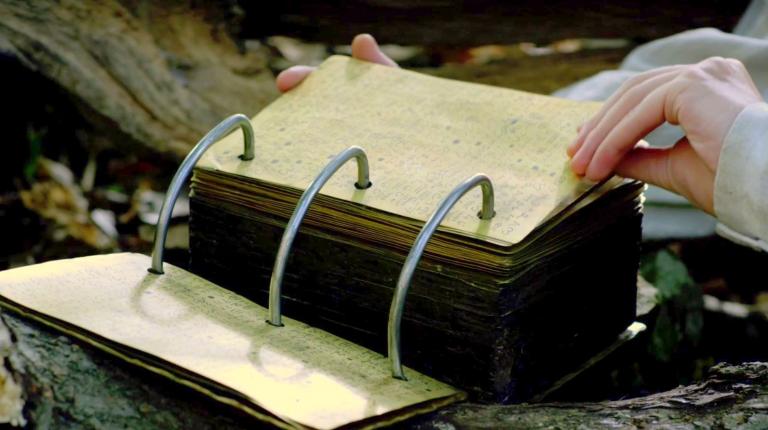
The replica of the Book of Mormon plates used in the Interpreter Foundation’s “Witnesses” film project
(still photograph by James Jordan)
Many years ago, a friend who was sympathetic to the Church but not a believer in the Book of Mormon asked me what the point of the golden plates was. After all, he said — he was quite well informed regarding Latter-day Saint beliefs — Joseph Smith apparently didn’t need them in order to translate and dictate the text. Sometimes, in fact, they weren’t even in the same room with him.
I recall responding to his question by answering that the plates were, in my opinion, at a minimum, an absolutely indigestible lump in the throats of people like himself. (We had a really good relationship, and I could say things like that to him without giving offense.)
Why would I say such a thing, apart from being naturally cheeky?
He wanted to believe that the Book of Mormon resulted from a purely subjective experience in the mind of Joseph Smith, that it was just a creation of Joseph’s own fertile imagination. But it seems clear to me that the plates decisively remove the Book of Mormon story from the realm of purely subjective experience. If they existed at all — and the evidence that they did exist is, in my judgment, absolutely conclusive — the plates were entirely real. Multiple witnesses saw them and even claimed to have “hefted” them. In fact, several of those who reported encounters with them estimated their weight at a quite tangible forty pounds or more.
Joseph Smith’s story dramatically differs, in this regard as in others, from that of the early-seventh-century Muslim prophet Muhammad, who had no corroborating witnesses to his production of the Qur’an. Indeed, strikingly, many if not most of Joseph’s revelations were shared with others.. By contrast, Muhammad’s claimed revelatory experiences were personal, individual, belonging to him and to him alone — and thus, in that sense at least, subjective.
To me, the plates force the question of the truth of the Book of Mormon in a much more direct and inescapable way than does the Qur’an. Somebody made them (to say nothing of the other strange material objects reported by Joseph’s contemporaries to have been in his possession, for at least a time).
Moreover, for what it’s worth, the palpable material reality of the plates probably served to reassure Joseph himself, in case he ever wondered about his sanity — as, accorded to the earliest Arabic sources, Muhammad definitely did. “I don’t blame any one for not believing my history,” Joseph once remarked. “If I had not experienced what I have, I would not have believed it myself.” In contrast to Joseph Smith, the Prophet of Islam lacked any fellow witnesses or material objects to confirm him in times of doubt.
Ah, but — say certain critics of the Restoration — even if the plates existed, their sheer existence doesn’t prove that they were ancient or that the Book of Mormon has any connection with the divine (if, indeed, the divine itself exists!). The mere existence of a set of metallic plates, in and of itself, neither demonstrates the validity of the Restoration nor illustrates its deep roots in antiquity.
True.
After all, we’re using a recently manufactured set of plates as a prop in our Witnesses film project. Why couldn’t Joseph have manufactured or obtained a recently-created set of plates for use as a prop to accompany the creation of his fake new religious text?
He could have, I suppose. Though that would have been much harder than some seem to assume. The plates that we’re using in our film project were created by an experienced professional metalworker, who (as he says in an interview that we filmed and that will likely figure in our documentary and accompanying materials) found the process quite demanding and difficult. Moreover, unlike our plates, Joseph’s were made of either gold or, more likely a gold alloy — rather unexpectedly on the American frontier and connected with a family of subsistence farmers. And, unlike our plates, they disappeared.
The existence of both the Book of Mormon plates and our prop plates requires explanation. As I said above, somebody made them. Thus, the sheer existence of the plates does make historical Nephites (slightly) more likely than the non-existence of the plates would, especially given the absence of any evidence that any particular nineteenth-century frontier American made them.
But we’re not talking about the mere existence of golden plates. Because we’re not talking merely about the Eight Witnesses to the Book of Mormon. Here is where the Three Witnesses come into play.
In their experience, they didn’t just see the plates, or even (unlike the Eight) just the plates and a few other mute physical objects. They saw an angel. And they heard the voice of God declaring that “they have been translated by the gift and power of God.” If accepted as authentic. their testimony argues very powerfully for divine involvement in the Book of Mormon and, accordingly, for the truth of the narrative and doctrine that it contains.
Neither the Eight Witnesses nor the Three Witnesses nor the additional or informal witnesses to the Book of Mormon stand alone. Together, though, they represent powerful evidence, forming a potent element of a cumulative overall case.
***

he Laie Hawaii Temple was first dedicated in 1919. The Hawaii campus of Brigham Young University, where Professor Matthew Bowen teaches, was founded more recently and now stands adjacent to the temple grounds. (LDS Media Library)
The newest new article in Interpreter: A Journal of Latter-day Saint Faith and Scholarship is by Matthew L. Bowen, of Brigham Young University’s campus in Laie, Oahu, Hawaii, and bears the title,
Abstract: Genesis 30:23–24 offers a double etiology for Joseph in terms of “taking away”/“gathering” (ʾāsap) and “adding” (yāsap). In addition to its later narratological use of the foregoing, the Joseph cycle (Genesis 37–50) evidences a third dimension of onomastic wordplay involving Joseph’s kĕtōnet passîm*, an uncertain phrase traditionally translated “coat of many colours” (from LXX), but perhaps better translated, “coat of manifold pieces.” Moroni1, quoting from a longer version of the Joseph story from the brass plates, refers to “Joseph, whose coat was rent by his brethren into* many pieces*” (Alma 46:23). As a military and spiritual leader, Moroni1 twice uses Joseph’s torn coat and the remnant doctrine from Jacob’s prophecy regarding Joseph’s coat as a model for his covenant use of his own coat to “gather” (cf.* ʾāsap*) and rally faithful Nephites as “a remnant of the seed of Joseph” (Alma 46:12–28, 31; 62:4–6). In putting that coat on a “pole” or “standard” (Hebrew* nēs — i.e., “ensign”) to “gather” a “remnant of the seed of Joseph” appears to make use of the Isaianic nēs*-imagery of Isaiah 11:11–12 (and elsewhere), where the Joseph-connected verbs* yāsap and ʾāsap serve as key terms. Moroni’s written-upon “standard” or “ensign” for “gathering” the “remnant of the seed of Joseph” constituted an important prophetic antetype for how Mormon and his son, Moroni2, perceived the function of their written record in the latter-days (see, e.g., 3 Nephi 5:23–26; Ether 13:1–13).
Church of Jesus Christ of Latter-day Saints
Next Post

December 5, 2020 Berlinski imagines Borges imagining literary "evolution"
Browse Our Archives
Select a Category Uncategorized
Select a Month October 2026 September 2026 August 2026 July 2026 June 2026 May 2026 April 2026 March 2026 February 2026 January 2026 December 2025 November 2025 October 2025 September 2025 August 2025 July 2025 June 2025 May 2025 April 2025 March 2025 February 2025 January 2025 December 2024 November 2024 October 2024 September 2024 August 2024 July 2024 June 2024 May 2024 April 2024 March 2024 February 2024 January 2024 December 2023 November 2023 October 2023 September 2023 August 2023 July 2023 June 2023 May 2023 April 2023 March 2023 February 2023 January 2023 December 2022 November 2022 October 2022 September 2022 August 2022 July 2022 June 2022 May 2022 April 2022 March 2022 February 2022 January 2022 December 2021 November 2021 October 2021 September 2021 August 2021 July 2021 June 2021 May 2021 April 2021 March 2021 February 2021 January 2021 December 2020 November 2020 October 2020 September 2020 August 2020 July 2020 June 2020 May 2020 April 2020 March 2020 February 2020 January 2020 December 2019 November 2019 October 2019 September 2019 August 2019 July 2019 June 2019 May 2019 April 2019 March 2019 February 2019 January 2019 December 2018 November 2018 October 2018 September 2018 August 2018 July 2018 June 2018 May 2018 April 2018 March 2018 February 2018 January 2018 December 2017 November 2017 October 2017 September 2017 August 2017 July 2017 June 2017 May 2017 April 2017 March 2017 February 2017 January 2017 December 2016 November 2016 October 2016 September 2016 August 2016 July 2016 June 2016 May 2016 April 2016 March 2016 February 2016 January 2016 December 2015 November 2015 October 2015 September 2015 August 2015 July 2015 June 2015 May 2015 April 2015 March 2015 February 2015 January 2015 December 2014 November 2014 March 2014 August 2013 February 2012
Follow Us!
TAKE THE
Religious Wisdom Quiz
True or False: Paul instructs the Philippians to do everything without grumbling or arguing.
Select your answer to see how you score.
FALSE TRUE
Related posts from Sic et Non


Notes on Women, Priesthood, and General Conference

"The Book of Moses as a Temple Text"

TRENDING AT PATHEOS Latter-day Saint

Janie Learns the Way of the Cross: A...
Teaching children about Jesus' Passion can be challenging. Many parents and educators...

Looking For Good Catholic Writing - October 2026
He alone extends the heavens, and he walks upon the waves of...

In "Irreplaceable," our book on vocation and technology, Trevor Sutton and I...

I was strolling through the top floor of the brand new Parthenon...

What Does Gêvâh Mean For Kimberley Guifoyle &...
This week, a lot of the news is focused on Kimberly Guilfoyle....

INNER CIRCLE: Profound Mystery (Of Christ In All...
Ephesians 5:31-32 “For this reason, a man will leave his father and...
view all Latter-day Saint blogs
Ad-Free & Subscriber Log-In Subscription Support
- About Us
- 2026 Calendar
- Videos
- Podcasts
- Library of World Religions
- Faith In Media Tracker
- Advertise With Us
- Write for Us
- Privacy Policy
- Terms of Service
- Do Not Sell My Data
- Contact Us
- Radiant Digital
- Manage Newsletter Subscriptions
- Unsubscribe From Notifications
- Sitemap
Copyright 2008-2026, Patheos. All rights reserved.
Subscription Support Ad-Free & Subscriber Log-In
Follow Patheos