
BuddhistCatholicContemplativeEvangelicalGeneral ChristianHinduJewishLatter-day SaintMuslimNew VisionsProgressive Christian
Beliefs
- Buddhist
- Catholic
- Contemplative
- Evangelical
- General Christian
- Hindu
- Jewish
- Latter-day Saint
- More Voices
- Muslim
- New Visions
- Pagan
- Progressive Christian
Topics
- Religion News
- Food and Religion
- Sports and Religion
- Religious Art
- Religious Music and Entertainment
- Religious Events
- History and Religion
- Style and Religion
- Politics and Religion
- Women in Religion
- Recreation Outdoors and Religion
- Business Finance and Religion
- Careers Workplace and Religion
- Education and Religion
- Family Parenting and Religion
- Health Fitness and Religion
- Home and Religion
- Relationships and Religion
- Technology and Religion
- Travel and Religion
Columnists
- Buddhist Columnists
- Business Finance and Religion Columnists
- Careers Workplace and Religion Columnists
- Catholic Columnists
- Contemplative Columnists
- Education and Religion Columnists
- Evangelists Columnists
- Family Parenting and Religion Columnists
- General Christian Columnists
- Health Fitness and Religion Columnists
- Hindu Columnists
- History and Religion Columnists
- Home and Religion Columnists
- Jewish Columnists
- More Voices Columnists
- Latter Day Columnists
- Muslim Columnists
- New Visions Columnists
- Nonreligious Columnists
- Pagan Columnists
- Politics and Religion Columnists
- Progressive Columnists
- Recreation Outdoors and Religion Columnists
- Relationships and Religion Columnists
- Religion News Columnists
- Religious Art Columnists
- Religious Events Columnists
- Religious Music and Entertainment Columnists
- Sports and Religion Columnists
- Style and Religion Columnists
- Technology and Religion Columnists
- Travel and Religion Columnists
- Women in Religion Columnists
Resource Library
- 2026 Calendar
- Library of World Religions
- The 100 Most Holy Places on Earth
- Patheos Answers
- Podcasts
- Videos
- Faith Leaders Database
- Anglican Episcopalian
- Bahai
- Baptist
- Buddhism
- Christianity
- Confucianism
- Eastern Orthodoxy
- Hinduism
- Holiness and Pentecostal
- ISKCON
- Islam
- Judaism
- Lutheran
- Methodist
- The Church of Jesus Christ of Latter-day Saints
- New Age
- Paganism
- Presbytarian and Reformed
- Protestantism
- Religion Behind the Scenes
- Roman Catholic
- Scientology
- Shia Islam
- Sikhism
- Sufism
- Sunni Islam
- Taoism
- Zen
- See all religions
Research Tools
 Ad-Free & Subscriber Log-In Subscription Support
Ad-Free & Subscriber Log-In Subscription Support
Follow Patheos 

- Trending:
- Forgiveness
- |
- Marriage
- |
- Consciousness
- |
- Death Penalty
- |
- Election
- |
- Halloween

- Home
- Latter-day Saint
- “Chiastic Structuring of Large Texts: Second Nephi as a Case Study”
“Chiastic Structuring of Large Texts: Second Nephi as a Case Study”
Last updated on: December 7, 2020 at 8:07 pm by Dan Peterson
“Chiastic Structuring of Large Texts: Second Nephi as a Case Study” 2020-12-07T20:07:52-07:00 Dan Peterson
Patheos Explore the world's faith through different perspectives on religion and spirituality! Patheos has the views of the prevalent religions and spiritualities of the world.
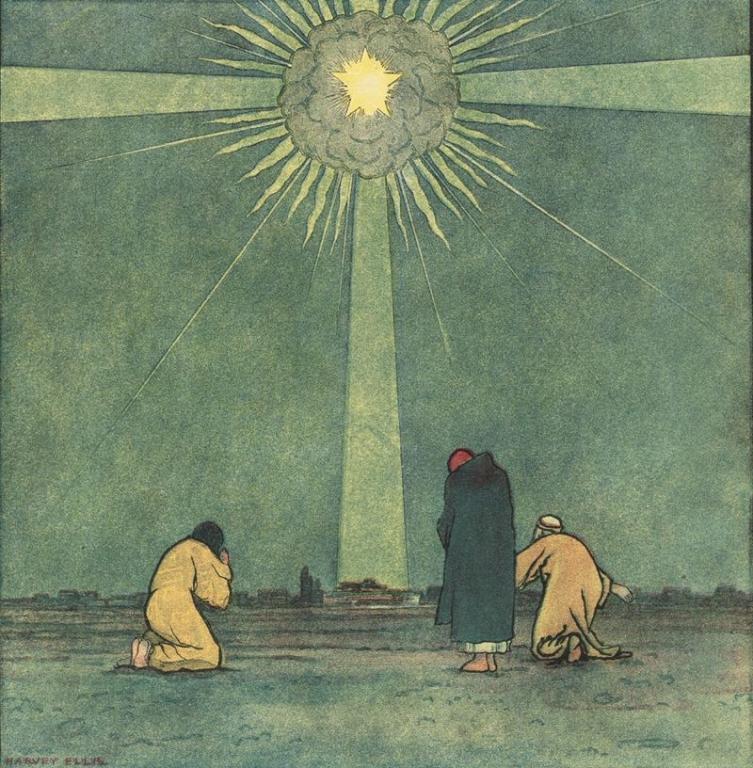
The Star over Bethlehem, from the Christmas 1898 cover of Harper’s Magazine
(Wikimedia Commons public domain)
I’m very happy to welcome a
New Vice President for The Interpreter Foundation
You can see photos and bios of our Board of Trustees, as currently constituted, here:
***
We published another article today in Interpreter: A Journal of Latter-day Saint Faith and Scholarship.
This one, by Noel B. Reynolds (who also serves on Interpreter Foundation’s Board of Trustees), is entitled
“Chiastic Structuring of Large Texts: Second Nephi as a Case Study”
Abstract: In this important paper, Noel Reynolds extends his 1980 argument for the chiastic structure of 1 Nephi to demonstrate that 2 Nephi can be seen as a matching structure with a similar nature. Taken together, these findings demonstrate that chiasmus is not a phenomenon that confines itself to the details of words and phrases at the level of scriptural verses but can extend to much larger units of meaning, allowing the rhetorical beauty and emphasis of their overall messages to shine more brilliantly when they are considered as purposefully crafted wholes.
[Editor’s Note: Part of our book chapter reprint series, this article is reprinted here as a service to the LDS community. Original pagination and page numbers have necessarily changed, otherwise the reprint has the same content as the original.
See Noel B. Reynolds, “Chiastic Structuring of Large Texts: Second Nephi as a Case Study,” in “To Seek the Law of the Lord”: Essays in Honor of John W. Welch, ed. Paul Y. Hoskisson and Daniel C. Peterson (Orem, UT: The Interpreter Foundation, 2017), 333–50. Further information at https://interpreterfoundation.org/books/to-seek-the-law-of-the-lord-essays-in-honor-of-john-w-welch-2/.]
***
You might find this blog entry, written by Jeff Lindsay (yet another member of the Interpreter Foundation’s Board of Trustees), an interesting read:
***
Here are some thoughts that I enjoyed from Alister E. McGrath, Mere Apologetics: How to Help Seekers and Skeptics Find Faith (Grand Rapids, MI: BakerBooks, 2012):
Apologetics aims to convert believers into thinkers, and thinkers into believers. (11)
To use an analogy found in the writings of Martin Luther, faith is like getting into a boat and crossing the sea to an island. Apologetics can help establish that it is reasonable to believe that there is a boat, that it is likely to be safe to travel in, and that there is an island just beyond the horizon. But you still need to get in the boat and travel to the island. (24)
As Blaise Pascal once quipped, we must “make good people wish that [the Christian faith] were true, and then show that it is.” (23, citing Blaise Pascal, Pensées [Minneola, NY: Dover Publications, 2003], 52)
Good apologetics, though, isn’t only about the content of faith. It’s about how that content is expressed, and the expression will vary from place to place, culture to culture, over time, according to such variables as the character and educational level and age and maturity and sophistication or lack of sophistication of its audience:
Apologetics is to be seen not as a defensive and hostile reaction against the world, but as a welcome opportunity to exhibit, celebrate, and display the treasure chest of the Christian faith. It encourages believers to appreciate their faith, and to explain and commend it to those outside the church. It aims to set out the intellectual, moral, imaginative, and relational richness of the Christian faith — particularly to reassure believers and help them develop their faith, but primarily to enable those outside the community of faith to realize the compelling vision that lies at the heart of the Christian gospel. (11)
Down the ages, like runners in a great relay race of history, others have passed this Good News from one generation to another. And now the baton has been handed to us. It’s our turn. We have been entrusted with passing on the Good News to those around and beyond us. (13)
Where apologetics aims to secure consent, evangelism aims to secure commitment. (22)
The dividing line between apologetics and evangelism is fuzzy; making a distinction between them, however, is helpful. Apologetics is conversational, where evangelism is invitational. (22)
The task of apologetics is . . . to prepare the way for the coming of Christ, just as someone might clear rocks and other roadblocks from a pathway. (22)
Dr. McGrath quotes the great Catholic apologist G. K. Chesterton (1874-1936):
The object of opening the mind, as of opening the mouth, is to shut it again on something solid. (11, citing G. K. Chesterton, Autobiography [New York: Sheed & Ward, 1936], 229)
Apologetics celebrates and proclaims the intellectual solidity, the imaginative richness, and the spiritual depth of the gospel in ways that can connect with our culture. (11)
Apologetics always takes place within a specific cultural context. Christian missionaries to China and India soon discovered that the apologetic methods that seemed to work well in western Europe did not seem to be effective in Asia. It was necessary to develop new approaches that resonated with the cultural mood and patterns of thought characteristic of these regions. An apologetic approach that was very productive in one context might prove much less effective, and perhaps even counterproductive, in a different cultural environment. (27)
[T]he apologist sets out to allow the truth and relevance of the gospel to be appreciated by the audience. (19)
[A]pologetics is concerned with three themes . . . :
- Identifying and responding to objections or difficulties concerning the gospel, and helping to overcome these barriers to faith.
- Communicating the excitement and wonder of the Christian faith, so that its potential to transform the human situation can be appreciated.
- Translating the core ideas of the Christian faith into language that makes sense to outsiders. (21)
As C. S. Lewis wisely remarked: “Our business is to present that which is timeless (the same yesterday, today, and tomorrow — Heb. 13:8) in the particular language of our own age.” Our privilege and responsibility is to express the timeless truths of the gospel using language and imagery adapted to our audiences. The apologist is thus someone who translates the realities of faith into the cultural vernacular. (37)
Food for thought.
Church of Jesus Christ of Latter-day Saints
Previous Post

December 6, 2020
My Connection with Some Controversial Recent Videos
Next Post
December 8, 2020 Help Hoped for in Holladay
Browse Our Archives
Select a Category Uncategorized
Select a Month October 2026 September 2026 August 2026 July 2026 June 2026 May 2026 April 2026 March 2026 February 2026 January 2026 December 2025 November 2025 October 2025 September 2025 August 2025 July 2025 June 2025 May 2025 April 2025 March 2025 February 2025 January 2025 December 2024 November 2024 October 2024 September 2024 August 2024 July 2024 June 2024 May 2024 April 2024 March 2024 February 2024 January 2024 December 2023 November 2023 October 2023 September 2023 August 2023 July 2023 June 2023 May 2023 April 2023 March 2023 February 2023 January 2023 December 2022 November 2022 October 2022 September 2022 August 2022 July 2022 June 2022 May 2022 April 2022 March 2022 February 2022 January 2022 December 2021 November 2021 October 2021 September 2021 August 2021 July 2021 June 2021 May 2021 April 2021 March 2021 February 2021 January 2021 December 2020 November 2020 October 2020 September 2020 August 2020 July 2020 June 2020 May 2020 April 2020 March 2020 February 2020 January 2020 December 2019 November 2019 October 2019 September 2019 August 2019 July 2019 June 2019 May 2019 April 2019 March 2019 February 2019 January 2019 December 2018 November 2018 October 2018 September 2018 August 2018 July 2018 June 2018 May 2018 April 2018 March 2018 February 2018 January 2018 December 2017 November 2017 October 2017 September 2017 August 2017 July 2017 June 2017 May 2017 April 2017 March 2017 February 2017 January 2017 December 2016 November 2016 October 2016 September 2016 August 2016 July 2016 June 2016 May 2016 April 2016 March 2016 February 2016 January 2016 December 2015 November 2015 October 2015 September 2015 August 2015 July 2015 June 2015 May 2015 April 2015 March 2015 February 2015 January 2015 December 2014 November 2014 March 2014 August 2013 February 2012
Follow Us!
TAKE THE
Religious Wisdom Quiz
What does "Capernaum" mean?
Select your answer to see how you score.
Village of comfort Place of water Port of peace City of trade
Related posts from Sic et Non


"The Book of Moses as a Temple Text"


TRENDING AT PATHEOS Latter-day Saint

When Halloween Unmasks Married Hearts
Written by Dr. David K. Ewen from Eternal Truth Bible College Behind...

Aristotle. He’s been called the father of logic, the father of the...

Methodist Central Hall and Westminster Abbey
Situated on the same square is Methodist Central Hall and Westminster Abbey. ...

57th Dove Awards Honor Dolly Parton, Crown New...
On gospel music’s biggest night, the 57th annual GMA Dove Awards honored...

The First Eucharistic Controversy: Christ’s Real Presence
For Catholics, the Eucharist is the source and summit of the Christian...

What a Stop Sign Can Teach Us About...
How to Make a Decision When You Can't Hear God Main point:...
view all Latter-day Saint blogs
Ad-Free & Subscriber Log-In Subscription Support
- About Us
- 2026 Calendar
- Videos
- Podcasts
- Library of World Religions
- Faith In Media Tracker
- Advertise With Us
- Write for Us
- Privacy Policy
- Terms of Service
- Do Not Sell My Data
- Contact Us
- Radiant Digital
- Manage Newsletter Subscriptions
- Unsubscribe From Notifications
- Sitemap
Copyright 2008-2026, Patheos. All rights reserved.
Subscription Support Ad-Free & Subscriber Log-In
Follow Patheos