
BuddhistCatholicContemplativeEvangelicalGeneral ChristianHinduJewishLatter-day SaintMuslimNew VisionsProgressive Christian
Beliefs
- Buddhist
- Catholic
- Contemplative
- Evangelical
- General Christian
- Hindu
- Jewish
- Latter-day Saint
- More Voices
- Muslim
- New Visions
- Pagan
- Progressive Christian
Topics
- Religion News
- Food and Religion
- Sports and Religion
- Religious Art
- Religious Music and Entertainment
- Religious Events
- History and Religion
- Style and Religion
- Politics and Religion
- Women in Religion
- Recreation Outdoors and Religion
- Business Finance and Religion
- Careers Workplace and Religion
- Education and Religion
- Family Parenting and Religion
- Health Fitness and Religion
- Home and Religion
- Relationships and Religion
- Technology and Religion
- Travel and Religion
Columnists
- Buddhist Columnists
- Business Finance and Religion Columnists
- Careers Workplace and Religion Columnists
- Catholic Columnists
- Contemplative Columnists
- Education and Religion Columnists
- Evangelists Columnists
- Family Parenting and Religion Columnists
- General Christian Columnists
- Health Fitness and Religion Columnists
- Hindu Columnists
- History and Religion Columnists
- Home and Religion Columnists
- Jewish Columnists
- More Voices Columnists
- Latter Day Columnists
- Muslim Columnists
- New Visions Columnists
- Nonreligious Columnists
- Pagan Columnists
- Politics and Religion Columnists
- Progressive Columnists
- Recreation Outdoors and Religion Columnists
- Relationships and Religion Columnists
- Religion News Columnists
- Religious Art Columnists
- Religious Events Columnists
- Religious Music and Entertainment Columnists
- Sports and Religion Columnists
- Style and Religion Columnists
- Technology and Religion Columnists
- Travel and Religion Columnists
- Women in Religion Columnists
Resource Library
- 2026 Calendar
- Library of World Religions
- The 100 Most Holy Places on Earth
- Patheos Answers
- Podcasts
- Videos
- Faith Leaders Database
- Anglican Episcopalian
- Bahai
- Baptist
- Buddhism
- Christianity
- Confucianism
- Eastern Orthodoxy
- Hinduism
- Holiness and Pentecostal
- ISKCON
- Islam
- Judaism
- Lutheran
- Methodist
- The Church of Jesus Christ of Latter-day Saints
- New Age
- Paganism
- Presbytarian and Reformed
- Protestantism
- Religion Behind the Scenes
- Roman Catholic
- Scientology
- Shia Islam
- Sikhism
- Sufism
- Sunni Islam
- Taoism
- Zen
- See all religions
Research Tools
 Ad-Free & Subscriber Log-In Subscription Support
Ad-Free & Subscriber Log-In Subscription Support
Follow Patheos 

- Trending:
- Forgiveness
- |
- Marriage
- |
- Consciousness
- |
- Death Penalty
- |
- Election
- |
- Halloween

- Home
- Latter-day Saint
- “A Prophet Like Moses,” and “The Journey of the Magi”
“A Prophet Like Moses,” and “The Journey of the Magi”
Last updated on: December 21, 2020 at 7:23 pm by Dan Peterson
“A Prophet Like Moses,” and “The Journey of the Magi” 2020-12-21T19:23:42-07:00 Dan Peterson
Patheos Explore the world's faith through different perspectives on religion and spirituality! Patheos has the views of the prevalent religions and spiritualities of the world.
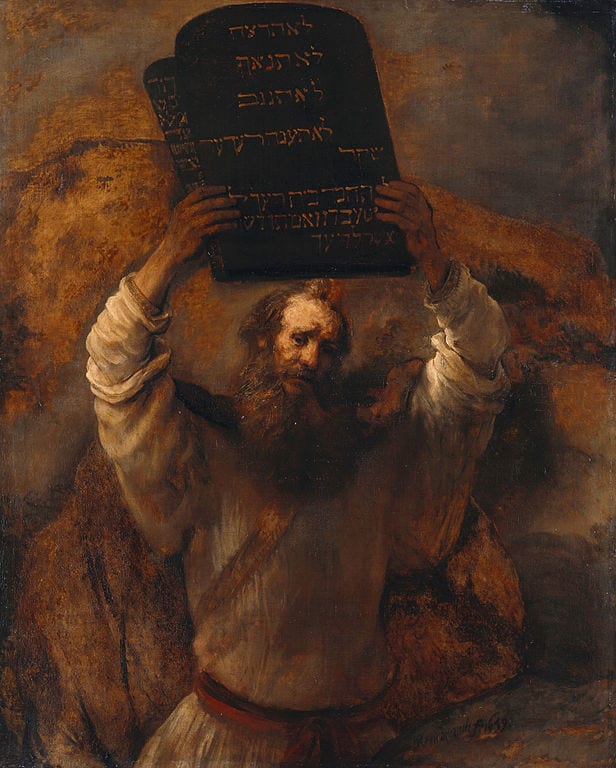
“Moses Breaking the Tablets of the Law” (1659), by Rembrandt
(Wikimedia Commons public domain image)
Two items were published on the website of the Interpreter Foundation today.
The first, by David R. Seely, appears in Interpreter: A Journal of Latter-day Saint Faith and Scholarship:
Abstract: David Seely provides a wide-ranging survey of interpretations of the prophecy in Deuteronomy 18:15–18 concerning “a prophet like unto Moses.” He examines relevant passages in the Book of Mormon, the Bible, and the Dead Sea Scrolls and shows how the prophecy has been fulfilled by Jesus Christ and others, continuing with Joseph Smith’s role in the Restoration and onward to the present day.
[Editor’s Note: Part of our book chapter reprint series, this article is reprinted here as a service to the LDS community. Original pagination and page numbers have necessarily changed, otherwise the reprint has the same content as the original.
See David R. Seely, ““A Prophet Like Moses” (Deuteronomy 18:15–18) in the Book of Mormon, the Bible, and the Dead Sea Scrolls,” in “To Seek the Law of the Lord”: Essays in Honor of John W. Welch, ed. Paul Y. Hoskisson and Daniel C. Peterson (Orem, UT: The Interpreter Foundation, 2017), 359–74. Further information at https://interpreterfoundation.org/books/to-seek-the-law-of-the-lord-essays-in-honor-of-john-w-welch-2/.]
The second is a brief podcast from the seemingly indefatigable Jeffrey Mark Bradshaw:
***
From the incomparable Jeff Lindsay:
***
And this, too: a fun and informative short item from “Saints Unscripted”:
“What Did the “Unofficial” Witnesses of the Book of Mormon Plates Experience?”
***
“The ‘Christmas Star’ Will Make an Appearance Tonight. Here’s How You Can Watch.”
***
A little bit more on that article in The Atlantic on “Mormonism” as “The Most American Religion”:
Jewish Insider: “Why McKay Coppins’ article on Mormons in America resonates with Jewish readers”
KCRW: “Mormonism is 200 years old. How the American religion is changing”
Deseret News: “The most ‘American’ religion is actually a global faith rich with meaning”
***
I conclude with a septet of items from the Christopher Hitchens Memorial “How Religion Poisons Everything” File:
“LDS Church donates $1 million to Salvation Army”
“BYU students, creator of Alexa develop software to preserve Cambodian stories”
I think it extremely unlikely that the dominant religious culture of Utah plays no significant role in this:
“STUDY: Utah ranked best state for the middle class in U.S.”
Back in 2015, Brigham Young University’s two a capella singing groups, Vocal Point (men) and Noteworthy (women), combined for this music video, which some of you might enjoy:
From Meridian Magazine: “A Cappella vocal group Eclipse 6 highlights the world’s longing for miracles with the plea, “O come, Immanuel.” To those who wait, hunger, pray, and wander, they sing, “Behold your King.” The video portrays how the miracles of healing performed by Jesus Christ during His ministry can be experienced today by those waiting for the coming of Immanuel. To the hearts that long for a little bit of hope, the group declares, “The Light of the World is here””:
“VIDEO: A Cappella Group Shares Beautiful #LightTheWorld Song Celebrating Miracles of Christ”
And here’s a five-minute video from my long-time friend and colleague Jack Welch (John W. Welch):
“A Thing of Beauty: Bertel Thorvaldsen’s Christus”
Finally, seventh of seven, here’s a great “Christmas poem” from T. S. Eliot (1888-1965). But it’s very far from the usual kind of Christmas poem. It’s not the sentimentalized story we often hear about the “babe of Bethlehem.” Eliot isn’t merely telling the manger story; he’s talking about the doctrine of the humiliation and condescension of Christ (on which, see my 2018 blog entry “Pure love led Christ to descend from the courts of glory”). According to Philippians 2:5-8, Jesus “emptied himself,” took on the “form of a servant,” was “born in the likeness of men,” and became obedient to the “point of death”– and those facts were already “hardwired” into his mission at his birth and, in fact, since long before it. “The Journey of the Magi” is also about conversion, which inevitably brings with it an unease with the present dispensation.
The Journey of the Magi
‘A cold coming we had of it,
Just the worst time of the year
For the journey, and such a long journey:
The ways deep and the weather sharp,
The very dead of winter.’
And the camels galled, sore-footed, refractory,
Lying down in the melting snow.
There were times we regretted
The summer palaces on slopes, the terraces,
And the silken girls bringing sherbet.
Then the camel men cursing and grumbling
And running away, and wanting their liquor and women,
And the night-fires going out, and the lack of shelters,
And the cities hostile and the towns unfriendly
And the villages dirty and charging high prices:
A hard time we had of it.
At the end we preferred to travel all night,
Sleeping in snatches,
With the voices singing in our ears, saying
That this was all folly.
Then at dawn we came down to a temperate valley,
Wet, below the snow line, smelling of vegetation;
With a running stream and a water-mill beating the darkness,
And three trees on the low sky,
And an old white horse galloped away in the meadow.
Then we came to a tavern with vine-leaves over the lintel,
Six hands at an open door dicing for pieces of silver,
And feet kicking the empty wine-skins,
But there was no information, and so we continued
And arrived at evening, not a moment too soon
Finding the place; it was (you may say) satisfactory
All this was a long time ago, I remember,
And I would do it again, but set down
This set down
This: were we led all that way for
Birth or Death? There was a Birth, certainly,
We had evidence and no doubt. I had seen birth and death,
But had thought they were different; this Birth was
Hard and bitter agony for us, like Death, our death,
We returned to our places, these Kingdoms,
But no longer at ease here, in the old dispensation,
With an alien people clutching their gods.
I should be glad of another death.
Christopher Hitchens Memorial "How Religion Poisons Everything" File
Church of Jesus Christ of Latter-day Saints
Previous Post

December 21, 2020
Some possible reading for Christmas week
Next Post
December 22, 2020 Ghost Stories, Richard Dawkins, Christmas, and Other Related Matters
Browse Our Archives
Select a Category Uncategorized
Select a Month October 2026 September 2026 August 2026 July 2026 June 2026 May 2026 April 2026 March 2026 February 2026 January 2026 December 2025 November 2025 October 2025 September 2025 August 2025 July 2025 June 2025 May 2025 April 2025 March 2025 February 2025 January 2025 December 2024 November 2024 October 2024 September 2024 August 2024 July 2024 June 2024 May 2024 April 2024 March 2024 February 2024 January 2024 December 2023 November 2023 October 2023 September 2023 August 2023 July 2023 June 2023 May 2023 April 2023 March 2023 February 2023 January 2023 December 2022 November 2022 October 2022 September 2022 August 2022 July 2022 June 2022 May 2022 April 2022 March 2022 February 2022 January 2022 December 2021 November 2021 October 2021 September 2021 August 2021 July 2021 June 2021 May 2021 April 2021 March 2021 February 2021 January 2021 December 2020 November 2020 October 2020 September 2020 August 2020 July 2020 June 2020 May 2020 April 2020 March 2020 February 2020 January 2020 December 2019 November 2019 October 2019 September 2019 August 2019 July 2019 June 2019 May 2019 April 2019 March 2019 February 2019 January 2019 December 2018 November 2018 October 2018 September 2018 August 2018 July 2018 June 2018 May 2018 April 2018 March 2018 February 2018 January 2018 December 2017 November 2017 October 2017 September 2017 August 2017 July 2017 June 2017 May 2017 April 2017 March 2017 February 2017 January 2017 December 2016 November 2016 October 2016 September 2016 August 2016 July 2016 June 2016 May 2016 April 2016 March 2016 February 2016 January 2016 December 2015 November 2015 October 2015 September 2015 August 2015 July 2015 June 2015 May 2015 April 2015 March 2015 February 2015 January 2015 December 2014 November 2014 March 2014 August 2013 February 2012
Follow Us!
TAKE THE
Religious Wisdom Quiz
Who said, "What must I do to be saved?"
Select your answer to see how you score.
The Philippian jailer Nicodemus Zacchaeus Peter
Related posts from Sic et Non


Notes on Women, Priesthood, and General Conference

"The Book of Moses as a Temple Text"

TRENDING AT PATHEOS Latter-day Saint

'Super Scam Me' Exposes AI Jon Bon Jovi...
Leslie Pickett believed she was in a relationship with Jon Bon Jovi....

The Brazilian Remake of Kendricks' 'Flywheel' Opens in...
“Flywheel,” the story that launched the Kendrick Brothers’ filmmaking career is getting...

The Dangers of Gradual Accommodation (Winking at Sin)
Recently, the “law of gradualness” resurfaced during the opening of a weeklong,...

The Iron Gates and the Lion of the...
Yesterday, I didn't finish my report about, well, yesterday. So I'll...

The Image: On the Horror of Capitalism and...
The Image Then went the Pharisees, and took counsel how they might...

We are approaching the date of our new American national holiday: October...
view all Latter-day Saint blogs
Ad-Free & Subscriber Log-In Subscription Support
- About Us
- 2026 Calendar
- Videos
- Podcasts
- Library of World Religions
- Faith In Media Tracker
- Advertise With Us
- Write for Us
- Privacy Policy
- Terms of Service
- Do Not Sell My Data
- Contact Us
- Radiant Digital
- Manage Newsletter Subscriptions
- Unsubscribe From Notifications
- Sitemap
Copyright 2008-2026, Patheos. All rights reserved.
Subscription Support Ad-Free & Subscriber Log-In
Follow Patheos