
BuddhistCatholicContemplativeEvangelicalGeneral ChristianHinduJewishLatter-day SaintMuslimNew VisionsProgressive Christian
Beliefs
- Buddhist
- Catholic
- Contemplative
- Evangelical
- General Christian
- Hindu
- Jewish
- Latter-day Saint
- More Voices
- Muslim
- New Visions
- Pagan
- Progressive Christian
Topics
- Religion News
- Food and Religion
- Sports and Religion
- Religious Art
- Religious Music and Entertainment
- Religious Events
- History and Religion
- Style and Religion
- Politics and Religion
- Women in Religion
- Recreation Outdoors and Religion
- Business Finance and Religion
- Careers Workplace and Religion
- Education and Religion
- Family Parenting and Religion
- Health Fitness and Religion
- Home and Religion
- Relationships and Religion
- Technology and Religion
- Travel and Religion
Columnists
- Buddhist Columnists
- Business Finance and Religion Columnists
- Careers Workplace and Religion Columnists
- Catholic Columnists
- Contemplative Columnists
- Education and Religion Columnists
- Evangelists Columnists
- Family Parenting and Religion Columnists
- General Christian Columnists
- Health Fitness and Religion Columnists
- Hindu Columnists
- History and Religion Columnists
- Home and Religion Columnists
- Jewish Columnists
- More Voices Columnists
- Latter Day Columnists
- Muslim Columnists
- New Visions Columnists
- Nonreligious Columnists
- Pagan Columnists
- Politics and Religion Columnists
- Progressive Columnists
- Recreation Outdoors and Religion Columnists
- Relationships and Religion Columnists
- Religion News Columnists
- Religious Art Columnists
- Religious Events Columnists
- Religious Music and Entertainment Columnists
- Sports and Religion Columnists
- Style and Religion Columnists
- Technology and Religion Columnists
- Travel and Religion Columnists
- Women in Religion Columnists
Resource Library
- 2026 Calendar
- Library of World Religions
- The 100 Most Holy Places on Earth
- Patheos Answers
- Podcasts
- Videos
- Faith Leaders Database
- Anglican Episcopalian
- Bahai
- Baptist
- Buddhism
- Christianity
- Confucianism
- Eastern Orthodoxy
- Hinduism
- Holiness and Pentecostal
- ISKCON
- Islam
- Judaism
- Lutheran
- Methodist
- The Church of Jesus Christ of Latter-day Saints
- New Age
- Paganism
- Presbytarian and Reformed
- Protestantism
- Religion Behind the Scenes
- Roman Catholic
- Scientology
- Shia Islam
- Sikhism
- Sufism
- Sunni Islam
- Taoism
- Zen
- See all religions
Research Tools
 Ad-Free & Subscriber Log-In Subscription Support
Ad-Free & Subscriber Log-In Subscription Support
Follow Patheos 

- Trending:
- Forgiveness
- |
- Marriage
- |
- Consciousness
- |
- Death Penalty
- |
- Election
- |
- Halloween

- Home
- Latter-day Saint
- Revision 5.21 “The End of the High Caliphal Period”
Revision 5.21 “The End of the High Caliphal Period”
Last updated on: October 4, 2020 at 10:20 pm by Dan Peterson
Revision 5.21 “The End of the High Caliphal Period” 2020-10-04T22:20:08-06:00 Dan Peterson
Patheos Explore the world's faith through different perspectives on religion and spirituality! Patheos has the views of the prevalent religions and spiritualities of the world.
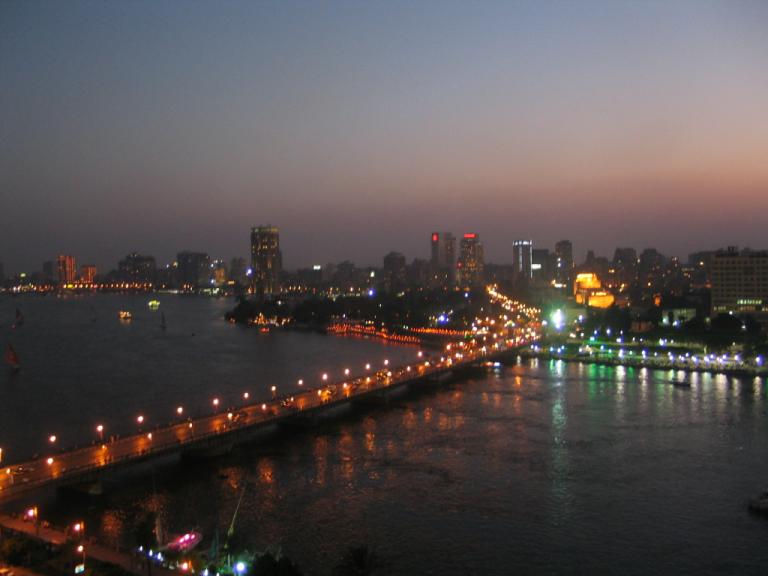
Cairo: Egypt’s capital, the largest city in Africa, and our first married home
(Wikimedia Commons public domain photo)
I have tried, by means of this rather lengthy digression into word origins and word borrowings, to give some idea of the variety and richness of Islamic civilization at its peak. It was a remarkable human achievement. Yet, like other human creations, the great Abbasid Arab empire was fated to perish.
In AD 945, a clan of rather barbaric Shiite converts from the mountainous areas south of the Caspian Sea conquered all of the central Islamic lands, including the Abbasid capital city of Baghdad. They placed the caliph under virtual house arrest, but did not depose him. Why not? Why, when a group of Shiites actually came to power, did they not immediately get rid of the Sunni usurper and install their own leader as the ruler of the empire? There are several reasons. The first and most important is that, sometime late in the ninth century, the main line of Shiite imams had died out. At least, that is what skeptical Westerners think. Believing Shiites argue that the last imam left behind an infant child, who was immediately taken into hiding so that hostile government authorities could not kill him. They have waited for many centuries for the return of their “Hidden Imam,” as he is called. Today’s Shiite leaders of Iran view themselves merely as stand-ins for their absent master, trying to do what he would do were he here.
The other reason that this group of barbarians from the Caspian Sea, known as the Buyids, did not immediately install a Shiite theocracy is probably that they would have felt obliged to obey it. And, frankly, since they were in charge they had very little interest in obeying anyone. So they kept the powerless Sunni caliph captive, a symbol of their legitimacy in what amounted virtually to a large-scale game of Capture the Flag. Actual power belonged to the Buyid amir, or “commander.” In reality, though, the Abbasid caliphate was dead. The High Caliphal Period was over. What Marshall Hodgson termed the “Middle Periods” of Islamic history had begun, and, specifically, what some have called the “Shiite Century.”
In the early tenth century, another Shiite sect known as the Fatimids had set up a state in the area of modern Tunisia, in northern Africa. But they were not content with a comfortable state on the fringes of the Arab world. Their goal was to rule all Muslims. For a few years, it looked as if they might actually do it. In 969 A.D., they conquered Egypt and founded a city that they named al-Qahira, “Victorious,” and which English-speakers today know as Cairo. From there, they would menace other Islamic states for many years. As the Abbasid empire continued to fragment, other Shiites seized whatever they could get. The Hamdanids set up an independent state in the cities of Mosul and Aleppo in northern Syria. Even Yemen was ruled by Shiites.
Previous Post

October 3, 2020
"Turning Gems Into Dirt"
Next Post
October 4, 2020 "And he became miffed with the Prophet Joseph"
Browse Our Archives
Select a Category Uncategorized
Select a Month October 2026 September 2026 August 2026 July 2026 June 2026 May 2026 April 2026 March 2026 February 2026 January 2026 December 2025 November 2025 October 2025 September 2025 August 2025 July 2025 June 2025 May 2025 April 2025 March 2025 February 2025 January 2025 December 2024 November 2024 October 2024 September 2024 August 2024 July 2024 June 2024 May 2024 April 2024 March 2024 February 2024 January 2024 December 2023 November 2023 October 2023 September 2023 August 2023 July 2023 June 2023 May 2023 April 2023 March 2023 February 2023 January 2023 December 2022 November 2022 October 2022 September 2022 August 2022 July 2022 June 2022 May 2022 April 2022 March 2022 February 2022 January 2022 December 2021 November 2021 October 2021 September 2021 August 2021 July 2021 June 2021 May 2021 April 2021 March 2021 February 2021 January 2021 December 2020 November 2020 October 2020 September 2020 August 2020 July 2020 June 2020 May 2020 April 2020 March 2020 February 2020 January 2020 December 2019 November 2019 October 2019 September 2019 August 2019 July 2019 June 2019 May 2019 April 2019 March 2019 February 2019 January 2019 December 2018 November 2018 October 2018 September 2018 August 2018 July 2018 June 2018 May 2018 April 2018 March 2018 February 2018 January 2018 December 2017 November 2017 October 2017 September 2017 August 2017 July 2017 June 2017 May 2017 April 2017 March 2017 February 2017 January 2017 December 2016 November 2016 October 2016 September 2016 August 2016 July 2016 June 2016 May 2016 April 2016 March 2016 February 2016 January 2016 December 2015 November 2015 October 2015 September 2015 August 2015 July 2015 June 2015 May 2015 April 2015 March 2015 February 2015 January 2015 December 2014 November 2014 March 2014 August 2013 February 2012
Follow Us!
TAKE THE
Religious Wisdom Quiz
What does "Capernaum" mean?
Select your answer to see how you score.
City of trade Village of comfort Port of peace Place of water
Related posts from Sic et Non

Islam in America or Islam versus America?

A basic working chronology of Islamic-era Iran

Actual Data and Actual Crusades

TRENDING AT PATHEOS Latter-day Saint

'Super Scam Me' Exposes AI Jon Bon Jovi...
Leslie Pickett believed she was in a relationship with Jon Bon Jovi....

The Brazilian Remake of Kendricks' 'Flywheel' Opens in...
“Flywheel,” the story that launched the Kendrick Brothers’ filmmaking career is getting...

The Dangers of Gradual Accommodation (Winking at Sin)
Recently, the “law of gradualness” resurfaced during the opening of a weeklong,...

The Iron Gates and the Lion of the...
Yesterday, I didn't finish my report about, well, yesterday. So I'll...

The Image: On the Horror of Capitalism and...
The Image Then went the Pharisees, and took counsel how they might...

We are approaching the date of our new American national holiday: October...
view all Latter-day Saint blogs
Ad-Free & Subscriber Log-In Subscription Support
- About Us
- 2026 Calendar
- Videos
- Podcasts
- Library of World Religions
- Faith In Media Tracker
- Advertise With Us
- Write for Us
- Privacy Policy
- Terms of Service
- Do Not Sell My Data
- Contact Us
- Radiant Digital
- Manage Newsletter Subscriptions
- Unsubscribe From Notifications
- Sitemap
Copyright 2008-2026, Patheos. All rights reserved.
Subscription Support Ad-Free & Subscriber Log-In
Follow Patheos