
BuddhistCatholicContemplativeEvangelicalGeneral ChristianHinduJewishLatter-day SaintMuslimNew VisionsProgressive Christian
Beliefs
- Buddhist
- Catholic
- Contemplative
- Evangelical
- General Christian
- Hindu
- Jewish
- Latter-day Saint
- More Voices
- Muslim
- New Visions
- Pagan
- Progressive Christian
Topics
- Religion News
- Food and Religion
- Sports and Religion
- Religious Art
- Religious Music and Entertainment
- Religious Events
- History and Religion
- Style and Religion
- Politics and Religion
- Women in Religion
- Recreation Outdoors and Religion
- Business Finance and Religion
- Careers Workplace and Religion
- Education and Religion
- Family Parenting and Religion
- Health Fitness and Religion
- Home and Religion
- Relationships and Religion
- Technology and Religion
- Travel and Religion
Columnists
- Buddhist Columnists
- Business Finance and Religion Columnists
- Careers Workplace and Religion Columnists
- Catholic Columnists
- Contemplative Columnists
- Education and Religion Columnists
- Evangelists Columnists
- Family Parenting and Religion Columnists
- General Christian Columnists
- Health Fitness and Religion Columnists
- Hindu Columnists
- History and Religion Columnists
- Home and Religion Columnists
- Jewish Columnists
- More Voices Columnists
- Latter Day Columnists
- Muslim Columnists
- New Visions Columnists
- Nonreligious Columnists
- Pagan Columnists
- Politics and Religion Columnists
- Progressive Columnists
- Recreation Outdoors and Religion Columnists
- Relationships and Religion Columnists
- Religion News Columnists
- Religious Art Columnists
- Religious Events Columnists
- Religious Music and Entertainment Columnists
- Sports and Religion Columnists
- Style and Religion Columnists
- Technology and Religion Columnists
- Travel and Religion Columnists
- Women in Religion Columnists
Resource Library
- 2026 Calendar
- Library of World Religions
- The 100 Most Holy Places on Earth
- Patheos Answers
- Podcasts
- Videos
- Faith Leaders Database
- Anglican Episcopalian
- Bahai
- Baptist
- Buddhism
- Christianity
- Confucianism
- Eastern Orthodoxy
- Hinduism
- Holiness and Pentecostal
- ISKCON
- Islam
- Judaism
- Lutheran
- Methodist
- The Church of Jesus Christ of Latter-day Saints
- New Age
- Paganism
- Presbytarian and Reformed
- Protestantism
- Religion Behind the Scenes
- Roman Catholic
- Scientology
- Shia Islam
- Sikhism
- Sufism
- Sunni Islam
- Taoism
- Zen
- See all religions
Research Tools
 Ad-Free & Subscriber Log-In Subscription Support
Ad-Free & Subscriber Log-In Subscription Support
Follow Patheos 

- Trending:
- Forgiveness
- |
- Marriage
- |
- Consciousness
- |
- Death Penalty
- |
- Election
- |
- Halloween

- Home
- Latter-day Saint
- “Anthropic balances should not be dismissed”
“Anthropic balances should not be dismissed”
Last updated on: October 17, 2020 at 10:32 pm by Dan Peterson
“Anthropic balances should not be dismissed” 2020-10-17T22:32:42-06:00 Dan Peterson
Patheos Explore the world's faith through different perspectives on religion and spirituality! Patheos has the views of the prevalent religions and spiritualities of the world.
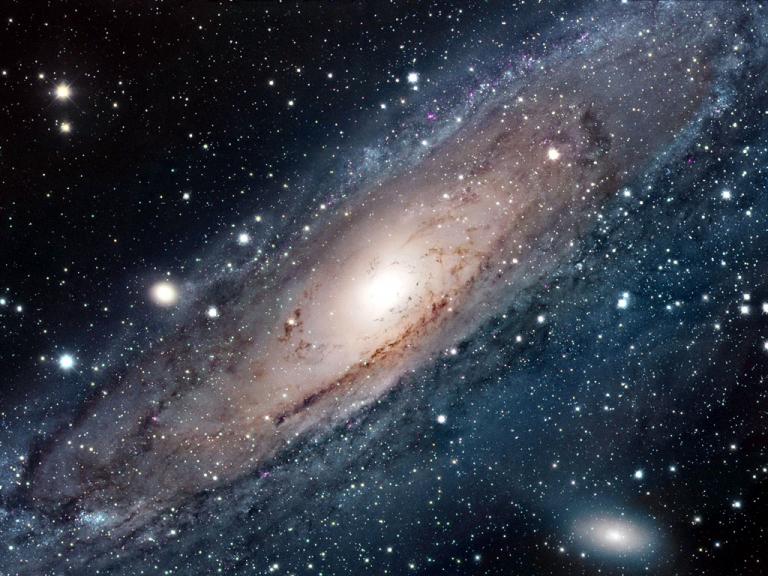
Order, not chaos. Why? (Wikimedia Commons public domain image)
***
From a British astrophysicist and theologian:
Anthropic balances should not be dismissed. They are a significant factor of the way the world is, and we need to note that they have led a number of scientists to questions of religion.
Of course, such insights cannot be used to prove the existence of God. In 1779 the philosopher David Hume attacked the logic of inferring the Christian God from the nature of the universe. Among a large number of logical problems that he raised, one is particularly important for our discussion of anthropic balances.
He argued that even if a divine designer could validly be inferred, we would not be able to postulate a Christian God who is good, wise and powerful. Hume argues that for a given effect you can only infer a cause sufficient to produce that effect. Therefore from a finite creation one can never infer an infinite God. In addition, from the diversity of the world one cannot infer one God. More importantly, even if one is able to reconcile evil with an omnipotent and wholly good God, one cannot infer a wholly good God from a manifestly imperfect world where evil exists. Kant also came to the conclusion that the design argument at most could only lead to a cosmic architect using existing material. Now this is surely correct.
This is illustrated very well by the kind of god both [Sir Fred] Hoyle and [Paul] Davies end up with. Neglecting the possibility of historical revelation and religious experience as a possible source of knowledge, they suggest that there is no conflict between a universe evolving according to the laws of physics and one which is nevertheless subject to intelligent control. It is from this basis that Davies suggests a ‘natural God’ who operates within the laws of nature, directing and controlling the evolution of the cosmos. This natural god produces within the laws of physics a complex and orderly cosmos.
Therefore, the use of the design argument has led to a god who is not transcendent but contained by the universe and its laws. Davies’ God is more of a ‘demiurge’. This term was used by the Greeks to denote a craftsman ‘god’ rather than the supreme creator being.
A similar conclusion is arrived at by Professor Brian Josephson, the Cambridge solid-state physicist. Josephson sees God in the chaotic quantum fluctuations which quantum field theory would claim to exist even in a perfect vacuum. Now for Josephson, as for Davies and Hoyle, God resides within the universe. In such an approach the distinction between God and nature becomes terribly blurred, and is reminiscent of the impersonal pantheism of Spinoza.
The ‘surer path to God’ [which the astrophysicist Paul Davies says belongs to science rather than religion] has led to a god remade to harmonise with the prevailing scientific ethos. Hanbury Brown, the Australian astronomer, has recently stated that this is what needs to be done to religion. The idea of God as person is dismissed as belonging ‘to an earlier simpler stage in the history of thought’. Davies suggests that his god might be well enough to satisfy most believers, but it is clear that this is not the same God of Abraham, Isaac and Jacob.
However, the point must be made that even if the design argument cannot lead to the Christian God, this does not mean that it is without value. The insight of anthropic balances within the universe can only be a starting point. To use Hume’s imagery, if we were able to see only one side of a pair of scales with a mass of ten grams on it and we saw it rise, then of course from that observation we would not be able to say what the weight on the other side was. However, we could say that there was a force on the other end (whether a mass greater than ten grams or the hand of a person), and this is not a trivial piece of information.
If the design argument as a way to prove the existence of God is no longer valid, then there is still something to be said despite all the criticisms. These anthropic balances may suggest that there is more to the universe than science can explain, and for some this will be a pointer to God. [Theoretical physicist Stephen] Hawking comments, ‘The odds against a universe like ours emerging out of something like the Big Bang are enormous. I think there are clearly religious implications.’
From David Wilkinson, God, Time and Stephen Hawking: An Exploration Into Origins (London: Monarch Books, 2001), 141-143.
Previous Post

October 16, 2020
Revision 6.12 "A quack-medicine cure appears"
Next Post
October 17, 2020 Revision 6.13 "Occidentosis"
Browse Our Archives
Select a Category Uncategorized
Select a Month October 2026 September 2026 August 2026 July 2026 June 2026 May 2026 April 2026 March 2026 February 2026 January 2026 December 2025 November 2025 October 2025 September 2025 August 2025 July 2025 June 2025 May 2025 April 2025 March 2025 February 2025 January 2025 December 2024 November 2024 October 2024 September 2024 August 2024 July 2024 June 2024 May 2024 April 2024 March 2024 February 2024 January 2024 December 2023 November 2023 October 2023 September 2023 August 2023 July 2023 June 2023 May 2023 April 2023 March 2023 February 2023 January 2023 December 2022 November 2022 October 2022 September 2022 August 2022 July 2022 June 2022 May 2022 April 2022 March 2022 February 2022 January 2022 December 2021 November 2021 October 2021 September 2021 August 2021 July 2021 June 2021 May 2021 April 2021 March 2021 February 2021 January 2021 December 2020 November 2020 October 2020 September 2020 August 2020 July 2020 June 2020 May 2020 April 2020 March 2020 February 2020 January 2020 December 2019 November 2019 October 2019 September 2019 August 2019 July 2019 June 2019 May 2019 April 2019 March 2019 February 2019 January 2019 December 2018 November 2018 October 2018 September 2018 August 2018 July 2018 June 2018 May 2018 April 2018 March 2018 February 2018 January 2018 December 2017 November 2017 October 2017 September 2017 August 2017 July 2017 June 2017 May 2017 April 2017 March 2017 February 2017 January 2017 December 2016 November 2016 October 2016 September 2016 August 2016 July 2016 June 2016 May 2016 April 2016 March 2016 February 2016 January 2016 December 2015 November 2015 October 2015 September 2015 August 2015 July 2015 June 2015 May 2015 April 2015 March 2015 February 2015 January 2015 December 2014 November 2014 March 2014 August 2013 February 2012
Follow Us!
TAKE THE
Religious Wisdom Quiz
How many total plagues did God send on Egypt?
Select your answer to see how you score.
Twelve Seven Ten Five
Related posts from Sic et Non

This Wednesday, at 4 PM, Utah time

What if Wallace had prevailed, rather than Darwin?

"Water, water everywhere, nor any drop to drink"
TRENDING AT PATHEOS Latter-day Saint

A new article, written by Jeff Lindsay and Gale L. Pooley,...

Swimfan: Forgotten Aughts Pleasures
This is a recovery effort. In 2002, My Big Fat Greek Wedding...

Top Three Anti-Catholic Lies About Catholicism
This is my initial transcript for the video, "THE 3 WORST...

Pope Leo Celebrates Mass for Nurses & Docs...
I don't have any idea how he did it, but Pope Leo...

The Sermon on the Mount, Part I: Matthew...
The Sermon on the Mount, Part I (Matthew 4:12-5:12) St. Matthew moves...

What's up from Crossway: Reviewing some of their latest A few weeks...
view all Latter-day Saint blogs
Ad-Free & Subscriber Log-In Subscription Support
- About Us
- 2026 Calendar
- Videos
- Podcasts
- Library of World Religions
- Faith In Media Tracker
- Advertise With Us
- Write for Us
- Privacy Policy
- Terms of Service
- Do Not Sell My Data
- Contact Us
- Radiant Digital
- Manage Newsletter Subscriptions
- Unsubscribe From Notifications
- Sitemap
Copyright 2008-2026, Patheos. All rights reserved.
Subscription Support Ad-Free & Subscriber Log-In
Follow Patheos