
BuddhistCatholicContemplativeEvangelicalGeneral ChristianHinduJewishLatter-day SaintMuslimNew VisionsProgressive Christian
Beliefs
- Buddhist
- Catholic
- Contemplative
- Evangelical
- General Christian
- Hindu
- Jewish
- Latter-day Saint
- More Voices
- Muslim
- New Visions
- Pagan
- Progressive Christian
Topics
- Religion News
- Food and Religion
- Sports and Religion
- Religious Art
- Religious Music and Entertainment
- Religious Events
- History and Religion
- Style and Religion
- Politics and Religion
- Women in Religion
- Recreation Outdoors and Religion
- Business Finance and Religion
- Careers Workplace and Religion
- Education and Religion
- Family Parenting and Religion
- Health Fitness and Religion
- Home and Religion
- Relationships and Religion
- Technology and Religion
- Travel and Religion
Columnists
- Buddhist Columnists
- Business Finance and Religion Columnists
- Careers Workplace and Religion Columnists
- Catholic Columnists
- Contemplative Columnists
- Education and Religion Columnists
- Evangelists Columnists
- Family Parenting and Religion Columnists
- General Christian Columnists
- Health Fitness and Religion Columnists
- Hindu Columnists
- History and Religion Columnists
- Home and Religion Columnists
- Jewish Columnists
- More Voices Columnists
- Latter Day Columnists
- Muslim Columnists
- New Visions Columnists
- Nonreligious Columnists
- Pagan Columnists
- Politics and Religion Columnists
- Progressive Columnists
- Recreation Outdoors and Religion Columnists
- Relationships and Religion Columnists
- Religion News Columnists
- Religious Art Columnists
- Religious Events Columnists
- Religious Music and Entertainment Columnists
- Sports and Religion Columnists
- Style and Religion Columnists
- Technology and Religion Columnists
- Travel and Religion Columnists
- Women in Religion Columnists
Resource Library
- 2026 Calendar
- Library of World Religions
- The 100 Most Holy Places on Earth
- Patheos Answers
- Podcasts
- Videos
- Faith Leaders Database
- Anglican Episcopalian
- Bahai
- Baptist
- Buddhism
- Christianity
- Confucianism
- Eastern Orthodoxy
- Hinduism
- Holiness and Pentecostal
- ISKCON
- Islam
- Judaism
- Lutheran
- Methodist
- The Church of Jesus Christ of Latter-day Saints
- New Age
- Paganism
- Presbytarian and Reformed
- Protestantism
- Religion Behind the Scenes
- Roman Catholic
- Scientology
- Shia Islam
- Sikhism
- Sufism
- Sunni Islam
- Taoism
- Zen
- See all religions
Research Tools
 Ad-Free & Subscriber Log-In Subscription Support
Ad-Free & Subscriber Log-In Subscription Support
Follow Patheos 

- Trending:
- Forgiveness
- |
- Marriage
- |
- Consciousness
- |
- Death Penalty
- |
- Election
- |
- Halloween

- Home
- Latter-day Saint
- Revision 5.12 “What the West Owes the East” (Take Two)
Revision 5.12 “What the West Owes the East” (Take Two)
Last updated on: September 26, 2020 at 8:55 pm by Dan Peterson
Revision 5.12 “What the West Owes the East” (Take Two) 2020-09-26T20:55:30-06:00 Dan Peterson
Patheos Explore the world's faith through different perspectives on religion and spirituality! Patheos has the views of the prevalent religions and spiritualities of the world.
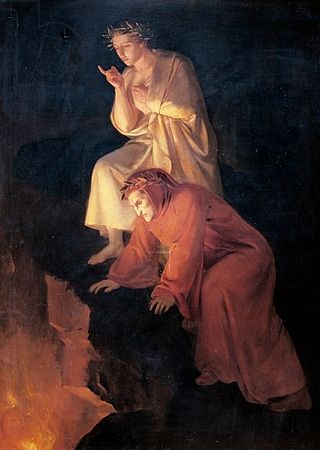
Rafael Flores (d. 1886), “Dante y Virgilio visitando el Infierno”
(Wikimedia Commons public domain image)
In the ninth century, translation from Greek into Arabic developed rapidly. Since possibly the middle of the eighth century there had been periodic translations, but the ninth century saw the establishment of a systematic, organized effort. The caliph al-Ma’mun, son of Harun al-Rashid, founded a translation bureau called the *Dar al-Hikma (“*House of Wisdom”), over which presided a Nestorian Christian named Hunayn ibn Ishaq.[1] (Hunayn’s son eventually succeeded him in the leadership of the institution.) The Nestorians were useful because they had a foot in both cultures. At the time of the Arab conquests, their native language was Syriac, a dialect of Aramaic. As we have seen, this made it easier for them to understand Arabic. But they were also oriented toward the West, the original homeland of their doctrine, and their most important writings were in Greek. Nestorian intellectuals, therefore, had typically mastered Greek, Syriac, and Arabic, and were perfectly equipped to serve as human bridges over whom the culture of the ancient classical world could enter into the new Arab empire.
However, it was not only Nestorian Christians who worked in the House of Wisdom. The bureau of translation was truly ecumenical and was staffed by Christians, Muslims, and Jews. Such collaboration between the various religious groups continued and was in fact of the greatest importance for the whole enterprise. Thus, for instance, the foremost student of al-Farabi (d. 950 A.D.), one of the greatest of the Arab philosophers, was a Christian. And Moses Maimonides (in Arabic, Musa ibn Maymun; d. 1204), the greatest rabbi and Jewish philosopher of the Middle Ages, served as a court physician in Cairo, where he read and pondered the works of earlier Arab Muslim thinkers and wrote his philosophical books in Arabic.[2]
Later, when Arabic philosophy—for several reasons—had lost its own creative spark, it helped to kindle a philosophical flame in western Europe. In this process, the Jews of Spain played a role very much like that played by the Nestorian Christians in the East. Like the Nestorians, the Jews had a foot in both worlds. Their own language was Hebrew, which was close enough to Arabic that they had little problem mastering that language. Yet they were also familiar with Latin. Consequently, they served as the middlemen, the transmitters of Arabic philosophical texts to the West.
And it was a rich body of texts that was transmitted. Besides al-Farabi, there was the great Ibn Sina (d. 1037), who became famous in the West under the name “Avicenna,” a Latin distortion of a Hebrew corruption of his original Arabic name. There was also Ibn Rushd, who, through a process similar to that of Avicenna, became Averroes in the West.[3] He was the author of the most famous commentaries on Aristotle to come out of the Middle Ages. It is an impressive tribute to these men that Dante Alighieri (d. 1321), in his brilliant Divine Comedy, placed them in the highest circle of hell. (That was the best that a devout medieval Catholic like Dante could do for non-Christians, given the religious beliefs of his day.) According to that long and famous poem, while Dante is being given a tour of hell in Canto IV of the Inferno, Virgil, the classical Roman poet who was his guide, points out many of the more famous inhabitants. In the first circle, the mildest place in the infernal realm, were many of the great heroes of the past, whose major sin was that they had not been able to receive Christianity. Among these unfortunates, obviously deeply admired by Dante, were such heroic figures of classical history and literature as Hector, Aeneas, and Caesar. But he also included among them philosophers, such as Socrates, Plato, Cicero, Seneca, and “the master of the men who know,” Aristotle. Great pagan scientists, including “Euclid the geometer,” Ptolemy, Hippocrates, and Galen, make their appearance. But there too, in the best part of Dante’s Inferno, despite all the enmity that divided their civilization from his, were Avicenna and “Averroes, of the Great Commentary.” These illustrious individuals were in hell only because they lacked the ordinance of baptism. (It is one of the greatest features of the true gospel that such injustice is banished by the ordinances of the temple.) Virgil, Dante’s guide through hell, explained the situation to him.
The kindly master said: “Do you not ask
who are these spirits whom you see before you? I’d have you know, before you go ahead,
they did not sin; and yet, though they have merits, that’s not enough, because they lacked baptism, the portal of the faith…
and of such spirits I myself am one.
For these defects, and for no other evil,
we now are lost and punished just with this: we have no hope and yet we live in longing.”[4]
Thomas Aquinas (d. 1274), the “Angelic Doctor,” was, until perhaps the last few years, essentially the official theologian of the Roman Catholic Church. He was influenced by the Arab philosophers, especially by Averroes and Avicenna, and placed the latter on a par with Plato. They attracted even the attention of kings: In 1473, King Louis XII of France decreed that Aristotle had to be taught with the commentaries of Averroes. As late as the sixteenth century, the Arab philosophers were required reading (in Latin translation) in the great European universities of Bologna, Padua, Paris, and Oxford.
[1] Al-Ma’mun’s name is pronounced “Ma’MOON.” The common name Ishaq is the Arabic equivalent of Isaac and is pronounced “ISS-hak.”
[2] To be precise, Maimonides wrote in the Arabic language but used the Hebrew alphabet. This is just one of many instances from the ancient and medieval periods of using the script of one language to write in another language. It is something that has been ridiculed in the Book of Mormon, whose writers evidently used a form of Egyptian script to write in Hebrew. But it was not unusual.
[3] Usually pronounced “A-VER-o-eez*.”*
[4] Dante, Inferno, Canto IV, lines 31-42, in the translation of Allen Mandelbaum.
Previous Post

September 24, 2020
Atheism as Wonderfully Good News . . .
Next Post
September 25, 2020 "Reckoning with the Mortally Inevitable"
Browse Our Archives
Select a Category Uncategorized
Select a Month October 2026 September 2026 August 2026 July 2026 June 2026 May 2026 April 2026 March 2026 February 2026 January 2026 December 2025 November 2025 October 2025 September 2025 August 2025 July 2025 June 2025 May 2025 April 2025 March 2025 February 2025 January 2025 December 2024 November 2024 October 2024 September 2024 August 2024 July 2024 June 2024 May 2024 April 2024 March 2024 February 2024 January 2024 December 2023 November 2023 October 2023 September 2023 August 2023 July 2023 June 2023 May 2023 April 2023 March 2023 February 2023 January 2023 December 2022 November 2022 October 2022 September 2022 August 2022 July 2022 June 2022 May 2022 April 2022 March 2022 February 2022 January 2022 December 2021 November 2021 October 2021 September 2021 August 2021 July 2021 June 2021 May 2021 April 2021 March 2021 February 2021 January 2021 December 2020 November 2020 October 2020 September 2020 August 2020 July 2020 June 2020 May 2020 April 2020 March 2020 February 2020 January 2020 December 2019 November 2019 October 2019 September 2019 August 2019 July 2019 June 2019 May 2019 April 2019 March 2019 February 2019 January 2019 December 2018 November 2018 October 2018 September 2018 August 2018 July 2018 June 2018 May 2018 April 2018 March 2018 February 2018 January 2018 December 2017 November 2017 October 2017 September 2017 August 2017 July 2017 June 2017 May 2017 April 2017 March 2017 February 2017 January 2017 December 2016 November 2016 October 2016 September 2016 August 2016 July 2016 June 2016 May 2016 April 2016 March 2016 February 2016 January 2016 December 2015 November 2015 October 2015 September 2015 August 2015 July 2015 June 2015 May 2015 April 2015 March 2015 February 2015 January 2015 December 2014 November 2014 March 2014 August 2013 February 2012
Follow Us!
TAKE THE
Religious Wisdom Quiz
What does the name "Moses" mean?
Select your answer to see how you score.
Delivered Saved Drawn out (of water) Judge
Related posts from Sic et Non

Islam in America or Islam versus America?

A basic working chronology of Islamic-era Iran

Actual Data and Actual Crusades

TRENDING AT PATHEOS Latter-day Saint

Pope Leo Celebrates Mass for Nurses & Docs...
I don't have any idea how he did it, but Pope Leo...

The Sermon on the Mount, Part I: Matthew...
The Sermon on the Mount, Part I (Matthew 4:12-5:12) St. Matthew moves...

What's up from Crossway: Reviewing some of their latest A few weeks...

Janie Learns the Way of the Cross: A...
Teaching children about Jesus' Passion can be challenging. Many parents and educators...

Looking For Good Catholic Writing - October 2026
He alone extends the heavens, and he walks upon the waves of...

In "Irreplaceable," our book on vocation and technology, Trevor Sutton and I...
view all Latter-day Saint blogs
Ad-Free & Subscriber Log-In Subscription Support
- About Us
- 2026 Calendar
- Videos
- Podcasts
- Library of World Religions
- Faith In Media Tracker
- Advertise With Us
- Write for Us
- Privacy Policy
- Terms of Service
- Do Not Sell My Data
- Contact Us
- Radiant Digital
- Manage Newsletter Subscriptions
- Unsubscribe From Notifications
- Sitemap
Copyright 2008-2026, Patheos. All rights reserved.
Subscription Support Ad-Free & Subscriber Log-In
Follow Patheos