
BuddhistCatholicContemplativeEvangelicalGeneral ChristianHinduJewishLatter-day SaintMuslimNew VisionsProgressive Christian
Beliefs
- Buddhist
- Catholic
- Contemplative
- Evangelical
- General Christian
- Hindu
- Jewish
- Latter-day Saint
- More Voices
- Muslim
- New Visions
- Pagan
- Progressive Christian
Topics
- Religion News
- Food and Religion
- Sports and Religion
- Religious Art
- Religious Music and Entertainment
- Religious Events
- History and Religion
- Style and Religion
- Politics and Religion
- Women in Religion
- Recreation Outdoors and Religion
- Business Finance and Religion
- Careers Workplace and Religion
- Education and Religion
- Family Parenting and Religion
- Health Fitness and Religion
- Home and Religion
- Relationships and Religion
- Technology and Religion
- Travel and Religion
Columnists
- Buddhist Columnists
- Business Finance and Religion Columnists
- Careers Workplace and Religion Columnists
- Catholic Columnists
- Contemplative Columnists
- Education and Religion Columnists
- Evangelists Columnists
- Family Parenting and Religion Columnists
- General Christian Columnists
- Health Fitness and Religion Columnists
- Hindu Columnists
- History and Religion Columnists
- Home and Religion Columnists
- Jewish Columnists
- More Voices Columnists
- Latter Day Columnists
- Muslim Columnists
- New Visions Columnists
- Nonreligious Columnists
- Pagan Columnists
- Politics and Religion Columnists
- Progressive Columnists
- Recreation Outdoors and Religion Columnists
- Relationships and Religion Columnists
- Religion News Columnists
- Religious Art Columnists
- Religious Events Columnists
- Religious Music and Entertainment Columnists
- Sports and Religion Columnists
- Style and Religion Columnists
- Technology and Religion Columnists
- Travel and Religion Columnists
- Women in Religion Columnists
Resource Library
- 2026 Calendar
- Library of World Religions
- The 100 Most Holy Places on Earth
- Patheos Answers
- Podcasts
- Videos
- Faith Leaders Database
- Anglican Episcopalian
- Bahai
- Baptist
- Buddhism
- Christianity
- Confucianism
- Eastern Orthodoxy
- Hinduism
- Holiness and Pentecostal
- ISKCON
- Islam
- Judaism
- Lutheran
- Methodist
- The Church of Jesus Christ of Latter-day Saints
- New Age
- Paganism
- Presbytarian and Reformed
- Protestantism
- Religion Behind the Scenes
- Roman Catholic
- Scientology
- Shia Islam
- Sikhism
- Sufism
- Sunni Islam
- Taoism
- Zen
- See all religions
Research Tools
 Ad-Free & Subscriber Log-In Subscription Support
Ad-Free & Subscriber Log-In Subscription Support
Follow Patheos 

- Trending:
- Forgiveness
- |
- Marriage
- |
- Consciousness
- |
- Death Penalty
- |
- Election
- |
- Halloween

- Home
- Latter-day Saint
- Three passages from B. H. Roberts
Three passages from B. H. Roberts
Last updated on: August 3, 2020 at 10:26 pm by Dan Peterson
Three passages from B. H. Roberts 2020-08-03T22:26:36-06:00 Dan Peterson
Patheos Explore the world's faith through different perspectives on religion and spirituality! Patheos has the views of the prevalent religions and spiritualities of the world.
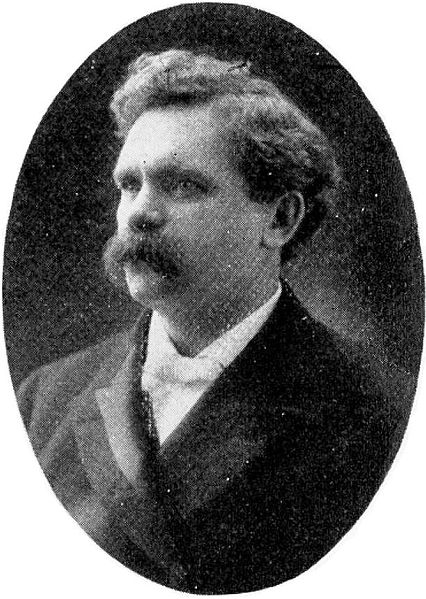
Elder B. H. Roberts, of the Seventy (ca. 1901)
A great and pathbreaking Latter-day Saint intellectual, Elder Roberts compiled the so-called “Documentary History of the Church,” in multiple volumes, and authored the multi-volume “Comprehensive History of the Church” as well as many other significant works.
(Public Domain, from Wikimedia Commons)
The testimony of the eight witnesses differs from that of the three witnesses in that the view of the plates by the latter was attended by a remarkable display of the glory and power of God, and the ministration of an angel; but no such remarkable display of God’s splendor and power was attendant upon the exhibition of the plates to the eight witnesses. On the contrary, it was just a plain, matter-of-fact exhibition of the plates by the Prophet himself to his friends. They saw the plates; they handled them; they turned the leaves of the old Nephite record, and saw and marveled at its curious workmanship. No brilliant light illuminated the forest or dazzled their vision; no angel was there to awe them by the splendor of his presence; no soul-piercing voice of God from the midst of a glory to make them tremble by its power. All these supernatural circumstances present at the view of the plates by the three witnesses were absent at the time when the eight witnesses saw them. In this latter event all was natural, matter-of-fact, plain. Nothing to inspire awe, or fear, or dread; nothing uncanny or overwhelming, but just a plain, straightforward proceeding that leaves men in possession of all their faculties, and self-consciousness; all of which renders such a thing as deception, or imposition entirely out of the question. They could pass the plates from hand to hand, guess at their weight—doubtless considerable, that idea being conveyed in their testimony—“we have seen and hefted, and know of a surety, that the said Smith has got the plates.” They could look upon the engravings, and observe calmly how different they were from everything modern in the way of record-making known to them, and hence the conclusion that the workmanship was not only curious but ancient.[1]
The hallucination theory breaks down under the force of the matter-of-fact testimony of the eight witnesses, from which all possible elements of hallucination are absent.
The manifestation of divine power, through which the three witnesses received their testimony, destroys the theory of deception alleged to have been practiced by the Prophet on the credulity of the eight witnesses by exhibiting plates either manufactured by himself or some ancient plates accidentally discovered.
Such, then is the force of this direct testimony of the eleven witnesses to the truth of the Book of Mormon—the testimony of the three and the eight when considered together.[2]
But the testimony of the three and the eight witnesses, respectively, stands or falls together. If the pure fabrication theory is adopted to explain away the testimony of the eight witnesses, there is no reason why it should not be adopted to explain away the testimony of the three. But every circumstance connected with the testimony of all these witnesses . . . cries out against the theory of “pure fabrication.” It is in recognition of the evident honesty of the three witnesses that the theory of mental hallucination is invented to account for their testimony; as it is also the evident honesty of the eight witnesses that leads to the admission by many anti-“Mormon” writers that Joseph Smith must have had some kind of plates which he exhibited to the eight witnesses, though he may not have obtained them through supernatural means.[3]
[1] Roberts, Comprehensive History, 1:148-149.
[2] Roberts, Comprehensive History, 1:154.
[3] Roberts, Comprehensive History, 1:153-154.
Previous Post

August 2, 2020
Revision 2.16 "The Blessings of Ishmael"
Browse Our Archives
Select a Category Uncategorized
Select a Month October 2026 September 2026 August 2026 July 2026 June 2026 May 2026 April 2026 March 2026 February 2026 January 2026 December 2025 November 2025 October 2025 September 2025 August 2025 July 2025 June 2025 May 2025 April 2025 March 2025 February 2025 January 2025 December 2024 November 2024 October 2024 September 2024 August 2024 July 2024 June 2024 May 2024 April 2024 March 2024 February 2024 January 2024 December 2023 November 2023 October 2023 September 2023 August 2023 July 2023 June 2023 May 2023 April 2023 March 2023 February 2023 January 2023 December 2022 November 2022 October 2022 September 2022 August 2022 July 2022 June 2022 May 2022 April 2022 March 2022 February 2022 January 2022 December 2021 November 2021 October 2021 September 2021 August 2021 July 2021 June 2021 May 2021 April 2021 March 2021 February 2021 January 2021 December 2020 November 2020 October 2020 September 2020 August 2020 July 2020 June 2020 May 2020 April 2020 March 2020 February 2020 January 2020 December 2019 November 2019 October 2019 September 2019 August 2019 July 2019 June 2019 May 2019 April 2019 March 2019 February 2019 January 2019 December 2018 November 2018 October 2018 September 2018 August 2018 July 2018 June 2018 May 2018 April 2018 March 2018 February 2018 January 2018 December 2017 November 2017 October 2017 September 2017 August 2017 July 2017 June 2017 May 2017 April 2017 March 2017 February 2017 January 2017 December 2016 November 2016 October 2016 September 2016 August 2016 July 2016 June 2016 May 2016 April 2016 March 2016 February 2016 January 2016 December 2015 November 2015 October 2015 September 2015 August 2015 July 2015 June 2015 May 2015 April 2015 March 2015 February 2015 January 2015 December 2014 November 2014 March 2014 August 2013 February 2012
Follow Us!
TAKE THE
Religious Wisdom Quiz
Who saw the vision of the valley of dry bones?
Select your answer to see how you score.
Ezekiel Daniel Isaiah Jeremiah
Related posts from Sic et Non


Some notes on the archaeology of the Bible


TRENDING AT PATHEOS Latter-day Saint

Janie Learns the Way of the Cross: A...
Teaching children about Jesus' Passion can be challenging. Many parents and educators...

Looking For Good Catholic Writing - October 2026
He alone extends the heavens, and he walks upon the waves of...

In "Irreplaceable," our book on vocation and technology, Trevor Sutton and I...

I was strolling through the top floor of the brand new Parthenon...

What Does Gêvâh Mean For Kimberley Guifoyle &...
This week, a lot of the news is focused on Kimberly Guilfoyle....

INNER CIRCLE: Profound Mystery (Of Christ In All...
Ephesians 5:31-32 “For this reason, a man will leave his father and...
view all Latter-day Saint blogs
Ad-Free & Subscriber Log-In Subscription Support
- About Us
- 2026 Calendar
- Videos
- Podcasts
- Library of World Religions
- Faith In Media Tracker
- Advertise With Us
- Write for Us
- Privacy Policy
- Terms of Service
- Do Not Sell My Data
- Contact Us
- Radiant Digital
- Manage Newsletter Subscriptions
- Unsubscribe From Notifications
- Sitemap
Copyright 2008-2026, Patheos. All rights reserved.
Subscription Support Ad-Free & Subscriber Log-In
Follow Patheos