
BuddhistCatholicContemplativeEvangelicalGeneral ChristianHinduJewishLatter-day SaintMuslimNew VisionsProgressive Christian
Beliefs
- Buddhist
- Catholic
- Contemplative
- Evangelical
- General Christian
- Hindu
- Jewish
- Latter-day Saint
- More Voices
- Muslim
- New Visions
- Pagan
- Progressive Christian
Topics
- Religion News
- Food and Religion
- Sports and Religion
- Religious Art
- Religious Music and Entertainment
- Religious Events
- History and Religion
- Style and Religion
- Politics and Religion
- Women in Religion
- Recreation Outdoors and Religion
- Business Finance and Religion
- Careers Workplace and Religion
- Education and Religion
- Family Parenting and Religion
- Health Fitness and Religion
- Home and Religion
- Relationships and Religion
- Technology and Religion
- Travel and Religion
Columnists
- Buddhist Columnists
- Business Finance and Religion Columnists
- Careers Workplace and Religion Columnists
- Catholic Columnists
- Contemplative Columnists
- Education and Religion Columnists
- Evangelists Columnists
- Family Parenting and Religion Columnists
- General Christian Columnists
- Health Fitness and Religion Columnists
- Hindu Columnists
- History and Religion Columnists
- Home and Religion Columnists
- Jewish Columnists
- More Voices Columnists
- Latter Day Columnists
- Muslim Columnists
- New Visions Columnists
- Nonreligious Columnists
- Pagan Columnists
- Politics and Religion Columnists
- Progressive Columnists
- Recreation Outdoors and Religion Columnists
- Relationships and Religion Columnists
- Religion News Columnists
- Religious Art Columnists
- Religious Events Columnists
- Religious Music and Entertainment Columnists
- Sports and Religion Columnists
- Style and Religion Columnists
- Technology and Religion Columnists
- Travel and Religion Columnists
- Women in Religion Columnists
Resource Library
- 2026 Calendar
- Library of World Religions
- The 100 Most Holy Places on Earth
- Patheos Answers
- Podcasts
- Videos
- Faith Leaders Database
- Anglican Episcopalian
- Bahai
- Baptist
- Buddhism
- Christianity
- Confucianism
- Eastern Orthodoxy
- Hinduism
- Holiness and Pentecostal
- ISKCON
- Islam
- Judaism
- Lutheran
- Methodist
- The Church of Jesus Christ of Latter-day Saints
- New Age
- Paganism
- Presbytarian and Reformed
- Protestantism
- Religion Behind the Scenes
- Roman Catholic
- Scientology
- Shia Islam
- Sikhism
- Sufism
- Sunni Islam
- Taoism
- Zen
- See all religions
Research Tools
 Ad-Free & Subscriber Log-In Subscription Support
Ad-Free & Subscriber Log-In Subscription Support
Follow Patheos 

- Trending:
- Forgiveness
- |
- Marriage
- |
- Consciousness
- |
- Death Penalty
- |
- Election
- |
- Halloween

- Home
- Latter-day Saint
- The “shaky foundations of reality”
The “shaky foundations of reality”
Last updated on: August 23, 2020 at 7:50 pm by Dan Peterson
The “shaky foundations of reality” 2020-08-23T19:50:11-06:00 Dan Peterson
Patheos Explore the world's faith through different perspectives on religion and spirituality! Patheos has the views of the prevalent religions and spiritualities of the world.
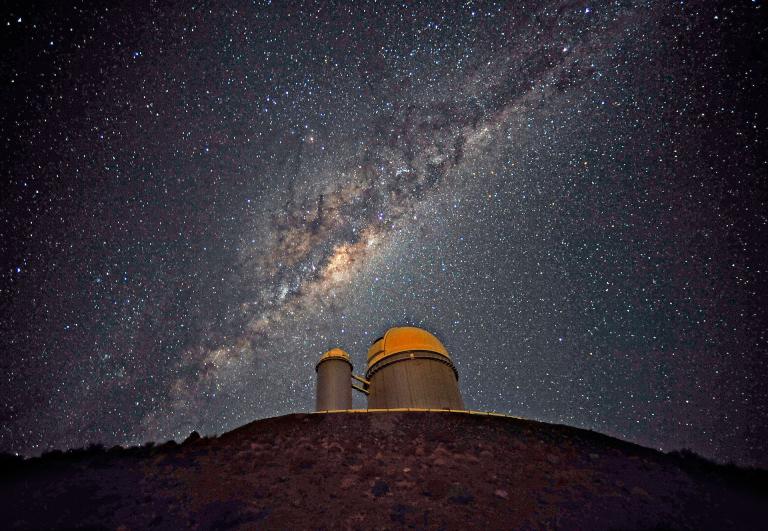
The center of our galaxy as seen above part of the European Southern Observatory at La Silla, Chile
(Wikimedia Commons public domain photo)
Scientism, in at least some of its manifestations, is the close cousin or sibling if not indeed altogether the Doppelgänger of the once-fashionable form(s) of philosophy known as logical positivism, logical empiricism, and/or neopositivism.
Very popular, especially in Europe, in the 1920s and 1930s, logical positivism, as I’ll call it here, argued that only statements that can be verified through empirical observation can be regarded as “significant” or genuinely meaningful. Statements regarding “unobservables” — and there is a vast host of such unobservables, some of them really quite important — were to be regarded as expressions of hope or preference, or as metaphorical, or, less charitably but not uncommonly, as “nonsense.”
Prominent groups of philosophers, engineers, scientists, and mathematicians, especially those associated with the so-called Berlin Circle (“led” most prominently by Hans Reichenbach) and the Vienna Circle (most notably including Moritz Schlick, but also Rudolf Carnap, Hans Hahn, Otto Neurath, and eventually Carl Hempel, with Karl Popper as their persistent, friendly, in-house dissenter and critic), were seeking to establish philosophy as a science-based discipline, freed from such matters as metaphysics and (certainly for some, at least) theology, where no empirical proof was available — definitely no decisive empirical proof — and, thus, where arguments have gone on and on for centuries and are likely to continue forever, this side of the veil of death anyway, without clear, objective resolution.
There’s at least one pretty obvious problem at the base of the enterprise, though: The proposition that only statements verifiable through empirical observation should be regarded as “significant” or genuinely meaningful is, itself, not strictly verifiable through empirical observation.
***
In my experience, a surprisingly high number of those devoted to scientism are not only not themselves scientists but are relatively unfamiliar with current science. I first noticed this phenomenon many years ago, when I was attempting to counsel a young man who had lost his faith because, he said, science had proven that God was impossible. I at first assumed that he was a science major. But he was not. He was a history major. I asked him whether he had ever taken a course on the history of science. He had not. And his grasp of physics was, so far as I could tell, vaguely and naïvely Newtonian. Classical. It was actually difficult to discuss scientific issues with him because he was too uninformed to sustain a serious conversation about them.
But current science, in at least some areas, is revealing a universe to us that is downright weird. Take this, for example:
“Quantum paradox points to shaky foundations of reality”
Previous Post

August 18, 2020
Revision 3.16 "The Passing of the Four Orthodox Caliphs"
Browse Our Archives
Select a Category Uncategorized
Select a Month October 2026 September 2026 August 2026 July 2026 June 2026 May 2026 April 2026 March 2026 February 2026 January 2026 December 2025 November 2025 October 2025 September 2025 August 2025 July 2025 June 2025 May 2025 April 2025 March 2025 February 2025 January 2025 December 2024 November 2024 October 2024 September 2024 August 2024 July 2024 June 2024 May 2024 April 2024 March 2024 February 2024 January 2024 December 2023 November 2023 October 2023 September 2023 August 2023 July 2023 June 2023 May 2023 April 2023 March 2023 February 2023 January 2023 December 2022 November 2022 October 2022 September 2022 August 2022 July 2022 June 2022 May 2022 April 2022 March 2022 February 2022 January 2022 December 2021 November 2021 October 2021 September 2021 August 2021 July 2021 June 2021 May 2021 April 2021 March 2021 February 2021 January 2021 December 2020 November 2020 October 2020 September 2020 August 2020 July 2020 June 2020 May 2020 April 2020 March 2020 February 2020 January 2020 December 2019 November 2019 October 2019 September 2019 August 2019 July 2019 June 2019 May 2019 April 2019 March 2019 February 2019 January 2019 December 2018 November 2018 October 2018 September 2018 August 2018 July 2018 June 2018 May 2018 April 2018 March 2018 February 2018 January 2018 December 2017 November 2017 October 2017 September 2017 August 2017 July 2017 June 2017 May 2017 April 2017 March 2017 February 2017 January 2017 December 2016 November 2016 October 2016 September 2016 August 2016 July 2016 June 2016 May 2016 April 2016 March 2016 February 2016 January 2016 December 2015 November 2015 October 2015 September 2015 August 2015 July 2015 June 2015 May 2015 April 2015 March 2015 February 2015 January 2015 December 2014 November 2014 March 2014 August 2013 February 2012
Follow Us!
TAKE THE
Religious Wisdom Quiz
What color is the first horse in Revelation 6?
Select your answer to see how you score.
Black Pale White Red
Related posts from Sic et Non
A few thoughts about faith, reason, and science

"If it isn't science, it's fiction"
Science and Religion: A Great Scottish Example

TRENDING AT PATHEOS Latter-day Saint

Methodist Central Hall and Westminster Abbey
Situated on the same square is Methodist Central Hall and Westminster Abbey. ...

57th Dove Awards Honor Dolly Parton, Crown New...
On gospel music’s biggest night, the 57th annual GMA Dove Awards honored...

The First Eucharistic Controversy: Christ’s Real Presence
For Catholics, the Eucharist is the source and summit of the Christian...

What a Stop Sign Can Teach Us About...
How to Make a Decision When You Can't Hear God Main point:...

Archdiocese Hosts Military Marriage Retreat in Germany
RASTATT, Germany — The transient military lifestyle, with its frequent deployments and...

Nearly every morning, I make the drive to Detroit with my high-school-age...
view all Latter-day Saint blogs
Ad-Free & Subscriber Log-In Subscription Support
- About Us
- 2026 Calendar
- Videos
- Podcasts
- Library of World Religions
- Faith In Media Tracker
- Advertise With Us
- Write for Us
- Privacy Policy
- Terms of Service
- Do Not Sell My Data
- Contact Us
- Radiant Digital
- Manage Newsletter Subscriptions
- Unsubscribe From Notifications
- Sitemap
Copyright 2008-2026, Patheos. All rights reserved.
Subscription Support Ad-Free & Subscriber Log-In
Follow Patheos