
BuddhistCatholicContemplativeEvangelicalGeneral ChristianHinduJewishLatter-day SaintMuslimNew VisionsProgressive Christian
Beliefs
- Buddhist
- Catholic
- Contemplative
- Evangelical
- General Christian
- Hindu
- Jewish
- Latter-day Saint
- More Voices
- Muslim
- New Visions
- Pagan
- Progressive Christian
Topics
- Religion News
- Food and Religion
- Sports and Religion
- Religious Art
- Religious Music and Entertainment
- Religious Events
- History and Religion
- Style and Religion
- Politics and Religion
- Women in Religion
- Recreation Outdoors and Religion
- Business Finance and Religion
- Careers Workplace and Religion
- Education and Religion
- Family Parenting and Religion
- Health Fitness and Religion
- Home and Religion
- Relationships and Religion
- Technology and Religion
- Travel and Religion
Columnists
- Buddhist Columnists
- Business Finance and Religion Columnists
- Careers Workplace and Religion Columnists
- Catholic Columnists
- Contemplative Columnists
- Education and Religion Columnists
- Evangelists Columnists
- Family Parenting and Religion Columnists
- General Christian Columnists
- Health Fitness and Religion Columnists
- Hindu Columnists
- History and Religion Columnists
- Home and Religion Columnists
- Jewish Columnists
- More Voices Columnists
- Latter Day Columnists
- Muslim Columnists
- New Visions Columnists
- Nonreligious Columnists
- Pagan Columnists
- Politics and Religion Columnists
- Progressive Columnists
- Recreation Outdoors and Religion Columnists
- Relationships and Religion Columnists
- Religion News Columnists
- Religious Art Columnists
- Religious Events Columnists
- Religious Music and Entertainment Columnists
- Sports and Religion Columnists
- Style and Religion Columnists
- Technology and Religion Columnists
- Travel and Religion Columnists
- Women in Religion Columnists
Resource Library
- 2026 Calendar
- Library of World Religions
- The 100 Most Holy Places on Earth
- Patheos Answers
- Podcasts
- Videos
- Faith Leaders Database
- Anglican Episcopalian
- Bahai
- Baptist
- Buddhism
- Christianity
- Confucianism
- Eastern Orthodoxy
- Hinduism
- Holiness and Pentecostal
- ISKCON
- Islam
- Judaism
- Lutheran
- Methodist
- The Church of Jesus Christ of Latter-day Saints
- New Age
- Paganism
- Presbytarian and Reformed
- Protestantism
- Religion Behind the Scenes
- Roman Catholic
- Scientology
- Shia Islam
- Sikhism
- Sufism
- Sunni Islam
- Taoism
- Zen
- See all religions
Research Tools
 Ad-Free & Subscriber Log-In Subscription Support
Ad-Free & Subscriber Log-In Subscription Support
Follow Patheos 

- Trending:
- Forgiveness
- |
- Marriage
- |
- Consciousness
- |
- Death Penalty
- |
- Election
- |
- Halloween

- Home
- Latter-day Saint
- The “economic quark” and the “immanent quark”
The “economic quark” and the “immanent quark”
Last updated on: August 22, 2020 at 4:43 pm by Dan Peterson
The “economic quark” and the “immanent quark” 2020-08-22T16:43:35-06:00 Dan Peterson
Patheos Explore the world's faith through different perspectives on religion and spirituality! Patheos has the views of the prevalent religions and spiritualities of the world.
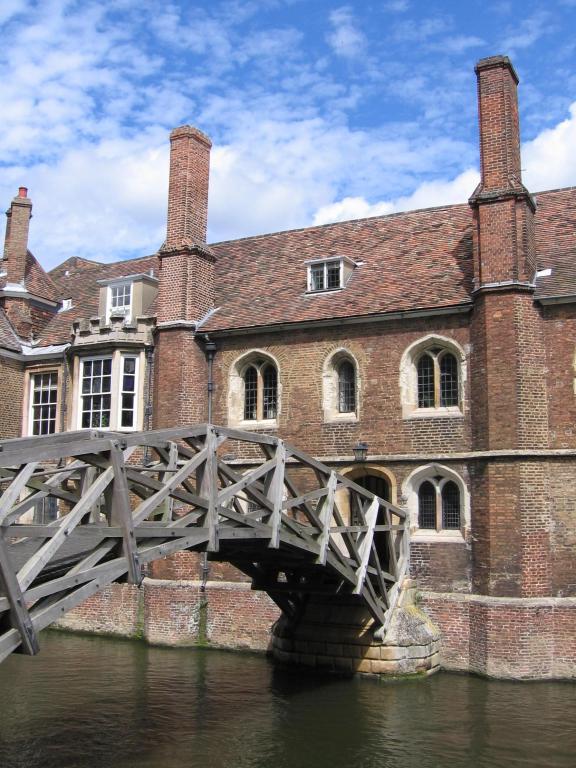
The famous Mathematical Bridge, first constructed in 1749, connects two parts of Queens’ College, University of Cambridge, across the River Cam.
(Wikimedia Commons public domain)
Sir John Polkinghorne, now in his ninetieth year, is both a Knight of the British Empire (KBE) and a Fellow of the prestigious Royal Society. Sir John was a professor of mathematical physics at the University of Cambridge until he resigned his professorial chair in order to study for the Anglican priesthood. He was ordained a priest in 1982 and, thereafter, served as the president of Queens’ College, Cambridge, from 1988 until 1996.
Here are two passages from the text of Sir John’s 1996 Terry Lectures, which he delivered at Yale University and which were published as John Polkinghorne, Belief in God in an Age of Science (New Haven and London: Yale University Press, 1998). In the first of the two quotations, he draws an analogy to the theological distinction between the “immanent Trinity” (the Godhead of Father, Son, and Holy Spirit in itself, internally, an sich, among themselves, without regard to their work of creation and redemption or their relationship to us and the world) and the “economic Trinity” (which refers to the activity and the roles of the three divine persons in the Godhead with regard to creation and redemption, or, in other words, to their, or the Trinity’s, external effects). The internal life of the Godhead is, for now at least — Professor Polkinghorne would likely say forever — unknown and incomprehensible to us, but we are capable of discerning and, to a large degree, of understanding, the works or effects of Father, Son, and Holy Spirit.
So, here’s Rev. Prof. Dr. Sir John Polkinghorne:
I believe that nuclear matter is made up of quarks which are not only unseen but which are also invisible in principle (because they are permanently confined within the protons and neutrons they constitute). The effects of these quarks can be perceived, but not the entities themselves. To borrow language from theology, we know the economic quark but not the immanent quark. Yet, on the basis of intelligibility as providing the grounds for ontological belief, a view which has already been defended in the scientific context, I am fully persuaded of the reality of the quark structure of matter. I believe that it makes sense of physical experience precisely because it corresponds to what is the case. A similar conviction grounds my belief in the invisible reality of God. (122-123)
Long ago, St. Anselm gave epigrammatic expression of critical realism in theology when he described theological enquiry as being fides quaerens intellectum, faith seeking understanding. Commitment to belief is the way to deepen and correct understanding; reality is made known to us as we trust the insights that come to us. We need not share Descartes’ anxiety that we are being misled by a malicious demon, for the world is the creation of the God of truth who wills that our minds should have access, both to something of the divine nature and also to something of the wonders of the world that God holds in being. The scientist and the theologian both work by faith, a realist trust in the rational reliability of our understanding of experience. (124)
Previous Post

August 22, 2020
Revision 4.4 "Dispensations"
Next Post
August 22, 2020 Book of Moses Insights, Radio Shows, and How You Can Help
Browse Our Archives
Select a Category Uncategorized
Select a Month October 2026 September 2026 August 2026 July 2026 June 2026 May 2026 April 2026 March 2026 February 2026 January 2026 December 2025 November 2025 October 2025 September 2025 August 2025 July 2025 June 2025 May 2025 April 2025 March 2025 February 2025 January 2025 December 2024 November 2024 October 2024 September 2024 August 2024 July 2024 June 2024 May 2024 April 2024 March 2024 February 2024 January 2024 December 2023 November 2023 October 2023 September 2023 August 2023 July 2023 June 2023 May 2023 April 2023 March 2023 February 2023 January 2023 December 2022 November 2022 October 2022 September 2022 August 2022 July 2022 June 2022 May 2022 April 2022 March 2022 February 2022 January 2022 December 2021 November 2021 October 2021 September 2021 August 2021 July 2021 June 2021 May 2021 April 2021 March 2021 February 2021 January 2021 December 2020 November 2020 October 2020 September 2020 August 2020 July 2020 June 2020 May 2020 April 2020 March 2020 February 2020 January 2020 December 2019 November 2019 October 2019 September 2019 August 2019 July 2019 June 2019 May 2019 April 2019 March 2019 February 2019 January 2019 December 2018 November 2018 October 2018 September 2018 August 2018 July 2018 June 2018 May 2018 April 2018 March 2018 February 2018 January 2018 December 2017 November 2017 October 2017 September 2017 August 2017 July 2017 June 2017 May 2017 April 2017 March 2017 February 2017 January 2017 December 2016 November 2016 October 2016 September 2016 August 2016 July 2016 June 2016 May 2016 April 2016 March 2016 February 2016 January 2016 December 2015 November 2015 October 2015 September 2015 August 2015 July 2015 June 2015 May 2015 April 2015 March 2015 February 2015 January 2015 December 2014 November 2014 March 2014 August 2013 February 2012
Follow Us!
TAKE THE
Religious Wisdom Quiz
True or False: The apostles drew lots to choose Matthias to replace Judas.
Select your answer to see how you score.
FALSE TRUE
Related posts from Sic et Non

A case of twin near-death experiences?

Toward a "Post-Materialist Science"?

Once more unto the breach, dear friends, once...
Created or Discovered? (Part Two)
TRENDING AT PATHEOS Latter-day Saint

Swimfan: Forgotten Aughts Pleasures
This is a recovery effort. In 2002, My Big Fat Greek Wedding...

Top Three Anti-Catholic Lies About Catholicism
This is my initial transcript for the video, "THE 3 WORST...

Pope Leo Celebrates Mass for Nurses & Docs...
I don't have any idea how he did it, but Pope Leo...

The Sermon on the Mount, Part I: Matthew...
The Sermon on the Mount, Part I (Matthew 4:12-5:12) St. Matthew moves...

What's up from Crossway: Reviewing some of their latest A few weeks...

Janie Learns the Way of the Cross: A...
Teaching children about Jesus' Passion can be challenging. Many parents and educators...
view all Latter-day Saint blogs
Ad-Free & Subscriber Log-In Subscription Support
- About Us
- 2026 Calendar
- Videos
- Podcasts
- Library of World Religions
- Faith In Media Tracker
- Advertise With Us
- Write for Us
- Privacy Policy
- Terms of Service
- Do Not Sell My Data
- Contact Us
- Radiant Digital
- Manage Newsletter Subscriptions
- Unsubscribe From Notifications
- Sitemap
Copyright 2008-2026, Patheos. All rights reserved.
Subscription Support Ad-Free & Subscriber Log-In
Follow Patheos