
BuddhistCatholicContemplativeEvangelicalGeneral ChristianHinduJewishLatter-day SaintMuslimNew VisionsProgressive Christian
Beliefs
- Buddhist
- Catholic
- Contemplative
- Evangelical
- General Christian
- Hindu
- Jewish
- Latter-day Saint
- More Voices
- Muslim
- New Visions
- Pagan
- Progressive Christian
Topics
- Religion News
- Food and Religion
- Sports and Religion
- Religious Art
- Religious Music and Entertainment
- Religious Events
- History and Religion
- Style and Religion
- Politics and Religion
- Women in Religion
- Recreation Outdoors and Religion
- Business Finance and Religion
- Careers Workplace and Religion
- Education and Religion
- Family Parenting and Religion
- Health Fitness and Religion
- Home and Religion
- Relationships and Religion
- Technology and Religion
- Travel and Religion
Columnists
- Buddhist Columnists
- Business Finance and Religion Columnists
- Careers Workplace and Religion Columnists
- Catholic Columnists
- Contemplative Columnists
- Education and Religion Columnists
- Evangelists Columnists
- Family Parenting and Religion Columnists
- General Christian Columnists
- Health Fitness and Religion Columnists
- Hindu Columnists
- History and Religion Columnists
- Home and Religion Columnists
- Jewish Columnists
- More Voices Columnists
- Latter Day Columnists
- Muslim Columnists
- New Visions Columnists
- Nonreligious Columnists
- Pagan Columnists
- Politics and Religion Columnists
- Progressive Columnists
- Recreation Outdoors and Religion Columnists
- Relationships and Religion Columnists
- Religion News Columnists
- Religious Art Columnists
- Religious Events Columnists
- Religious Music and Entertainment Columnists
- Sports and Religion Columnists
- Style and Religion Columnists
- Technology and Religion Columnists
- Travel and Religion Columnists
- Women in Religion Columnists
Resource Library
- 2026 Calendar
- Library of World Religions
- The 100 Most Holy Places on Earth
- Patheos Answers
- Podcasts
- Videos
- Faith Leaders Database
- Anglican Episcopalian
- Bahai
- Baptist
- Buddhism
- Christianity
- Confucianism
- Eastern Orthodoxy
- Hinduism
- Holiness and Pentecostal
- ISKCON
- Islam
- Judaism
- Lutheran
- Methodist
- The Church of Jesus Christ of Latter-day Saints
- New Age
- Paganism
- Presbytarian and Reformed
- Protestantism
- Religion Behind the Scenes
- Roman Catholic
- Scientology
- Shia Islam
- Sikhism
- Sufism
- Sunni Islam
- Taoism
- Zen
- See all religions
Research Tools
 Ad-Free & Subscriber Log-In Subscription Support
Ad-Free & Subscriber Log-In Subscription Support
Follow Patheos 

- Trending:
- Forgiveness
- |
- Marriage
- |
- Consciousness
- |
- Death Penalty
- |
- Election
- |
- Halloween

- Home
- Latter-day Saint
- Revision 2.2 “Arabia”
Revision 2.2 “Arabia”
Last updated on: July 24, 2020 at 12:11 am by Dan Peterson
Revision 2.2 “Arabia” 2020-07-24T00:11:06-06:00 Dan Peterson
Patheos Explore the world's faith through different perspectives on religion and spirituality! Patheos has the views of the prevalent religions and spiritualities of the world.
Arabia’s reach is considerable.
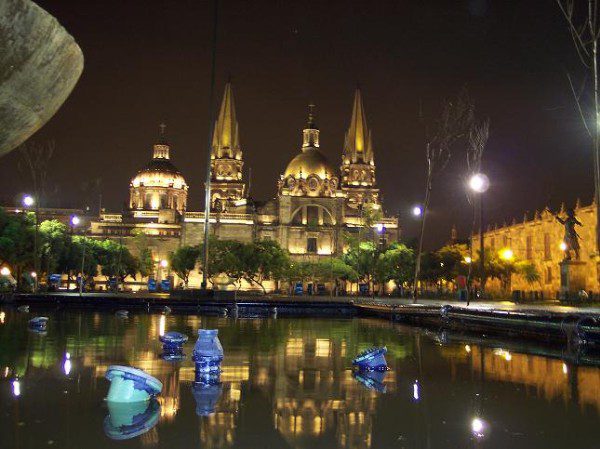
The Plaza de la Liberación and the Cathedral in Guadalajara, Mexico. Compare note 1, below.
(Wikimedia Commons public domain photograph)
A rim of mountains runs along the western side of the peninsula. These mountains are cut by many valleys, each of which is known as a wadi (pronounced wah-dee), and many of these wadis serve as caravan routes.[1] Plains, usually narrow, are found along the coasts. Oases, where a spring furnishes enough water for at least some vegetation, are found especially along the caravan routes in northern Arabia. No large lakes exist in Arabia, and there is only one short river, in the south, that manages to flow more or less year round. On the other hand, after occasional cloudbursts, temporary freshets may rush down the valleys. But these torrents soon vanish, and they cannot serve as dependable sources of water to travellers. (See, for instance, Job 6:15-20, which refers to known locations in the Nufud desert and in the south of the peninsula). It was probably one of these “rivers of water” that Nephi saw as he and his family made their way down the coast of Arabia toward the land of promise.[2] Even the “filthy” river observed by Lehi and Nephi in their visions of the Tree of Life sounds like one of these torrents, hurtling down the valleys with a load of dirt and sand and rocks. Like flash floods in the deserts of western North America, these “rivers” would disappear as suddenly as they had appeared. So the people in the peninsula have had to be resourceful, and, since water sometimes remains in the subsoil of the wadis, the Arabians have learned to dig wells to find it.
It was not only the Arabians, however, who had to put up with the harsh climate of their land. Sometimes that climate visited surrounding lands. The east wind, for example, which came from the deserts to the south and southeast of Palestine, carried dry, dusty, hot air—to the immense discomfort of both men and animals. It blasted vegetation, as in Pharaoh’s dream of the seven thin ears of corn. It could become a tempest, destroying ships at sea. It was an east wind that drove the waters of the Red Sea back, permitting the children of Israel to pass over on dry ground. It was the east wind that brought Moses’ locust plague to Egypt and the prophet Joel’s plague to Palestine .[3]
So, again, why would anybody want to control so inhospitable a place as Arabia? The answer is that it was a crossroad of world trade. Whoever controlled it, controlled the trade. Oil had not yet assumed any importance, but there were many other commodities that moved across Arabian sands on their way to the wealthy cities of the eastern Mediterranean. “Almug trees,” to choose just one such commodity, were brought by the Arabian queen of Sheba to king Solomon and are commonly thought to have been red sandalwood, brought originally from India and Ceylon.[4] Ebony seems to have been imported by early Arabian merchants from Africa.[5] Dates and date palms, such as those found by the wandering children of Israel at Elim, were also an important part of the Arabian economy.[6] To this day, they are known as “bedouin bread.”
But the most important commercial products freighted across ancient Arabia were, beyond doubt, frankincense and other perfumes. Arabia and the Arabians are often associated with spices in the Bible. Thus, for instance, Joseph’s brothers sold him to “a company of Ishmeelites,” who had come “from Gilead with their camels bearing spicery and balm and myrrh, going to carry it down to Egypt.”[7] And the queen of Sheba, visiting Solomon, “came to Jerusalem with a very great train, with camels that bare spices, and very much gold, and precious stones . . . And she gave the king an hundred and twenty talents of gold, and of spices very great store, and precious stones: there came no more such abundance of spices as these which the queen of Sheba gave to king Solomon.”[8] Even in prophecy, this is the image of Arabia: “The multitude of camels shall cover thee,” says Isaiah, “the dromedaries of Midian and Ephah; all they from Sheba shall come: they shall bring gold and incense; and they shall shew forth the praises of the Lord.”[9]
[1] The word wadi appears very commonly (as guada-) in Spanish place-names such as Guadalajara (wadi al-hajara, “valley of stones”), Guadalquivir (al-wadi al-kabir, “the big river”), and Guadalcanal. In the last case, the sixteenth-century Spanish discoverers of an island in the southwestern Pacific named it after a location near Seville that had originally been called wadi al-khanat (“the valley of stalls”) because of the refreshment stalls that had been set up there during the Muslim period. The very common place-name Guadalupe comes either from Arabic al-wadi al-lubin (“the hidden valley”) or from wadi combined with the Latin word lupe, meaning “wolf.”
[2] 1 Nephi 2:6-9, 16:12. See Hugh Nibley’s discussion in Lehi in the Desert/The World of the Jaredites/There Were Jaredites, Volume 5 in the Collected Works of Hugh Nibley (Salt Lake City and Provo: Deseret Book and the Foundation for Ancient Research and Mormon Studies, 1988), 79-83.
[3] On the east wind, see Genesis 41:6-7; Exodus 10:13; 14:21; Job 27:20-21; Psalm 48:7; Isaiah 27:8; Ezekiel 17:10; 27:26; Jonah 4:8. So powerful was the image of the east wind as an agent of destruction and divine wrath that the peoples of the Book of Mormon continued to use it, even in their different geographical situation: King Limhi quotes the Lord as saying, “If my people shall sow filthiness they shall reap the east wind, which bringeth immediate destruction” (Mosiah 7:31; compare 12:6). For an excellent treatment of the subject, see Kerry Hull, “An ‘East Wind’: Old and New World Perspectives,” in Abinadi: He Came Among Them in Disguise, edited by Shon D. Hopkin (BYU Religious Studies Center and Deseret Book, 2018), 169-208.
[4] 1 Kings 10:11-12.
[5] See, for example, Ezekiel 27:15.
[6]Exodus 15:27
[7] Genesis 37:25.
[8] 1 Kings 10:2, 10; compare 2 Chronicles 9:1, 9. The queen’s visit to Solomon was almost certainly part of a trade mission.
[9] Isaiah 60:6.
Posted from. Park City, Utah
Previous Post

July 18, 2020
Revision 2.1 "The Arabs before Islam"
Next Post
July 19, 2020 Why have physicists become increasingly open to the "God question"?
Browse Our Archives
Select a Category Uncategorized
Select a Month October 2026 September 2026 August 2026 July 2026 June 2026 May 2026 April 2026 March 2026 February 2026 January 2026 December 2025 November 2025 October 2025 September 2025 August 2025 July 2025 June 2025 May 2025 April 2025 March 2025 February 2025 January 2025 December 2024 November 2024 October 2024 September 2024 August 2024 July 2024 June 2024 May 2024 April 2024 March 2024 February 2024 January 2024 December 2023 November 2023 October 2023 September 2023 August 2023 July 2023 June 2023 May 2023 April 2023 March 2023 February 2023 January 2023 December 2022 November 2022 October 2022 September 2022 August 2022 July 2022 June 2022 May 2022 April 2022 March 2022 February 2022 January 2022 December 2021 November 2021 October 2021 September 2021 August 2021 July 2021 June 2021 May 2021 April 2021 March 2021 February 2021 January 2021 December 2020 November 2020 October 2020 September 2020 August 2020 July 2020 June 2020 May 2020 April 2020 March 2020 February 2020 January 2020 December 2019 November 2019 October 2019 September 2019 August 2019 July 2019 June 2019 May 2019 April 2019 March 2019 February 2019 January 2019 December 2018 November 2018 October 2018 September 2018 August 2018 July 2018 June 2018 May 2018 April 2018 March 2018 February 2018 January 2018 December 2017 November 2017 October 2017 September 2017 August 2017 July 2017 June 2017 May 2017 April 2017 March 2017 February 2017 January 2017 December 2016 November 2016 October 2016 September 2016 August 2016 July 2016 June 2016 May 2016 April 2016 March 2016 February 2016 January 2016 December 2015 November 2015 October 2015 September 2015 August 2015 July 2015 June 2015 May 2015 April 2015 March 2015 February 2015 January 2015 December 2014 November 2014 March 2014 August 2013 February 2012
Follow Us!
TAKE THE
Religious Wisdom Quiz
How many times did Elijah stretch over dead child?
Select your answer to see how you score.
3 4 5 2
Related posts from Sic et Non

Some notes on the archaeology of the Bible

Mandatory Bible reading in Texas public schools?

The Book of Mormon on the composition of...
Who is the most important character in the...
TRENDING AT PATHEOS Latter-day Saint

The Sermon on the Mount, Part I: Matthew...
The Sermon on the Mount, Part I (Matthew 4:12-5:12) St. Matthew moves...

What's up from Crossway: Reviewing some of their latest A few weeks...

Janie Learns the Way of the Cross: A...
Teaching children about Jesus' Passion can be challenging. Many parents and educators...

Looking For Good Catholic Writing - October 2026
He alone extends the heavens, and he walks upon the waves of...

In "Irreplaceable," our book on vocation and technology, Trevor Sutton and I...

I was strolling through the top floor of the brand new Parthenon...
view all Latter-day Saint blogs
Ad-Free & Subscriber Log-In Subscription Support
- About Us
- 2026 Calendar
- Videos
- Podcasts
- Library of World Religions
- Faith In Media Tracker
- Advertise With Us
- Write for Us
- Privacy Policy
- Terms of Service
- Do Not Sell My Data
- Contact Us
- Radiant Digital
- Manage Newsletter Subscriptions
- Unsubscribe From Notifications
- Sitemap
Copyright 2008-2026, Patheos. All rights reserved.
Subscription Support Ad-Free & Subscriber Log-In
Follow Patheos