
BuddhistCatholicContemplativeEvangelicalGeneral ChristianHinduJewishLatter-day SaintMuslimNew VisionsProgressive Christian
Beliefs
- Buddhist
- Catholic
- Contemplative
- Evangelical
- General Christian
- Hindu
- Jewish
- Latter-day Saint
- More Voices
- Muslim
- New Visions
- Pagan
- Progressive Christian
Topics
- Religion News
- Food and Religion
- Sports and Religion
- Religious Art
- Religious Music and Entertainment
- Religious Events
- History and Religion
- Style and Religion
- Politics and Religion
- Women in Religion
- Recreation Outdoors and Religion
- Business Finance and Religion
- Careers Workplace and Religion
- Education and Religion
- Family Parenting and Religion
- Health Fitness and Religion
- Home and Religion
- Relationships and Religion
- Technology and Religion
- Travel and Religion
Columnists
- Buddhist Columnists
- Business Finance and Religion Columnists
- Careers Workplace and Religion Columnists
- Catholic Columnists
- Contemplative Columnists
- Education and Religion Columnists
- Evangelists Columnists
- Family Parenting and Religion Columnists
- General Christian Columnists
- Health Fitness and Religion Columnists
- Hindu Columnists
- History and Religion Columnists
- Home and Religion Columnists
- Jewish Columnists
- More Voices Columnists
- Latter Day Columnists
- Muslim Columnists
- New Visions Columnists
- Nonreligious Columnists
- Pagan Columnists
- Politics and Religion Columnists
- Progressive Columnists
- Recreation Outdoors and Religion Columnists
- Relationships and Religion Columnists
- Religion News Columnists
- Religious Art Columnists
- Religious Events Columnists
- Religious Music and Entertainment Columnists
- Sports and Religion Columnists
- Style and Religion Columnists
- Technology and Religion Columnists
- Travel and Religion Columnists
- Women in Religion Columnists
Resource Library
- 2026 Calendar
- Library of World Religions
- The 100 Most Holy Places on Earth
- Patheos Answers
- Podcasts
- Videos
- Faith Leaders Database
- Anglican Episcopalian
- Bahai
- Baptist
- Buddhism
- Christianity
- Confucianism
- Eastern Orthodoxy
- Hinduism
- Holiness and Pentecostal
- ISKCON
- Islam
- Judaism
- Lutheran
- Methodist
- The Church of Jesus Christ of Latter-day Saints
- New Age
- Paganism
- Presbytarian and Reformed
- Protestantism
- Religion Behind the Scenes
- Roman Catholic
- Scientology
- Shia Islam
- Sikhism
- Sufism
- Sunni Islam
- Taoism
- Zen
- See all religions
Research Tools
 Ad-Free & Subscriber Log-In Subscription Support
Ad-Free & Subscriber Log-In Subscription Support
Follow Patheos 

- Trending:
- Forgiveness
- |
- Marriage
- |
- Consciousness
- |
- Death Penalty
- |
- Election
- |
- Halloween

- Home
- Latter-day Saint
- Revision 1.7. “The First Jewish Revolt”
Revision 1.7. “The First Jewish Revolt”
Last updated on: July 10, 2020 at 9:09 pm by Dan Peterson
Revision 1.7. “The First Jewish Revolt” 2020-07-10T21:09:08-06:00 Dan Peterson
Patheos Explore the world's faith through different perspectives on religion and spirituality! Patheos has the views of the prevalent religions and spiritualities of the world.
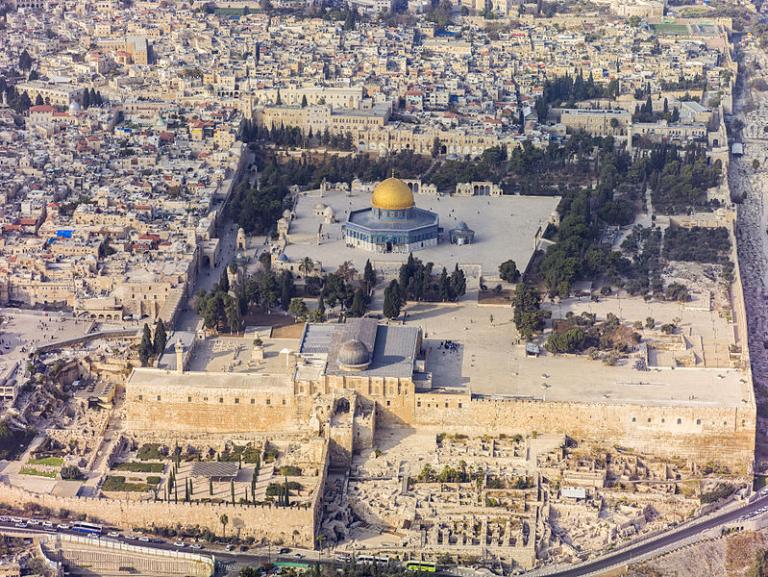
The Temple Mount as it appears today.
(Photo from Wikimedia Commons)
The death of Herod the Great marked the end of the last period of stable Jewish rule in Palestine until, in the middle of the twentieth century, David Ben Gurion proclaimed the state of Israel. True, Herod had sons, but they proved unworthy and incompetent. Archelaus, to whom Herod left Judea, was deposed by the Romans in 6 A.D. For several decades afterwards, the province of Judea and its major city, Jerusalem, were ruled directly by a Roman procurator or imperial governor from his headquarters in Caesarea on the coast. (Pontius Pilate was one of these procurators.) It seems, however, that the Romans really didn’t want to rule Judea directly. In 37 A.D., they returned the province to the family of Herod the Great, appointing his grandson, Herod Agrippa, to rule the area. Agrippa appears to have been a competent ruler, but he died relatively young in 44 A.D., and the Romans saw themselves with no choice but to impose direct rule again. And that, effectively, was the end of any real possibility for Jewish self-government in Palestine.
But many Jews continued to hope for independence and self-rule, and there were many rebellions. The Zealots, for example, carried out street assassinations. The so-called Essenes, gathered on the barren shores above the Dead Sea, dreamed of apocalyptic violence and produced military training manuals such as the one entitled “The War of the Children of Light Against the Children of Darkness.” (It doesn’t take much imagination to realize which side they saw themselves on.) But these revolutionaries had little chance of success, and they were crushed every time the Romans could catch them. Rome must have been rather puzzled by Jewish dissatisfaction. Most Roman provinces prospered and were largely at peace. In fact the majority of the Jews were satisfied, if the truth were known. Rome was liberal and tolerant by ancient standards; its governors were usually competent, and its laws were just. The Romans’ image as something like ancient Nazis, standard in Hollywood movies for many years, is undeserved. But the Jews were different, and Judea was a constant source of trouble and torment for its Roman rulers.
In 66 A.D., the “Great Revolt” (as it’s known) of the Jews against Rome broke out in Caesarea. It started with a riot in which Greeks began to kill Jews while the Greek-speaking Roman garrison of the town stood by with its hands in its pockets. A massacre ensued, and the news spread to Jerusalem, where more riots broke out. The situation was made worse by the fact that the Roman occupation government, needing money, had decided (like Antiochus before them) to dip into the temple treasury. Radical Jewish nationalists saw this as their opportunity to throw the Romans out once and for all. They also turned their attention to the Jewish upper classes, to the Hellenizers, whom they equated with the evil Greeks and who had identified themselves so completely with Roman rule. (“We have no king but Caesar,” the chief priests had told Pilate when seeking Christ’s death.)[1] We know that the aristocratic rich were a target of the radicals because one of the radicals’ first acts, when trouble broke out in Jerusalem, was to seize and burn the temple archives, which housed all records of debts.
The rebels also attacked and massacred the Roman garrison in Jerusalem. Such an act, of course, couldn’t possibly go unpunished. The Roman legate in Syria, who bore overall responsibility for the entire region, thereupon gathered a large force and marched unsuccessfully on the city. At this, Rome itself took over. An enormous force of four Roman legions, under the command of a highly experienced general named Titus Flavius Vespasian, moving at a careful pace, cleared the coast, seized virtually every fortress held by Jewish forces, and pacified the countryside. It was a smooth, professional operation. And it was noticed by those who counted. In 69 A.D., Vespasian was chosen emperor of Rome, and he departed for Italy after leaving his son Titus, a future emperor himself, in charge of the army during the final phase of the campaign, which centered on the siege of Jerusalem.
The siege lasted from April to September of 70 A.D. Titus had 60,000 men under his command, highly disciplined and well trained in the use of the latest and most modern siege equipment. The Jewish defenders of the city, by contrast, were only about 25,000 in number and were divided bitterly among themselves. The outcome was never really in doubt, although it was hard work for the Romans at every step. By the end of the siege, the temple had been burned to the ground and those of the Jews who had not been killed outright had either been sent off as slaves or to die in the gladiatorial arenas of Caesarea, Antioch, or Rome itself. Titus’s triumphal arch still stands in Rome where it was erected to commemorate his victory, and on it, carved in stone and still clearly visible, is the great menorah, the lampstand of the temple that he captured and carried off.
[1] John 19:15. In so saying, in proclaiming their sole loyalty to an earthly monarch, the chief priests rejected their heavenly king—in more ways than one. Contrast 1 Samuel 8:6-7; Judges 8:22-23.
Next Post

July 9, 2020 Volcanism in Mesoamerica
Browse Our Archives
Select a Category Uncategorized
Select a Month October 2026 September 2026 August 2026 July 2026 June 2026 May 2026 April 2026 March 2026 February 2026 January 2026 December 2025 November 2025 October 2025 September 2025 August 2025 July 2025 June 2025 May 2025 April 2025 March 2025 February 2025 January 2025 December 2024 November 2024 October 2024 September 2024 August 2024 July 2024 June 2024 May 2024 April 2024 March 2024 February 2024 January 2024 December 2023 November 2023 October 2023 September 2023 August 2023 July 2023 June 2023 May 2023 April 2023 March 2023 February 2023 January 2023 December 2022 November 2022 October 2022 September 2022 August 2022 July 2022 June 2022 May 2022 April 2022 March 2022 February 2022 January 2022 December 2021 November 2021 October 2021 September 2021 August 2021 July 2021 June 2021 May 2021 April 2021 March 2021 February 2021 January 2021 December 2020 November 2020 October 2020 September 2020 August 2020 July 2020 June 2020 May 2020 April 2020 March 2020 February 2020 January 2020 December 2019 November 2019 October 2019 September 2019 August 2019 July 2019 June 2019 May 2019 April 2019 March 2019 February 2019 January 2019 December 2018 November 2018 October 2018 September 2018 August 2018 July 2018 June 2018 May 2018 April 2018 March 2018 February 2018 January 2018 December 2017 November 2017 October 2017 September 2017 August 2017 July 2017 June 2017 May 2017 April 2017 March 2017 February 2017 January 2017 December 2016 November 2016 October 2016 September 2016 August 2016 July 2016 June 2016 May 2016 April 2016 March 2016 February 2016 January 2016 December 2015 November 2015 October 2015 September 2015 August 2015 July 2015 June 2015 May 2015 April 2015 March 2015 February 2015 January 2015 December 2014 November 2014 March 2014 August 2013 February 2012
Follow Us!
TAKE THE
Religious Wisdom Quiz
What did Nehemiah do upon reading that Moabites and Ammonites were forbidden in God's assembly?
Select your answer to see how you score.
Started a fast Expelled them Rebuilt the altar Closed the gates
Related posts from Sic et Non

Notes on Women, Priesthood, and General Conference

"The Book of Moses as a Temple Text"

TRENDING AT PATHEOS Latter-day Saint

Swimfan: Forgotten Aughts Pleasures
This is a recovery effort. In 2002, My Big Fat Greek Wedding...

Top Three Anti-Catholic Lies About Catholicism
This is my initial transcript for the video, "THE 3 WORST...

Pope Leo Celebrates Mass for Nurses & Docs...
I don't have any idea how he did it, but Pope Leo...

The Sermon on the Mount, Part I: Matthew...
The Sermon on the Mount, Part I (Matthew 4:12-5:12) St. Matthew moves...

What's up from Crossway: Reviewing some of their latest A few weeks...

Janie Learns the Way of the Cross: A...
Teaching children about Jesus' Passion can be challenging. Many parents and educators...
view all Latter-day Saint blogs
Ad-Free & Subscriber Log-In Subscription Support
- About Us
- 2026 Calendar
- Videos
- Podcasts
- Library of World Religions
- Faith In Media Tracker
- Advertise With Us
- Write for Us
- Privacy Policy
- Terms of Service
- Do Not Sell My Data
- Contact Us
- Radiant Digital
- Manage Newsletter Subscriptions
- Unsubscribe From Notifications
- Sitemap
Copyright 2008-2026, Patheos. All rights reserved.
Subscription Support Ad-Free & Subscriber Log-In
Follow Patheos