
BuddhistCatholicContemplativeEvangelicalGeneral ChristianHinduJewishLatter-day SaintMuslimNew VisionsProgressive Christian
Beliefs
- Buddhist
- Catholic
- Contemplative
- Evangelical
- General Christian
- Hindu
- Jewish
- Latter-day Saint
- More Voices
- Muslim
- New Visions
- Pagan
- Progressive Christian
Topics
- Religion News
- Food and Religion
- Sports and Religion
- Religious Art
- Religious Music and Entertainment
- Religious Events
- History and Religion
- Style and Religion
- Politics and Religion
- Women in Religion
- Recreation Outdoors and Religion
- Business Finance and Religion
- Careers Workplace and Religion
- Education and Religion
- Family Parenting and Religion
- Health Fitness and Religion
- Home and Religion
- Relationships and Religion
- Technology and Religion
- Travel and Religion
Columnists
- Buddhist Columnists
- Business Finance and Religion Columnists
- Careers Workplace and Religion Columnists
- Catholic Columnists
- Contemplative Columnists
- Education and Religion Columnists
- Evangelists Columnists
- Family Parenting and Religion Columnists
- General Christian Columnists
- Health Fitness and Religion Columnists
- Hindu Columnists
- History and Religion Columnists
- Home and Religion Columnists
- Jewish Columnists
- More Voices Columnists
- Latter Day Columnists
- Muslim Columnists
- New Visions Columnists
- Nonreligious Columnists
- Pagan Columnists
- Politics and Religion Columnists
- Progressive Columnists
- Recreation Outdoors and Religion Columnists
- Relationships and Religion Columnists
- Religion News Columnists
- Religious Art Columnists
- Religious Events Columnists
- Religious Music and Entertainment Columnists
- Sports and Religion Columnists
- Style and Religion Columnists
- Technology and Religion Columnists
- Travel and Religion Columnists
- Women in Religion Columnists
Resource Library
- 2026 Calendar
- Library of World Religions
- The 100 Most Holy Places on Earth
- Patheos Answers
- Podcasts
- Videos
- Faith Leaders Database
- Anglican Episcopalian
- Bahai
- Baptist
- Buddhism
- Christianity
- Confucianism
- Eastern Orthodoxy
- Hinduism
- Holiness and Pentecostal
- ISKCON
- Islam
- Judaism
- Lutheran
- Methodist
- The Church of Jesus Christ of Latter-day Saints
- New Age
- Paganism
- Presbytarian and Reformed
- Protestantism
- Religion Behind the Scenes
- Roman Catholic
- Scientology
- Shia Islam
- Sikhism
- Sufism
- Sunni Islam
- Taoism
- Zen
- See all religions
Research Tools
 Ad-Free & Subscriber Log-In Subscription Support
Ad-Free & Subscriber Log-In Subscription Support
Follow Patheos 

- Trending:
- Forgiveness
- |
- Marriage
- |
- Consciousness
- |
- Death Penalty
- |
- Election
- |
- Halloween

- Home
- Latter-day Saint
- Revision 1.11 “Yohanan ben Zakkai”
Revision 1.11 “Yohanan ben Zakkai”
Last updated on: July 15, 2020 at 6:55 pm by Dan Peterson
Revision 1.11 “Yohanan ben Zakkai” 2020-07-15T18:55:48-06:00 Dan Peterson
Patheos Explore the world's faith through different perspectives on religion and spirituality! Patheos has the views of the prevalent religions and spiritualities of the world.
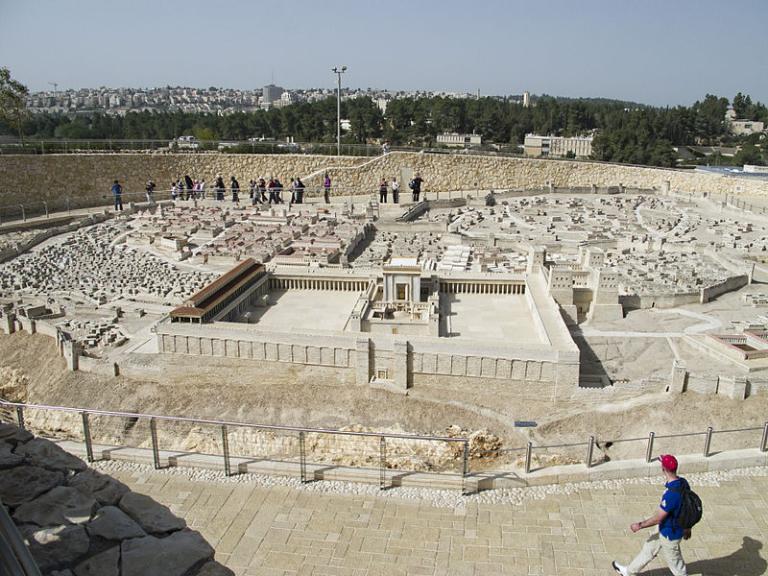
This model of Jerusalem as it looked in AD 66, just before the First Jewish Revolt and the city’s destruction at the hands of the Romans, is one of my very favorite teaching devices. It is located at the Israel Museum, near the Knesset.
(Public domain photo from Wikimedia Commons)
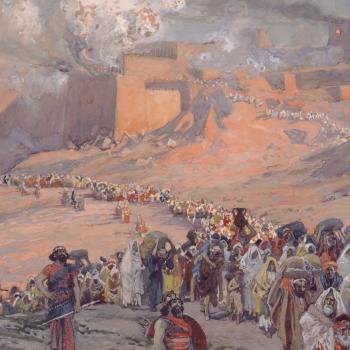
Furthermore, the ruling classes of Jewry, including the chief families of hereditary priests, had perished along with the temple and the state they had served. Roman administrators were busily monitoring, harrassing, and persecuting descendants of the Davidic line, including the leaders of the Sanhedrin, in order to prevent them from serving as the nucleus of any new revolt. The prophets were long gone. Only the rabbis were left to become the leaders of a new Torah-centered Judaism. And, of course, since the Torah was their specialty and since their knowledge of it was the source of their authority, they were uniquely qualified to take over. Jewish tradition records that the great rabbi Yohanan (or Johanan) ben Zakkai, deputy head of the Sanhedrin, was smuggled out of the city of Jerusalem in a coffin just before it fell to the Romans in 70 A.D., not for fear of the besieging armies but because his fellow Jews, the Zealots, were guarding all exits to prevent anybody from escaping the doomed city. Rabbi Yohanan, a priest and a Pharisee, was a realist. He favored peace and rejected fanaticism. He had opposed the revolt and, in fact, had long felt that Judaism would actually do better without the corruption and the distraction that seemed necessary accompaniments to a Jewish state. Thus, when the state disappeared, he was spiritually and intellectually prepared to go on and, more importantly, to help his people to go on.
Rabbi Yohanan sought and received permission from the victorious Roman authorities to set up a Jewish religious center at Yavneh (also Jabneh, or even Jamnia), to the west of Jerusalem. There, with the Jewish state gone and its traditional leadership destroyed, an assembly of rabbis met and, still under the title of “Sanhedrin,” set about to answer the questions that arose among Jews as a result of the radically new conditions in which they found themselves. There were many of these questions. Jews had been accustomed to praying toward the temple, for example.[1] Now, with it gone, where should they pray? The Sanhedrin had always met within the temple precincts. How could it function now? The tithes and dues and offerings that were so important to Jewish practice were almost all tied up with Jerusalem and the temple. What now? Could Passover still be celebrated with the sacrificial lamb? These questions had to be answered, and in order to do so, the rabbis had to create or discover new resources among the treasures of their ancient heritage. Rabbi Johanan and his associates took decisive steps in this direction. To his disciples and to the Jewish people in general, who were dismayed by the fall of the temple and who wondered where the sins of Israel could now find atonement, he taught: “My son, do not distress yourself, we have another atonement that is like it; and what is it? Charity: `For charity I desire, not sacrifice.”‘[2]
It was under Johanan ben Zakkai that the process of canonizing the Psalms and the so-called “wisdom books” of the Hebrew Bible was completed. Previously, while all Jews had agreed to accept the so-called “five books of Moses,” the Pentateuch, some—notably the Sadducees—had refused to recognize the other books of our Old Testament as canonical. It’s noteworthy, in fact, that the old sectarian divisions among Jews—between Zealots, Essenes, Sadducees, various schools of Pharisees, and the like—virtually disappeared. Only rabbinic Judaism survived, focused intensely on the Law and sustained by a consensus among Jews that this, and this alone, was or should be the true center of a pious Jewish life for both the individual and the community. As time passed, the new Sanhedrin at Yavneh took on most of the functions of the old one that had operated when the temple was still in place. The Sanhedrin became the executive body within Jewish community life, as well as the interpreter of the Law and an academy for training new generations in the intricacies of the Torah.
[1] This practice was attested in Daniel’s day (Daniel 6:10).
[2] Cited by Shmuel Safrai, in H. H. Ben-Sasson, A History of the Jewish People (Cambridge: Harvard University Press, 1976), 321. Rabbi Yohanan is himself citing the great statement of Hosea 6:6.
Posted from Park City, Utah
Previous Post

July 13, 2020
"Temples All the Way Down"
Next Post
July 14, 2020 "Human Wrecks"
Browse Our Archives
Select a Category Uncategorized
Select a Month October 2026 September 2026 August 2026 July 2026 June 2026 May 2026 April 2026 March 2026 February 2026 January 2026 December 2025 November 2025 October 2025 September 2025 August 2025 July 2025 June 2025 May 2025 April 2025 March 2025 February 2025 January 2025 December 2024 November 2024 October 2024 September 2024 August 2024 July 2024 June 2024 May 2024 April 2024 March 2024 February 2024 January 2024 December 2023 November 2023 October 2023 September 2023 August 2023 July 2023 June 2023 May 2023 April 2023 March 2023 February 2023 January 2023 December 2022 November 2022 October 2022 September 2022 August 2022 July 2022 June 2022 May 2022 April 2022 March 2022 February 2022 January 2022 December 2021 November 2021 October 2021 September 2021 August 2021 July 2021 June 2021 May 2021 April 2021 March 2021 February 2021 January 2021 December 2020 November 2020 October 2020 September 2020 August 2020 July 2020 June 2020 May 2020 April 2020 March 2020 February 2020 January 2020 December 2019 November 2019 October 2019 September 2019 August 2019 July 2019 June 2019 May 2019 April 2019 March 2019 February 2019 January 2019 December 2018 November 2018 October 2018 September 2018 August 2018 July 2018 June 2018 May 2018 April 2018 March 2018 February 2018 January 2018 December 2017 November 2017 October 2017 September 2017 August 2017 July 2017 June 2017 May 2017 April 2017 March 2017 February 2017 January 2017 December 2016 November 2016 October 2016 September 2016 August 2016 July 2016 June 2016 May 2016 April 2016 March 2016 February 2016 January 2016 December 2015 November 2015 October 2015 September 2015 August 2015 July 2015 June 2015 May 2015 April 2015 March 2015 February 2015 January 2015 December 2014 November 2014 March 2014 August 2013 February 2012
Follow Us!
TAKE THE
Religious Wisdom Quiz
What did Nehemiah do upon reading that Moabites and Ammonites were forbidden in God's assembly?
Select your answer to see how you score.
Started a fast Expelled them Rebuilt the altar Closed the gates
Related posts from Sic et Non
Memories of President Jeffrey R. Holland
TRENDING AT PATHEOS Latter-day Saint

Swimfan: Forgotten Aughts Pleasures
This is a recovery effort. In 2002, My Big Fat Greek Wedding...

Top Three Anti-Catholic Lies About Catholicism
This is my initial transcript for the video, "THE 3 WORST...

Pope Leo Celebrates Mass for Nurses & Docs...
I don't have any idea how he did it, but Pope Leo...

The Sermon on the Mount, Part I: Matthew...
The Sermon on the Mount, Part I (Matthew 4:12-5:12) St. Matthew moves...

What's up from Crossway: Reviewing some of their latest A few weeks...

Janie Learns the Way of the Cross: A...
Teaching children about Jesus' Passion can be challenging. Many parents and educators...
view all Latter-day Saint blogs
Ad-Free & Subscriber Log-In Subscription Support
- About Us
- 2026 Calendar
- Videos
- Podcasts
- Library of World Religions
- Faith In Media Tracker
- Advertise With Us
- Write for Us
- Privacy Policy
- Terms of Service
- Do Not Sell My Data
- Contact Us
- Radiant Digital
- Manage Newsletter Subscriptions
- Unsubscribe From Notifications
- Sitemap
Copyright 2008-2026, Patheos. All rights reserved.
Subscription Support Ad-Free & Subscriber Log-In
Follow Patheos