
BuddhistCatholicContemplativeEvangelicalGeneral ChristianHinduJewishLatter-day SaintMuslimNew VisionsProgressive Christian
Beliefs
- Buddhist
- Catholic
- Contemplative
- Evangelical
- General Christian
- Hindu
- Jewish
- Latter-day Saint
- More Voices
- Muslim
- New Visions
- Pagan
- Progressive Christian
Topics
- Religion News
- Food and Religion
- Sports and Religion
- Religious Art
- Religious Music and Entertainment
- Religious Events
- History and Religion
- Style and Religion
- Politics and Religion
- Women in Religion
- Recreation Outdoors and Religion
- Business Finance and Religion
- Careers Workplace and Religion
- Education and Religion
- Family Parenting and Religion
- Health Fitness and Religion
- Home and Religion
- Relationships and Religion
- Technology and Religion
- Travel and Religion
Columnists
- Buddhist Columnists
- Business Finance and Religion Columnists
- Careers Workplace and Religion Columnists
- Catholic Columnists
- Contemplative Columnists
- Education and Religion Columnists
- Evangelists Columnists
- Family Parenting and Religion Columnists
- General Christian Columnists
- Health Fitness and Religion Columnists
- Hindu Columnists
- History and Religion Columnists
- Home and Religion Columnists
- Jewish Columnists
- More Voices Columnists
- Latter Day Columnists
- Muslim Columnists
- New Visions Columnists
- Nonreligious Columnists
- Pagan Columnists
- Politics and Religion Columnists
- Progressive Columnists
- Recreation Outdoors and Religion Columnists
- Relationships and Religion Columnists
- Religion News Columnists
- Religious Art Columnists
- Religious Events Columnists
- Religious Music and Entertainment Columnists
- Sports and Religion Columnists
- Style and Religion Columnists
- Technology and Religion Columnists
- Travel and Religion Columnists
- Women in Religion Columnists
Resource Library
- 2026 Calendar
- Library of World Religions
- The 100 Most Holy Places on Earth
- Patheos Answers
- Podcasts
- Videos
- Faith Leaders Database
- Anglican Episcopalian
- Bahai
- Baptist
- Buddhism
- Christianity
- Confucianism
- Eastern Orthodoxy
- Hinduism
- Holiness and Pentecostal
- ISKCON
- Islam
- Judaism
- Lutheran
- Methodist
- The Church of Jesus Christ of Latter-day Saints
- New Age
- Paganism
- Presbytarian and Reformed
- Protestantism
- Religion Behind the Scenes
- Roman Catholic
- Scientology
- Shia Islam
- Sikhism
- Sufism
- Sunni Islam
- Taoism
- Zen
- See all religions
Research Tools
 Ad-Free & Subscriber Log-In Subscription Support
Ad-Free & Subscriber Log-In Subscription Support
Follow Patheos 

- Trending:
- Forgiveness
- |
- Marriage
- |
- Consciousness
- |
- Death Penalty
- |
- Election
- |
- Halloween

- Home
- Latter-day Saint
- The Decline of the East
The Decline of the East
Last updated on: June 14, 2020 at 12:46 pm by Dan Peterson
The Decline of the East 2020-06-14T12:46:41-06:00 Dan Peterson
Patheos Explore the world's faith through different perspectives on religion and spirituality! Patheos has the views of the prevalent religions and spiritualities of the world.
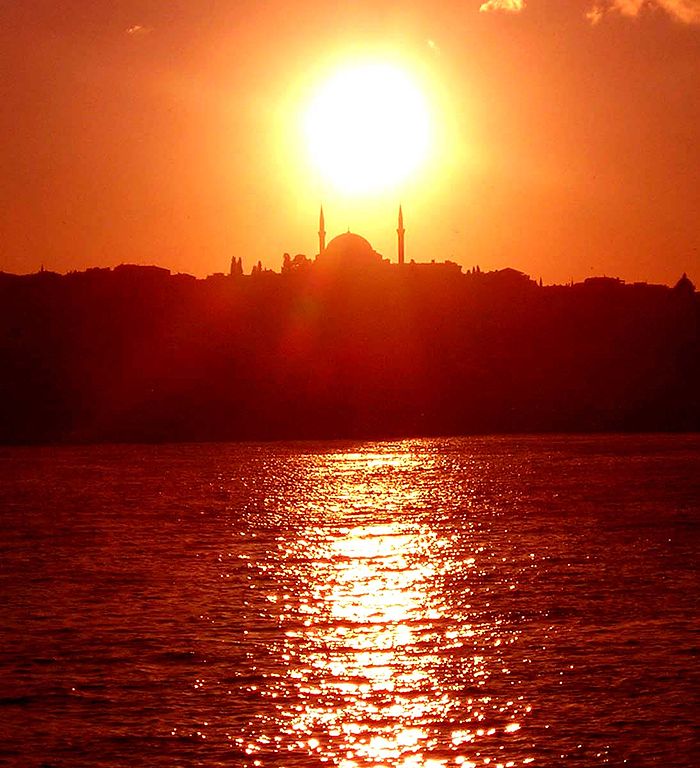
Sunset over Istanbul’s Golden Horn, in Turkey
(Wikimedia Commons public domain photograph)
I have, once or twice, used Daniel W. Brown, A New Introduction to Islam, 2d. ed. (Malden MA and Oxford: Wiley-Blackwell, 2009) as the principal text for my introductory course on the religion of Islam. Along the way, I’ve marked a few passages that reminded me of points that I myself wanted to make in a revised third edition of my book on Islam for Latter-day Saints, which will actually represent such substantial revision that I intend to give it a new title. Among other things, it will expand from its focus on the Arabs to cover Turkey, Iran, and, to some extent, the Islamic world as a whole. Here is one of the passages that I marked:
The almost simultaneous rise of three great empires in the Islamic world is a striking enough convergence of events to mark the first three decades of the sixteenth century as an important historical watershed. The convergence becomes even more startling when we include European developments. In 1497 Vasco da Gama rounded the Cape of Good Hope, reaching India in 1498. During the following four decades Portuguese ships ruled the long-range sea routes to the Indian Ocean, paving the way for a European monopoly on long-range trade. Ferdinand Magellan’s circumnavigation of the world between 1519 and 1522 showed that there would soon be no navigable port on earth out of range of European navies and merchant ships. In hindsight it is clear that the world economic and political context was on the verge of a major transformation.
The seeds of European expansion sown during these few decades at the beginning of the sixteenth century, although barely noticeable at the time, grew during the following centuries into full-blown imperialism. India felt the impact earliest: the Portuguese dominated the Indian Ocean and established coastal colonies in the sixteenth century, and the British took their place in the seventeenth century with the establishment of the British East India Company “presidencies” at Calcutta, Madras, and Bombay. In 1757 the company stumbled into the business of colonial rule when Robert Clive replaced the ruler of Bengal with a British puppet. By 1803 the British controlled Delhi, and the Mughal emperor became a marionette. Half a century later, in 1857, the British dispensed with the fiction of indirect rule, and India became the Jewel of the Empire.
For the Ottoman empire the first hint that something had changed in the world was a series of military and diplomatic reversals. The Ottoman army was driven back from Vienna in 1683 in a decisive enough way to show that it was falling behind European armies in technology and tactics. The peace of Karlowitz that followed in 1699 led to the loss of Hungary and the inescapable inference that the Ottomans were no longer invincible. Seventy-five years later the loss of invincibility had turned into a total rout. In 1774 at the treaty of Küçük Kaynarca Russia forced the Ottomans to their knees. The Russians gained not just Ottoman territory, but a naval presence in the Black Sea, trading rights, consulates wherever they liked, and the right to interfere in the empire at will as the protectors of Orthodox Christians. By the nineteenth century the Ottoman empire had been transformed from the terror of Christendom to the “Sick Man of Europe.” (238-239)
Previous Post

June 12, 2020
"I know that what I am talking about is true"
Next Post
June 12, 2020 "Vaughn J. Featherstone’s Atlanta Temple Letter"
Browse Our Archives
Select a Category Uncategorized
Select a Month October 2026 September 2026 August 2026 July 2026 June 2026 May 2026 April 2026 March 2026 February 2026 January 2026 December 2025 November 2025 October 2025 September 2025 August 2025 July 2025 June 2025 May 2025 April 2025 March 2025 February 2025 January 2025 December 2024 November 2024 October 2024 September 2024 August 2024 July 2024 June 2024 May 2024 April 2024 March 2024 February 2024 January 2024 December 2023 November 2023 October 2023 September 2023 August 2023 July 2023 June 2023 May 2023 April 2023 March 2023 February 2023 January 2023 December 2022 November 2022 October 2022 September 2022 August 2022 July 2022 June 2022 May 2022 April 2022 March 2022 February 2022 January 2022 December 2021 November 2021 October 2021 September 2021 August 2021 July 2021 June 2021 May 2021 April 2021 March 2021 February 2021 January 2021 December 2020 November 2020 October 2020 September 2020 August 2020 July 2020 June 2020 May 2020 April 2020 March 2020 February 2020 January 2020 December 2019 November 2019 October 2019 September 2019 August 2019 July 2019 June 2019 May 2019 April 2019 March 2019 February 2019 January 2019 December 2018 November 2018 October 2018 September 2018 August 2018 July 2018 June 2018 May 2018 April 2018 March 2018 February 2018 January 2018 December 2017 November 2017 October 2017 September 2017 August 2017 July 2017 June 2017 May 2017 April 2017 March 2017 February 2017 January 2017 December 2016 November 2016 October 2016 September 2016 August 2016 July 2016 June 2016 May 2016 April 2016 March 2016 February 2016 January 2016 December 2015 November 2015 October 2015 September 2015 August 2015 July 2015 June 2015 May 2015 April 2015 March 2015 February 2015 January 2015 December 2014 November 2014 March 2014 August 2013 February 2012
Follow Us!
TAKE THE
Religious Wisdom Quiz
Which prophet raised a dead boy to life for the Shunammite woman?
Select your answer to see how you score.
Elisha Elijah Isaiah Samuel
Related posts from Sic et Non

Islam in America or Islam versus America?

A basic working chronology of Islamic-era Iran

Actual Data and Actual Crusades
TRENDING AT PATHEOS Latter-day Saint

Methodist Central Hall and Westminster Abbey
Situated on the same square is Methodist Central Hall and Westminster Abbey. ...

57th Dove Awards Honor Dolly Parton, Crown New...
On gospel music’s biggest night, the 57th annual GMA Dove Awards honored...

The First Eucharistic Controversy: Christ’s Real Presence
For Catholics, the Eucharist is the source and summit of the Christian...

What a Stop Sign Can Teach Us About...
How to Make a Decision When You Can't Hear God Main point:...

Archdiocese Hosts Military Marriage Retreat in Germany
RASTATT, Germany — The transient military lifestyle, with its frequent deployments and...

Nearly every morning, I make the drive to Detroit with my high-school-age...
view all Latter-day Saint blogs
Ad-Free & Subscriber Log-In Subscription Support
- About Us
- 2026 Calendar
- Videos
- Podcasts
- Library of World Religions
- Faith In Media Tracker
- Advertise With Us
- Write for Us
- Privacy Policy
- Terms of Service
- Do Not Sell My Data
- Contact Us
- Radiant Digital
- Manage Newsletter Subscriptions
- Unsubscribe From Notifications
- Sitemap
Copyright 2008-2026, Patheos. All rights reserved.
Subscription Support Ad-Free & Subscriber Log-In
Follow Patheos