
BuddhistCatholicContemplativeEvangelicalGeneral ChristianHinduJewishLatter-day SaintMuslimNew VisionsProgressive Christian
Beliefs
- Buddhist
- Catholic
- Contemplative
- Evangelical
- General Christian
- Hindu
- Jewish
- Latter-day Saint
- More Voices
- Muslim
- New Visions
- Pagan
- Progressive Christian
Topics
- Religion News
- Food and Religion
- Sports and Religion
- Religious Art
- Religious Music and Entertainment
- Religious Events
- History and Religion
- Style and Religion
- Politics and Religion
- Women in Religion
- Recreation Outdoors and Religion
- Business Finance and Religion
- Careers Workplace and Religion
- Education and Religion
- Family Parenting and Religion
- Health Fitness and Religion
- Home and Religion
- Relationships and Religion
- Technology and Religion
- Travel and Religion
Columnists
- Buddhist Columnists
- Business Finance and Religion Columnists
- Careers Workplace and Religion Columnists
- Catholic Columnists
- Contemplative Columnists
- Education and Religion Columnists
- Evangelists Columnists
- Family Parenting and Religion Columnists
- General Christian Columnists
- Health Fitness and Religion Columnists
- Hindu Columnists
- History and Religion Columnists
- Home and Religion Columnists
- Jewish Columnists
- More Voices Columnists
- Latter Day Columnists
- Muslim Columnists
- New Visions Columnists
- Nonreligious Columnists
- Pagan Columnists
- Politics and Religion Columnists
- Progressive Columnists
- Recreation Outdoors and Religion Columnists
- Relationships and Religion Columnists
- Religion News Columnists
- Religious Art Columnists
- Religious Events Columnists
- Religious Music and Entertainment Columnists
- Sports and Religion Columnists
- Style and Religion Columnists
- Technology and Religion Columnists
- Travel and Religion Columnists
- Women in Religion Columnists
Resource Library
- 2026 Calendar
- Library of World Religions
- The 100 Most Holy Places on Earth
- Patheos Answers
- Podcasts
- Videos
- Faith Leaders Database
- Anglican Episcopalian
- Bahai
- Baptist
- Buddhism
- Christianity
- Confucianism
- Eastern Orthodoxy
- Hinduism
- Holiness and Pentecostal
- ISKCON
- Islam
- Judaism
- Lutheran
- Methodist
- The Church of Jesus Christ of Latter-day Saints
- New Age
- Paganism
- Presbytarian and Reformed
- Protestantism
- Religion Behind the Scenes
- Roman Catholic
- Scientology
- Shia Islam
- Sikhism
- Sufism
- Sunni Islam
- Taoism
- Zen
- See all religions
Research Tools
 Ad-Free & Subscriber Log-In Subscription Support
Ad-Free & Subscriber Log-In Subscription Support
Follow Patheos 

- Trending:
- Forgiveness
- |
- Marriage
- |
- Consciousness
- |
- Death Penalty
- |
- Election
- |
- Halloween

- Home
- Latter-day Saint
- Some notes on Wahhābism
Some notes on Wahhābism
Last updated on: May 8, 2020 at 11:56 pm by Dan Peterson
Some notes on Wahhābism 2020-05-08T23:56:42-06:00 Dan Peterson
Patheos Explore the world's faith through different perspectives on religion and spirituality! Patheos has the views of the prevalent religions and spiritualities of the world.
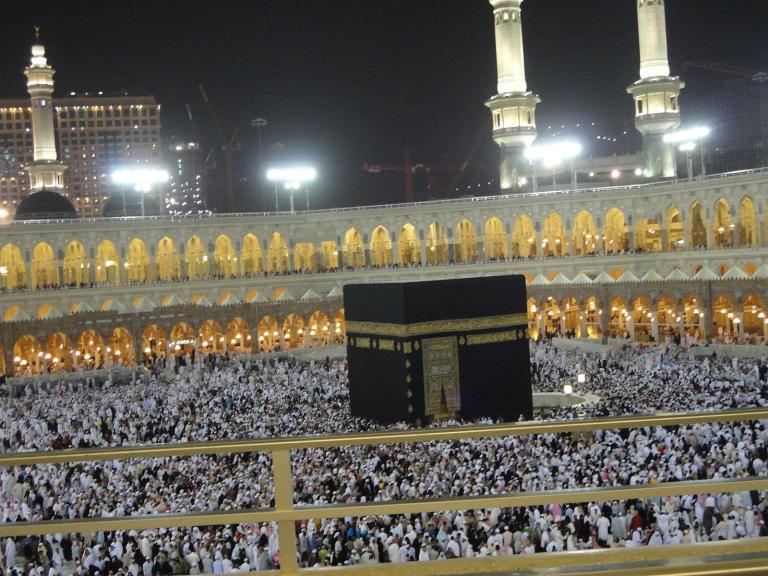
The Ka‘ba in Mecca (Wikimedia Commons public domain photo)
Although dating to pre-Islamic times, it has been the center of the Muslim world since the early seventh century.
At least once, and perhaps twice, I used Daniel W. Brown, A New Introduction to Islam, 2d. ed. (Malden MA and Oxford: Wiley-Blackwell, 2009) as the principal text for my own introductory course on the religion of Islam. Along the way, I marked a few passages that reminded me of points that I myself wanted to make in a revised third edition of my book on Islam for Latter-day Saints (on which I’m finally beginning to really get to work). Here are four of those passages:
[T]he most urgent set of theological, ethical, and political problems faced by the Muslim community in the contemporary world is posed by the challenge of pluralism. . . . Muslims in the contemporary world continue to make the case for the rationality of Islam, but reason is no longer the central challenge they face. The yardstick of the postmodern world is not reason, but tolerance. The question most often posed by outsiders to Islam is not whether the claims of Islam are true and reasonable — a suitable religion for “modern” people; the new most frequently asked question is whether Islam is “a religion of peace.” Are Muslims, in other words, able to accept a place as one community among many? Are “Islamic” values compatible with a system of democratic pluralism, and with the ideology of pluralism that often accompanies it? (283-284)
Like their intellectual forebears, contemporary Wahhābīs draw the circle of Islam narrowly, and are thus most easily identified by what they oppose, including all manifestations of ṣūfism [sic], all manifestations of Shī‘ite Islam, all forms of theological or philosophical discourse, most forms of music, and, in general, any idea, scientific or otherwise, that cannot be justified from the Qur’ān or the Sunna. . . . Wahhābism, in short, is an ideology vigorously opposed to pluralism, whether that pluralism is within the circle of Islam or without. . . . One of the rallying cries of Wahhābism has been the Qur’ānic imperative to “command the right and forbid the wrong.” Error and evil must not simply be avoided for the sake of one’s own soul, they must be actively opposed, whether by argument or by force. The agent of choice for this job is the state, and it is thus incumbent upon the state to use its resources and coercive power to implement this vision of Islam. . . .
[E]xtreme tendencies within the Wahhābī tradition have come together with other trends in modern Muslim thought to produce a new cult of martyrdom. (285-286)
Wahhābism, with its bold claim to represent the one true understanding of Islam, represents one important way of responding to the challenge of pluralism: to utterly reject the possibility that religious (or even cultural) diversity may be a good thing. . . . Partly because of the resources and visibility of Wahhābī Islam in the modern world, non-Muslims are increasingly prone to identify “true” Islam with Wahhābī forms. . . . There is a good chance, in other words, that the ordinary Western lay person, when she thinks of Islam, has in her mind a version of Islam which has been in some way colored by Wahhābī ideas. The more hawkish among Western commentators on the Islamic world regularly dismiss any divergence from the Wahhābī pattern as, at best, fringe ideas or movements which do not represent “true” Islam. (287)
It is one measure of the success of Wahhābism that it has for so long and so successfully convinced many non-Muslims that it is the real thing. (288)
Previous Post

May 8, 2020
"A Democratic Salvation"
Next Post
May 9, 2020 Insights into the Book of Moses and other relevant topics
Browse Our Archives
Select a Category Uncategorized
Select a Month October 2026 September 2026 August 2026 July 2026 June 2026 May 2026 April 2026 March 2026 February 2026 January 2026 December 2025 November 2025 October 2025 September 2025 August 2025 July 2025 June 2025 May 2025 April 2025 March 2025 February 2025 January 2025 December 2024 November 2024 October 2024 September 2024 August 2024 July 2024 June 2024 May 2024 April 2024 March 2024 February 2024 January 2024 December 2023 November 2023 October 2023 September 2023 August 2023 July 2023 June 2023 May 2023 April 2023 March 2023 February 2023 January 2023 December 2022 November 2022 October 2022 September 2022 August 2022 July 2022 June 2022 May 2022 April 2022 March 2022 February 2022 January 2022 December 2021 November 2021 October 2021 September 2021 August 2021 July 2021 June 2021 May 2021 April 2021 March 2021 February 2021 January 2021 December 2020 November 2020 October 2020 September 2020 August 2020 July 2020 June 2020 May 2020 April 2020 March 2020 February 2020 January 2020 December 2019 November 2019 October 2019 September 2019 August 2019 July 2019 June 2019 May 2019 April 2019 March 2019 February 2019 January 2019 December 2018 November 2018 October 2018 September 2018 August 2018 July 2018 June 2018 May 2018 April 2018 March 2018 February 2018 January 2018 December 2017 November 2017 October 2017 September 2017 August 2017 July 2017 June 2017 May 2017 April 2017 March 2017 February 2017 January 2017 December 2016 November 2016 October 2016 September 2016 August 2016 July 2016 June 2016 May 2016 April 2016 March 2016 February 2016 January 2016 December 2015 November 2015 October 2015 September 2015 August 2015 July 2015 June 2015 May 2015 April 2015 March 2015 February 2015 January 2015 December 2014 November 2014 March 2014 August 2013 February 2012
Follow Us!
TAKE THE
Religious Wisdom Quiz
True or False: Mark is the only Gospel that records Jesus asking 'Who touched my clothes?' after power went out from him.
Select your answer to see how you score.
FALSE TRUE
Related posts from Sic et Non

Islam in America or Islam versus America?

A basic working chronology of Islamic-era Iran

Actual Data and Actual Crusades

TRENDING AT PATHEOS Latter-day Saint

Janie Learns the Way of the Cross: A...
Teaching children about Jesus' Passion can be challenging. Many parents and educators...

Looking For Good Catholic Writing - October 2026
He alone extends the heavens, and he walks upon the waves of...

In "Irreplaceable," our book on vocation and technology, Trevor Sutton and I...

I was strolling through the top floor of the brand new Parthenon...

What Does Gêvâh Mean For Kimberley Guifoyle &...
This week, a lot of the news is focused on Kimberly Guilfoyle....

INNER CIRCLE: Profound Mystery (Of Christ In All...
Ephesians 5:31-32 “For this reason, a man will leave his father and...
view all Latter-day Saint blogs
Ad-Free & Subscriber Log-In Subscription Support
- About Us
- 2026 Calendar
- Videos
- Podcasts
- Library of World Religions
- Faith In Media Tracker
- Advertise With Us
- Write for Us
- Privacy Policy
- Terms of Service
- Do Not Sell My Data
- Contact Us
- Radiant Digital
- Manage Newsletter Subscriptions
- Unsubscribe From Notifications
- Sitemap
Copyright 2008-2026, Patheos. All rights reserved.
Subscription Support Ad-Free & Subscriber Log-In
Follow Patheos