
BuddhistCatholicContemplativeEvangelicalGeneral ChristianHinduJewishLatter-day SaintMuslimNew VisionsProgressive Christian
Beliefs
- Buddhist
- Catholic
- Contemplative
- Evangelical
- General Christian
- Hindu
- Jewish
- Latter-day Saint
- More Voices
- Muslim
- New Visions
- Pagan
- Progressive Christian
Topics
- Religion News
- Food and Religion
- Sports and Religion
- Religious Art
- Religious Music and Entertainment
- Religious Events
- History and Religion
- Style and Religion
- Politics and Religion
- Women in Religion
- Recreation Outdoors and Religion
- Business Finance and Religion
- Careers Workplace and Religion
- Education and Religion
- Family Parenting and Religion
- Health Fitness and Religion
- Home and Religion
- Relationships and Religion
- Technology and Religion
- Travel and Religion
Columnists
- Buddhist Columnists
- Business Finance and Religion Columnists
- Careers Workplace and Religion Columnists
- Catholic Columnists
- Contemplative Columnists
- Education and Religion Columnists
- Evangelists Columnists
- Family Parenting and Religion Columnists
- General Christian Columnists
- Health Fitness and Religion Columnists
- Hindu Columnists
- History and Religion Columnists
- Home and Religion Columnists
- Jewish Columnists
- More Voices Columnists
- Latter Day Columnists
- Muslim Columnists
- New Visions Columnists
- Nonreligious Columnists
- Pagan Columnists
- Politics and Religion Columnists
- Progressive Columnists
- Recreation Outdoors and Religion Columnists
- Relationships and Religion Columnists
- Religion News Columnists
- Religious Art Columnists
- Religious Events Columnists
- Religious Music and Entertainment Columnists
- Sports and Religion Columnists
- Style and Religion Columnists
- Technology and Religion Columnists
- Travel and Religion Columnists
- Women in Religion Columnists
Resource Library
- 2026 Calendar
- Library of World Religions
- The 100 Most Holy Places on Earth
- Patheos Answers
- Podcasts
- Videos
- Faith Leaders Database
- Anglican Episcopalian
- Bahai
- Baptist
- Buddhism
- Christianity
- Confucianism
- Eastern Orthodoxy
- Hinduism
- Holiness and Pentecostal
- ISKCON
- Islam
- Judaism
- Lutheran
- Methodist
- The Church of Jesus Christ of Latter-day Saints
- New Age
- Paganism
- Presbytarian and Reformed
- Protestantism
- Religion Behind the Scenes
- Roman Catholic
- Scientology
- Shia Islam
- Sikhism
- Sufism
- Sunni Islam
- Taoism
- Zen
- See all religions
Research Tools
 Ad-Free & Subscriber Log-In Subscription Support
Ad-Free & Subscriber Log-In Subscription Support
Follow Patheos 

- Trending:
- Forgiveness
- |
- Marriage
- |
- Consciousness
- |
- Death Penalty
- |
- Election
- |
- Halloween

- Home
- Latter-day Saint
- Just a temporary assemblage of chemicals?
Just a temporary assemblage of chemicals?
Last updated on: May 31, 2020 at 12:48 am by Dan Peterson
Just a temporary assemblage of chemicals? 2020-05-31T00:48:51-06:00 Dan Peterson
Patheos Explore the world's faith through different perspectives on religion and spirituality! Patheos has the views of the prevalent religions and spiritualities of the world.
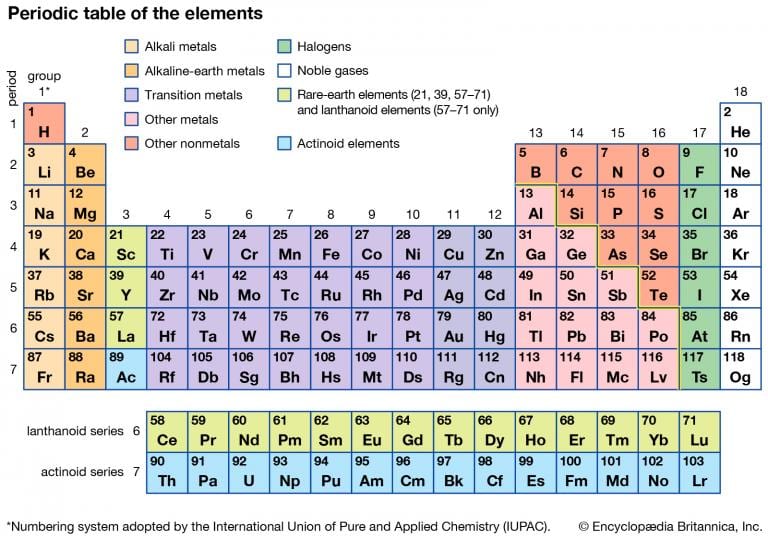
In the end, is all human history, literature, music, philosophy, art, and literature reducible to this?
(Wikimedia Commons public domain image)
The target of Curtis White, The Science Delusion: Asking the Big Questions in a Culture of Easy Answers [Brooklyn and London: Melville Books, 2014], is not science itself but, rather, “science as ideology (or ‘scientism,’ as it is often called),” which White describes as “certainly an abuse of the real value of science.” (10) He is particularly incensed by scientism’s reduction of humans to machines:
Are we really just the percolating of leptons and bosons, as philosopher of science Alex Rosenberg believes? Are we just matter obeying the laws of physics? In our emotional lives, have we been for all this time nothing better than the humiliated lover of E. T. A. Hoffmann’s “The Sand Man” who falls in love with Olympia, a seductive piece of clockwork? For all these centuries, have our soul mates . . . been mere congeries of meat, wire, and chemical? Are our ideas best understood as gene-like “memes” for which the most important consideration is not truth but adaptive “fitness”? (5)
White is rejecting the claim that
The human mind is a machine of flesh, neurons, and chemicals. (9)
Richard Feynman once claimed that “all things are made of atoms, and . . . everything that living things do can be understood in terms of the jigglings and wigglings of atoms.” In order to contest this claim one need not be religious.
(Curtis White himself is an atheist.)
In this next passage, he is certainly generalizing too widely. Some scientists are reductionists, but very many are not:
[S]cientists are weirdly comfortable with the idea that the universe and human life is meaningless. We’re just products of physics and chemistry and so is the universe. As John Gribbin writes at the conclusion of his Science: A History: “The Earth is an ordinary planet orbiting an ordinary star in the suburbs of an average galaxy,” and life is nothing more than “chemical processes.” [Richard] Feynman, hammering out his favorite chord, put it this way: “There is nothing that living beings do that cannot be understood from the point of view that they are made from atoms acting according to the laws of physics.” . . . But, Gribbin goes on to reassure us, none of this implies the meaninglessness of science. That exciting game continues. He writes, “Who knows what the next five centuries, let alone the next five millennia, might bring.” (80-81)
There seems to me a strange disconnect at work here. If everything is the result of atomic processes, wouldn’t that include scientific inquiry? Why, then, Gribbin’s eagerness, his appetite, his excitement for what the future holds for scientific discovery? Isn’t his own enthusiasm evidence of something extra-atomic about the Earth’s human inhabitants? There may be nothing special about our place in the cosmos, but there is something very special about our ability to say so. (81-82)
In a note appended to the immediately previous passage, White remarks that
Science thus becomes a version of the liar’s paradox (“I am lying”): “I am special because I know that I’m not special.” (82n)
Previous Post

May 29, 2020
On the late Christopher Hitchens
Next Post
May 30, 2020 Polling on shari‘a
Browse Our Archives
Select a Category Uncategorized
Select a Month October 2026 September 2026 August 2026 July 2026 June 2026 May 2026 April 2026 March 2026 February 2026 January 2026 December 2025 November 2025 October 2025 September 2025 August 2025 July 2025 June 2025 May 2025 April 2025 March 2025 February 2025 January 2025 December 2024 November 2024 October 2024 September 2024 August 2024 July 2024 June 2024 May 2024 April 2024 March 2024 February 2024 January 2024 December 2023 November 2023 October 2023 September 2023 August 2023 July 2023 June 2023 May 2023 April 2023 March 2023 February 2023 January 2023 December 2022 November 2022 October 2022 September 2022 August 2022 July 2022 June 2022 May 2022 April 2022 March 2022 February 2022 January 2022 December 2021 November 2021 October 2021 September 2021 August 2021 July 2021 June 2021 May 2021 April 2021 March 2021 February 2021 January 2021 December 2020 November 2020 October 2020 September 2020 August 2020 July 2020 June 2020 May 2020 April 2020 March 2020 February 2020 January 2020 December 2019 November 2019 October 2019 September 2019 August 2019 July 2019 June 2019 May 2019 April 2019 March 2019 February 2019 January 2019 December 2018 November 2018 October 2018 September 2018 August 2018 July 2018 June 2018 May 2018 April 2018 March 2018 February 2018 January 2018 December 2017 November 2017 October 2017 September 2017 August 2017 July 2017 June 2017 May 2017 April 2017 March 2017 February 2017 January 2017 December 2016 November 2016 October 2016 September 2016 August 2016 July 2016 June 2016 May 2016 April 2016 March 2016 February 2016 January 2016 December 2015 November 2015 October 2015 September 2015 August 2015 July 2015 June 2015 May 2015 April 2015 March 2015 February 2015 January 2015 December 2014 November 2014 March 2014 August 2013 February 2012
Follow Us!
TAKE THE
Religious Wisdom Quiz
Which mountain did Jesus ascend from at His ascension?
Select your answer to see how you score.
Mount Zion Mount Carmel Mount Sinai Mount of Olives
Related posts from Sic et Non



"She already existed before her life on Earth...

Christmas, the Israelite Tabernacle, and the Gospel of...
TRENDING AT PATHEOS Latter-day Saint

57th Dove Awards Honor Dolly Parton, Crown New...
On gospel music’s biggest night, the 57th annual GMA Dove Awards honored...

The First Eucharistic Controversy: Christ’s Real Presence
For Catholics, the Eucharist is the source and summit of the Christian...

What a Stop Sign Can Teach Us About...
How to Make a Decision When You Can't Hear God Main point:...

Archdiocese Hosts Military Marriage Retreat in Germany
RASTATT, Germany — The transient military lifestyle, with its frequent deployments and...

Nearly every morning, I make the drive to Detroit with my high-school-age...

The Real AI Story Is Adoption Without Trust
Artificial intelligence has crossed a political threshold. It is no longer a...
view all Latter-day Saint blogs
Ad-Free & Subscriber Log-In Subscription Support
- About Us
- 2026 Calendar
- Videos
- Podcasts
- Library of World Religions
- Faith In Media Tracker
- Advertise With Us
- Write for Us
- Privacy Policy
- Terms of Service
- Do Not Sell My Data
- Contact Us
- Radiant Digital
- Manage Newsletter Subscriptions
- Unsubscribe From Notifications
- Sitemap
Copyright 2008-2026, Patheos. All rights reserved.
Subscription Support Ad-Free & Subscriber Log-In
Follow Patheos