
BuddhistCatholicContemplativeEvangelicalGeneral ChristianHinduJewishLatter-day SaintMuslimNew VisionsProgressive Christian
Beliefs
- Buddhist
- Catholic
- Contemplative
- Evangelical
- General Christian
- Hindu
- Jewish
- Latter-day Saint
- More Voices
- Muslim
- New Visions
- Pagan
- Progressive Christian
Topics
- Religion News
- Food and Religion
- Sports and Religion
- Religious Art
- Religious Music and Entertainment
- Religious Events
- History and Religion
- Style and Religion
- Politics and Religion
- Women in Religion
- Recreation Outdoors and Religion
- Business Finance and Religion
- Careers Workplace and Religion
- Education and Religion
- Family Parenting and Religion
- Health Fitness and Religion
- Home and Religion
- Relationships and Religion
- Technology and Religion
- Travel and Religion
Columnists
- Buddhist Columnists
- Business Finance and Religion Columnists
- Careers Workplace and Religion Columnists
- Catholic Columnists
- Contemplative Columnists
- Education and Religion Columnists
- Evangelists Columnists
- Family Parenting and Religion Columnists
- General Christian Columnists
- Health Fitness and Religion Columnists
- Hindu Columnists
- History and Religion Columnists
- Home and Religion Columnists
- Jewish Columnists
- More Voices Columnists
- Latter Day Columnists
- Muslim Columnists
- New Visions Columnists
- Nonreligious Columnists
- Pagan Columnists
- Politics and Religion Columnists
- Progressive Columnists
- Recreation Outdoors and Religion Columnists
- Relationships and Religion Columnists
- Religion News Columnists
- Religious Art Columnists
- Religious Events Columnists
- Religious Music and Entertainment Columnists
- Sports and Religion Columnists
- Style and Religion Columnists
- Technology and Religion Columnists
- Travel and Religion Columnists
- Women in Religion Columnists
Resource Library
- 2026 Calendar
- Library of World Religions
- The 100 Most Holy Places on Earth
- Patheos Answers
- Podcasts
- Videos
- Faith Leaders Database
- Anglican Episcopalian
- Bahai
- Baptist
- Buddhism
- Christianity
- Confucianism
- Eastern Orthodoxy
- Hinduism
- Holiness and Pentecostal
- ISKCON
- Islam
- Judaism
- Lutheran
- Methodist
- The Church of Jesus Christ of Latter-day Saints
- New Age
- Paganism
- Presbytarian and Reformed
- Protestantism
- Religion Behind the Scenes
- Roman Catholic
- Scientology
- Shia Islam
- Sikhism
- Sufism
- Sunni Islam
- Taoism
- Zen
- See all religions
Research Tools
 Ad-Free & Subscriber Log-In Subscription Support
Ad-Free & Subscriber Log-In Subscription Support
Follow Patheos 

- Trending:
- Forgiveness
- |
- Marriage
- |
- Consciousness
- |
- Death Penalty
- |
- Election
- |
- Halloween

- Home
- Latter-day Saint
- Entering Holy Week
Entering Holy Week
Last updated on: April 12, 2020 at 3:16 pm by Dan Peterson
Entering Holy Week 2020-04-12T15:16:41-06:00 Dan Peterson
Patheos Explore the world's faith through different perspectives on religion and spirituality! Patheos has the views of the prevalent religions and spiritualities of the world.
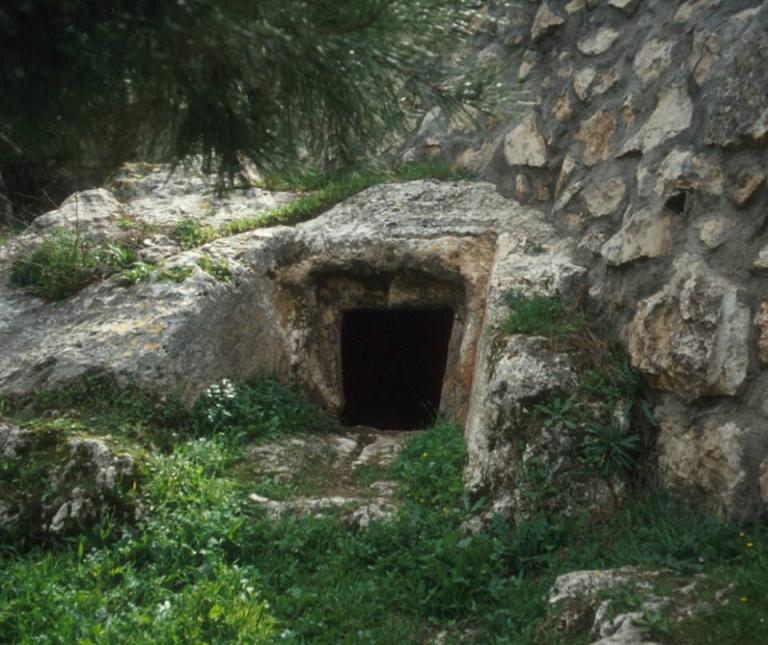
An empty tomb in Jerusalem dating to the Herodian period. The photograph was taken by my friend and colleague Dr. Jeffrey Chadwick, and I use it here with his kind permission. Neither of us believes either the Garden Tomb or the Holy Sepulcher to be the right place, so this will have to represent the as-yet unknown site of Christ’s burial and resurrection.
The late Bill Hamblin and I — how it still surprises and grieves me to write that phrase, “the late Bill Hamblin”! — published the article below in the 19 April 2014 issue of the Deseret News:
Historically, Easter has been the most important Christian holy day, as well as the oldest. Since the Reformation, many Protestant groups have simplified their Easter celebrations, focusing only on brief services on Easter Sunday itself.
For Roman Catholics and eastern Christians, however, the celebration of the crucifixion and resurrection of Jesus Christ is part of a complex of pilgrimage and ritual commemorations known as Holy Week.
Elaborate celebration of Easter had developed in Jerusalem in the early fourth century A.D., when the Christianization of the Roman Empire finally allowed widespread Christian pilgrimage.
Holy Week celebrations at Jerusalem evolved into a liturgical or ritual drama re-enacting the events of the last week of Christ’s life. The first detailed description of Holy Week rituals in Jerusalem comes from the account of the pilgrim Egeria, a French nun who visited Egypt and the Holy Land from 381 to 384. Although originally celebrated only at Jerusalem, Holy Week was soon adopted by Christians throughout the world, with special rites for each day of the week preceding Easter celebrated in local churches in imitation of the original practices of Jerusalem.
By participating in Holy Week, Christians commemorate and ritually participate in the Easter story. In a mystical sense, some contemplate the passion of Christ as if they had been there.
Palm Sunday is celebrated on the Sunday before Easter in commemoration of Christ’s triumphal entry into Jerusalem, when his followers, waving palm branches and shouting “Hosanna to the Son of David,” proclaimed him the Messiah. Thousands of pilgrims bearing palm branches follow the ancient route of Jesus’ triumphal entry still today.
The Thursday before Easter is known in English as Maundy Thursday, in commemoration of the Last Supper. The term maundy is derived from Christ’s washing of the disciples’ feet, when he gave a “new commandment” that they should “love one another as I have loved you” (John 13:34). The phrase “new commandment” is translated in Latin as mandatum novum; hence, “maundy” Thursday is the day commemorating the new mandatum or commandment. Vigil is also held in Gethsemane.
Good Friday is a day of fasting, abstinence and penance in remembrance of the crucifixion. In some Christian traditions, Good Friday and Holy Saturday are the only two days on which the Eucharist (the sacramental offering of bread and wine) isn’t celebrated. Services frequently include reading the story of the crucifixion and veneration of the cross, where believers ritually act as if they themselves were witnesses of the crucifixion. In Jerusalem, pilgrims walk the Via Dolorosa, the “Way of Pain,” where each event of Jesus’ passion is memorialized.
Holy Saturday commemorates the day when Christ’s body rested in the tomb, culminating in the evening with the Paschal Vigil, in which many Christians attend midnight services in imitation of mourning outside the tomb of Christ and awaiting the resurrection. Although in English the Sunday of the resurrection of Christ is called Easter, in many European languages the name is derived from the ancient word for “Passover”: in Hebrew pesach and in Aramaic pascha — hence, the word paschal. This often includes the lighting of the paschal candle, symbolic of the spread of the light of Christ, and the believers’ acceptance of that light in their own lives.
In early Christianity, Easter was the preferred day of baptism for new converts, many of whom spent the paschal vigil on the night of Holy Saturday in preparation for their baptism on Easter Sunday morning, reflecting the symbolism of baptism as resurrection. The practice of 40 days of fasting before Easter is known as Lent, and seems to have begun as a preparatory period of these candidates for Easter baptism in imitation of the 40-day fast of Christ. In older traditions, the fast permitted only one small evening meal a day, requiring complete abstinence from meat, fish, eggs and milk products. It’s a time of penance, abstinence, alms-giving and special religious devotions.
Holy Week culminates with the celebration of Easter Sunday. Although specific forms of remembrance can vary widely among Christian denominations, all unite in joyous thanksgiving for the atonement and resurrection of Christ and in hopeful anticipation of the future resurrection of all mankind.
Unfortunately, in many modern secularized Western societies — where holiday has ceased to mean “holy day,” becoming instead merely a time for fun and recreation — the authentic significance of Easter, like that of Christmas, has been largely obscured by commercialization and indulgence.
Previous Post

April 4, 2020
Science and Health, with No Reference to Mary Baker Eddy
Next Post
April 5, 2020 Shared Delusion?
Browse Our Archives
Select a Category Uncategorized
Select a Month October 2026 September 2026 August 2026 July 2026 June 2026 May 2026 April 2026 March 2026 February 2026 January 2026 December 2025 November 2025 October 2025 September 2025 August 2025 July 2025 June 2025 May 2025 April 2025 March 2025 February 2025 January 2025 December 2024 November 2024 October 2024 September 2024 August 2024 July 2024 June 2024 May 2024 April 2024 March 2024 February 2024 January 2024 December 2023 November 2023 October 2023 September 2023 August 2023 July 2023 June 2023 May 2023 April 2023 March 2023 February 2023 January 2023 December 2022 November 2022 October 2022 September 2022 August 2022 July 2022 June 2022 May 2022 April 2022 March 2022 February 2022 January 2022 December 2021 November 2021 October 2021 September 2021 August 2021 July 2021 June 2021 May 2021 April 2021 March 2021 February 2021 January 2021 December 2020 November 2020 October 2020 September 2020 August 2020 July 2020 June 2020 May 2020 April 2020 March 2020 February 2020 January 2020 December 2019 November 2019 October 2019 September 2019 August 2019 July 2019 June 2019 May 2019 April 2019 March 2019 February 2019 January 2019 December 2018 November 2018 October 2018 September 2018 August 2018 July 2018 June 2018 May 2018 April 2018 March 2018 February 2018 January 2018 December 2017 November 2017 October 2017 September 2017 August 2017 July 2017 June 2017 May 2017 April 2017 March 2017 February 2017 January 2017 December 2016 November 2016 October 2016 September 2016 August 2016 July 2016 June 2016 May 2016 April 2016 March 2016 February 2016 January 2016 December 2015 November 2015 October 2015 September 2015 August 2015 July 2015 June 2015 May 2015 April 2015 March 2015 February 2015 January 2015 December 2014 November 2014 March 2014 August 2013 February 2012
Follow Us!
TAKE THE
Religious Wisdom Quiz
What did God create on the second day?
Select your answer to see how you score.
Trees Sun Fish Sky
Related posts from Sic et Non
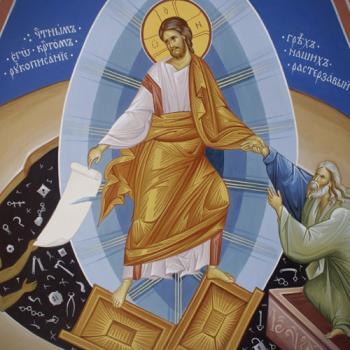
Χριστός ἀνέστη! Ἀληθῶς ἀνέστη!
"Well, I've been afraid of changin'"
TRENDING AT PATHEOS Latter-day Saint

The First Eucharistic Controversy: Christ’s Real Presence
For Catholics, the Eucharist is the source and summit of the Christian...

How to Make a Decision When You Can't...
Main point: It’s much more valuable to stay close to God so...

Archdiocese Hosts Military Marriage Retreat in Germany
RASTATT, Germany — The transient military lifestyle, with its frequent deployments and...

Nearly every morning, I make the drive to Detroit with my high-school-age...

The Real AI Story Is Adoption Without Trust
Artificial intelligence has crossed a political threshold. It is no longer a...

A new article, written by Jeff Lindsay and Gale L. Pooley,...
view all Latter-day Saint blogs
Ad-Free & Subscriber Log-In Subscription Support
- About Us
- 2026 Calendar
- Videos
- Podcasts
- Library of World Religions
- Faith In Media Tracker
- Advertise With Us
- Write for Us
- Privacy Policy
- Terms of Service
- Do Not Sell My Data
- Contact Us
- Radiant Digital
- Manage Newsletter Subscriptions
- Unsubscribe From Notifications
- Sitemap
Copyright 2008-2026, Patheos. All rights reserved.
Subscription Support Ad-Free & Subscriber Log-In
Follow Patheos