
BuddhistCatholicContemplativeEvangelicalGeneral ChristianHinduJewishLatter-day SaintMuslimNew VisionsProgressive Christian
Beliefs
- Buddhist
- Catholic
- Contemplative
- Evangelical
- General Christian
- Hindu
- Jewish
- Latter-day Saint
- More Voices
- Muslim
- New Visions
- Pagan
- Progressive Christian
Topics
- Religion News
- Food and Religion
- Sports and Religion
- Religious Art
- Religious Music and Entertainment
- Religious Events
- History and Religion
- Style and Religion
- Politics and Religion
- Women in Religion
- Recreation Outdoors and Religion
- Business Finance and Religion
- Careers Workplace and Religion
- Education and Religion
- Family Parenting and Religion
- Health Fitness and Religion
- Home and Religion
- Relationships and Religion
- Technology and Religion
- Travel and Religion
Columnists
- Buddhist Columnists
- Business Finance and Religion Columnists
- Careers Workplace and Religion Columnists
- Catholic Columnists
- Contemplative Columnists
- Education and Religion Columnists
- Evangelists Columnists
- Family Parenting and Religion Columnists
- General Christian Columnists
- Health Fitness and Religion Columnists
- Hindu Columnists
- History and Religion Columnists
- Home and Religion Columnists
- Jewish Columnists
- More Voices Columnists
- Latter Day Columnists
- Muslim Columnists
- New Visions Columnists
- Nonreligious Columnists
- Pagan Columnists
- Politics and Religion Columnists
- Progressive Columnists
- Recreation Outdoors and Religion Columnists
- Relationships and Religion Columnists
- Religion News Columnists
- Religious Art Columnists
- Religious Events Columnists
- Religious Music and Entertainment Columnists
- Sports and Religion Columnists
- Style and Religion Columnists
- Technology and Religion Columnists
- Travel and Religion Columnists
- Women in Religion Columnists
Resource Library
- 2026 Calendar
- Library of World Religions
- The 100 Most Holy Places on Earth
- Patheos Answers
- Podcasts
- Videos
- Faith Leaders Database
- Anglican Episcopalian
- Bahai
- Baptist
- Buddhism
- Christianity
- Confucianism
- Eastern Orthodoxy
- Hinduism
- Holiness and Pentecostal
- ISKCON
- Islam
- Judaism
- Lutheran
- Methodist
- The Church of Jesus Christ of Latter-day Saints
- New Age
- Paganism
- Presbytarian and Reformed
- Protestantism
- Religion Behind the Scenes
- Roman Catholic
- Scientology
- Shia Islam
- Sikhism
- Sufism
- Sunni Islam
- Taoism
- Zen
- See all religions
Research Tools
 Ad-Free & Subscriber Log-In Subscription Support
Ad-Free & Subscriber Log-In Subscription Support
Follow Patheos 

- Trending:
- Forgiveness
- |
- Marriage
- |
- Consciousness
- |
- Death Penalty
- |
- Election
- |
- Halloween

- Home
- Latter-day Saint
- Geology and Third Nephi (9): Cities Burned, Buried, and Drowned (Part One)
Geology and Third Nephi (9): Cities Burned, Buried, and Drowned (Part One)
Last updated on: March 2, 2020 at 2:51 pm by Dan Peterson
Geology and Third Nephi (9): Cities Burned, Buried, and Drowned (Part One) 2020-03-02T14:51:34-07:00 Dan Peterson
Patheos Explore the world's faith through different perspectives on religion and spirituality! Patheos has the views of the prevalent religions and spiritualities of the world.
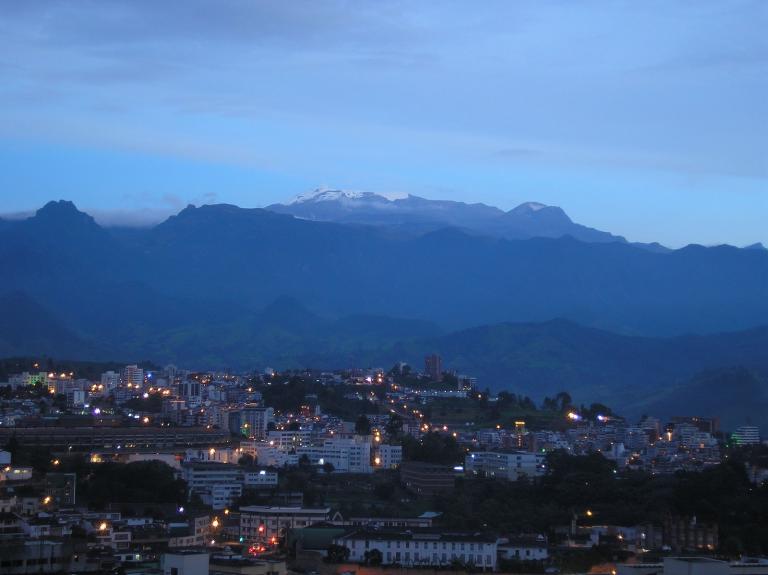
Nevado del Ruiz, as seen from Manizales, Colombia, in 2006. Beautiful, but deadly.
(Wikimedia Commons public domain photograph)
I continue with notes that I’m drawing largely from an article written by my longtime friend Dr. Bart Kowallis, a Professor Emeritus in the Department of Geological Sciences at Brigham Young University, about the natural catastrophe described in the Book of Mormon as having occurred in the New World at the death of Christ: Bart J. Kowallis, “In the Thirty and Fourth Year: A Geologist’s View of the Great Destruction in 3 Nephi,” BYU Studies 37/3 (1997-1998):
According to the account given in 3 Nephi, the cities of Jacobugath, Laman, Josh, Gad, and Kishkumen were burned, along with their inhabitants. The great city of Zarahemla “took fire,” as well. The cities of Moroni, Onihah, Mocum, and (New World) Jerusalem were covered by water, and their inhabitants drowned. The cities of Moronihah, Gilgal, Gadiandi, Gadiomnah, Jacob, and Gimgimno “sank” into the earth or were buried.
Is this plausible? Can it be explained by known geological causes? Yes, and yes it can.
The destruction of people and buildings may occur in a variety of different ways during an explosive volcanic eruption, and the devastation may be widespread, reaching up to a few hundred miles from the erupting volcano. . . . The cities mentioned in the 3 Nephi account were all destroyed in ways understandable in terms of a massive volcanic eruption. (160)
Hot ash falling onto wooden and thatched structures would cause fires, as would a fast-moving hot cloud of ash traveling along the ground, violent lightning accompanying a volcanic eruption, and disturbed lamps, torches, and cooking fires. Professor Kowallis cites the case of the city of Stabiae, which caught fire during the eruption of Mount Vesuvius in A.D. 79, and quotes extensively from a dramatic account of the eruption of Mt. Pelée on the eastern Caribbean island of Martinique in 1902. He also includes spectacular before-and-after photographs of the once thriving city of St. Pierre.
The flooding of cities and villages is also a common occurrence during large, explosive volcanic eruptions. (162)
Tidal waves or, more properly, tsunamis, are one result of such volcanic events. During Krakatoa’s 1883 eruption, 165 villages were totally destroyed and an additional 132 were partially destroyed by massive waves, which are reported to have reached heights of more than 130 feet. Approximately 33,000 people died as a result of these waves. The city of Moroni, one of those destroyed by water, is described in the Book of Mormon as having been “near the east sea” (Alma 50:13).
The seiche waves on a lake can also be very destructive, as can changes in lake water levels. After the 1980 eruption of Mount St. Helens, Spirit Lake, which was located at the foot of the volcano was two hundred feet higher in elevation. “Lodges, cabins — everything near the previous lakeshore — were buried deeply under water, mud, and debris” (165). John Sorenson has suggested that the New World city of Jerusalem was located on the shore of a lake.
Previous Post

March 2, 2020
We aren't dead yet.
Next Post
March 2, 2020 I Live to Serve
Browse Our Archives
Select a Category Uncategorized
Select a Month October 2026 September 2026 August 2026 July 2026 June 2026 May 2026 April 2026 March 2026 February 2026 January 2026 December 2025 November 2025 October 2025 September 2025 August 2025 July 2025 June 2025 May 2025 April 2025 March 2025 February 2025 January 2025 December 2024 November 2024 October 2024 September 2024 August 2024 July 2024 June 2024 May 2024 April 2024 March 2024 February 2024 January 2024 December 2023 November 2023 October 2023 September 2023 August 2023 July 2023 June 2023 May 2023 April 2023 March 2023 February 2023 January 2023 December 2022 November 2022 October 2022 September 2022 August 2022 July 2022 June 2022 May 2022 April 2022 March 2022 February 2022 January 2022 December 2021 November 2021 October 2021 September 2021 August 2021 July 2021 June 2021 May 2021 April 2021 March 2021 February 2021 January 2021 December 2020 November 2020 October 2020 September 2020 August 2020 July 2020 June 2020 May 2020 April 2020 March 2020 February 2020 January 2020 December 2019 November 2019 October 2019 September 2019 August 2019 July 2019 June 2019 May 2019 April 2019 March 2019 February 2019 January 2019 December 2018 November 2018 October 2018 September 2018 August 2018 July 2018 June 2018 May 2018 April 2018 March 2018 February 2018 January 2018 December 2017 November 2017 October 2017 September 2017 August 2017 July 2017 June 2017 May 2017 April 2017 March 2017 February 2017 January 2017 December 2016 November 2016 October 2016 September 2016 August 2016 July 2016 June 2016 May 2016 April 2016 March 2016 February 2016 January 2016 December 2015 November 2015 October 2015 September 2015 August 2015 July 2015 June 2015 May 2015 April 2015 March 2015 February 2015 January 2015 December 2014 November 2014 March 2014 August 2013 February 2012
Follow Us!
TAKE THE
Religious Wisdom Quiz
What sign marked the houses to be spared during Passover?
Select your answer to see how you score.
A red ribbon A dove symbol A lit candle Blood on doorposts
Related posts from Sic et Non


Some notes on the archaeology of the Bible

An action movie and some vacuous theology

TRENDING AT PATHEOS Latter-day Saint

The First Eucharistic Controversy: Christ’s Real Presence
For Catholics, the Eucharist is the source and summit of the Christian...

What a Stop Sign Can Teach Us About...
How to Make a Decision When You Can't Hear God Main point:...

Archdiocese Hosts Military Marriage Retreat in Germany
RASTATT, Germany — The transient military lifestyle, with its frequent deployments and...

Nearly every morning, I make the drive to Detroit with my high-school-age...

The Real AI Story Is Adoption Without Trust
Artificial intelligence has crossed a political threshold. It is no longer a...

A new article, written by Jeff Lindsay and Gale L. Pooley,...
view all Latter-day Saint blogs
Ad-Free & Subscriber Log-In Subscription Support
- About Us
- 2026 Calendar
- Videos
- Podcasts
- Library of World Religions
- Faith In Media Tracker
- Advertise With Us
- Write for Us
- Privacy Policy
- Terms of Service
- Do Not Sell My Data
- Contact Us
- Radiant Digital
- Manage Newsletter Subscriptions
- Unsubscribe From Notifications
- Sitemap
Copyright 2008-2026, Patheos. All rights reserved.
Subscription Support Ad-Free & Subscriber Log-In
Follow Patheos