
BuddhistCatholicContemplativeEvangelicalGeneral ChristianHinduJewishLatter-day SaintMuslimNew VisionsProgressive Christian
Beliefs
- Buddhist
- Catholic
- Contemplative
- Evangelical
- General Christian
- Hindu
- Jewish
- Latter-day Saint
- More Voices
- Muslim
- New Visions
- Pagan
- Progressive Christian
Topics
- Religion News
- Food and Religion
- Sports and Religion
- Religious Art
- Religious Music and Entertainment
- Religious Events
- History and Religion
- Style and Religion
- Politics and Religion
- Women in Religion
- Recreation Outdoors and Religion
- Business Finance and Religion
- Careers Workplace and Religion
- Education and Religion
- Family Parenting and Religion
- Health Fitness and Religion
- Home and Religion
- Relationships and Religion
- Technology and Religion
- Travel and Religion
Columnists
- Buddhist Columnists
- Business Finance and Religion Columnists
- Careers Workplace and Religion Columnists
- Catholic Columnists
- Contemplative Columnists
- Education and Religion Columnists
- Evangelists Columnists
- Family Parenting and Religion Columnists
- General Christian Columnists
- Health Fitness and Religion Columnists
- Hindu Columnists
- History and Religion Columnists
- Home and Religion Columnists
- Jewish Columnists
- More Voices Columnists
- Latter Day Columnists
- Muslim Columnists
- New Visions Columnists
- Nonreligious Columnists
- Pagan Columnists
- Politics and Religion Columnists
- Progressive Columnists
- Recreation Outdoors and Religion Columnists
- Relationships and Religion Columnists
- Religion News Columnists
- Religious Art Columnists
- Religious Events Columnists
- Religious Music and Entertainment Columnists
- Sports and Religion Columnists
- Style and Religion Columnists
- Technology and Religion Columnists
- Travel and Religion Columnists
- Women in Religion Columnists
Resource Library
- 2026 Calendar
- Library of World Religions
- The 100 Most Holy Places on Earth
- Patheos Answers
- Podcasts
- Videos
- Faith Leaders Database
- Anglican Episcopalian
- Bahai
- Baptist
- Buddhism
- Christianity
- Confucianism
- Eastern Orthodoxy
- Hinduism
- Holiness and Pentecostal
- ISKCON
- Islam
- Judaism
- Lutheran
- Methodist
- The Church of Jesus Christ of Latter-day Saints
- New Age
- Paganism
- Presbytarian and Reformed
- Protestantism
- Religion Behind the Scenes
- Roman Catholic
- Scientology
- Shia Islam
- Sikhism
- Sufism
- Sunni Islam
- Taoism
- Zen
- See all religions
Research Tools
 Ad-Free & Subscriber Log-In Subscription Support
Ad-Free & Subscriber Log-In Subscription Support
Follow Patheos 

- Trending:
- Forgiveness
- |
- Marriage
- |
- Consciousness
- |
- Death Penalty
- |
- Election
- |
- Halloween

- Home
- Latter-day Saint
- “Cosmic Optimism”
“Cosmic Optimism”
Last updated on: February 4, 2020 at 11:37 pm by Dan Peterson
“Cosmic Optimism” 2020-02-04T23:37:55-07:00 Dan Peterson
Patheos Explore the world's faith through different perspectives on religion and spirituality! Patheos has the views of the prevalent religions and spiritualities of the world.
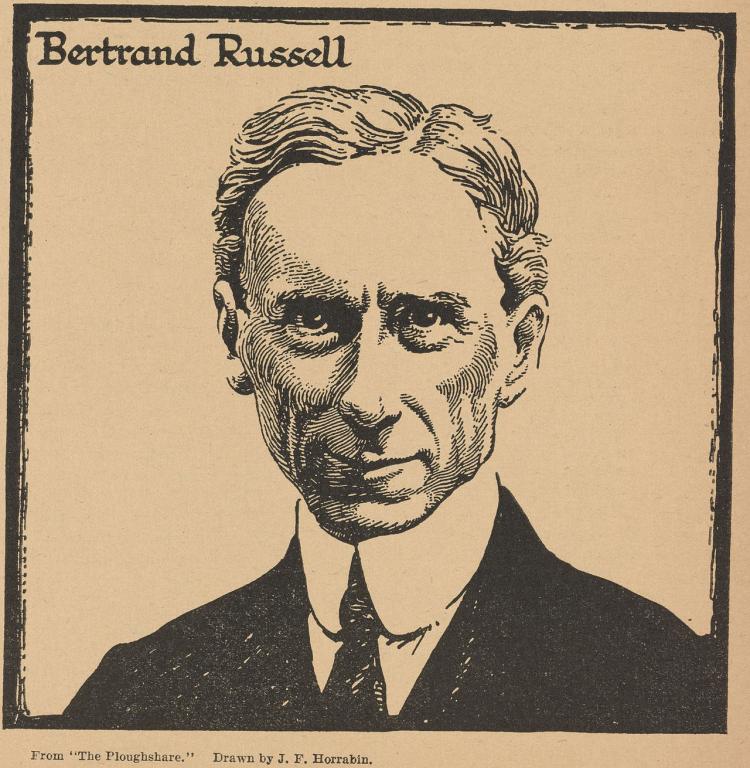
A 1917 image of Bertrand Arthur William Russell, 3rd Earl Russell (1872-1970), British philosopher, logician, mathematician, historian, writer, social critic, political activist, and 1950 Nobel laureate for literature
(Wikimedia Commons public domain image)
I published this column back in the late 1990s, in the Provo Daily Herald:
In a world filled with violence, poverty, suffering, illness, accidental death, disappointment, frustration, and hatred, pessimism is an ever-beckoning possibility. And, for some, pessimism shades eventually into utter despair, hopelessness, and cynicism.
In the long term, the secular or naturalistic worldview actually has little else to offer. As one American philosopher put it, the things that matter most will ultimately be at the mercy of the things that matter least. The British philosopher-mathematician Bertrand Russell, an outspoken atheist, expressed the situation even more strikingly in an essay rather archly entitled “A Free Man’s Worship”:
“That man is the product of causes which had no prevision of the end they were achieving; that his origin, his growth, his hopes and fears, his loves and his beliefs, are but the outcome of accident collocations of atoms; that no fire, no heroism, no intensity of thought and feeling, can preserve an individual life beyond the grave; that all the labors of the ages, all the devotion, all the inspiration, all the noonday brightness of human genius, are destined to extinction in the vast death of the solar system, and that the whole temple of man’s achievement must inevitably be buried beneath the debris of a universe in ruins—all these things, if not quite beyond dispute, are yet so nearly certain that no philosophy which rejects them can hope to stand. Only within the scaffolding of these truths, only on the firm foundation of unyielding despair, can the soul’s habitation henceforth be safely built.”
But is such a view really safe? Is it even remotely satisfying, when honestly confronted? Russell’s own Autobiography suggests that the rather defiant public face of humanistic optimism that he consistently wore masked frequent bouts of inner misery.
Strikingly, Russell’s own daughter Katharine, while a graduate student with her husband at Harvard, rejected the fierce atheism in which she had been raised. It had, she said, brought her only unhappiness and dissatisfaction. Ironically, when her husband subsequently entered divinity school, some of the money from Russell’s Nobel prize for literature went to paying his tuition. Katharine impishly commented to her father that God probably found that fact rather funny; Russell responded that, while he didn’t know about God, officials at the Bank of England had been highly amused.
While they differ in much, the great religions of the world are united in declaring that there are great and good things in store for the faithful, and even, in some versions, for all or virtually all of humankind. The contemporary British philosopher John Hick terms this view, shared by Buddhism, Hinduism, Islam, Christianity, Judaism, and all of the major traditions, “cosmic optimism.” “Eye hath not seen, nor ear heard, neither have entered into the heart of man, the things which God hath prepared for them that love him.” These words come from the King James version of 1 Corinthians 2:9, a Christian text from the New Testament. But they are unmistakably based upon Isaiah 64:4, a passage from the Old Testament or Hebrew Bible. And, in Islam, they eventually turn up as a “hadith” or tradition ascribed to the Prophet Muhammad.
The Hebrew Bible opens with the book of Genesis, in which we are told, leaving aside debatable details, that the physical world in which we live is not the product of random chance but of the deliberate action of a supremely powerful and intelligent being who benevolently looked upon his creation and pronounced it “good.” And the Christian Bible closes with the Revelation of John which, again leaving aside arguments over the details of interpretation, testifies that, however bad things may become, however great the uncertainties and the sufferings, all remains under the control of a vastly powerful and infinitely good Father. In the end, all will conclude in a vision of blessed happiness, symbolized by a celestial city that needs no illumination because God himself is its light. “And God shall wipe away all tears from their eyes; and there shall be no more death, neither sorrow, nor crying, neither shall there be any more pain: for the former things are done away” (Revelation 21:4).
The principal message of religion, said the American philosopher William James, is that “the best things are the more eternal things, the overlapping things, the things in the universe that throw the last stone, so to speak, and say the final word.” Or, in the memorable words of the fourteenth century English mystic and anchorite Julian of Norwich, that “All shall be well and all shall be well and all manner of things shall be well.”
It is a message, and a confidence, that is much needed in our time
Previous Post

February 2, 2020
One of the highpoints of the annual calendar
Next Post
February 3, 2020 Inheriting Wind
Browse Our Archives
Select a Category Uncategorized
Select a Month October 2026 September 2026 August 2026 July 2026 June 2026 May 2026 April 2026 March 2026 February 2026 January 2026 December 2025 November 2025 October 2025 September 2025 August 2025 July 2025 June 2025 May 2025 April 2025 March 2025 February 2025 January 2025 December 2024 November 2024 October 2024 September 2024 August 2024 July 2024 June 2024 May 2024 April 2024 March 2024 February 2024 January 2024 December 2023 November 2023 October 2023 September 2023 August 2023 July 2023 June 2023 May 2023 April 2023 March 2023 February 2023 January 2023 December 2022 November 2022 October 2022 September 2022 August 2022 July 2022 June 2022 May 2022 April 2022 March 2022 February 2022 January 2022 December 2021 November 2021 October 2021 September 2021 August 2021 July 2021 June 2021 May 2021 April 2021 March 2021 February 2021 January 2021 December 2020 November 2020 October 2020 September 2020 August 2020 July 2020 June 2020 May 2020 April 2020 March 2020 February 2020 January 2020 December 2019 November 2019 October 2019 September 2019 August 2019 July 2019 June 2019 May 2019 April 2019 March 2019 February 2019 January 2019 December 2018 November 2018 October 2018 September 2018 August 2018 July 2018 June 2018 May 2018 April 2018 March 2018 February 2018 January 2018 December 2017 November 2017 October 2017 September 2017 August 2017 July 2017 June 2017 May 2017 April 2017 March 2017 February 2017 January 2017 December 2016 November 2016 October 2016 September 2016 August 2016 July 2016 June 2016 May 2016 April 2016 March 2016 February 2016 January 2016 December 2015 November 2015 October 2015 September 2015 August 2015 July 2015 June 2015 May 2015 April 2015 March 2015 February 2015 January 2015 December 2014 November 2014 March 2014 August 2013 February 2012
Follow Us!
TAKE THE
Religious Wisdom Quiz
According to James, what is pure and undefiled religion?
Select your answer to see how you score.
To love your neighbor as yourself To care for orphans and widows in their distress and keep oneself from being polluted by the world To obey all the commandments To pray without ceasing
Related posts from Sic et Non


Bidding Adieu to My Native State


6DIA is streaming, physicalism is depressing, and I'm...
TRENDING AT PATHEOS Latter-day Saint

The First Eucharistic Controversy: Christ’s Real Presence
For Catholics, the Eucharist is the source and summit of the Christian...

How to Make a Decision When You Can't...
Main point: It’s much more valuable to stay close to God so...

Archdiocese Hosts Military Marriage Retreat in Germany
RASTATT, Germany — The transient military lifestyle, with its frequent deployments and...

Nearly every morning, I make the drive to Detroit with my high-school-age...

The Real AI Story Is Adoption Without Trust
Artificial intelligence has crossed a political threshold. It is no longer a...

A new article, written by Jeff Lindsay and Gale L. Pooley,...
view all Latter-day Saint blogs
Ad-Free & Subscriber Log-In Subscription Support
- About Us
- 2026 Calendar
- Videos
- Podcasts
- Library of World Religions
- Faith In Media Tracker
- Advertise With Us
- Write for Us
- Privacy Policy
- Terms of Service
- Do Not Sell My Data
- Contact Us
- Radiant Digital
- Manage Newsletter Subscriptions
- Unsubscribe From Notifications
- Sitemap
Copyright 2008-2026, Patheos. All rights reserved.
Subscription Support Ad-Free & Subscriber Log-In
Follow Patheos